


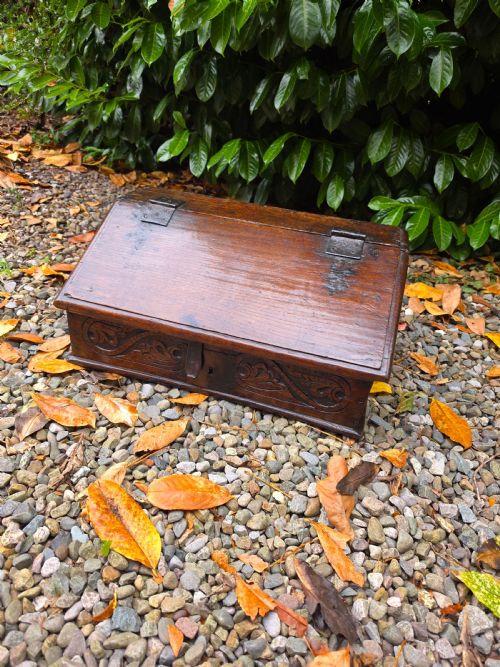
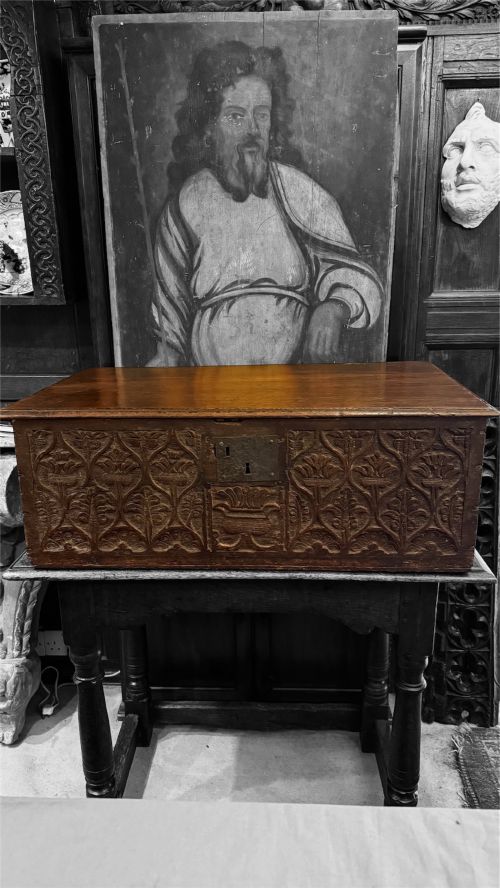
Jacobean Oak Writing Desk
These pieces for a jacobean oak writing desk combine timber and functional storage for working surfaces.
Jacobean Oak Writing Desk
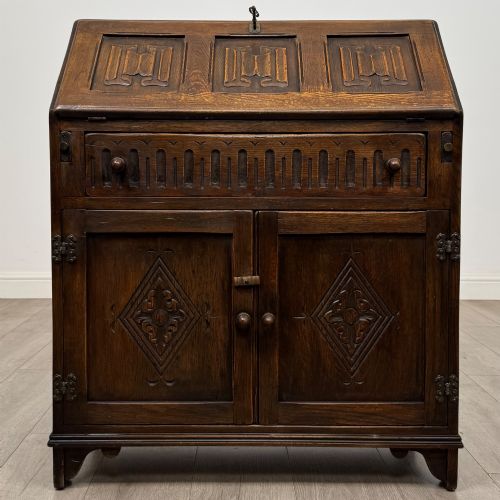
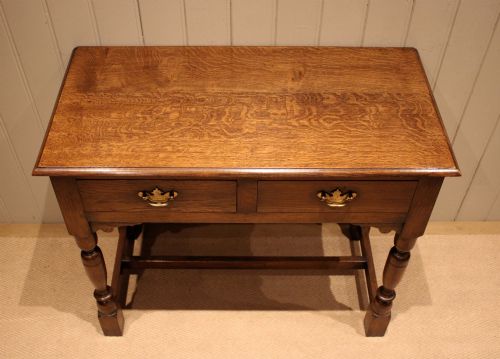
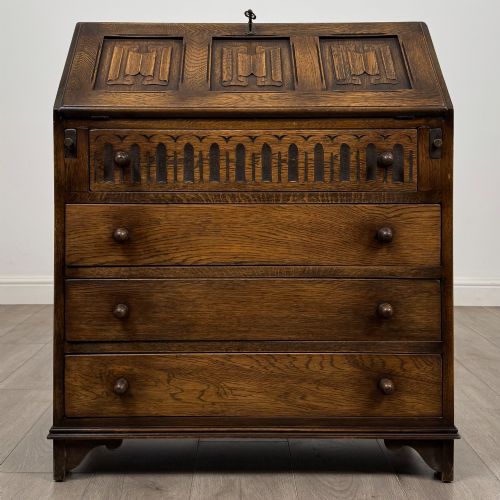
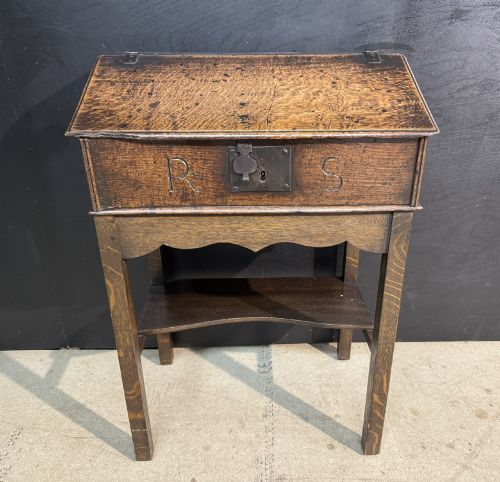
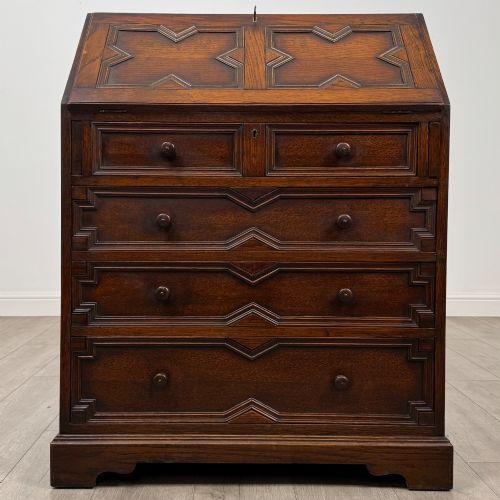
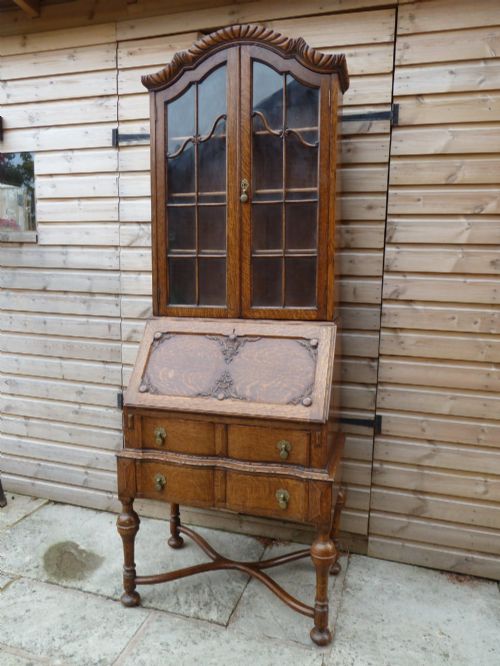
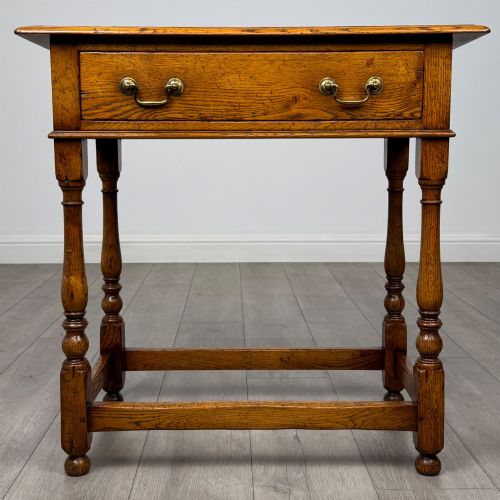
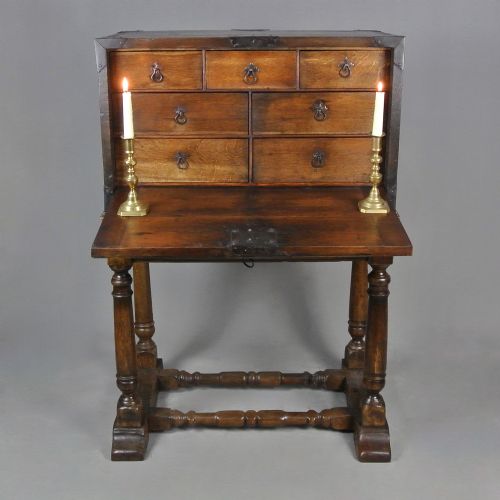
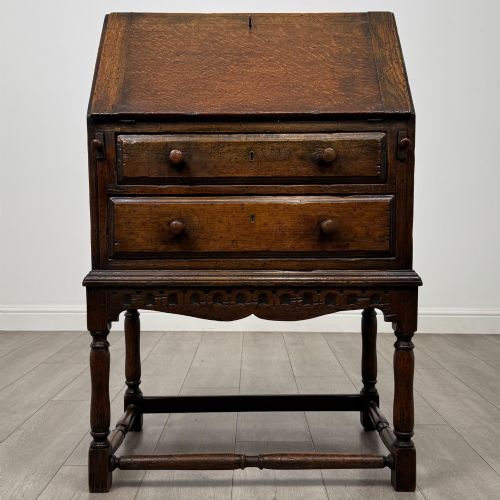
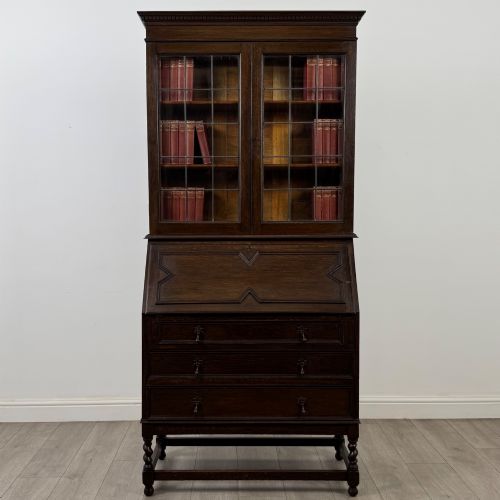
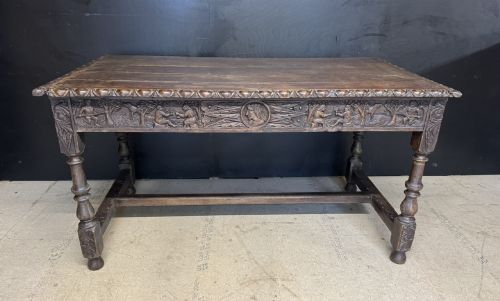
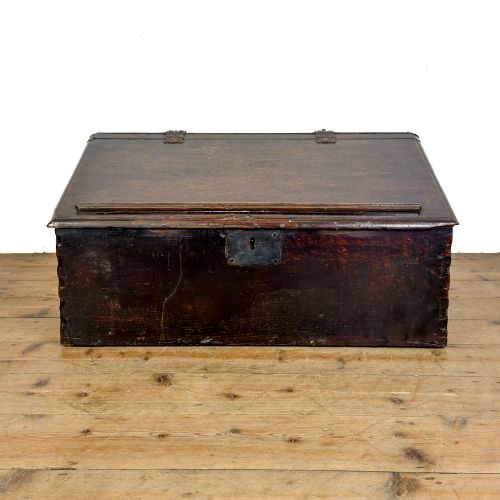
A jacobean oak writing desk spans several centuries of production, appearing in authentic seventeenth-century formats alongside later revivals from the Victorian, Edwardian, and twentieth-century periods. Buyers encounter forms ranging from slope-front bible boxes and desk boxes to substantial bureau bookcases, writing tables, and side tables fitted with drawers.
The material vocabulary centres squarely on solid oak and oak veneer, complemented by hardware in brass, iron, and wrought iron, with occasional leather writing surfaces and glass panel doors. Surviving examples reflect vernacular traditions as well as revived styles including Jacobean Revival, Tudor Revival, Victorian Gothic Revival, and Carolean.
Pieces originating from the seventeenth century contrast with nineteenth-century neo-Jacobean architect desks and twentieth-century bureaus. This spread offers buyers a choice between early document boxes and later multi-drawer workstation formats.
How they were made
Makers utilised solid oak and oak veneer, framing panels with traditional joinery methods suited to heavy timbers. Hardware elements such as hinges, handles, and escutcheons incorporate brass and iron.
Carving provides surface decoration across panels and friezes, alongside specialised treatments like linenfold patterning found on Edwardian pieces. Interiors frequently incorporate fitted compartments, small drawers, and slant-front writing slopes.
Jacobean Oak Writing Desk Retail Price Guide 2026
Typical asking prices for jacobean oak writing desk among the pieces listed under this phrase on Sellingantiques today, from the lower quarter to the upper quarter. They describe what is for sale here now, not the wider market.
The listings span the seventeenth century through the Edwardian period, featuring oak, brass, iron, glass, and leather across desks, boxes, and side tables.
What varies in quality
The standard of execution depends heavily on the depth and crispness of the carved ornamentation and the integrity of the timber construction. Early period boxes and desks with original interior compartments and fitted drawers stand apart from plainer utility formats.
The integration of secondary materials, such as well-fitted leather inserts on writing tables and intact brass hardware, distinguishes finer examples. Surviving provenance and period authenticity separate seventeenth-century originals from later revival interpretations.
Wylie & Lochhead
The Jacobean Oak Writing Desk Glossary
- Bible box
- A small wooden box with a sloping or flat lid, originally built to hold folio volumes and later utilised for writing documents. These portable pieces frequently date to the seventeenth century.
- Bureau
- A writing cabinet featuring a slant front that opens to reveal internal compartments and small drawers. Later versions often incorporate bookcase sections above.
- Linenfold
- A carved wooden panel motif imitating folded cloth, commonly seen on Edwardian oak furniture. This decorative technique adds texture to doors and drop-front panels.
- Strong box
- A heavy timber storage chest reinforced with iron straps and secure locking mechanisms, designed for valuable documents. These seventeenth-century examples rely on sturdy oak construction.
Jacobean Oak Writing Desk: Frequently Asked Questions
What is a bible box?
A bible box is a small portable wooden container featuring a flat or sloping lid designed to hold sacred texts and writing materials. These compact boxes date predominantly from the seventeenth century and sit on tables or desks.
Many examples contain internal compartments for inkwells and quills, serving as the precursor to the larger writing desk and bureau formats developed in subsequent centuries.
How do I identify a seventeenth century piece?
Seventeenth-century pieces display authentic period construction techniques, heavier solid oak timbers, and hand-cut joinery. Surface decoration often includes geometric mouldings or vernacular carved details characteristic of the era.
Later revivals from the Victorian and Edwardian periods imitate these characteristics but typically feature machine tooling, lighter oak veneers, or different interior hardware styles.
What is a bureau bookcase?
A bureau bookcase combines a lower writing desk with a glazed or panelled cabinet superstructure designed for book storage. The writing surface is typically concealed behind a hinged sloping fall-front.
These combination pieces provide both functional workspace and display shelving, appearing in twentieth-century Edwardian and revival formats within the inventory.
How should I care for antique oak?
Antique oak benefits from stable indoor humidity levels away from direct heat sources and strong sunlight. Regular dusting with a soft dry cloth maintains the finish without stripping natural patination.
Application of traditional wax polish helps nourish the timber surface periodically, preserving the historic character of the oak grain and carved details.