


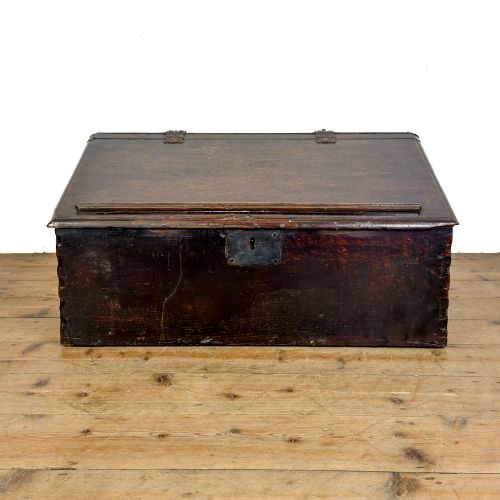
Early Oak Coffer
An early oak coffer brings centuries of utilitarian strength and rich timber patination into a modern interior.
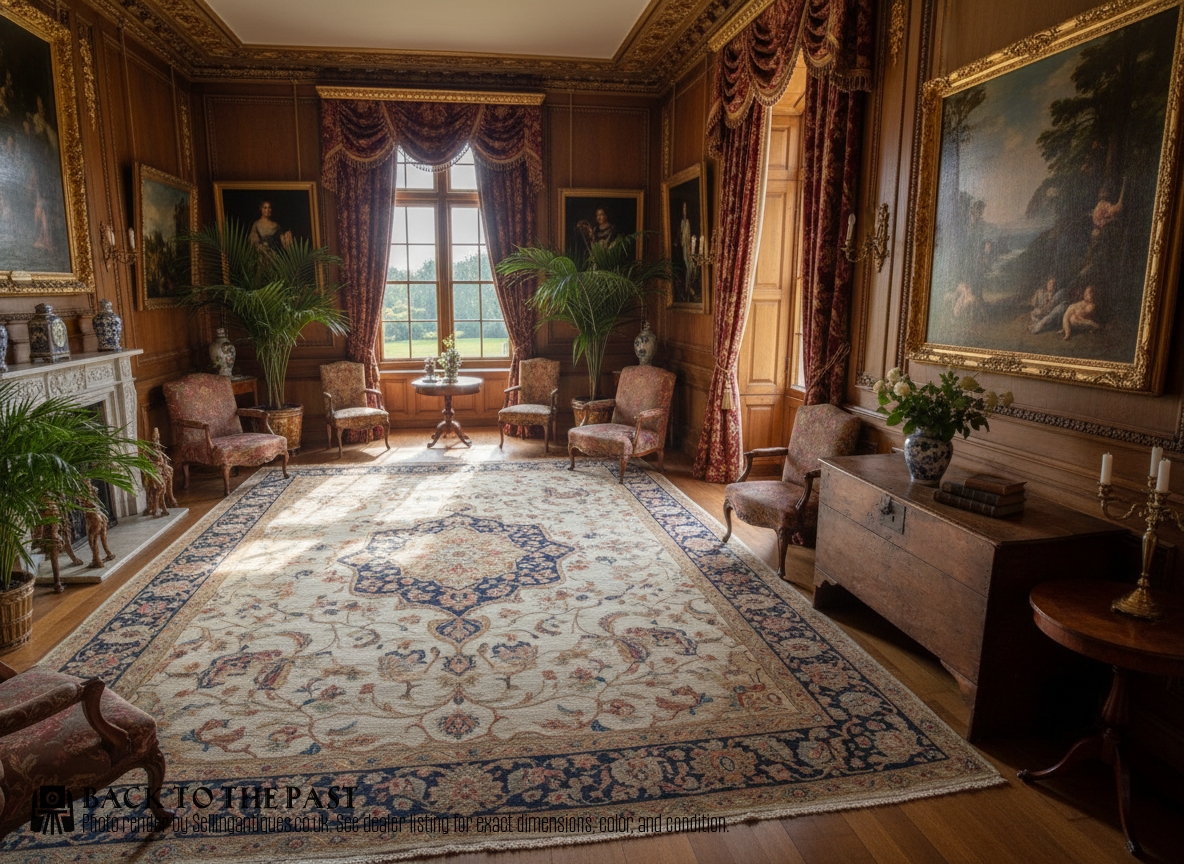
Early oak coffer
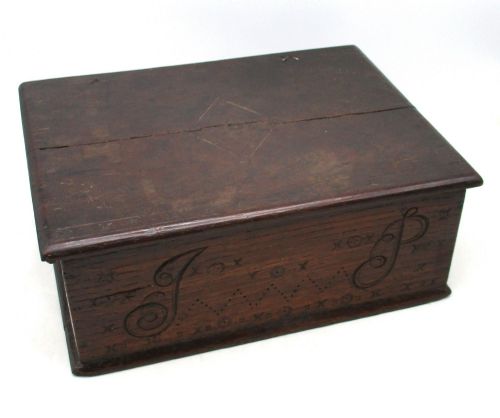
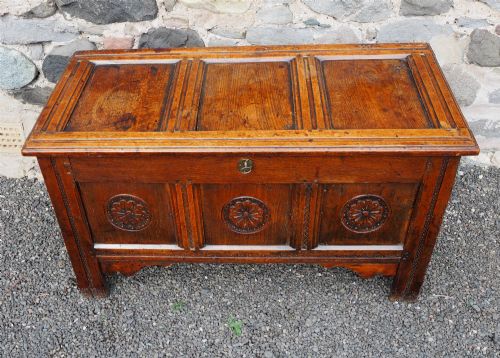
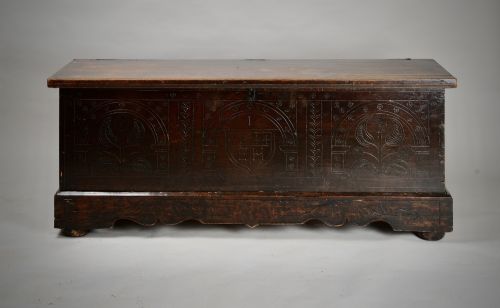
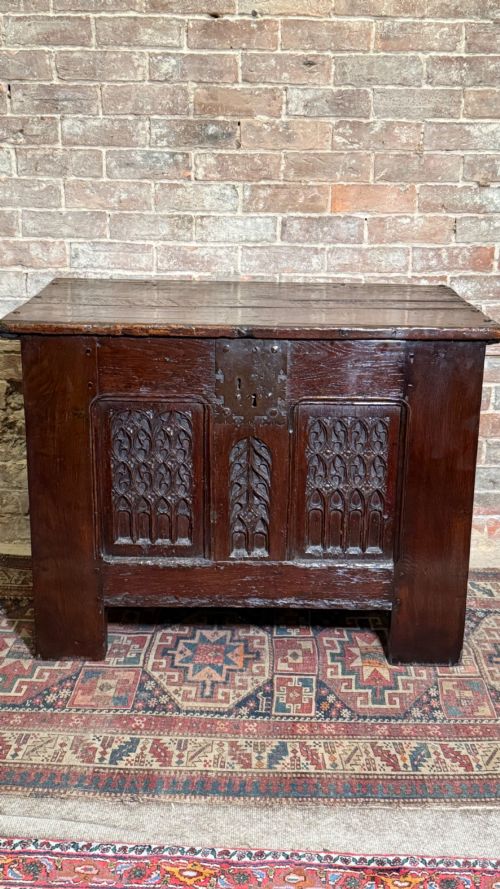
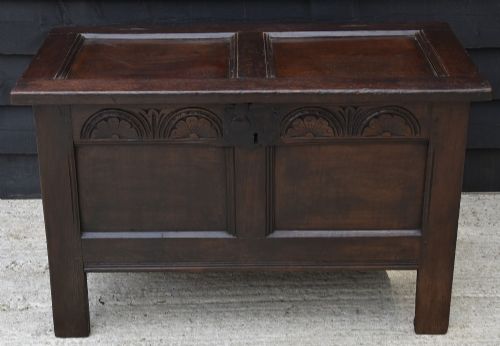
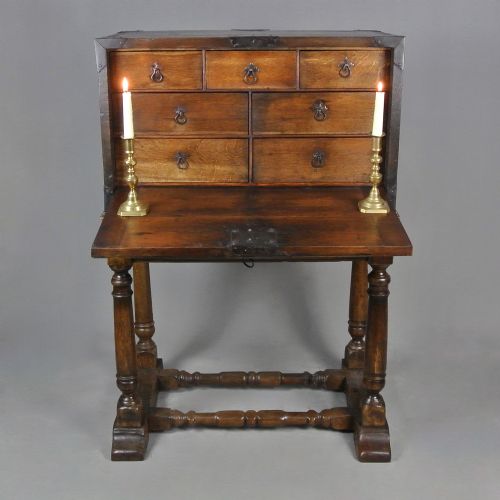
An early oak coffer serves as a sturdy storage chest spanning periods from the sixteenth century through to the nineteenth century, encompassing forms such as bible boxes, coffer bach pieces, and large panelled examples. These utilitarian objects originate primarily from English, Welsh, and Westmorland traditions, showing vernacular as well as more formal stylistic traits.
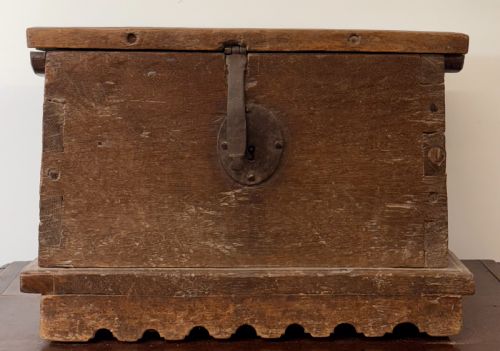
Buyers encounter simple planked construction methods alongside complex joined and panelled formats bearing carved details. Pieces range from small children's coffers and miniature boxes up to large storage chests designed for domestic security and household goods.
Materials and construction
Carpenters utilised native oak alongside iron and wrought iron for hinges, straps, and locking mechanisms. Planks were shaped and joined to form rigid boxes, frequently employing six-plank assemblies or frame-and-panel techniques.
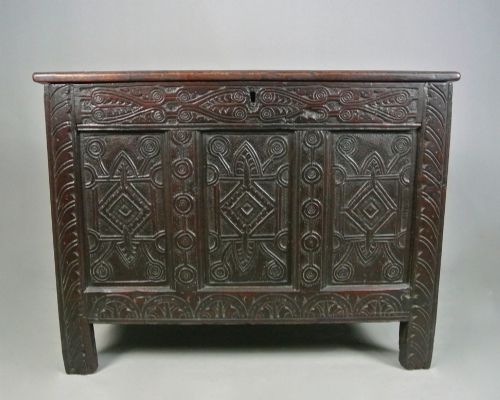
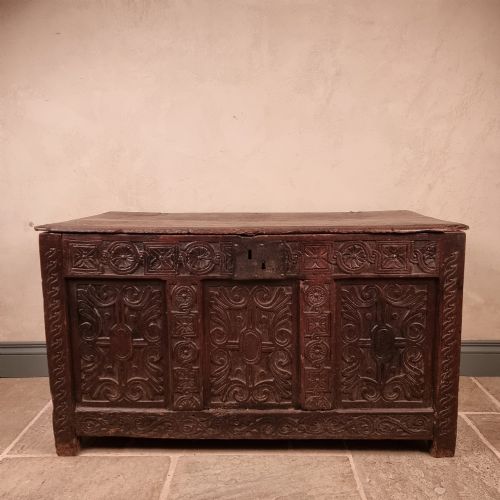
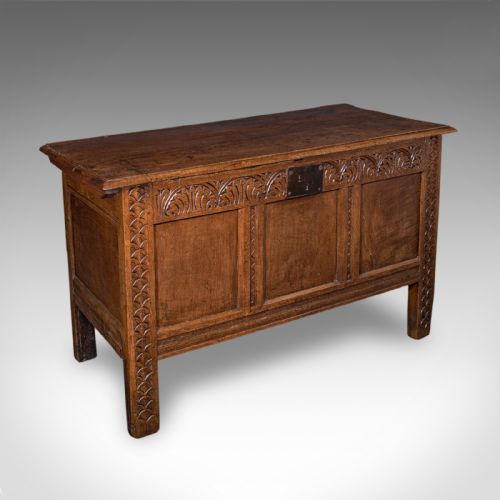
Joinery methods included pegged mortise and tenon joints on panelled examples, whilst simpler constructions relied on edge-joined boards secured with iron nails or pins. Surfaces often display hand- carved ornamentation executed directly into the timber.
Retail Price Guide 2026
Typical UK retail prices for early oak coffer, calculated from the Sellingantiques database of over a million retail prices indexed since 2003. This retail price guide relies exclusively on Sellingantiques data; no external sources or auction records are used, so the figures do not describe the wider market.
Listings span periods from the 16th century through the 19th century, utilising solid oak complemented by iron and wrought iron hardware.
Distinctions in quality
The sophistication of the joinery and the depth of the original carved decoration separate standard vernacular pieces from finer examples. Intricately carved panels and authentic period hardware elevate a piece above simpler planked constructions.
The survival of original surfaces, panelled tops, and untouched timber patination dictates the desirability of an example. Alterations, replaced panels, and secondary timber insertions diminish historical integrity.
The Early Oak Coffer Glossary
- Coffer
- A large wooden chest used historically for storing valuables, linen, and documents. These sturdy receptacles typically feature hinged lids and robust timber construction.
- Six plank coffer
- A primitive storage chest constructed from six individual boards joined directly at the edges. This represents one of the earliest and most direct forms of box-making.
- Joined coffer
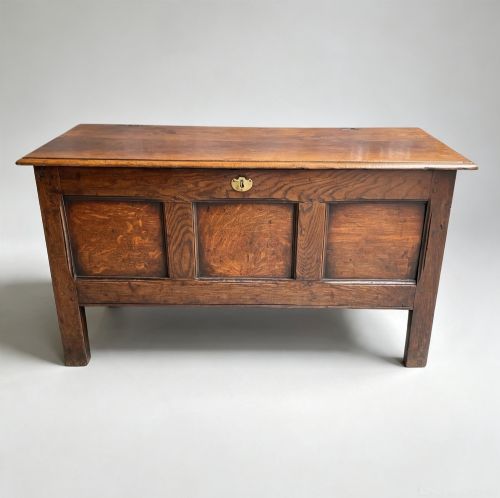
- A chest constructed using a frame of stiles and rails fitted with floating panels. This technique allowed timber to expand and contract naturally without splitting.
- Coffer bach
- A small Welsh box or miniature coffer mounted on feet, traditionally used for holding valuables or presentation items. These diminutive pieces mirror the construction of larger domestic chests.
- Panels
- Individual flat boards fitted within a surrounding frame to make up the front, back, or sides of joined furniture. They allow the wood to move with changes in atmospheric humidity.
Frequently Asked Questions
What were early oak coffers used for?
These chests functioned primarily as secure storage for valuable household possessions, documents, and textiles. In domestic settings, they also served as seating benches or tables when space required.
Over centuries, their role shifted from utilitarian strongboxes to decorative furnishing items within the home.
How do I care for an oak coffer?
Keep wooden coffers away from direct heat sources and dramatic humidity fluctuations to prevent timber splitting or warping. Feed the dry oak surfaces periodically with traditional beeswax to maintain the finish.
Avoid using modern chemical polishes that can degrade the historic patination accumulated over centuries.
How are different periods identified?
Sixteenth and seventeenth-century pieces typically exhibit primitive board construction or heavy joined framing with geometric or floral carved panels. Eighteenth-century examples often display lighter proportions, refined panels, and occasional secret drawers.
Hardware styles, tool marks, and assembly methods help establish the chronological progression from early planked chests to later panelled formats.
What is a coffer bach?
A coffer bach is a small Welsh box featuring miniature proportions and distinct regional craftsmanship. These diminutive versions replicate the form of standard household coffers on a reduced scale.
They frequently incorporate small drawers beneath the main compartment and served as presentation pieces or valuables chests.