
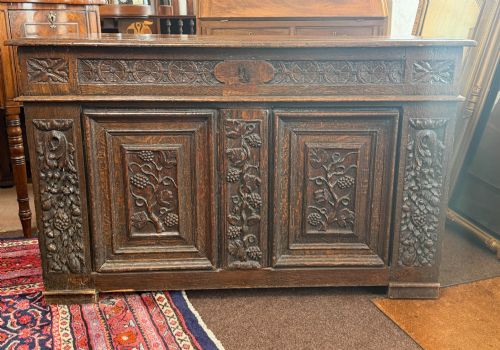
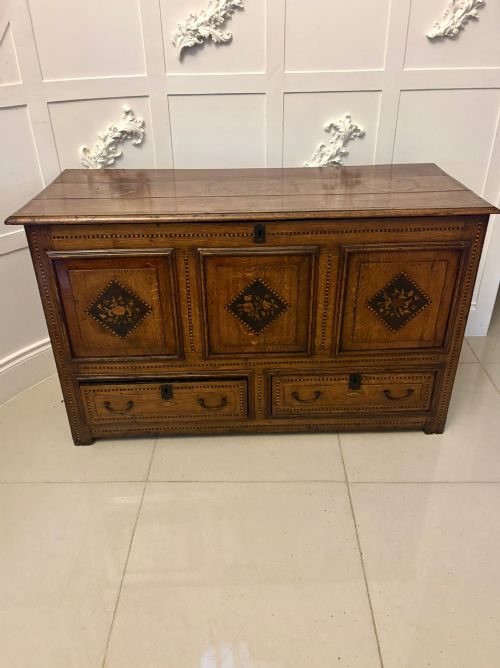
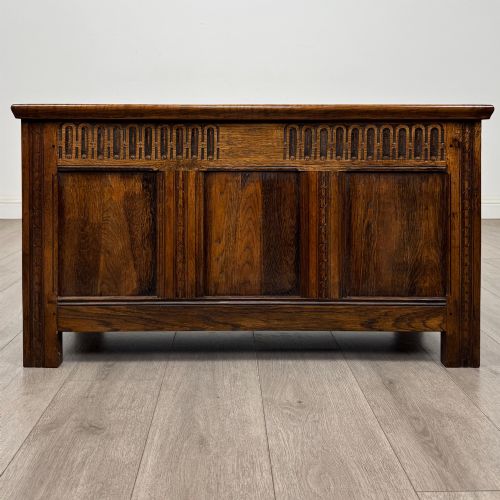


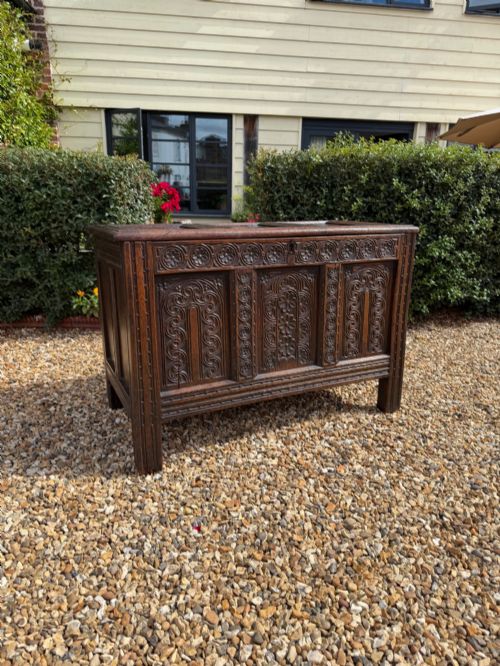
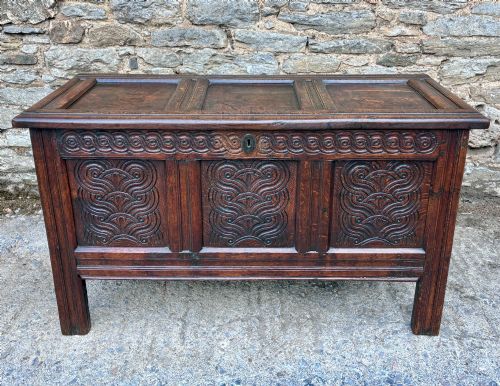
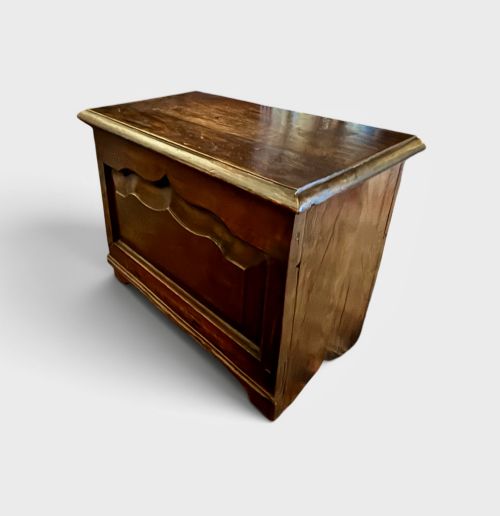
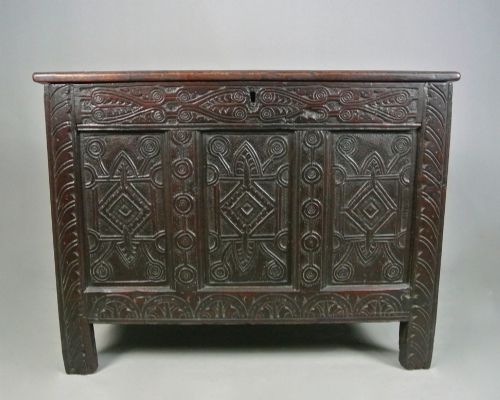
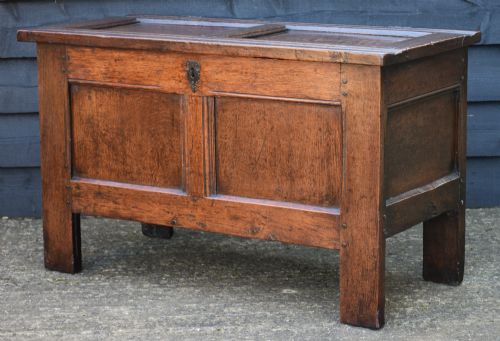
Carved Panel Blanket Chest
A carved panel blanket chest brings solid timber history into a room, offering robust storage with centuries of hand-cut character.
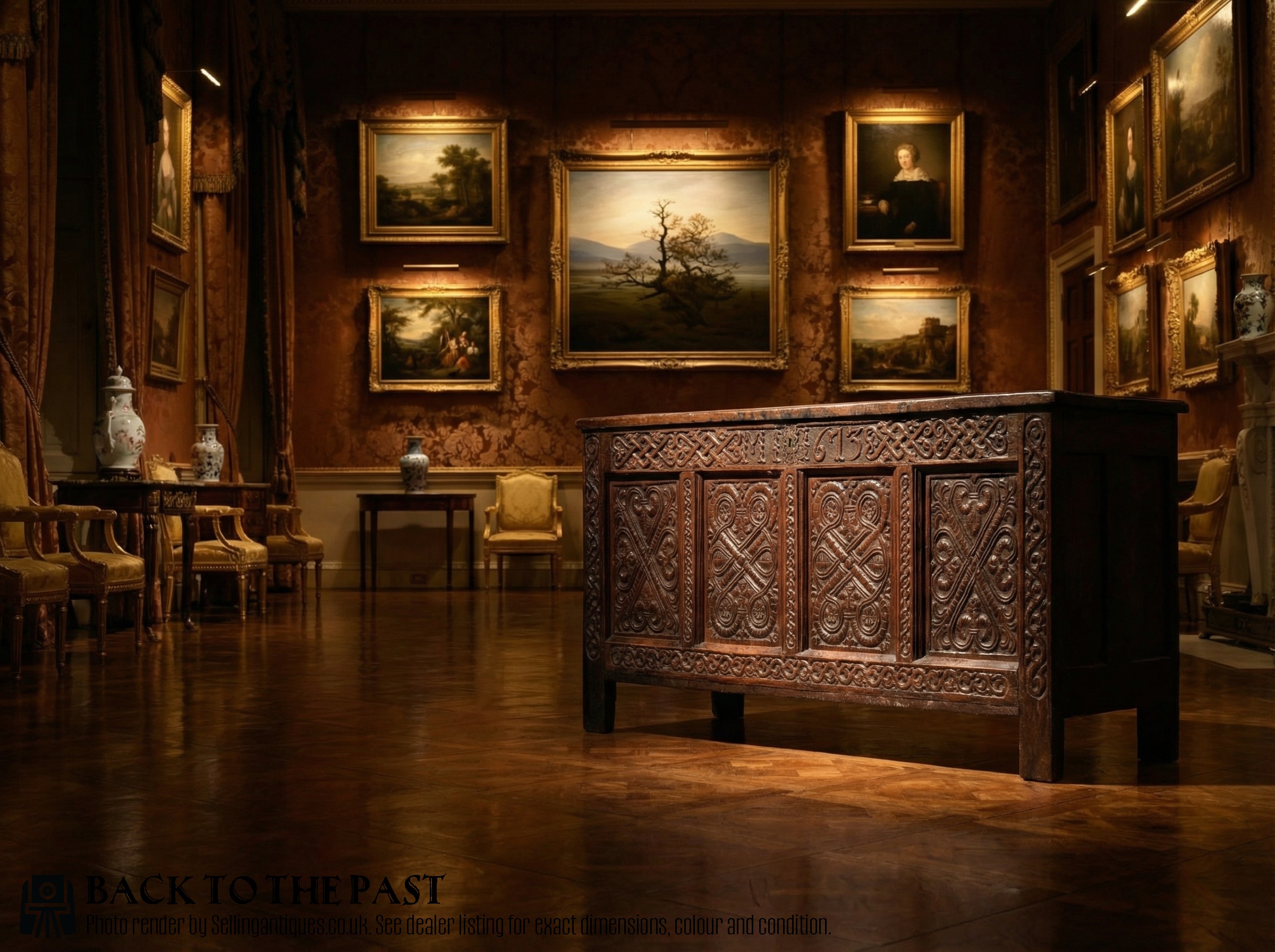
Understanding the carved panel blanket chest
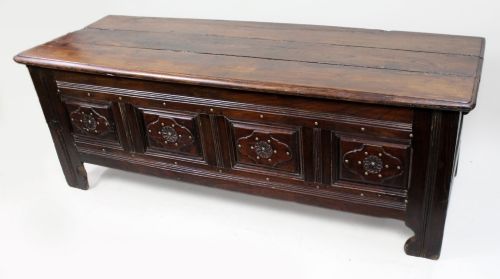
A carved panel blanket chest is a sturdy timber repository designed for linens and valuables, appearing across the sixteenth, seventeenth, and eighteenth centuries. These pieces function equally well as blanket boxes, window seats, or central storage furniture in traditional interiors.
The most common examples encountered on this page date from the seventeenth century, often featuring panelled construction and characteristic low relief ornament. Regional variations such as Lakeland and Welsh pieces appear alongside English styles from the Elizabethan, Jacobean, and William III periods.
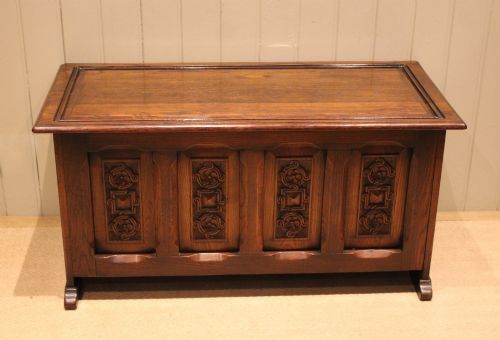
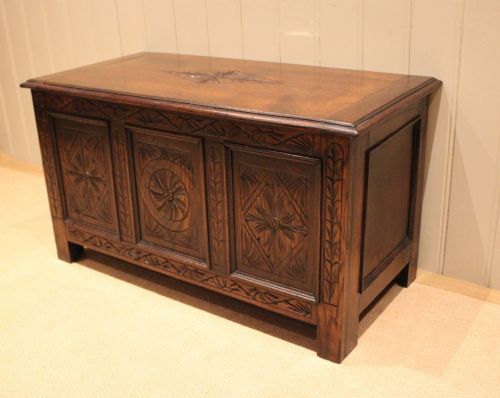
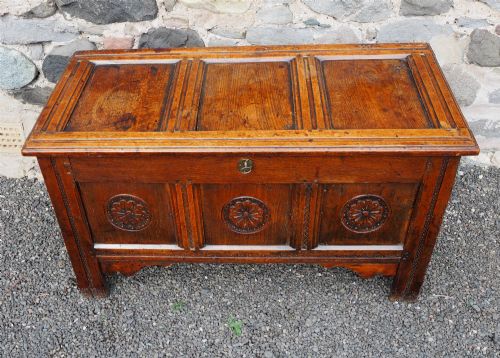
Forms alternate between simple twin panel layouts and larger triple panel configurations with hinged lids. The core purpose remains domestic storage, though scale and proportion shift depending on the specific century of origin.
Materials and construction methods
Construction relies heavily on native oak, shaped using traditional joinery techniques suited to heavy timber boards. Iron and brass fittings such as hinges and locks provide structural reinforcement and functional operation.
Surfaces display hand-cut carving across the front panels, executed with gouges and chisels directly into the solid wood. Panels are set within stiles and rails to allow for natural timber movement over long periods.
Retail Price Guide 2026
Typical UK retail prices for carved panel blanket chest, calculated from the Sellingantiques database of over a million retail prices indexed since 2003. This retail price guide relies exclusively on Sellingantiques data; no external sources or auction records are used, so the figures do not describe the wider market.
Several chests double neatly as window seats, proving that seventeenth-century linen storage had multitasking built right into the lid.
Distinctions in quality
Quality rests in the depth and crispness of the carving, where confident chisel work separates superior examples from simpler village pieces. The integrity of the original boards and the retention of early iron or brass hardware also elevate a piece.
Proportion and structural balance dictate the visual success of the chest, alongside the preservation of patinated timber surfaces. Examples retaining untouched structural timber present greater integrity than those with extensive modern timber replacement.
The Carved Panel Blanket Chest Glossary
- Cofer
- An alternative term for a chest or box used historically for storing valuables and textiles. These heavy wooden containers often sat at the foot of a bed.
- Stile and rail
- A frame method where vertical stiles and horizontal rails hold a central floating panel in place. This construction accommodates wood expansion and contraction.
- Linenfold
- A style of carved wooden panelling that resembles folded fabric, frequently seen on earlier pieces. It represents a subtle transition from Gothic to Renaissance ornament.
- Vernacular
- Architecture or furniture made by local craftsmen using regional traditions and materials rather than high court designs. Welsh and Lakeland chests often display these distinct local traits.
- Patina
- The surface sheen and colour developed by timber through age, handling, and waxing over centuries. Good patina indicates minimal aggressive stripping and long-term care.
Frequently Asked Questions
What is a coffer?
A coffer is a traditional heavy storage chest, typically constructed from oak and secured with a hinged lid.
Historically, these pieces held household valuables, important documents, and textiles before fitted wardrobes became common.
How do I date an oak chest?
Dating relies on examining the construction methods, tool marks, and specific carved motifs characteristic of periods like the Jacobean era or the eighteenth century.
Changes in panel layout, from twin to triple panel arrangements, also help establish the chronological origin of the timber.
Were these used as seats?
Yes, their flat, sturdy lids made them practical benches and window seats in early homes.
Using them for seating also kept heavy blankets and linens accessible while saving floor space in smaller rooms.
What is regional vernacular furniture?
Vernacular pieces are items made by local country joiners who followed regional design preferences rather than metropolitan fashions.
Examples from Wales or Lakeland exhibit unique structural quirks and local carving styles that distinguish them from standard English output.
How should I care for antique oak?
Maintain the timber by applying natural beeswax sparingly to nourish the dry wood and protect the aged surface.
Keep these chests away from direct heat sources and strong sunlight to prevent the oak boards from splitting or warping.