


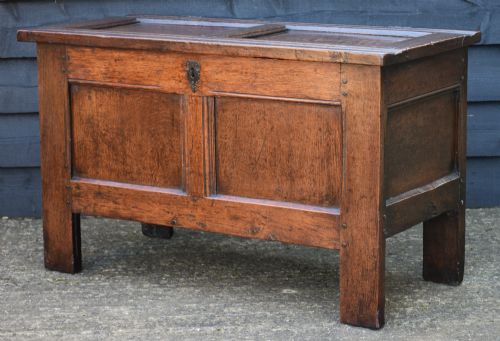
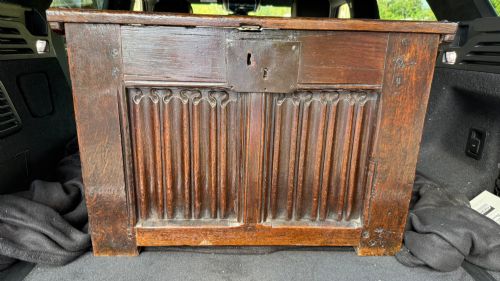
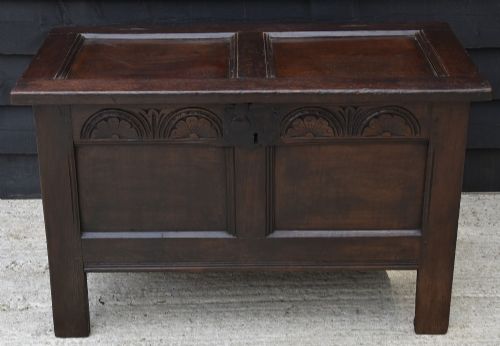
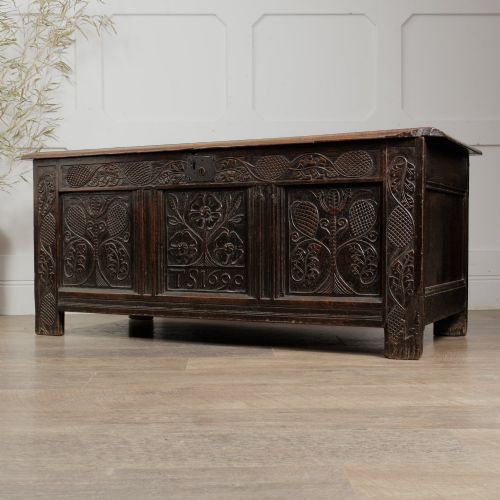
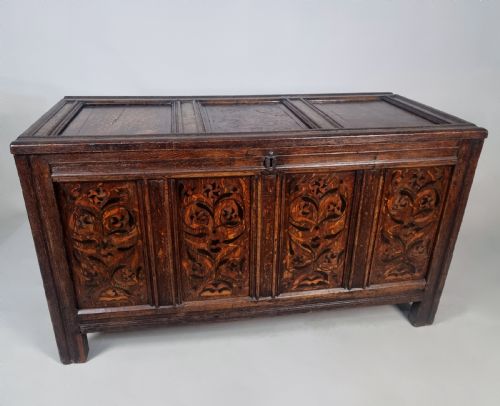
Period Oak Trunk
A period oak trunk offers substantial timber storage with centuries of historic character, bringing authentic early craftsmanship directly into a modern interior.
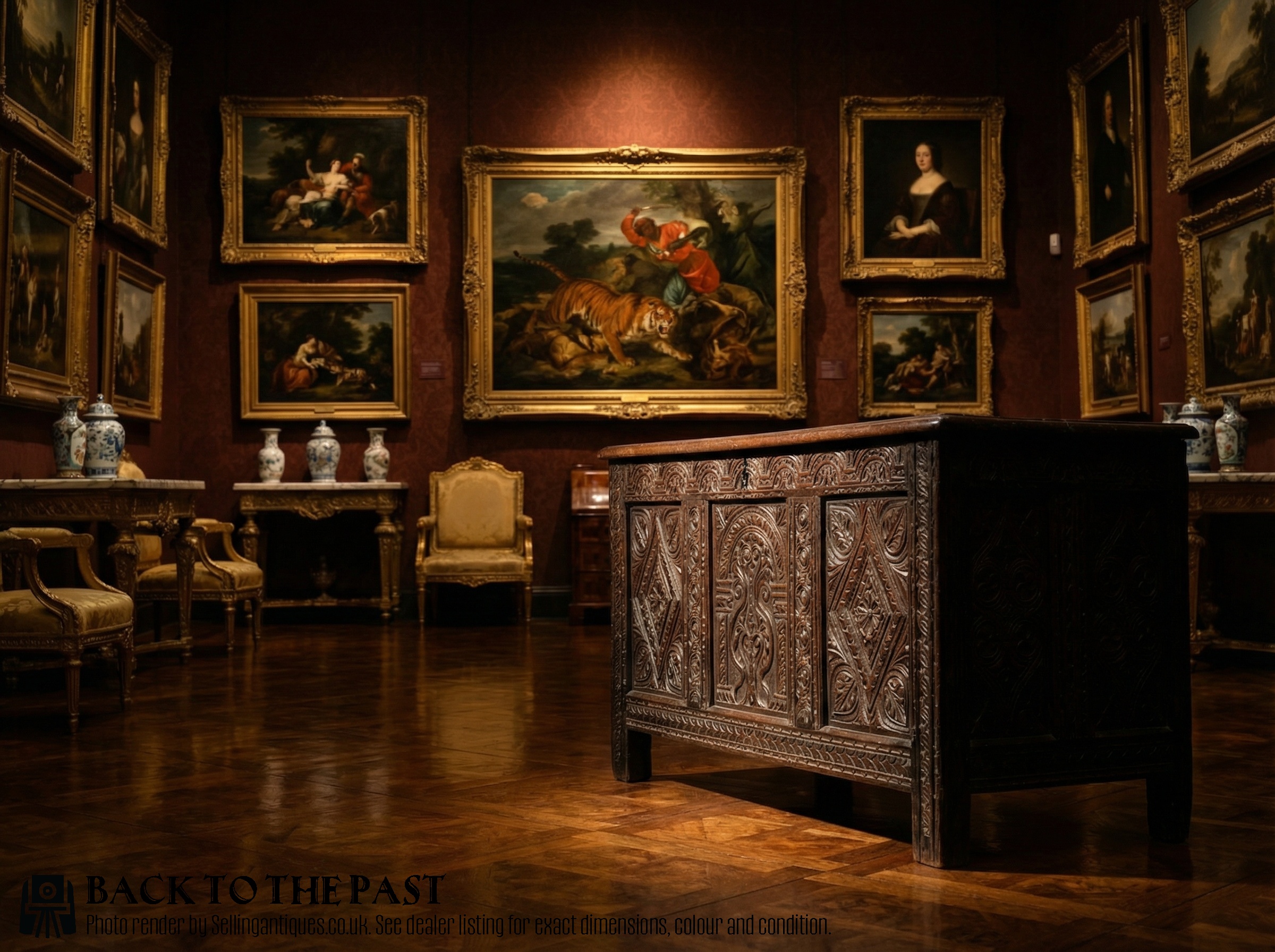
Period Oak Trunk
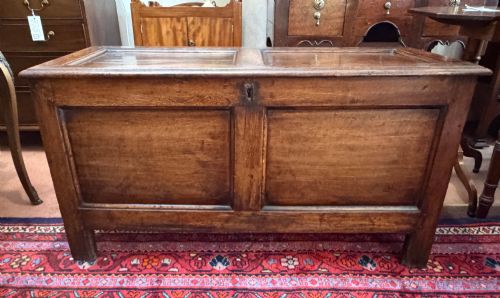
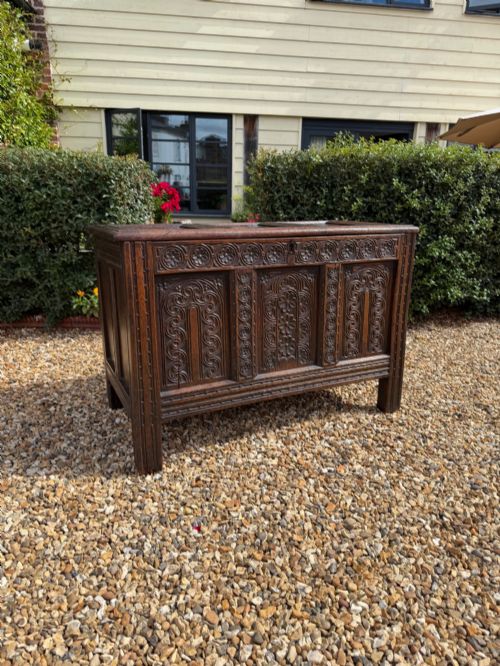
A period oak trunk, often found as a coffer, blanket chest or box, serves as a robust storage piece shaped by centuries of domestic use. These items appear across sixteenth, seventeenth and eighteenth-century periods, alongside later Georgian, Edwardian and nineteen-thirties examples.
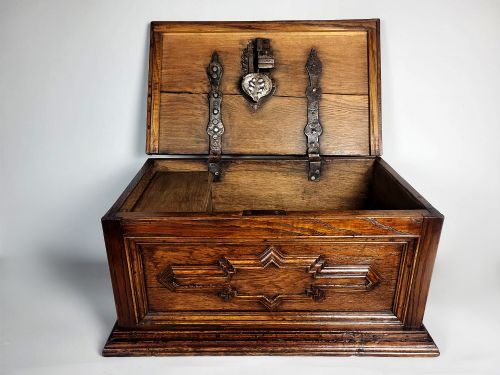
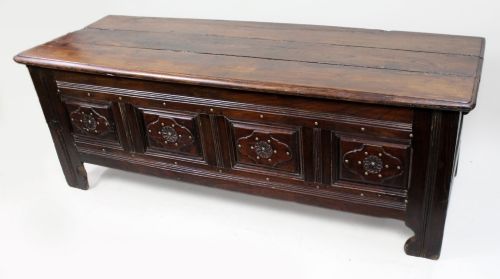
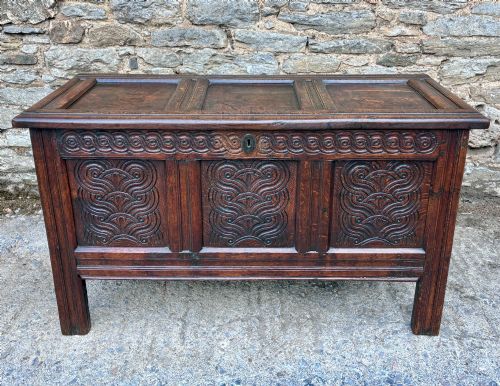
The version most commonly met on this page is the seventeenth-century joined oak coffer, frequently featuring panelled construction and regional British origins such as Wales, Dorset or the Gower Peninsula. French and Flemish pieces also emerge, alongside Scottish George III trunks and safe boxes fitted with complex steel locks.
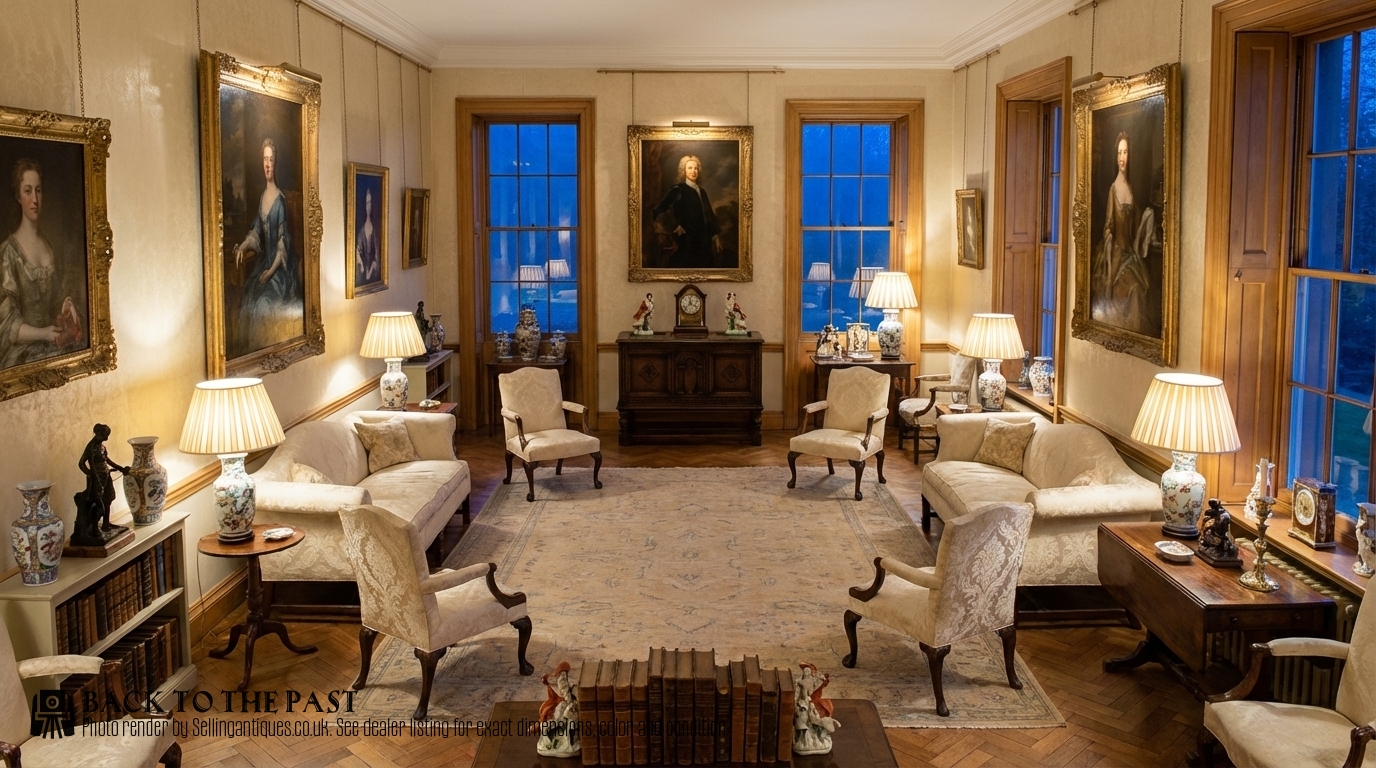
How they were made
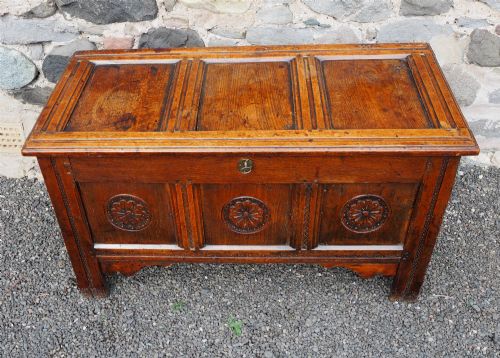
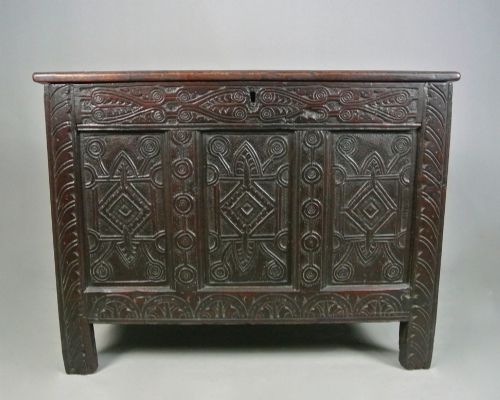
Construction relies heavily on solid oak timbers shaped through joined or boarded techniques, frequently assembled with pegged mortise and tenon joints to withstand heavy daily use. Early makers employed simple hand tools to plane and carve panels, occasionally incorporating linen fold designs or geometric patterns.
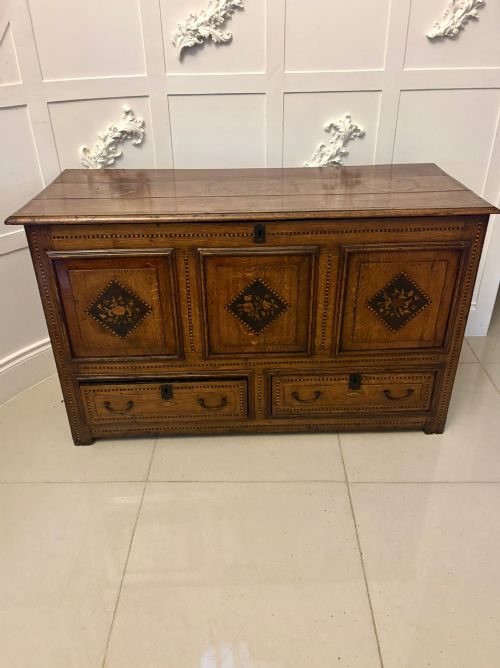
Metalwork played a crucial structural and security role, with wrought iron, brass and steel hinges, straps and complex locks reinforcing the heavy timber bodies. Decorative flourish sometimes arrived through marquetry inlay or mixed inlay woods, adding subtle contrast to the dense grain of the primary material.
Period Oak Trunk Retail Price Guide 2026
Typical asking prices for period oak trunk among the pieces listed under this phrase on Sellingantiques today, from the lower quarter to the upper quarter. They describe what is for sale here now, not the wider market.
Listings feature periods spanning from the sixteenth century through to nineteen-thirties revivals, constructed predominantly in solid oak with iron, brass and marquetry inlay.
What varies in quality
Quality separates examples largely by the ambition of the carving and the integrity of the original construction, moving from plain boarded boxes to elaborately carved joined chests. The presence of sophisticated regional detailing, such as specific Welsh or Dorset stylistic traits, elevates an item beyond standard utilitarian storage.
Survival of original surface patination and ironwork dictates much of the distinction at the upper end of the range. Trunks retaining untouched complex steel locks, original panel assemblies and deep, honest wear represent the pinnacle of surviving domestic woodwork.
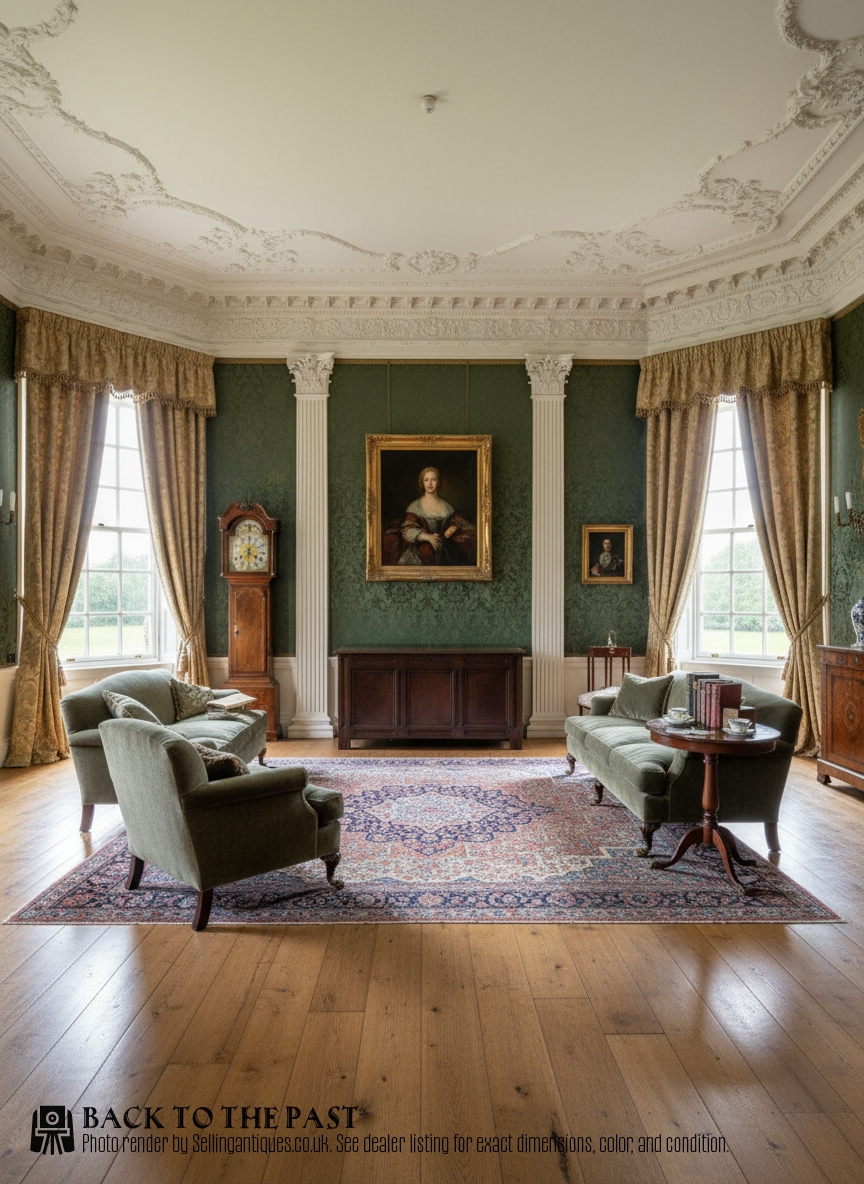
The Period Oak Trunk Glossary
- Coffer
- A heavy wooden chest traditionally used for storing valuables, documents or textiles. It forms the primary furniture type found within early oak storage categories.
- Joined oak
- A method of furniture construction utilising tightly fitted mortise and tenon joints secured with wooden pegs. This technique replaced earlier boarded construction and allowed for sophisticated panelled designs.
- Mule chest
- A traditional storage chest featuring one or more drawers built into the base beneath the primary compartment. This form bridges the gap between the simple coffer and the later chest of drawers.
- Marquetry inlay
- The art of applying small pieces of wood veneer to a structure to form decorative patterns. Makers utilised mixed inlay woods to create contrasting geometric or floral motifs upon the oak panels.
- Linen fold
- A carved wooden panel motif imitating the appearance of folded linen drapery. This style appears frequently on sixteenth and seventeenth-century church and domestic woodwork.
Period Oak Trunk: Frequently Asked Questions
What is the difference between a coffer and a trunk?
A coffer typically describes a heavily constructed wooden box built with joined frame and panel techniques, often dating from the sixteenth or seventeenth centuries. A trunk frequently indicates a later or more utilitarian container, sometimes reinforced with metal for travel or secure storage.
While both served overlapping domestic purposes for keeping household goods, their construction methods and regional origins often reflect distinct periods of workshop practice.
How do I identify a seventeenth century oak coffer?
Seventeenth century examples generally rely on heavy joined oak construction featuring pegged mortise and tenon joints. Panels are often hand-carved with geometric or floral motifs characteristic of the Jacobean and Elizabethan stylistic eras.
Examining the interior reveals adze marks, hand-split timber grain and forged iron hardware that confirm early hand-tool manufacturing methods.
Where were these oak chests made?
The pieces originate primarily from British workshops, with specific regional examples recorded from Wales, the Gower Peninsula, Dorset and Scotland. Continental European influences also appear through sixteenth-century Flemish and French import pieces.
Local woodworkers utilised native oak supplies, imparting distinct regional construction traits and carving styles to each domestic storage chest.
How should I care for a period oak trunk?
Period oak requires a stable indoor environment away from direct heat sources and sudden humidity fluctuations to prevent timber splitting. Applying occasional applications of traditional beeswax helps nourish the historic patina without sealing the wood.
Lifting the trunk by its base rather than relying on historical iron carrying handles preserves the original structural integrity of the joints.