




Tudor Oak Chest
A tudor oak chest is a sturdy domestic container built for storage, prized by collectors for its heavy timber construction and centuries of surviving patina.
Tudor Oak Chest
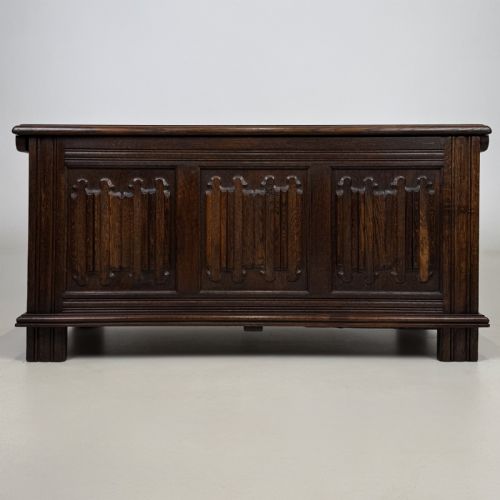
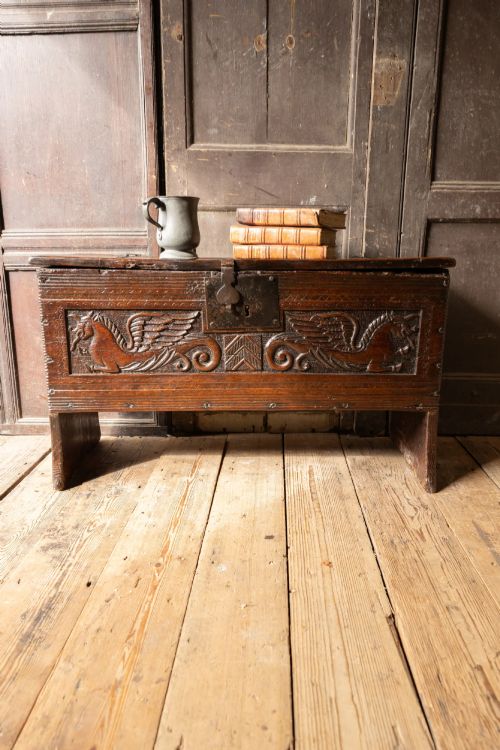
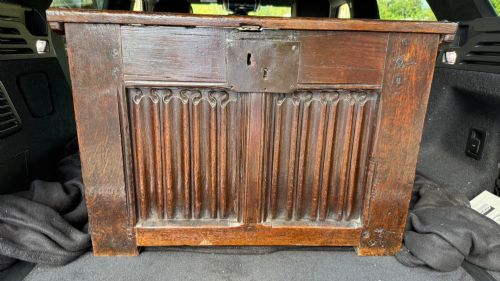
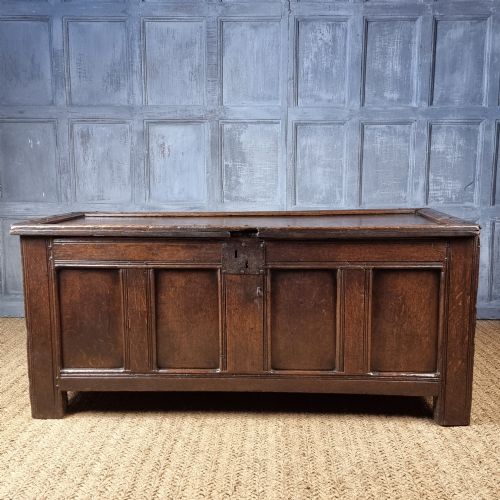
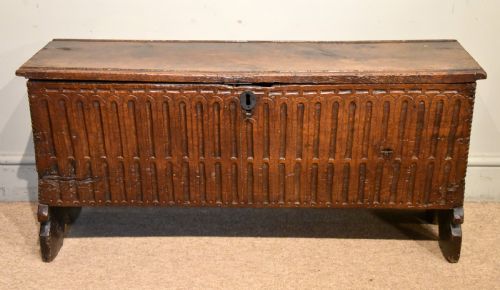
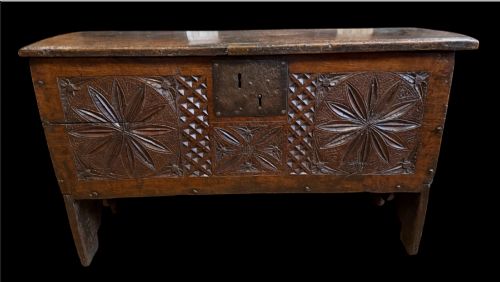
When you search for a tudor oak chest, you encounter heavy wooden receptacles primarily fashioned during the sixteenth century, alongside later revival pieces. These forms include boarded coffers, plank chests, meal arks, and sword chests constructed from solid English timber.
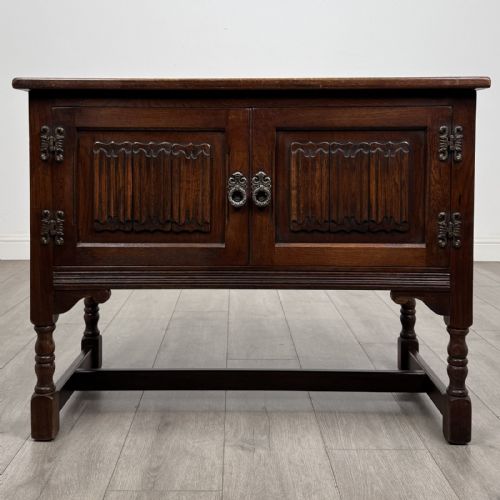
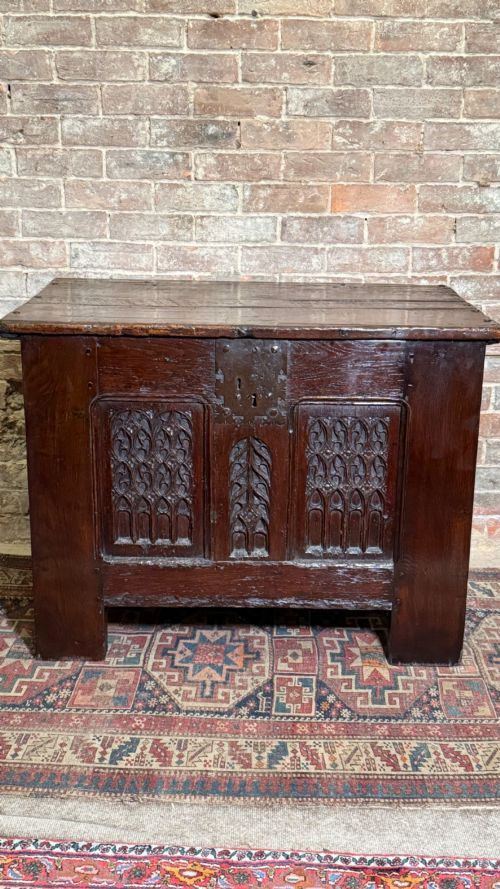
The pieces appearing on this page span several stylistic categories, encompassing plain utilitarian construction as well as deeply carved panels bearing Gothic, Elizabethan, and Renaissance motifs. While many items date directly to the sixteenth century, you also find Edwardian revival examples and seventeenth-century variants sharing the same material heritage.
What varies in quality
The standard of a tudor oak chest rests upon the integrity of the original timber and the depth of hand-carved detail on the facade. Pieces retaining their primary iron hinges, original boards, and untouched structural joinery command greater appreciation than those with extensive replaced sections.
Proportion and the sophistication of decorative elements, such as intricate linenfold carving or dated inscriptions, distinguish exceptional examples from simpler utilitarian storage trunks. The presence of secondary woods or heavy later alterations alters the historical coherence of the piece.
Tudor Oak Chest Retail Price Guide 2026
Typical asking prices for tudor oak chest among the pieces listed under this phrase on Sellingantiques today, from the lower quarter to the upper quarter. They describe what is for sale here now, not the wider market.
The listings combine sixteenth-century pieces with Edwardian revival items, all sharing oak as the primary construction material alongside iron hardware.
The Tudor Oak Chest Glossary
- Coffer
- A heavy wooden chest traditionally used for storing valuables, documents, or textiles. These containers often feature flat lids and robust locking mechanisms.
- Linenfold
- A style of relief carving imitating folded parchment or linen, frequently seen on sixteenth-century panels. This motif became popular across Tudor furnishings.
- Plank chest
- A primitive form of furniture constructed from vertical timber boards joined at the edges. Also known as a boarded coffer, it represents an early method of box construction.
- Meal ark
- A specialised storage chest designed for keeping grain or meal dry and secure. These domestic boxes often incorporate ventilated panels or heavy clamping.
- Wrought iron
- Iron beaten into shape by hand while hot, commonly used for structural straps and hinges on early chests. This metalwork provides both reinforcement and visual contrast against the dark oak.
Tudor Oak Chest: Frequently Asked Questions
What were tudor oak chests used for?
These heavy containers served primarily to store valuable household possessions, including linen, silver, documents, and clothing, in an era before fitted wardrobes existed.
Because they were secure and portable, wealthy households also utilised them for transporting belongings during travels between different estates.
How do I tell sixteenth-century chests apart from later revivals?
Original pieces exhibit period-specific tool marks, hand-split oak boards, and traditional peg construction without modern machine-cut screws.
Revival pieces, such as Edwardian examples, often display mechanical uniformity, different timber seasoning, and twentieth-century hardware beneath the styling.
Can I use a tudor oak chest as a coffee table?
Their flat lids and sturdy construction make them suitable as low tables in a living space, provided the surface is protected from moisture and heat.
Placing felt pads beneath items set upon the timber helps preserve the historic wax finish and prevents scratching the old oak.
Why do some chests have iron straps?
Wrought iron bands and clamps were added to reinforce the corners and lid joints against splitting, as well as to secure the contents against theft.
These metal reinforcements are integral to the structural survival of boarded coffers and indicate high-security domestic storage.