
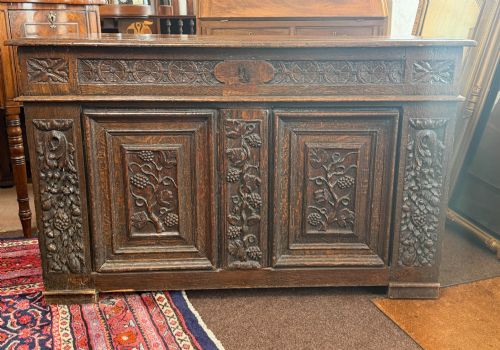
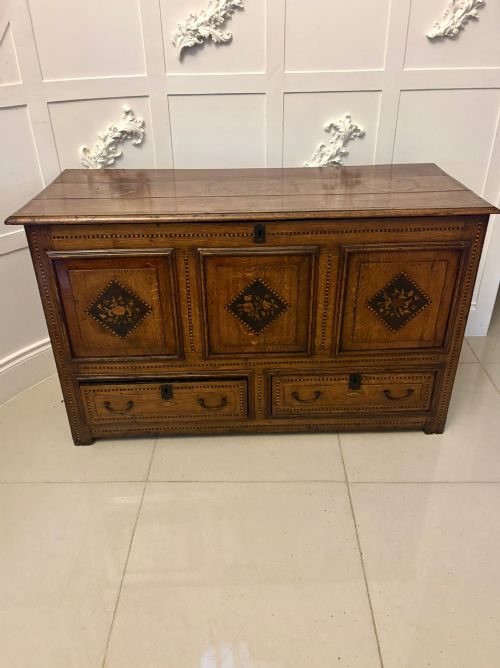
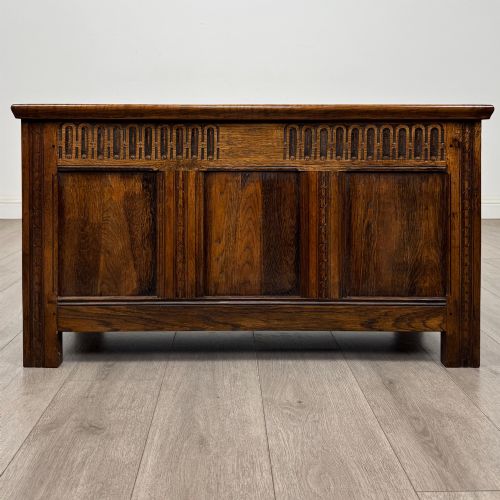


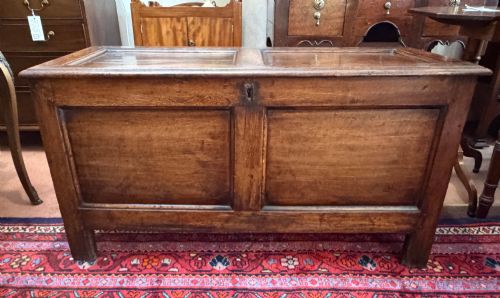
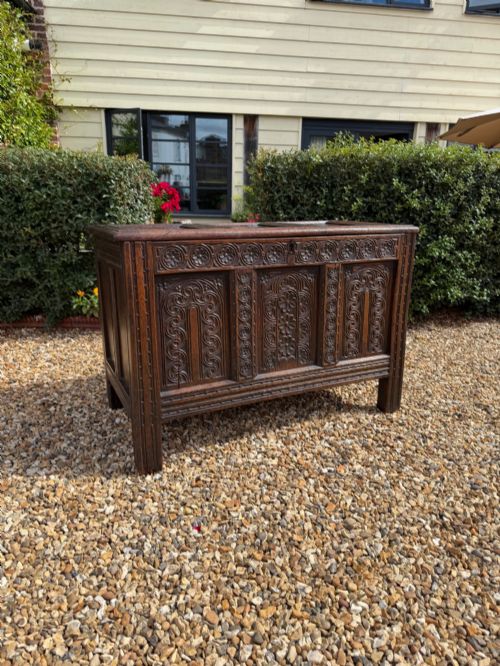
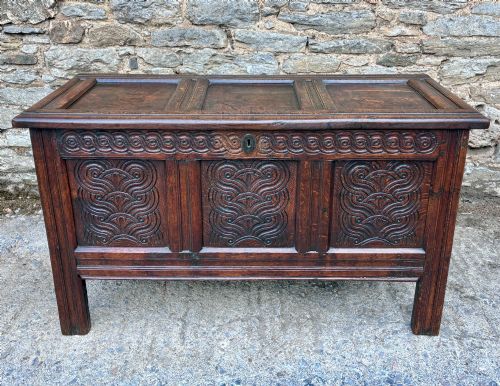
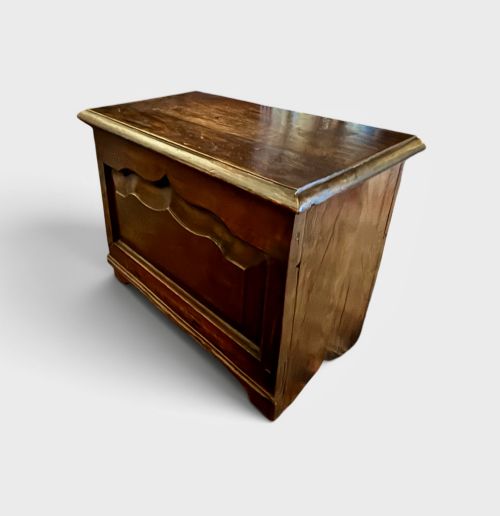
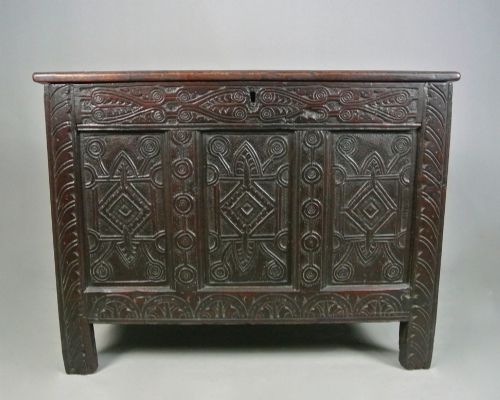
Panelled Oak Blanket Box
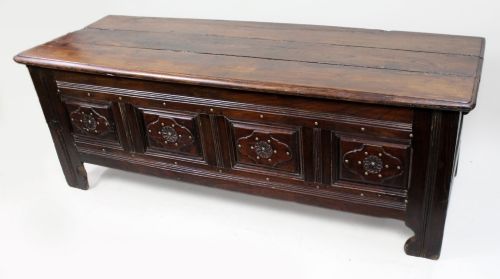
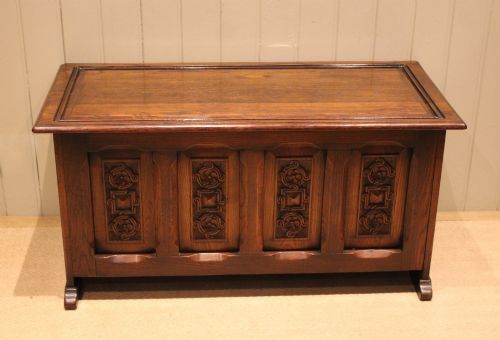
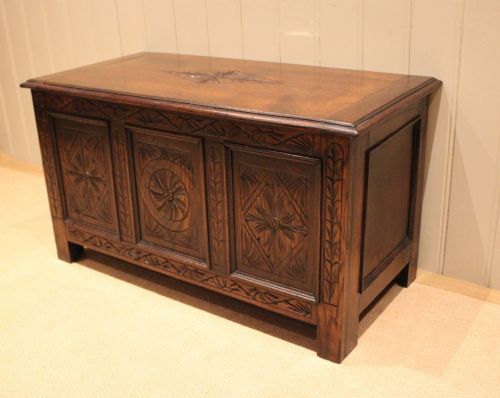
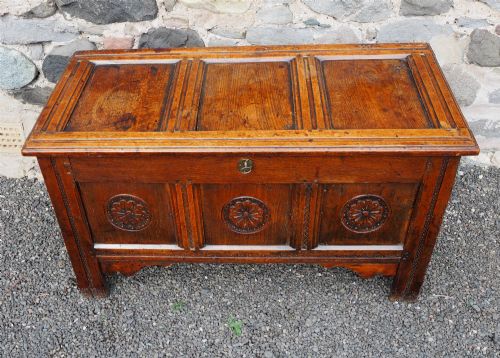
A panelled oak blanket box brings sturdy 17th or 18th century storage into a room, prized for honest construction and rich grain.
What panelled oak blanket boxes are
When you search for panelled oak blanket box, you encounter robust storage chests, trunks, and coffers spanning the 17th century, 18th century, and 19th century. These pieces serve as practical furniture with deep historical roots, often encountered as four panel examples or joined and panelled marriage mule chests fitted with lower drawers.
The objects originate primarily from seventeenth century Jacobean, Tudor, and Georgian traditions, showing utilitarian domestic design. Most items on this page share a lineage of heavy timber construction intended for holding household textiles and garments.
Mule chests add functionality through base drawers beneath the main storage compartment. Both simple coffers and drawer-fitted variants reflect centuries of continuous household use.
How they were made
Carpenters built these boxes using solid oak timbers assembled through joined and panelled construction methods. The frames rely on mortise and tenon joints to hold the floating wooden panels securely in place.
Hardware consists of iron and brass components, including hinges and occasional lock plates. Hand planing and basic carving tools shaped the timber surfaces.
Retail Price Guide 2026
Typical UK retail prices for panelled oak blanket box, calculated from the Sellingantiques database of over a million retail prices indexed since 2003. This retail price guide relies exclusively on Sellingantiques data; no external sources or auction records are used, so the figures do not describe the wider market.
Some marriage mule chests secretly served as dowry trunks for brides embarking on domestic life.
What varies in quality
The distinction between standard storage chests and finer examples lies in the depth of period carving and the crispness of the joined framing. Earlier 17th century and Jacobean pieces often exhibit more pronounced hand-carved detail across the panels.
Proportion and timber figure also differentiate the pieces, with some showing rich medullary rays in the oak grain. The presence of integrated drawers, as seen on Georgian mule chests, introduces another layer of cabinetmaking complexity.
The Panelled Oak Blanket Box Glossary
- Cofer
- A large wooden chest used for storing valuables, linens, or personal belongings. These early storage forms predated standard wardrobes.
- Joined
- A method of furniture construction using mortise and tenon joints locked with wooden pegs rather than metal nails. This technique provides exceptional structural stability.
- Mule chest
- A traditional storage chest featuring one or more drawers built into the base beneath the primary lift-lid compartment. They bridge the design gap between simple coffers and chest of drawers.
- Jacobean
- The stylistic period spanning the early to mid-17th century, characterised by dark oak, geometric mouldings, and formal carved ornamentation. Surviving pieces display heavy timber proportions.
Frequently Asked Questions
How do I date an oak coffer?
Dating relies on examining construction methods, such as joined frames versus later nailed boards, alongside tool marks and hinge types. Early 17th century examples typically display hand-pegged joints and heavier timber.
Secondary indicators include carved motifs, overall proportions, and the presence of integrated drawers which became more common during the Georgian era.
What is the difference between a coffer and a mule chest?
A coffer is a simple lidded chest designed purely for top-access storage. These early forms focused on basic security and containment for household textiles.
A mule chest incorporates one or more drawers at the bottom of the structure. This evolution offered easier access to smaller garments without needing to disturb the items stored in the main upper compartment.
Can I use a blanket box as a coffee table?
Many people place these sturdy chests in living spaces to function as low tables while providing concealed storage. The flat oak lids easily support books and decorative items.
Ensure the height matches your seating arrangements and protect the antique timber surface from moisture with appropriate coasters or trays.
How should I care for antique oak furniture?
Maintain the timber by keeping it away from direct heat sources and sudden humidity changes to prevent wood splitting. Apply a quality beeswax periodically to nourish the dry oak grain.
Avoid silicone-based polishes which can build up on the surface and attract dust over time. Gentle dusting with a soft cloth preserves the natural finish.