

Country Oak Blanket Chest
A country oak blanket chest brings raw, time-washed timber and centuries of domestic utility straight into a modern hallway.
What They Are
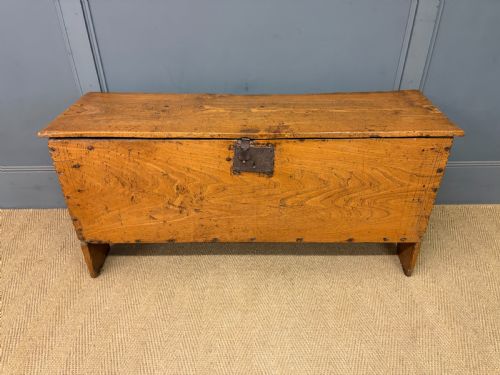
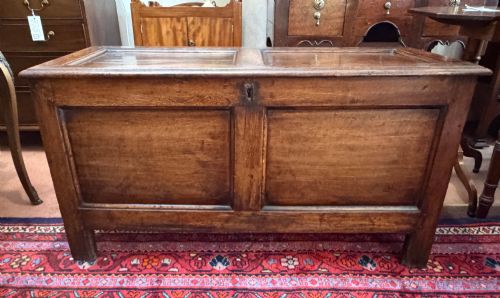
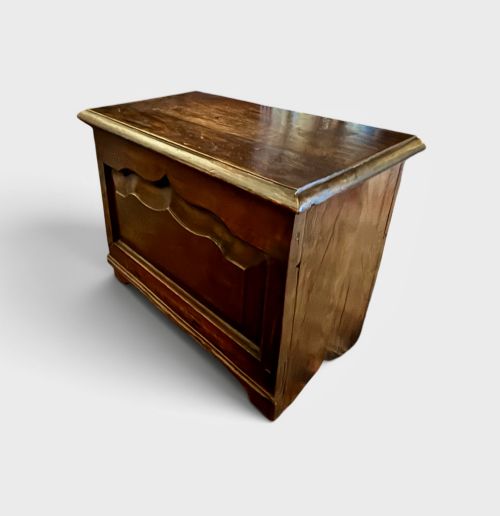
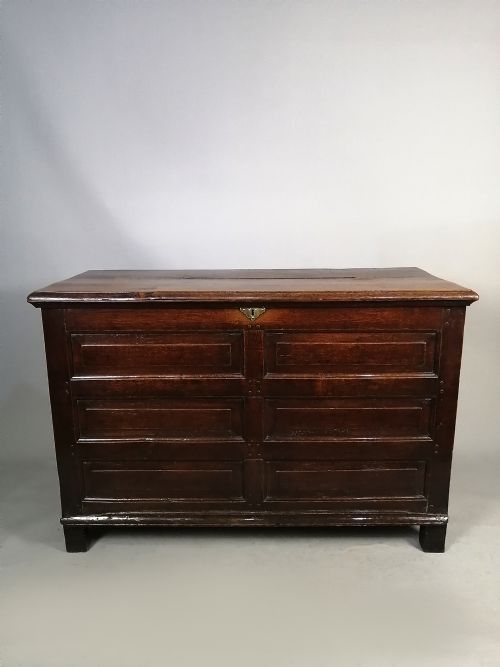
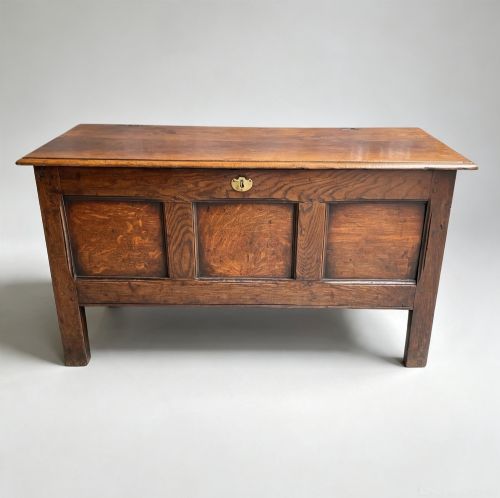
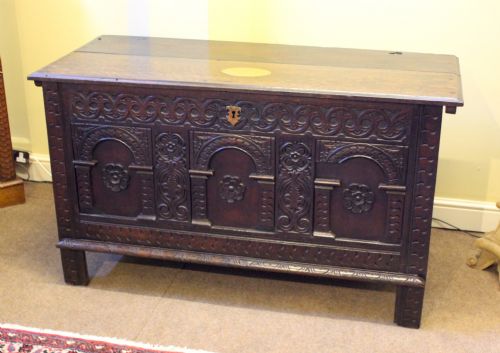
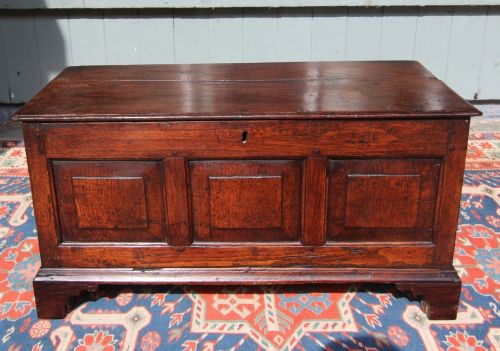
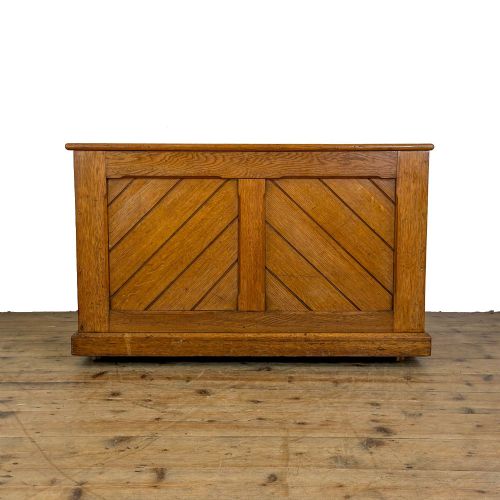
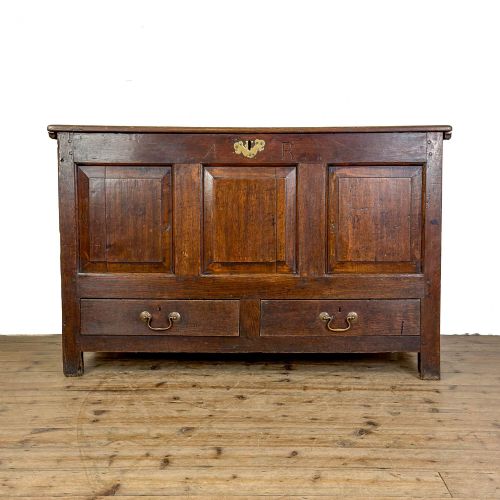
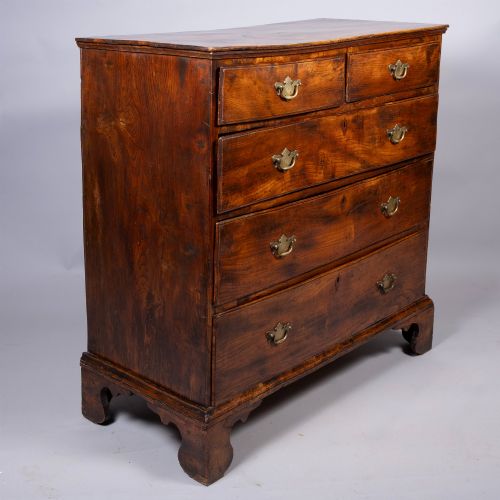
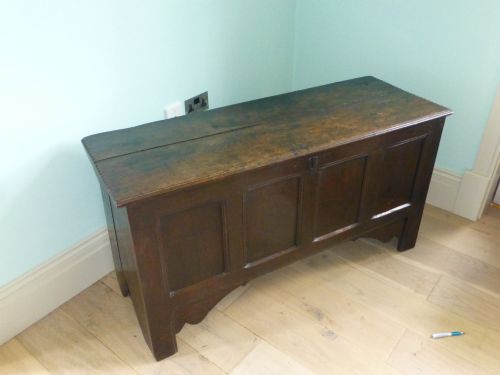
A country oak blanket chest is a solid storage box built for heavy domestic service in centuries past. When searching for a country oak blanket chest, a buyer encounters robust coffers and trunks primarily fashioned from native timber.
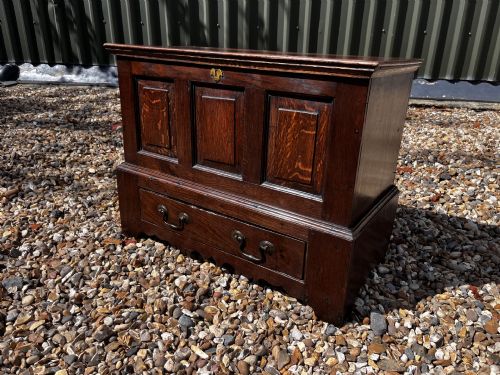
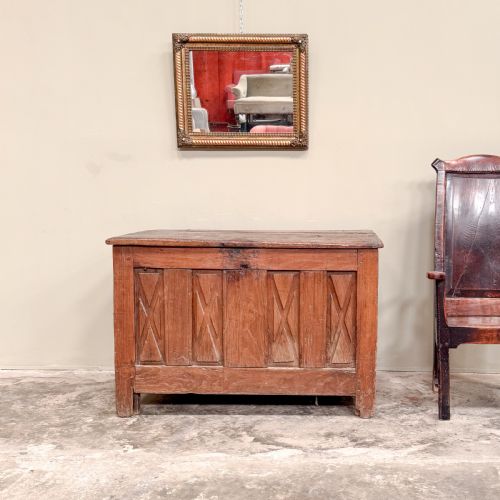
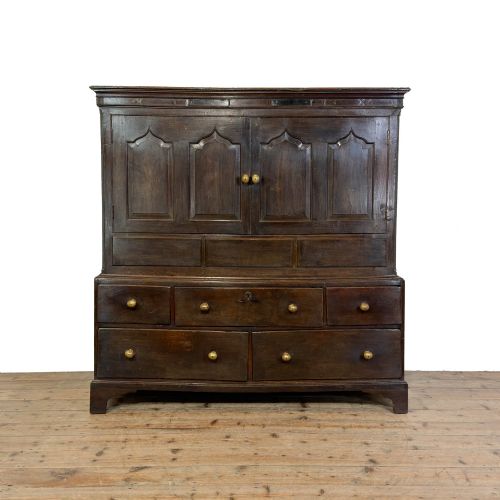
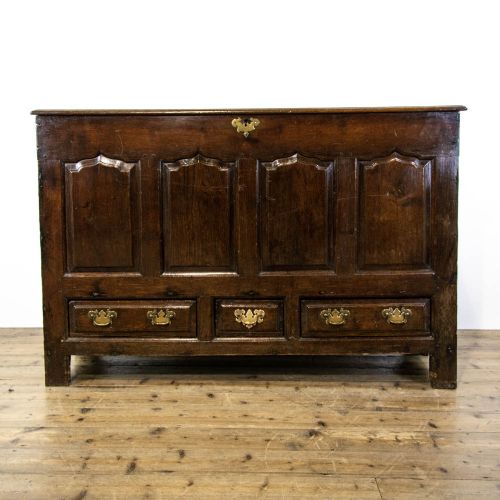
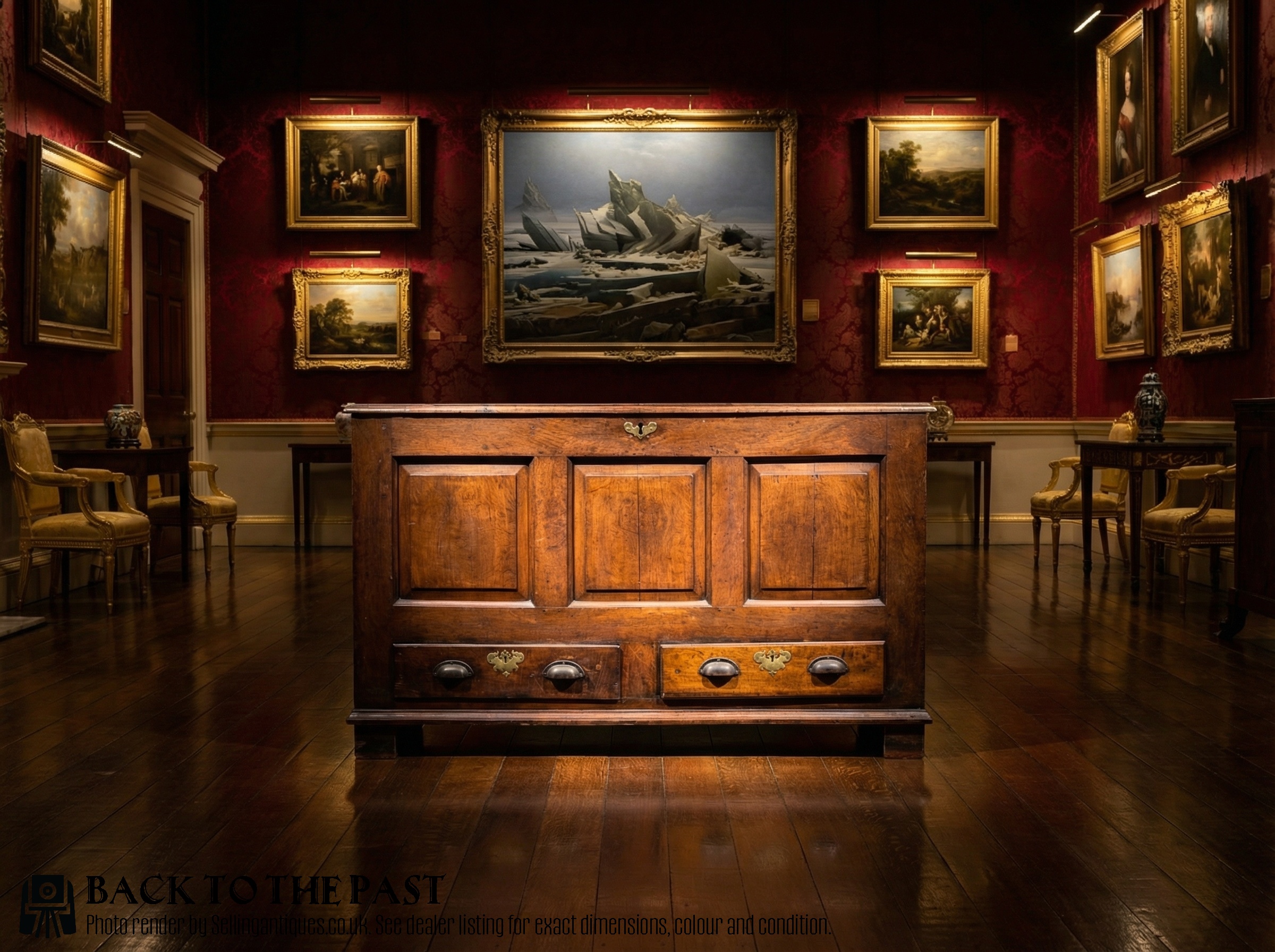
The pieces appearing on this page span several distinct eras, reaching from the seventeenth century through to the mid-eighteenth century and the nineteenth century. Surviving examples demonstrate forms ranging from simple linen fold panel coffers to more developed mule chests equipped with lower drawers.
Regional origins play a notable role among these items, with specific pieces recorded as Welsh oak coffers. Buyers frequently find these rustic chests displaying considerable patination built up through generations of handling.
How They Were Made
These chests rely entirely on solid timber construction using heavy oak boards joined to form rigid carcases. Joiners worked the wood by hand, producing surfaces that often show the tool marks of early adzes and saws.
Metal hardware such as iron and brass appears on hinges, plates, and locks, securing the heavy lids and providing functional contrast to the timber. Panels were frequently carved or moulded directly into the face, as seen in traditional linen fold designs.
Retail Price Guide 2026
Typical UK retail prices for country oak blanket chest, calculated from the Sellingantiques database of over a million retail prices indexed since 2003. This retail price guide relies exclusively on Sellingantiques data; no external sources or auction records are used, so the figures do not describe the wider market.
Early joiners occasionally hid secret compartments inside these chests, perfect for stashing spare farthings or a prized parsnip recipe.
What Varies in Quality
The depth and warmth of the surface patination dictate the visual merit of each chest, separating examples kept in daily use from those of lesser presence. Natural ageing leaves deep honey and bronze tones across the timber that cannot be replicated artificially.
Structural integrity and the retention of original hardware determine the standard of craftsmanship. Chests featuring untouched seventeenth-century panel work and coherent proportions stand at the upper end of the range compared to later nineteenth-century interpretations.
The Country Oak Blanket Chest Glossary
- Coffer
- A large wooden chest traditionally used for storing valuables, documents, or textiles before fitted wardrobes became common. These sturdy boxes often double as early forms of domestic seating.
- Mule chest
- An oak storage chest that incorporates one or more drawers beneath the main lift-top compartment. This hybrid form bridges the gap between the simple coffer and the chest of drawers.
- Linen fold
- A carved wooden panel motif that mimics the appearance of folded fabric or linen hanging in vertical folds. This decorative technique is particularly characteristic of sixteenth and seventeenth-century joinery.
- Patina
- The lustrous surface sheen developed on timber over decades and centuries through handling, waxing, and exposure to light. A rich patination indicates great age and continuous domestic use.
Frequently Asked Questions
What is a country oak blanket chest?
A country oak blanket chest is a heavy storage box built from solid timber to hold household textiles and clothing. These pieces originate from periods ranging from the seventeenth to the nineteenth century.
They serve as both functional furniture and historical artefacts, displaying regional construction methods and deep wooden patination.
How do I tell seventeenth-century chests apart from later ones?
Seventeenth-century examples often feature pegged frame construction, hand-carved linen fold panels, and simple joined box designs. Nineteenth-century pieces may show different internal configurations and less tactile tool work.
Examining the hinges, locks, and timber grain helps clarify the chronological origin of each individual trunk.
What is the difference between a coffer and a mule chest?
A coffer consists of a single deep compartment accessed by lifting the top lid. A mule chest adds one or more pull-out drawers beneath the main storage cavity.
This drawer addition represents an evolution in domestic furniture design during the seventeenth and eighteenth centuries.
How should I care for an antique oak chest?
Keep the timber away from direct heat sources and sudden humidity changes to prevent the oak from splitting. Apply a traditional beeswax polish occasionally to nourish the grain and preserve the surface shine.
Avoid modern silicone-based sprays, which can degrade the historic finish over time.