



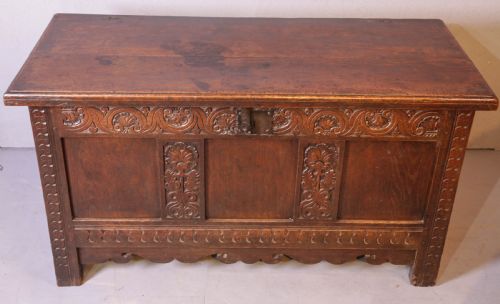


Antique Dower Chest
An antique dower chest holds centuries of linen and family history inside robust oak and pine panels.

Identifying an antique dower chest
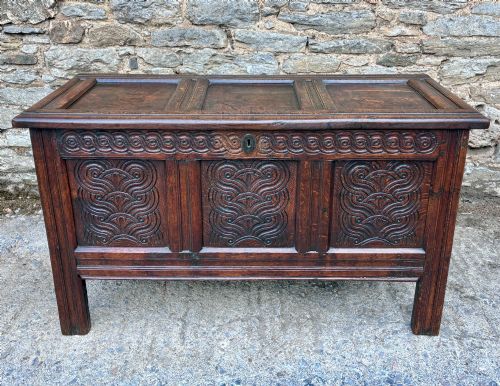
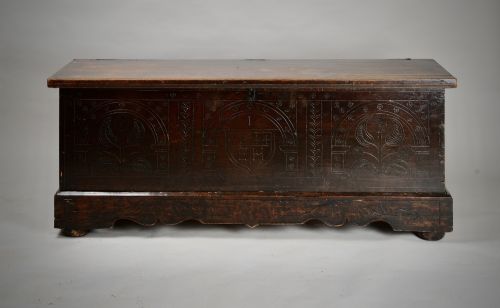
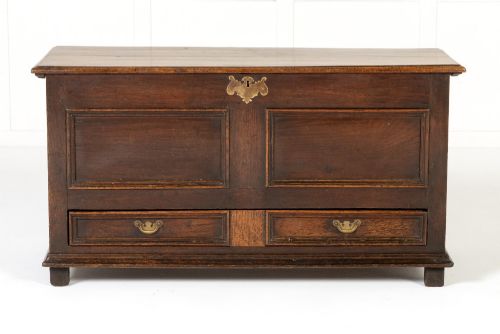
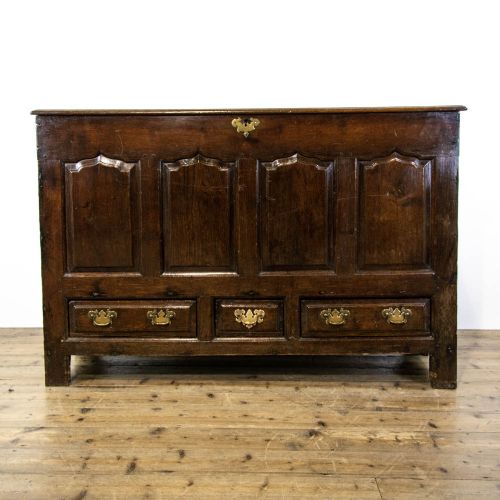
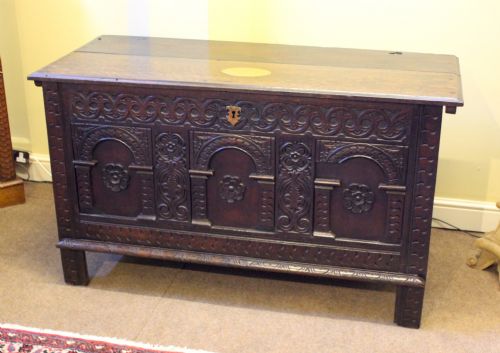
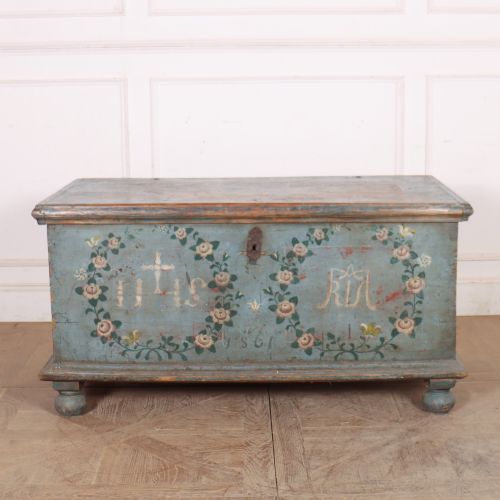
An antique dower chest serves as a traditional storage trunk for household linens, textiles, and personal belongings accumulated for marriage. The pieces seen on this page span the eighteenth century and the mid-nineteenth century, drawing from Georgian English traditions and Scandinavian country craftsmanship.
Originating from British workshops and Scandinavian homes, these chests reflect domestic storage needs across generations. The forms range from plain planked pine to cross-banded Georgian oak.
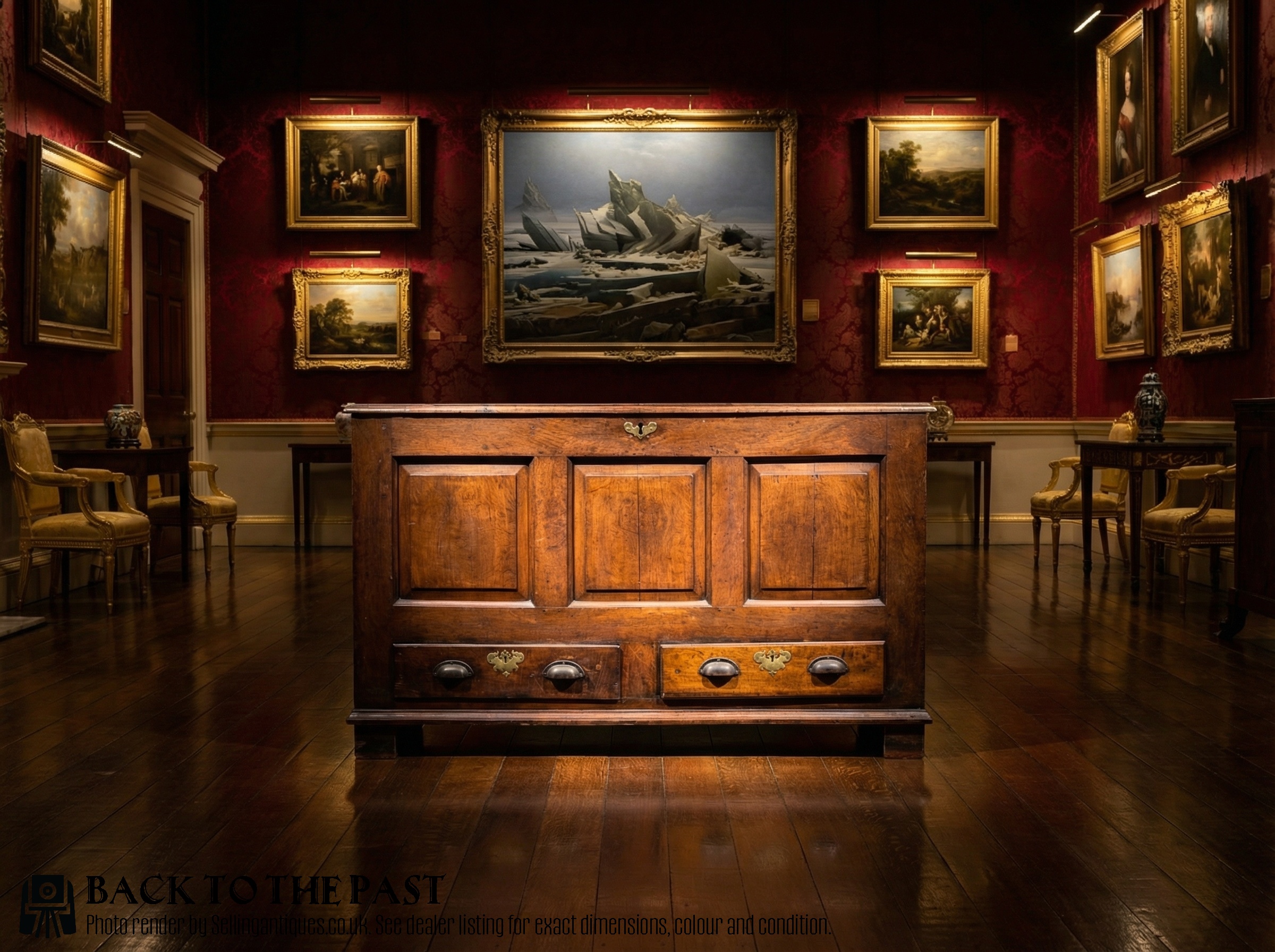
Construction and materials
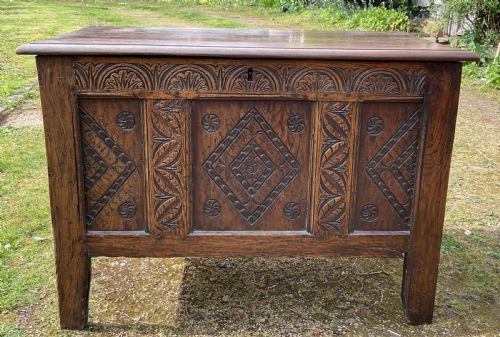
Carpenters built these chests using solid timber boards of oak and pine, joined with traditional framing methods. Surfaces often display the distinct grain of native hardwoods alongside painted finishes.
Hardware consists of forged iron hinges, latches, and brass details that secure the heavy lids. Wrought iron strapwork reinforces the structural corners and adds utilitarian strength to the design.
Retail Price Guide 2026
Typical UK retail prices for dower chest, calculated from the Sellingantiques database of over a million retail prices indexed since 2003. This retail price guide relies exclusively on Sellingantiques data; no external sources or auction records are used, so the figures do not describe the wider market.
Judging quality and character
Superior examples distinguish themselves through choice timber selection, such as finely figured oak and decorative cross-banding. The crispness of hand-planed mouldings and the integrity of original iron or brass hardware elevate a piece above simpler vernacular items.
Simpler regional pine chests rely on honest utility and painted surfaces rather than complex cabinetmaking. Variations in quality rest on the survival of original structural timbers and untouched patination built up over centuries.
The Antique Dower Chest Glossary
- Mule chest
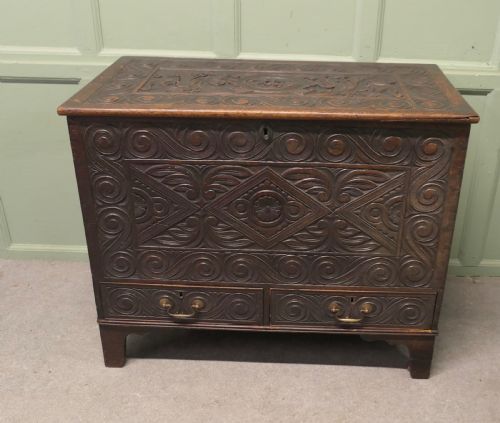
- A storage chest featuring one or more drawers beneath the main lift-top compartment. This form bridges the traditional coffer and the modern chest of drawers.
- Marriage chest
- A celebratory trunk commissioned or decorated for a wedding, often bearing initials or dates. These pieces frequently originate from Scandinavian country workshops.
- Cross-banded
- A technique where narrow strips of veneer are laid across the grain of the primary wood to create a decorative border. This detail appears on finer Georgian examples.
- Coffer
- A heavy, antique wooden box used for storing valuables, documents, or garments. It represents the earliest ancestor of the modern chest.
- Wrought iron
- Iron shaped by hammering while hot, used to create durable hinges, brackets, and carrying handles. This material shows the hand of the blacksmith.
Frequently Asked Questions
What is an antique dower chest?
An antique dower chest is a large wooden storage box traditionally used to hold a bride's household linen and garments. These pieces date from the eighteenth and nineteenth centuries.
They functioned as essential bedroom and hallway furniture in British and Scandinavian homes before fitted wardrobes became common.
How do I tell a mule chest from a dower chest?
A mule chest includes one or more drawers built into the base beneath the main lift-top compartment. A standard dower chest consists solely of an upper storage box.
Both terms often overlap in historical listings, but the presence of a drawer defines the mule variant.
What woods were used for these chests?
British makers relied heavily on native oak, while Scandinavian workshops frequently utilised pine. Some examples incorporate painted finishes or decorative contrasting timbers.
Hardware elements bring in wrought iron and brass for hinges and locks.
How should I care for an antique chest?
Keep the wood away from direct heat sources and sudden humidity changes to prevent timber splitting. Regular dusting with a dry cloth protects the historic finish.
Avoid modern liquid polishes that can build up on aged oak and pine surfaces.