
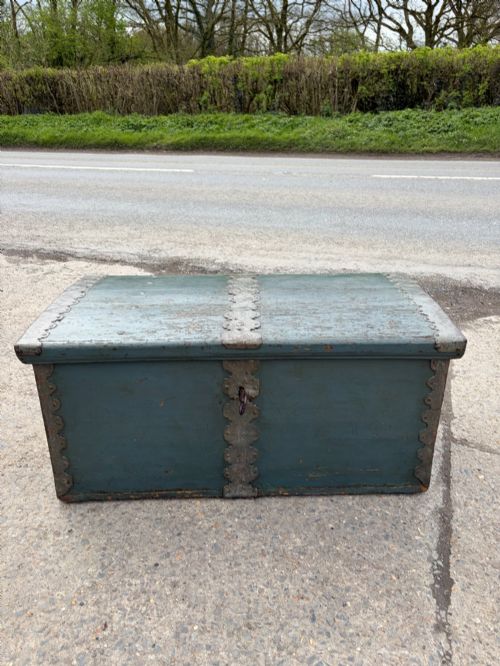


Domed Top Trunk
A domed top trunk brings structural curves and period character to a room, functioning as practical storage with centuries of utility behind it.

Domed Top Trunk
When searching for a domed top trunk, a buyer encounters substantial storage pieces designed to shed water and accommodate bulky textiles. The form spans eighteenth century pine marriage chests, nineteenth century pine travel boxes, and leather clad coffers.
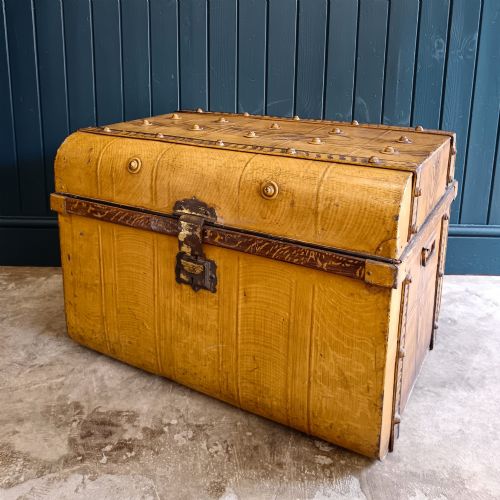
The version met most frequently on this page is the nineteenth century painted pine or leather covered chest. These range from Swedish hand painted dome top coffers to British Victorian variants featuring iron and brass studwork.
Origins stretch across Britain, Scandinavia, France, Spain, and the Netherlands, taking shape as heavy oak coffers, canvas covered chests, and steamer luggage. Each region contributes distinct construction traits, from Dutch leather applications to Scandinavian folk art paintwork.
Materials and construction
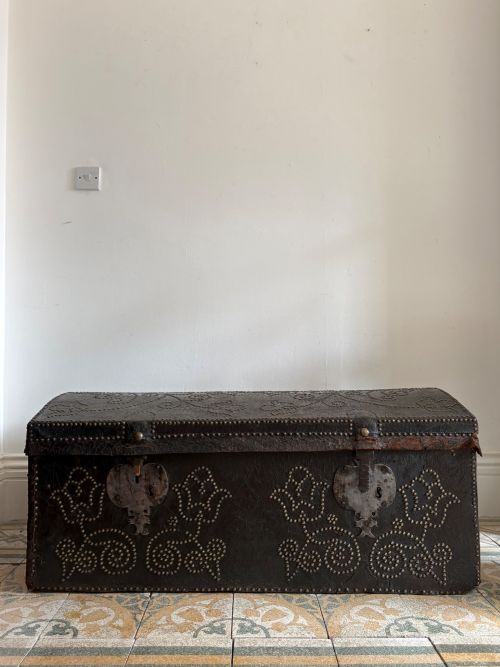
Makers constructed these pieces primarily from solid timber frames in pine, oak, and walnut, often reinforcing the curved lids with internal ribbing. Exterior surfaces received protective coverings of leather, hide, canvas, or tin, secured using iron and brass studs.
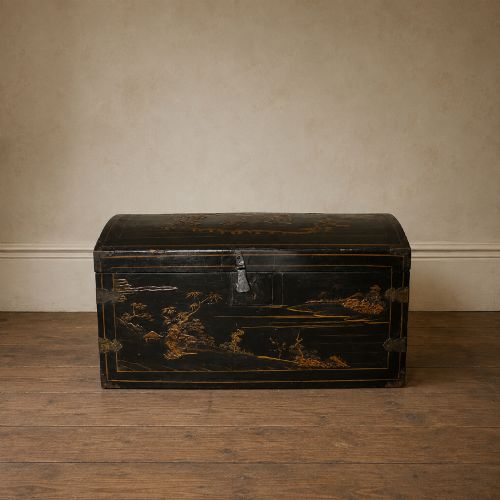
Surface treatments relied on traditional mediums including oil paint, black lacquer, and gilt decoration for export and regional pieces. Metal bindings, wrought iron carry handles, and brass hardware provided structural integrity for travel and daily domestic use.
Domed Top Trunk Retail Price Guide 2026
Typical asking prices for domed top trunk among the pieces listed under this phrase on Sellingantiques today, from the lower quarter to the upper quarter. They describe what is for sale here now, not the wider market.
Several travel trunks retain old transit labels from shipping lines like Cunard, carrying the ghosts of transatlantic voyages across stormy seas.
Elements of quality
Quality rests in the integrity of the original surface, whether preserved leather, untouched hand painted folk art, or grained faux wood. Pieces retaining their structural ironwork, working brass studs, and original carry handles command greater authority.
Execution of the curved lid structure and the joinery of the primary timber frame set standard chests apart from finer cabinet maker pieces. Integration of decorative details, such as elaborate studwork patterns or profuse continental walnut inlay, signals superior workshop origin.
Arthur Wannop·Chapple and Sons
The Domed Top Trunk Glossary
- Dome top
- A curved lid construction designed originally to shed water and increase internal storage capacity. This profile defines the primary silhouette of these chests.
- Coffer
- A heavy wooden chest traditionally used for storing valuables and documents. These pieces often feature sturdy iron bindings and robust timber construction.
- Studwork
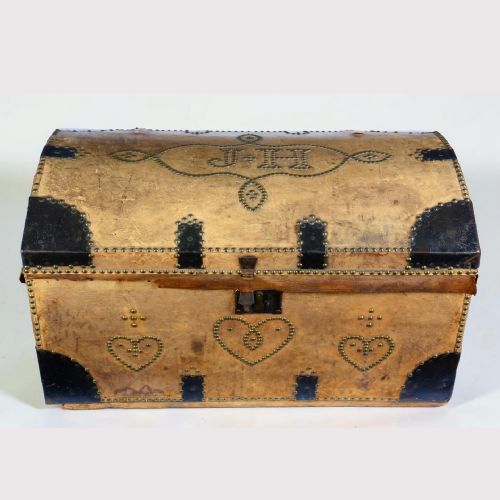
- The decorative and functional application of brass or iron nails across leather or hide surfaces. This technique secures the covering while forming geometric patterns.
- Marriage chest
- A celebratory storage piece commissioned to hold a bride's dowry and household linens. These examples frequently carry specific dates, initials, or regional folk painted motifs.
- Steamer trunk
- A travel case built with a lower profile to fit beneath passenger ship cabins during nineteenth century journeys. They incorporate metal framing and canvas or painted metal cladding.
Domed Top Trunk: Frequently Asked Questions
How were domed top trunks used historically?
These chests served primarily for domestic storage of heavy textiles, blankets, and personal valuables. Their curved lids allowed items to be packed above the rim while shedding moisture during transport.
Travellers also utilised them as luggage for long journeys by sea and coach. Robust iron handles and studded leather provided durability against the rigours of transit.
Are painted pine chests authentic period pieces?
Many pine chests retain their original nineteenth century Scandinavian or British folk art paint schemes. Pigments were bound in oil or milk paint bases, yielding a matte finish that ages with a distinctive craquelure.
Examining the wear patterns around handles and edges helps confirm the age of the paint surface. Traces of underlying preparation layers also indicate period application.
Where should I place a domed trunk at home?
The generous proportions make these chests suitable as coffee tables in living spaces, offering internal storage for books or spare throws. Position them away from direct heat sources and strong sunlight to protect historic wood and leather.
Bedrooms also accommodate them well at the foot of a bed for seasonal bedding. Their flat bases ensure stability on most flooring surfaces.