

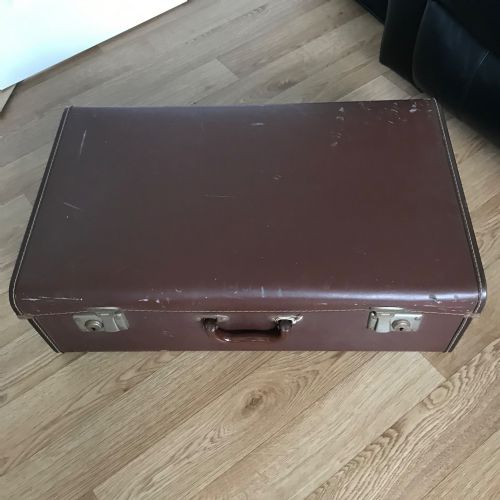

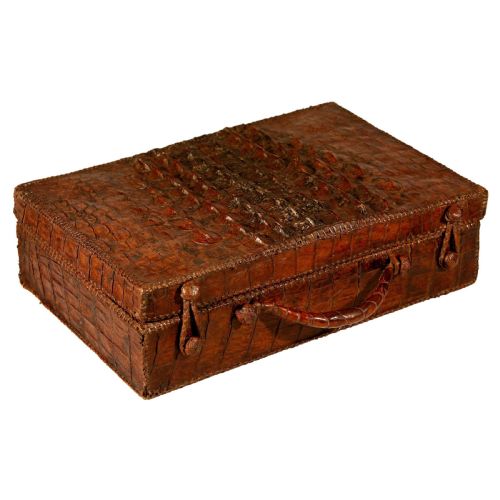
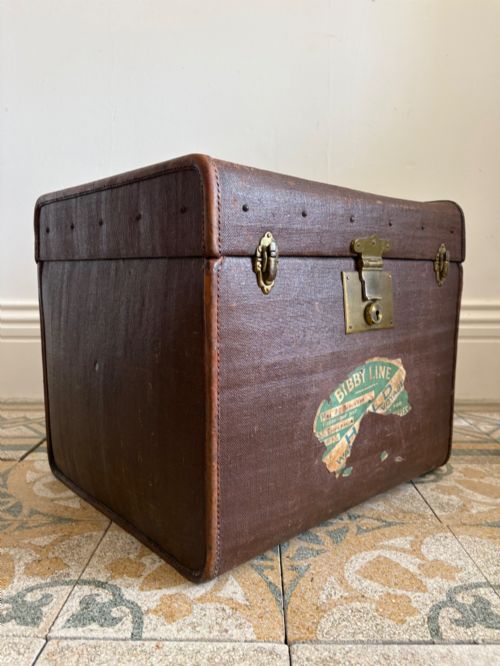
Brown Leather Trunk
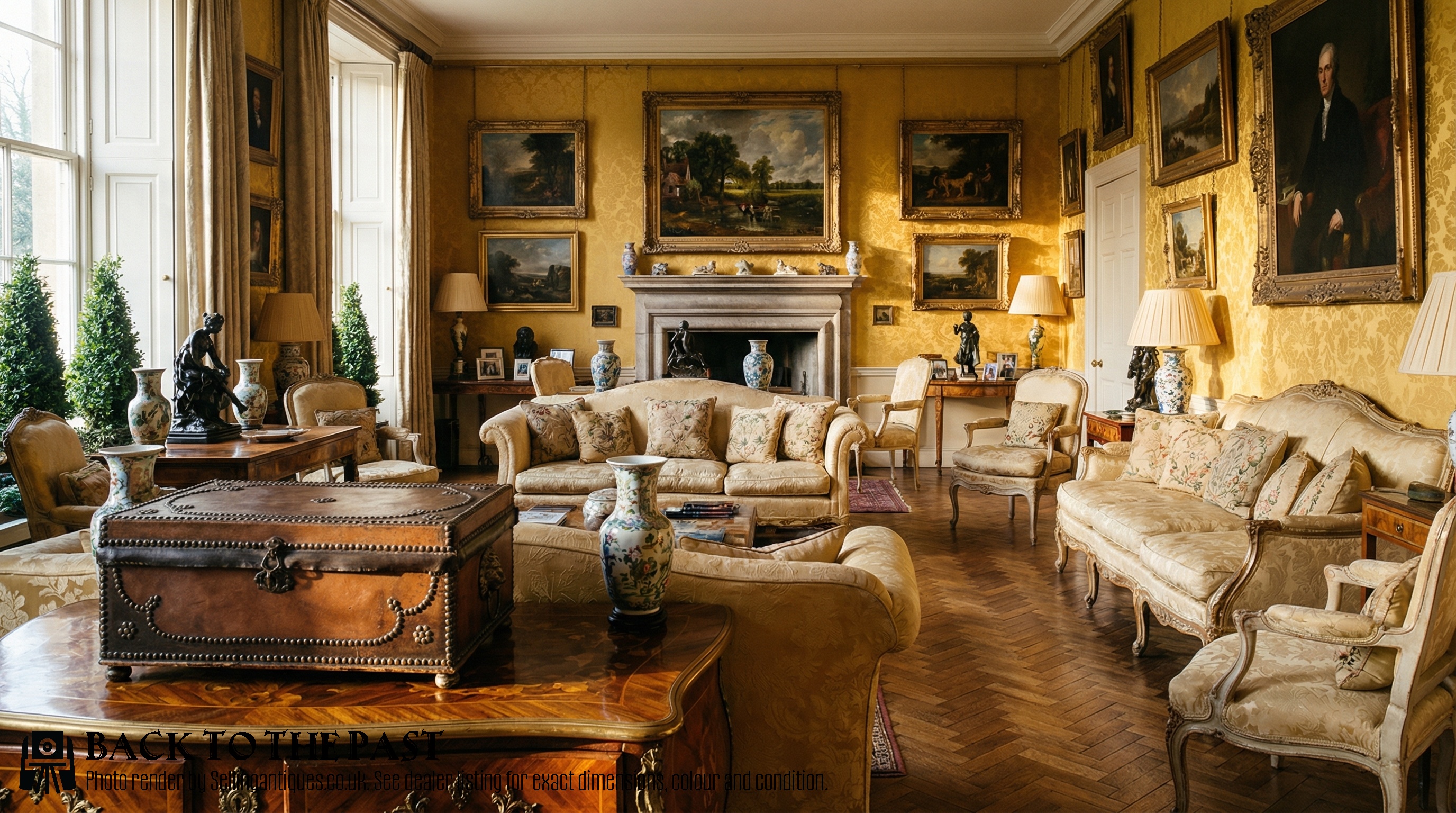
A brown leather trunk brings historic travel into a room, offering robust storage with centuries of craftsmanship behind it.
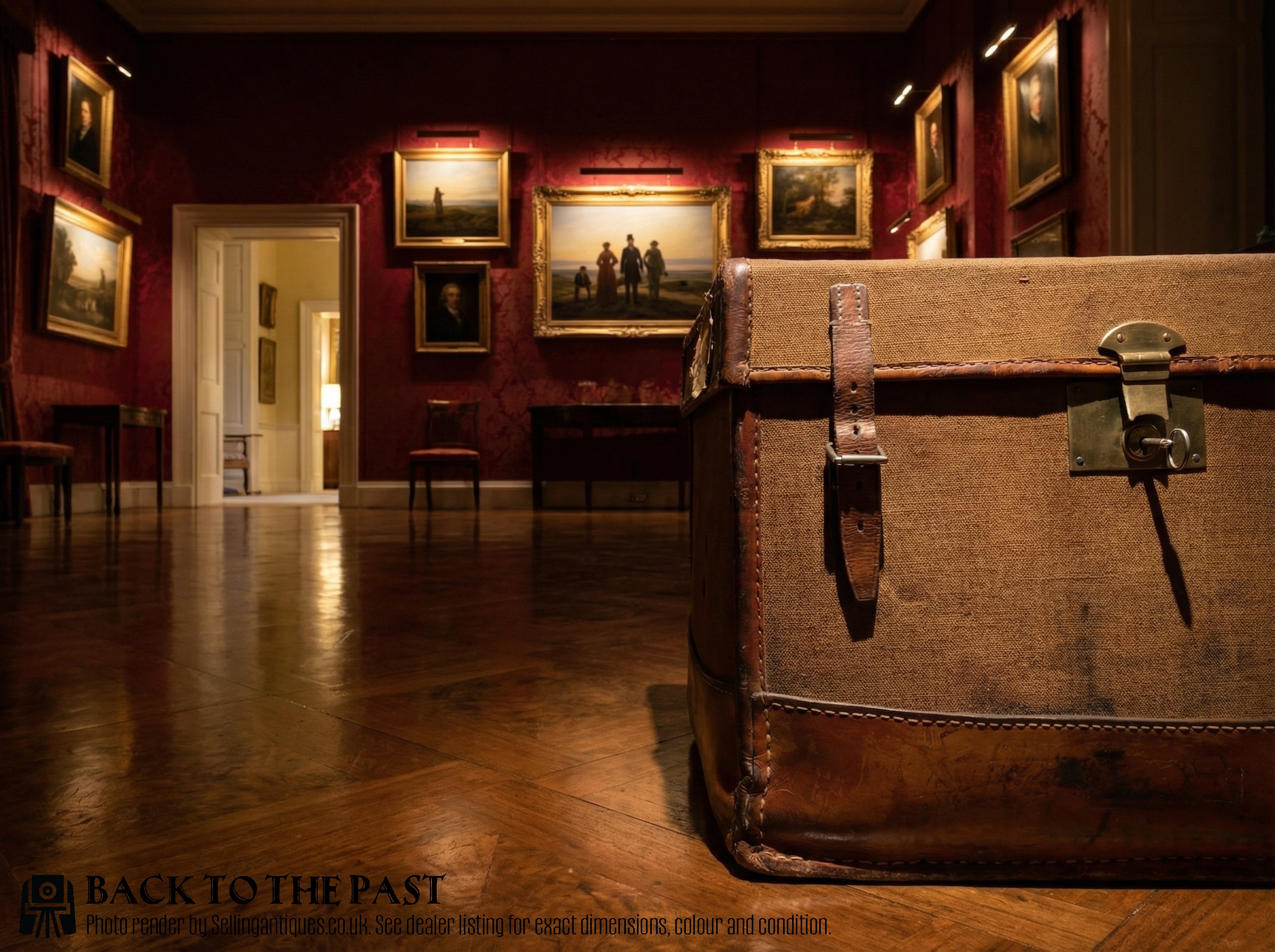
Brown Leather Trunk
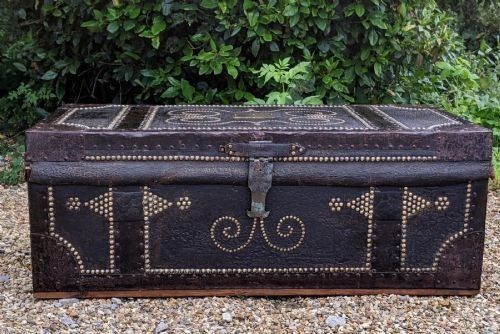
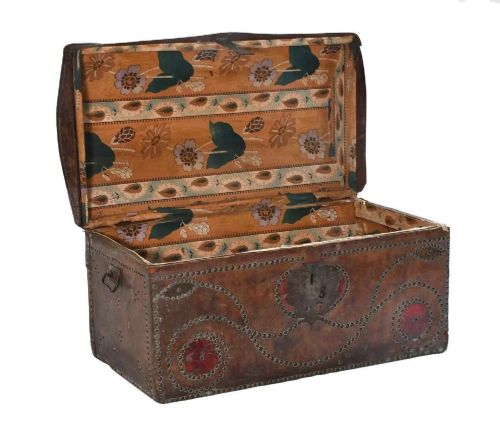
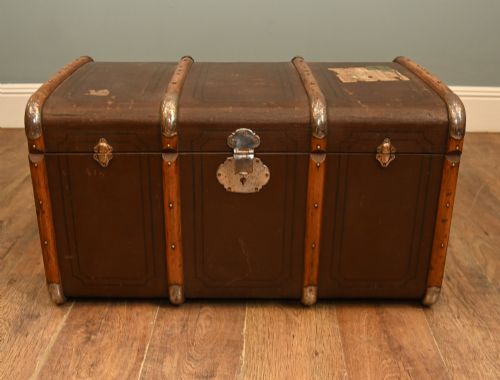
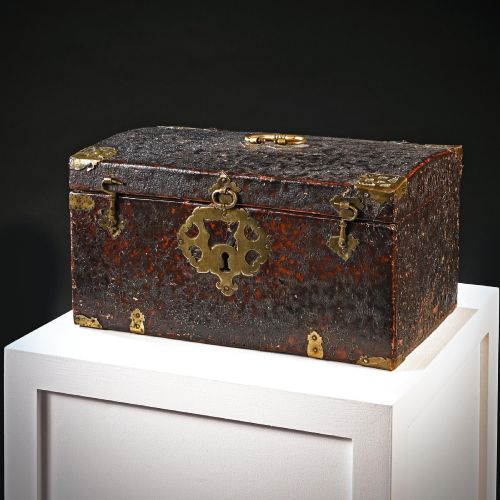
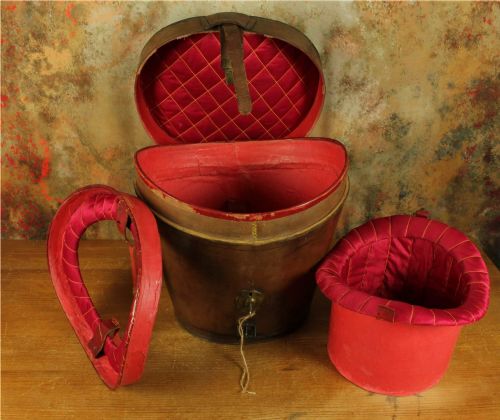
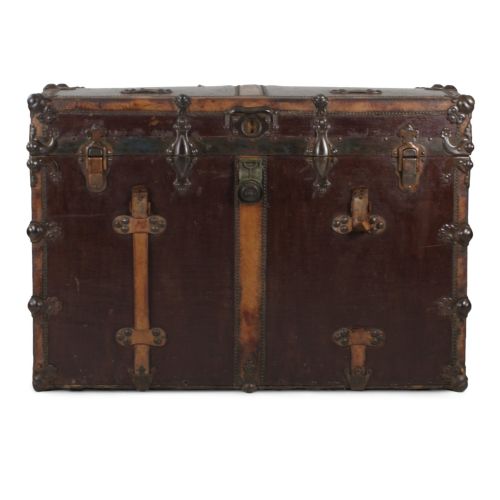
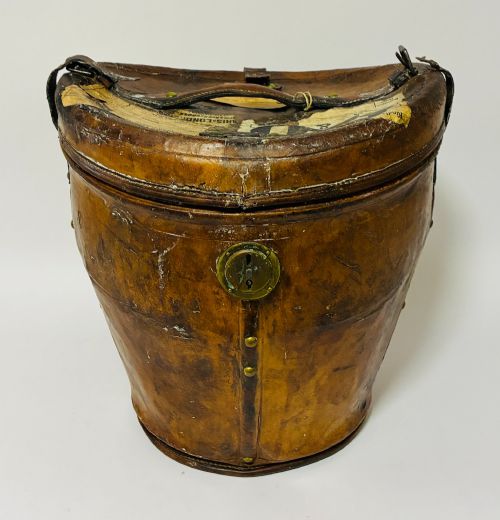
A brown leather trunk serves as both a practical storage vessel and a tactile piece of room furniture, appearing across several centuries from the seventeenth onwards. These pieces span sturdy campaign chests, domed travel coffers, and tall hat cases designed for the rigours of transit. On this page, the nineteenth-century Victorian and Edwardian examples predominate alongside early twentieth-century luggage items.
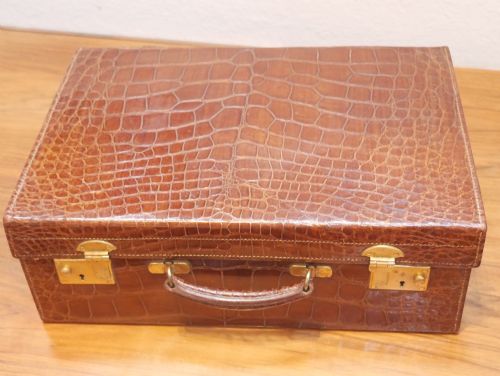
Buyers encounter forms ranging from small picnic suitcases and double hat boxes to large country house ottomans and travelling wardrobe trunks. Materials frequently combine hide with timber frames, metal reinforcement, and canvas reinforcement. Origins stretch from English workshops to French and Dutch makers, reflecting the international nature of antique luggage.
How They Were Made
Construction relies heavily on robust natural materials, uniting leather or hide over internal wooden frameworks of oak, mahogany, or general timber. Metal components such as iron and brass provide structural reinforcement, appearing as corner brackets, stud work, and carrying handles.
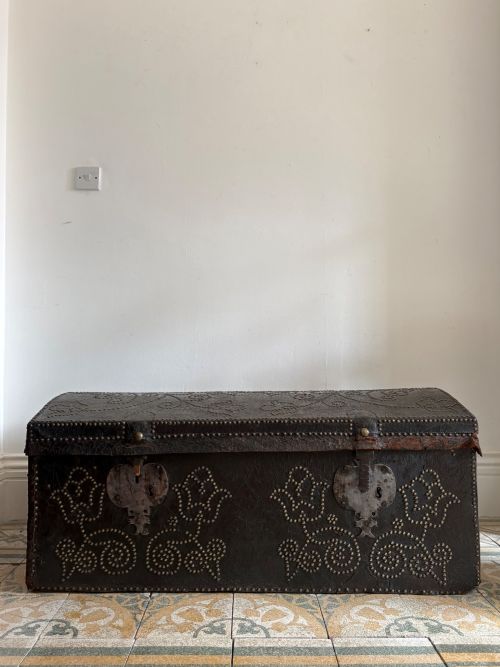
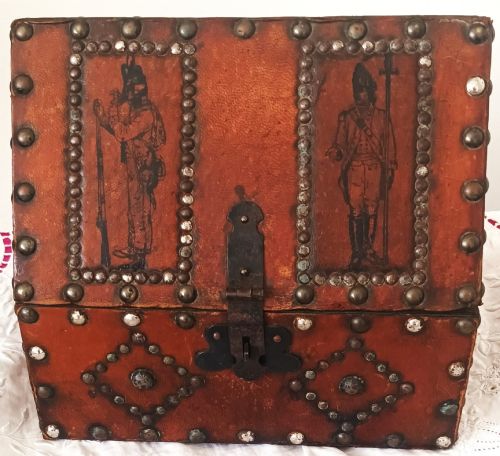
Detailing often incorporates canvas coverings, paper linings, and hand-stitched elements executed by specialist luggage makers. The application of brass studs forms geometric patterns across domed and flat lids alike, securing the hide to the underlying carcase.
Brown Leather Trunk Retail Price Guide 2026
Typical asking prices for brown leather trunk among the pieces listed under this phrase on Sellingantiques today, from the lower quarter to the upper quarter. They describe what is for sale here now, not the wider market.
Listings feature items spanning the seventeenth century through to the 1930s, constructed from leather, brass, oak, and canvas.
What Varies in Quality
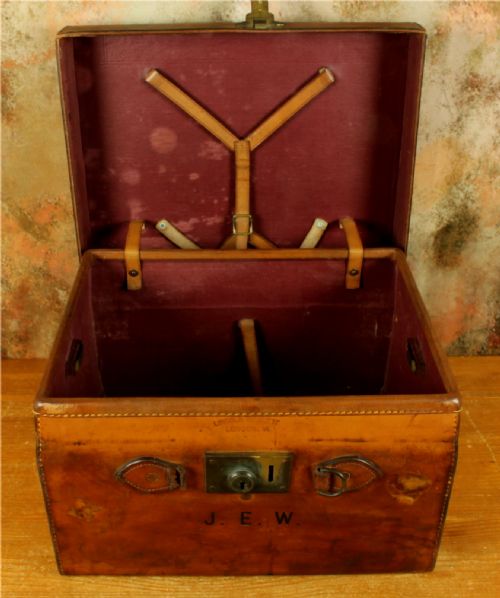
Differentiation across the range depends on the integrity of the materials and the pedigree of the maker. Finer items exhibit superior hide selection, complex internal fittings such as fitted compartments for hats or valet gear, and substantial brass hardware.
The sophistication of the construction also dictates standing, with hand-made pieces from notable makers demonstrating greater refinement in joinery and stud work than standard commercial travel receptacles.
Samuel Pratt·Lincoln Bennett·J.E.W.·Pioneer·Army and Navy·Chapple and Sons·Drew and Sons·JW Allen·Aux Etats Unis·Louis Vuitton·John Pound
The Brown Leather Trunk Glossary
- Campaign case
- A portable chest or trunk built for military officers on active service abroad, usually featuring robust brass corners and recessed carrying handles for transit.
- Dome top
- A rounded lid profile designed to shed water during travel and provide extra internal headroom for garments.
- Casket
- A small decorative box or chest used for storing valuables, often bound in leather and studded.
- Ottoman
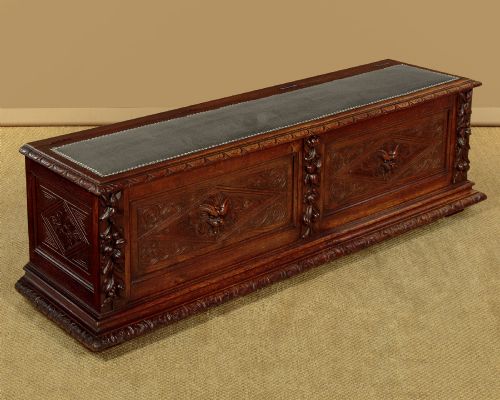
- A low upholstered seat or box with a hinged lid, frequently constructed using leather over a timber frame.
- Steamer trunk
- A lower-profile luggage piece engineered to fit beneath a ship cabin berth during early twentieth-century ocean voyages.
Brown Leather Trunk: Frequently Asked Questions
What is a brown leather trunk?
A brown leather trunk is a historic storage container or piece of luggage constructed from animal hide stretched over a wooden frame, often reinforced with metal or canvas.
These pieces were originally built for travel by coach, rail, or ship, and today they function as decorative storage furniture in homes.
How were they used?
Owners used them to transport personal belongings, clothing, hats, and military equipment during journeys of varying lengths.
Specialised versions accommodated specific items, such as double hat boxes for top hats or fitted cases for picnic sets and valet gear.
How do I live with one?
They integrate easily into living spaces as coffee tables, footstools, or end-of-bed storage chests that conceal clutter.
Their robust construction allows them to support everyday items placed on top while adding tactile warmth and historic character to a room.
How do I tell periods apart?
Earlier examples from the seventeenth and eighteenth centuries often feature simple timber carcases with heavy iron or brass studding and domed lids.
Later Victorian, Edwardian, and twentieth-century versions incorporate sophisticated locking mechanisms, maker stamps, canvas exteriors, and specialised internal compartments.