



Antique Leather Coffer
An antique leather coffer offers robust storage wrapped in centuries of craftsmanship, prized for both its tactile surface and its journeyed presence in a room.

Antique Leather Coffer
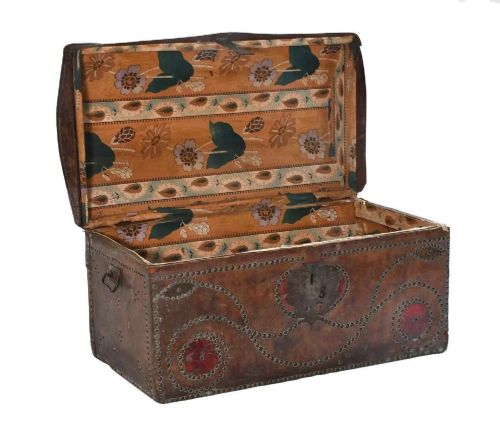
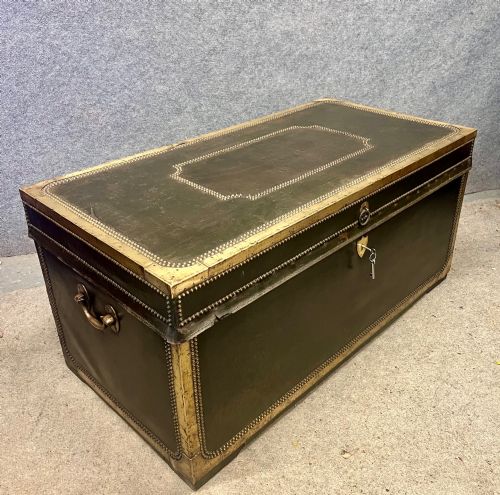
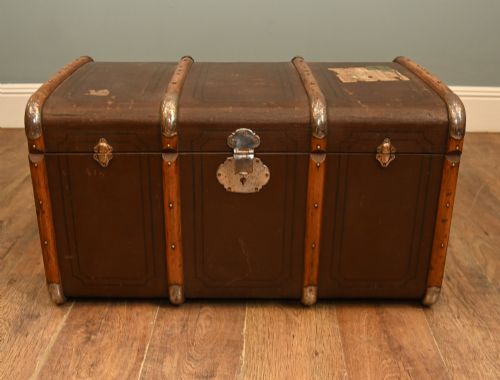
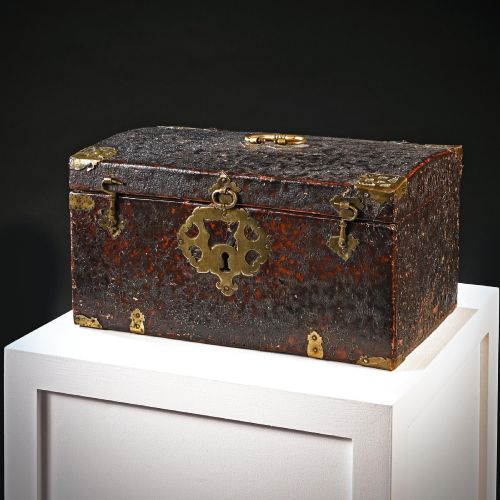
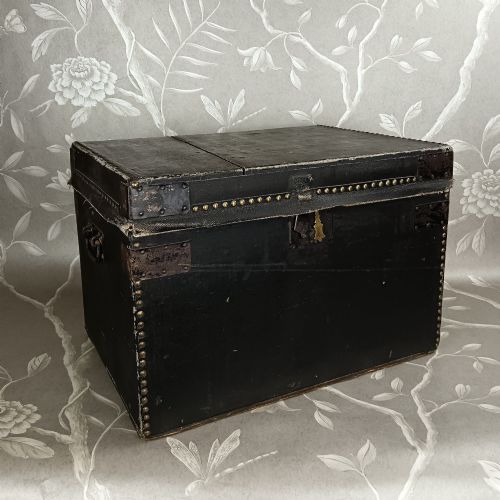
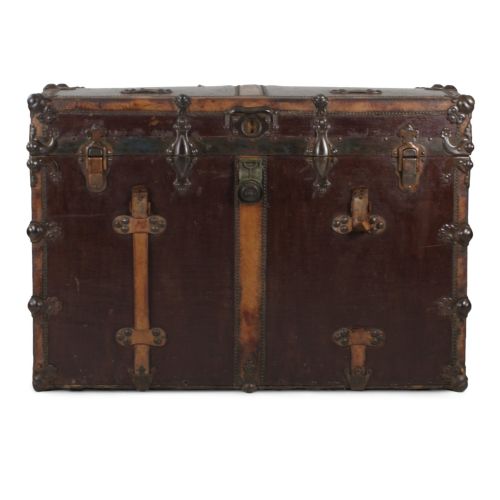
An antique leather coffer brings together centuries of storage forms, spanning from seventeenth-century Spanish and English dome-topped boxes to nineteenth-century campaign trunks, ottomans, and travel cases. These pieces were built for transit or domestic safekeeping, utilising durable frames covered in hide, leather, or canvas.
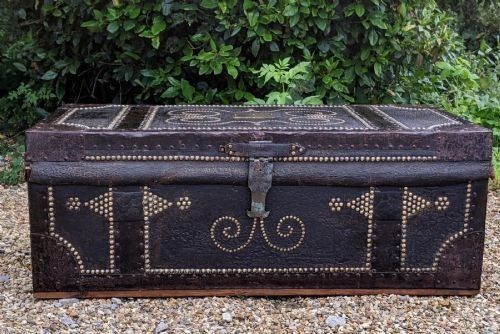
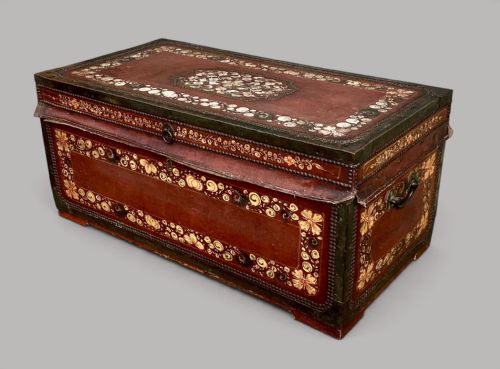
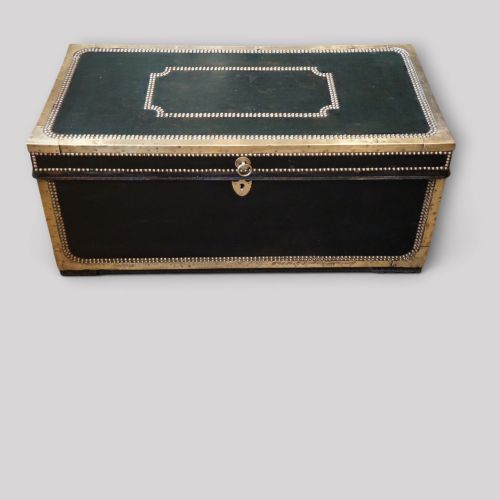
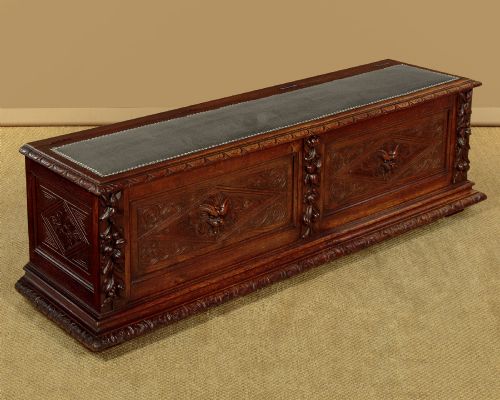
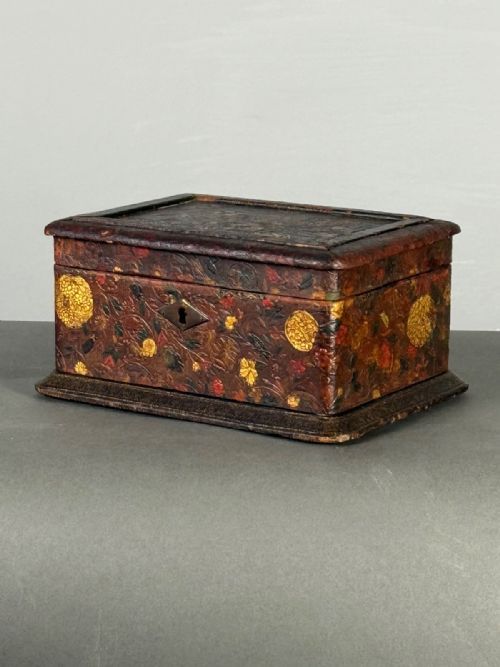
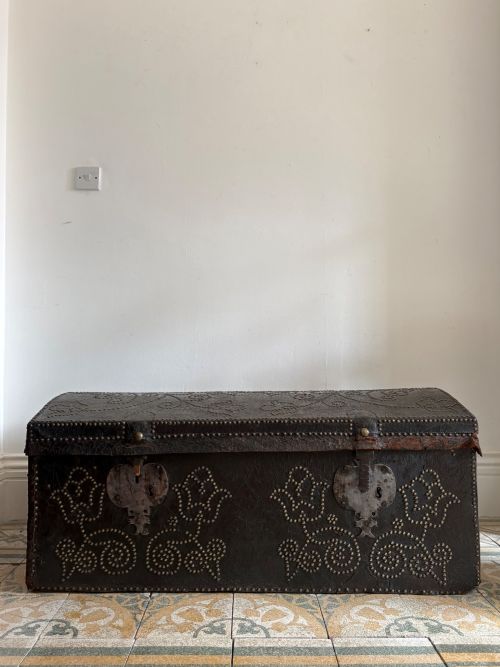
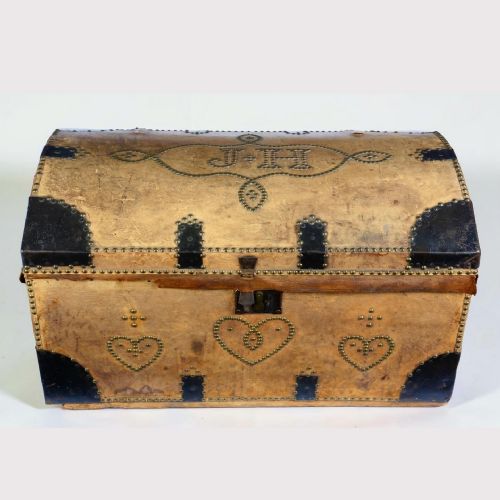
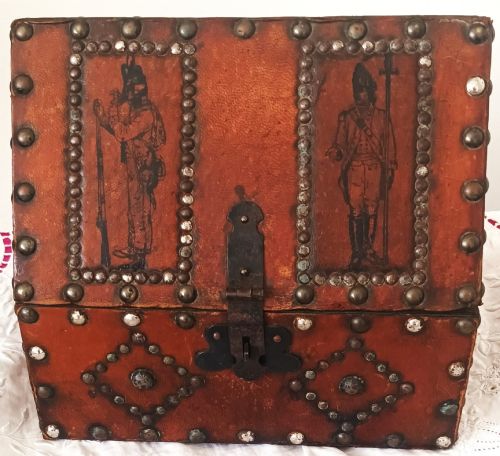
The varieties seen on this page range from compact caskets and writing boxes to large country house ottomans and China Trade camphor wood chests. Buyers encounter items defined by heavy brass studding, metal bindings, and occasionally polychrome painted finishes.
Origins stretch across Britain, continental Europe, and international trade routes, reflecting diverse workshop traditions. Whether configured as a flat-topped travel chest or a domed storage trunk, each piece displays the functional design of its respective era.
How they were made
Makers constructed the primary carcases using woods such as oak, pine, birch, mahogany, and camphor wood, providing a rigid structural foundation for exterior cladding. These wooden boxes were then wrapped in animal hide or leather, secured tightly to the frame.
Surface detailing relied heavily on metalwork, incorporating brass studs, iron bands, and heavy carrying handles to reinforce corners and edges against the rigours of travel. Nailhead patterns often combined structural fastening with decorative geometric designs across the leather surface.
Antique Leather Coffer Retail Price Guide 2026
Typical asking prices for leather coffer among the pieces listed under this phrase on Sellingantiques today, from the lower quarter to the upper quarter. They describe what is for sale here now, not the wider market.
Periods represented on this page span from the seventeenth century through the Edwardian era and the early twentieth century.
What varies in quality
The distinction in quality rests upon the integrity of the underlying timber frame and the treatment of the leather skin. Superior examples display dense, well-joined woods like camphor or oak paired with supple, hand-dyed or polished hide that retains its original character without brittle degradation.
Hardware execution further separates standard items from finer pieces. Precision in the placement of brass studding, substantial iron bindings, and the survival of maker plates or travel history indicate a higher tier of workshop production.
Susse Freres Paris·Samuel Pratt·Wm Insall of Bristol·Chapple and Sons·Seabrook of St Pauls London
The Antique Leather Coffer Glossary
- Coffer
- A heavy wooden chest, typically bound in leather and metal, used for storing valuables or travel.
- Campaign trunk
- A portable storage chest designed for military officers or travellers, often featuring recessed handles and reinforced corners.
- Studded
- Decorated with rows of metal or brass nailheads that frequently secure the leather skin to the wood beneath.
- Dome top
- A curved lid construction designed to shed water during travel and increase interior storage volume.
- Camphor wood
- An aromatic timber frequently utilised in China Trade trunks to protect stored textiles from insects.
Antique Leather Coffer: Frequently Asked Questions
How were leather coffers used originally?
These pieces served primarily as secure containers for transporting clothing, documents, and valuables during long journeys by coach, ship, or rail.
In domestic settings, they transitioned into stationary storage for blankets, linens, and personal effects, often placed in bedrooms or grand hallways.
How do I care for antique leather?
Keep the pieces away from direct sunlight and excessive heat sources to prevent the hide from drying out and cracking.
Apply a specialist leather conditioner sparingly to maintain flexibility and preserve the historic surface texture.
Are these trunks waterproof?
While historical travel luggage utilised treated hides, canvas, and metal bindings to shed moisture during transit, they are not entirely impervious to water after centuries of ageing.
Modern placement should avoid damp environments to protect the internal wooden carcase and original linings.
How can I tell the age of a trunk?
Age is indicated by the construction techniques of the wood, the style of the hardware, and the type of leather dressing used.
Earlier seventeenth and eighteenth-century examples tend to feature heavy hand-wrought iron and robust oak frames, whereas Victorian and Edwardian pieces often incorporate brass detailing and fitted interior compartments.