
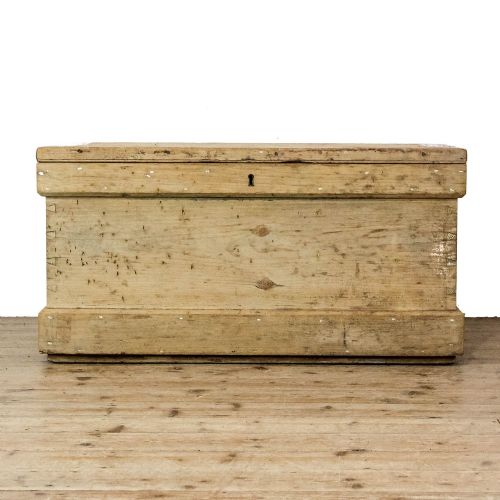
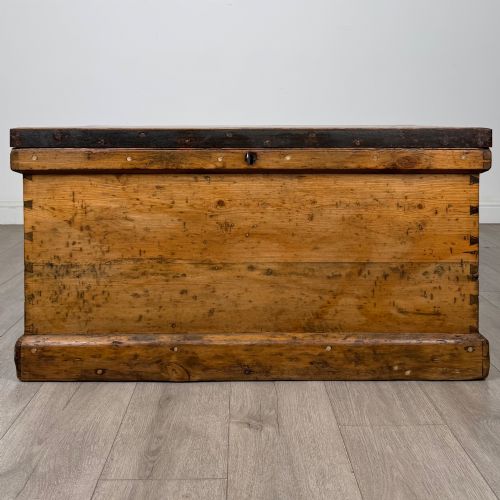
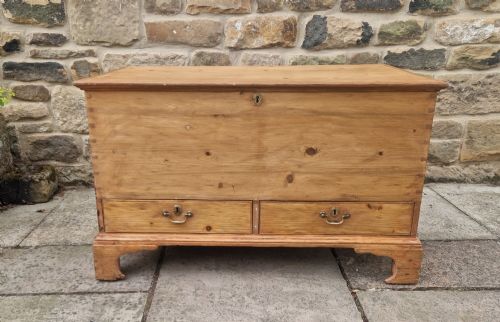
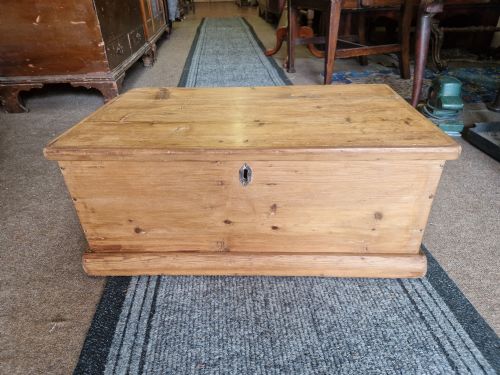


Natural Pine Trunk
Natural pine trunk pieces are sturdy utilitarian storage chests built from pine, prized for their honest grain and robust capacity.

What natural pine trunk means
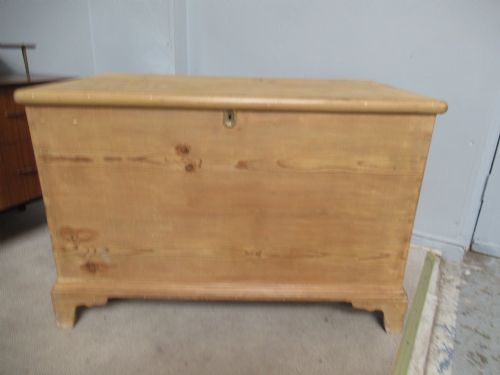
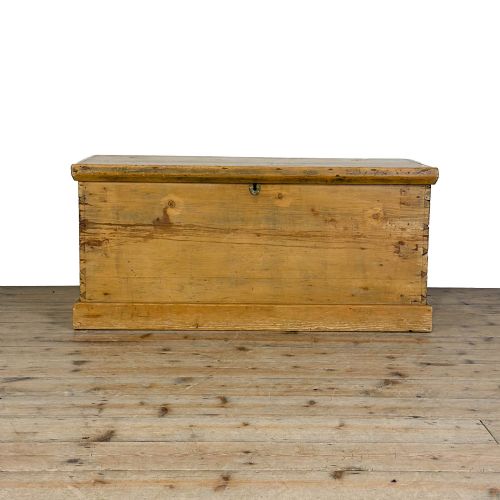
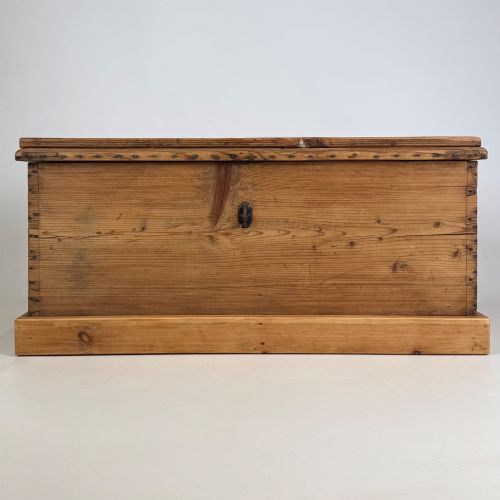
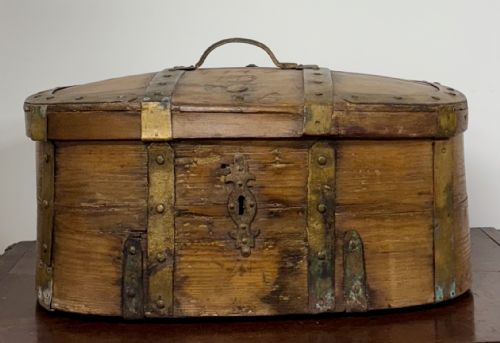
Natural pine trunk examples on this page encompass functional storage pieces built during the Georgian, Victorian, and 1900 periods. The forms include blanket boxes, marriage chests, tool chests, storage chests, and travelling trunks with flat or domed tops.
Most pieces seen here belong to the Victorian era, offering straightforward rectangular proportions suited to domestic storage. Buyers encounter rustic country, rustic farmhouse, and Scandinavian country styles reflecting practical household utility rather than courtly ornament.
Materials and construction
These trunks are constructed entirely from solid pine timber, selected for its accessibility and workability in regional workshops. Surfaces often display the natural grain and knots of the softwood rather than heavy painted finishes.
Makers reinforced the wooden bodies using iron, brass, and wrought iron hardware such as corner brackets, carrying handles, and strap hinges. Such metalwork secured the joints and protected the edges during transit or daily use.
Retail Price Guide 2026
Typical UK retail prices for natural pine trunk, calculated from the Sellingantiques database of over a million retail prices indexed since 2003. This retail price guide relies exclusively on Sellingantiques data; no external sources or auction records are used, so the figures do not describe the wider market.
Some marriage chests carried enough blankets and linens to start a small textile empire in a snowy Scandinavian village.
Distinctions in quality
Quality in these pieces rests upon the integrity of the timber joints, the thickness of the pine boards, and the retention of original iron or brass fittings. Dovetail or robust lap joints indicate careful carpentry rather than hasty assembly.
The presence of period metalwork, such as wrought iron carrying handles and sturdy hinges, elevates a trunk above basic utilitarian boxes. Surviving original surfaces with honest patination carry greater distinction than stripped or over-restored pine.
The Natural Pine Trunk Glossary
- Blanket box
- A large rectangular chest primarily designed for storing bedding, woollens, and household linens. These items form a core category among surviving domestic pine furniture.
- Domed top trunk
- A storage chest featuring an arched or curved lid that allows water to run off during travel and provides extra internal headroom. Such profiles distinguish travelling luggage from flat-lidded stationary chests.
- Marriage chest
- A celebratory storage piece commissioned to hold a bride's dowry or household goods upon marriage. Examples often date to the Georgian period and reflect Scandinavian or regional European traditions.
- Wrought iron
- Iron heated and hammered into shape by hand, producing robust hinges, brackets, and handles with visible tool marks. This material provides durable reinforcement for working wooden trunks.
Frequently Asked Questions
How were natural pine trunks used?
These trunks served as dependable receptacles for blankets, tools, and personal belongings in homes and during travel.
Their robust pine construction and metal hardware ensured contents remained protected from dust and dampness.
What periods do these trunks come from?
The available pieces span the Georgian period, the Victorian era, and around 1900.
Victorian examples appear most frequently, alongside earlier rustic country forms.
What metals are found on pine trunks?
Hardware typically includes iron, brass, and wrought iron elements.
These metals appear as corner reinforcements, hinges, and side handles designed to withstand frequent handling.