
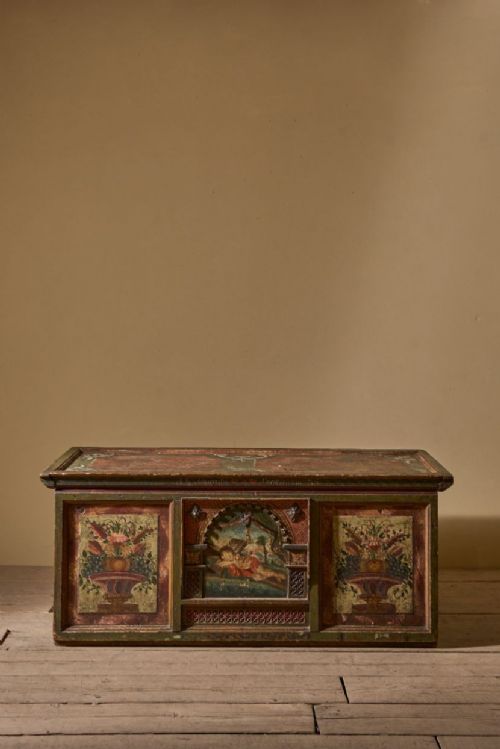
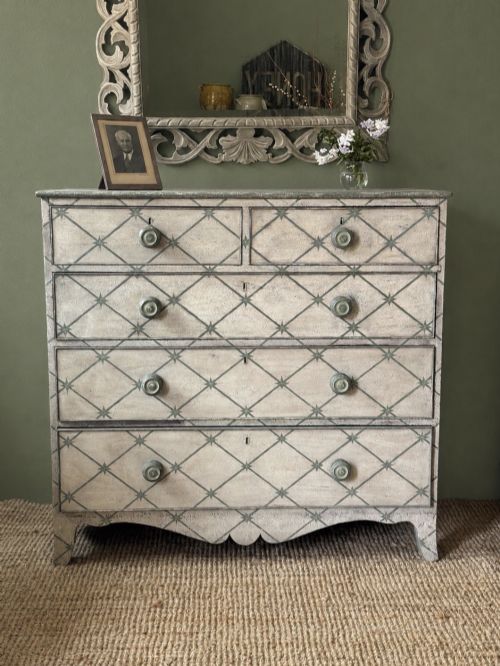
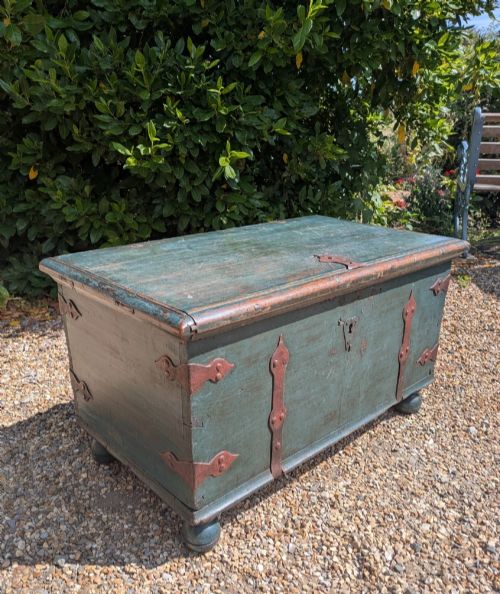
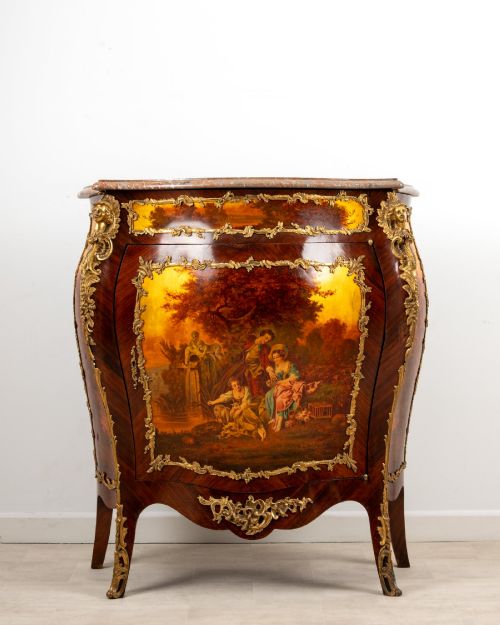


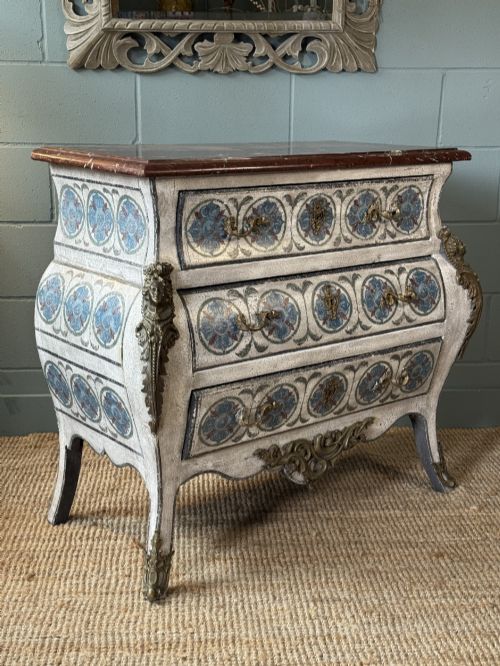

Hand Painted Storage Chest
A hand painted storage chest brings together utility and vibrant regional artistry, offering robust containment wrapped in decorative narrative.
Hand Painted Storage Chest
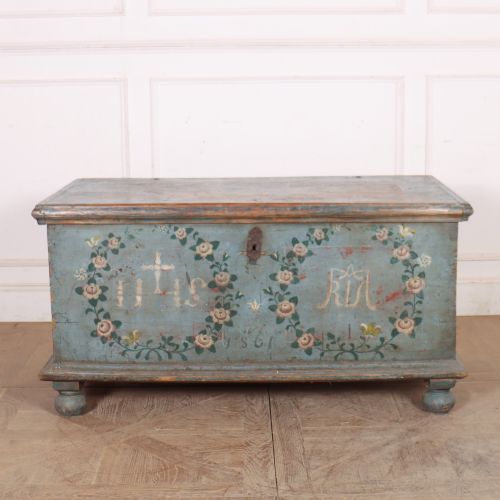
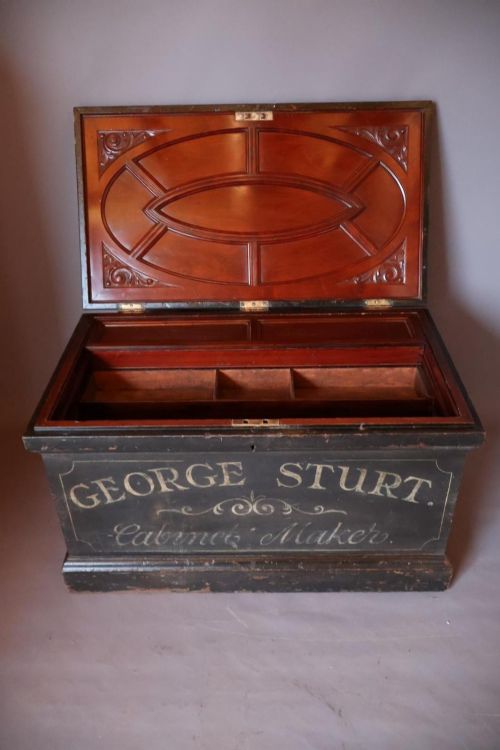
A hand painted storage chest encompasses diverse domestic receptacles, ranging from marriage trunks and blanket boxes to commodes and tool chests. When exploring this selection, buyers encounter domestic pieces originating from various European regions, alongside British, Asian, and Spanish workshops.
The domestic inventory spans several centuries, with nineteenth-century examples forming a substantial portion of the available pieces alongside Georgian, Victorian, and early twentieth-century items. Regional variants include Scandinavian folk art boxes, Alpine marriage chests, and Hungarian pine boxes.
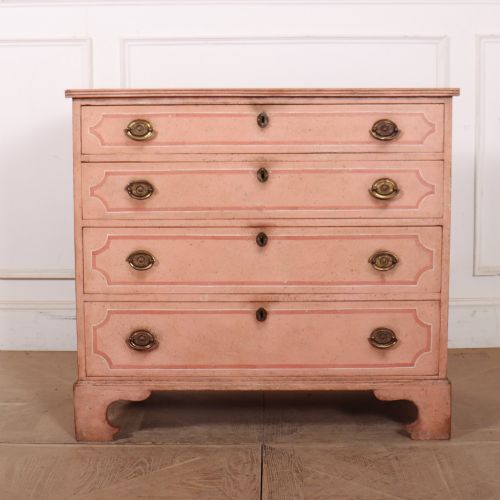
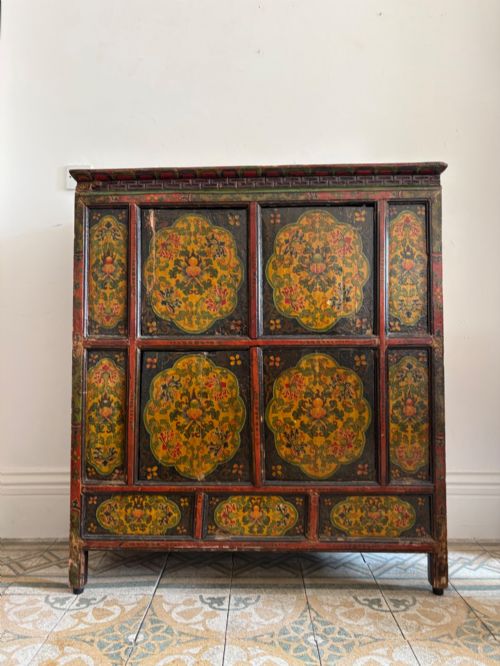
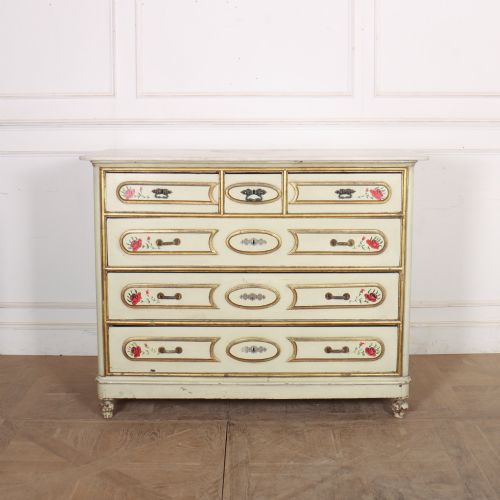
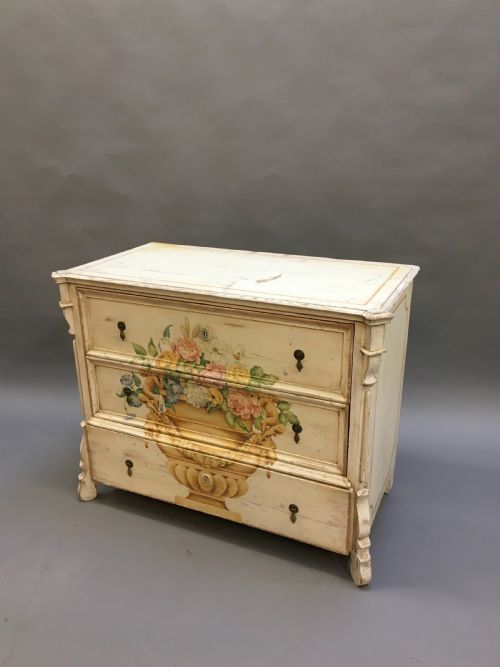
Forms extend beyond simple trunks to incorporate chests of drawers, cabinets, and commodes. Each object served a practical domestic purpose, whether holding household linens, personal documents, or specialised tools.
Materials and Construction
Pine and general wood provide the primary structural foundation for the majority of these storage pieces, often reinforced with iron strapwork or brass fittings. Cabinet makers utilised native and imported timbers, shaping robust panels to withstand heavy daily use.
Surfaces received decorative treatments involving paint, lacquer, and varnish, applied over prepared wood grounds. Hand forged iron hardware, such as hinges and handles, fastened structural joints while adding functional security.
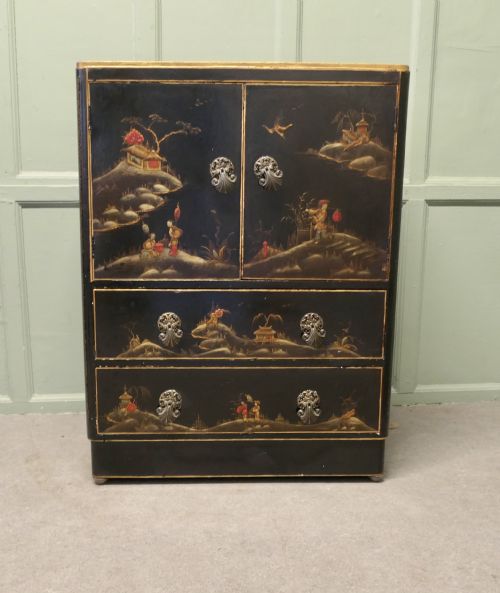
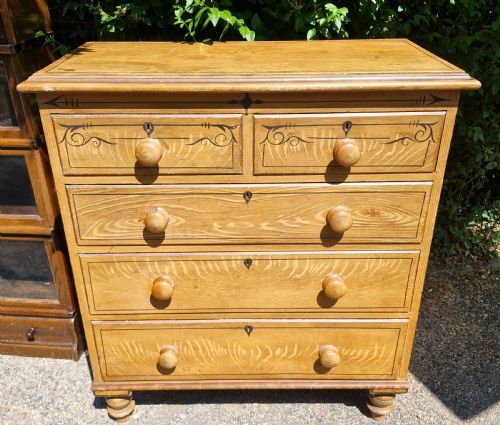
Specialised decorative techniques include Chinoiserie lacquerwork, floral motifs, and scumbled paint finishes. Artisans applied pigments directly to pine, mahogany, or camphor wood surfaces to create lasting regional folk art designs.
Hand Painted Storage Chest Retail Price Guide 2026
Typical asking prices for hand painted storage chest among the pieces listed under this phrase on Sellingantiques today, from the lower quarter to the upper quarter. They describe what is for sale here now, not the wider market.
One surviving pine chest bears the hand sign-written name of the Bluecoat School in Liverpool, recording its institutional past.
Assessing Craftsmanship
Quality rests upon the integrity of the original construction and the preservation of the painted surface. Pieces retaining their initial pigment without modern repainting hold greater documentary interest for collectors.
Joinery techniques distinguish standard utilitarian containers from finer cabinet work, evident in the cut of the dovetails and the weight of the iron or brass mounts. The nuance of the hand painted decoration, from simple folk motifs to intricate Chinoiserie lacquer, determines the aesthetic standing of the object.
The Hand Painted Storage Chest Glossary
- Cassone
- A traditional Italian large chest, frequently commissioned for marriages and decorated with painted or carved panels.
- Scumbled
- A painting technique involving the layering of a translucent glaze over an opaque base colour to create a textured, mottled appearance.
- Chinoiserie
- European artistic style reflecting Chinese aesthetic influences, characteristically expressed through lacquer and gold painted motifs.
- Bombe
- A furniture shape featuring convex, outward-curving sides that swell outwards towards the base.
- Strapwork
- Flat bands of metal, commonly iron or brass, fastened across the exterior of a chest to reinforce the wooden joints.
Hand Painted Storage Chest: Frequently Asked Questions
What were these chests used for?
These receptacles held household linens, garments, and personal valuables, often serving as dowry containers during marriage ceremonies.
Larger trunks travelled across distances as luggage, while smaller boxes contained apothecary items, tea, or specialised tools.
How do I identify the period?
Dating relies upon construction methods, timber selection, and the style of the painted decoration. Eighteenth and nineteenth-century pieces display distinct regional folk art palettes and hand forged iron hardware.
Later Victorian and Edwardian examples incorporate machine-sawn timber and different fastening techniques.
Are the painted finishes original?
Many items retain their initial decorative schemes, while others show evidence of later refreshing or entirely subsequent painting. Close examination of the pigment layers reveals whether the surface decoration matches the age of the underlying wood.
Listings specify original condition where documented by the dealer.
How do I care for painted wood?
Protect the painted surfaces from direct sunlight and maintain stable room humidity to prevent the timber from warping and the paint from flaking.
Dust gently with a soft dry cloth and avoid applying harsh chemical cleaners or abrasive polishes.