




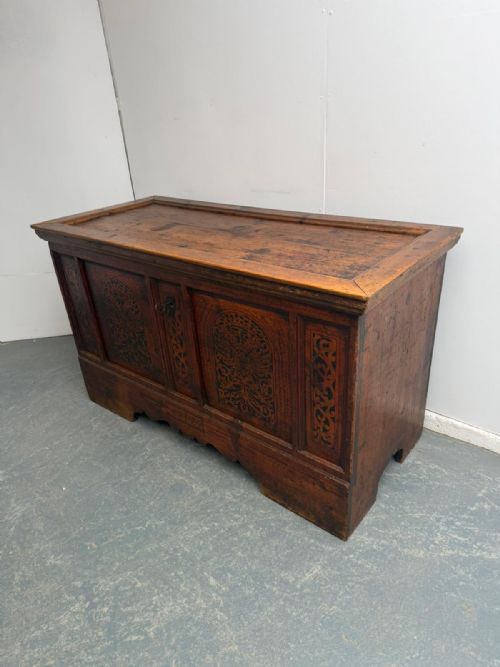


Painted Pine Blanket Box
These painted pine blanket box examples bring centuries of utility and folk artistry directly into living spaces.

Painted Pine Blanket Box
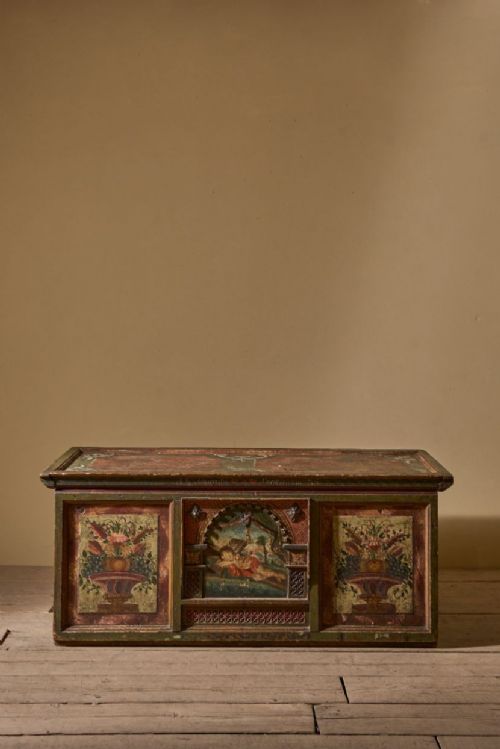
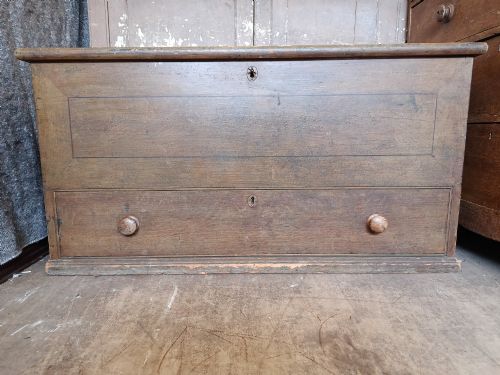
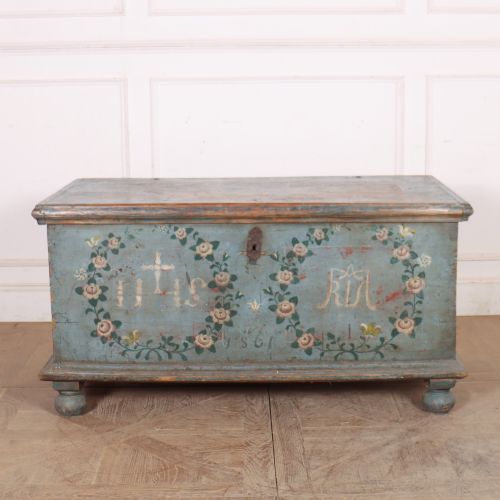
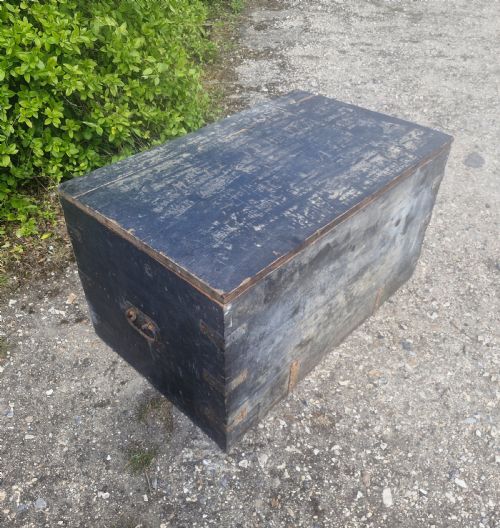
A painted pine blanket box serves as a robust storage trunk for textiles and household goods, spanning the Georgian, Victorian, and Regency periods. These pieces appear frequently in Scandinavian, Hungarian, and English regional styles, often taking the form of marriage chests, mule chests with drawers, or simple dome-top coffers.
The domestic utility of these boxes dictated their survival, moving from utilitarian estate storerooms into principal rooms as decorative furniture. Examples range from simple scumble-painted English boxes to elaborate floral marriage chests from Sweden and Hungary.
How They Were Made
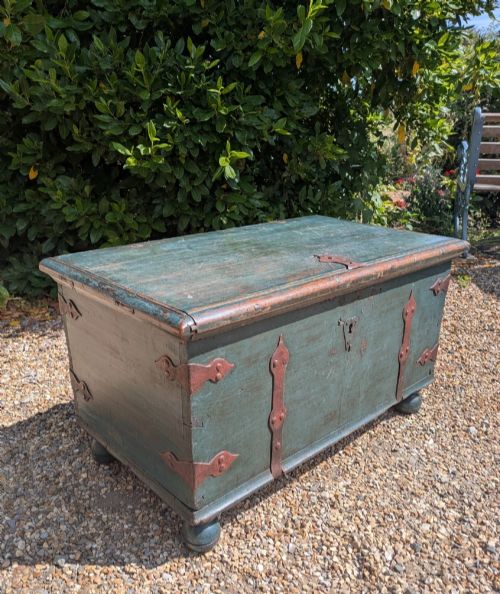
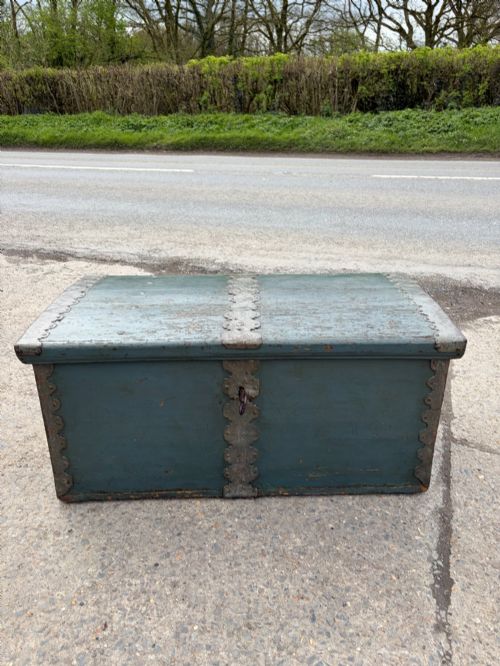
Carpenters constructed these trunks from solid pine, utilising dovetail joints or heavy side-plank construction to withstand heavy daily use. Hand-forged iron strapwork, brass handles, and wrought iron hinges reinforced the corners and lids of larger coffer boxes.
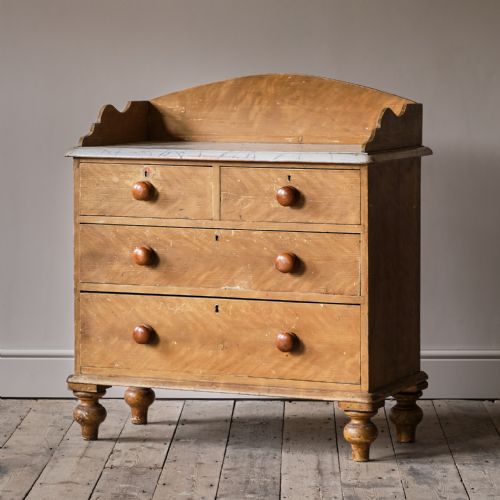
Makers applied pigment and oil paints directly to the wood, sometimes employing scumbling techniques to simulate grain or layering colours for depth. Surface decoration frequently included hand-painted floral motifs or Moorish-style patterns applied over the base coat.
Painted Pine Blanket Box Retail Price Guide 2026
Typical asking prices for painted pine blanket box among the pieces listed under this phrase on Sellingantiques today, from the lower quarter to the upper quarter. They describe what is for sale here now, not the wider market.
Internal candle boxes survive inside these trunks, preserving spaces once meant for tallow dips and sweet-smelling herbs.
What Varies in Quality
The survival and integrity of the original paint surface dictates much of the distinction between pieces, with untouched historical pigment holding greater character than later overpainting. The ambition of the decoration, from simple grained finishes to intricate folk art alpine scenes, marks the hand of a more skilled regional painter.
Structural heft and original hardware further separate everyday storage trunks from grander marriage chests. Heavy iron strapwork, intact internal candle boxes, and well-preserved bracket feet elevate the status of an individual chest.
The Painted Pine Blanket Box Glossary
- Mule chest
- A storage chest fitted with one or more drawers beneath the main internal compartment. This form bridges the gap between traditional coffers and modern drawer chests.
- Scumble
- A decorative painting technique involving the layering of a translucent glaze over an opaque base coat. This method creates textured, mottled effects that mimic richer timber grain.
- Strapwork
- Flat strips of metal, usually iron, fixed across corners and lids for structural reinforcement. On these boxes, hand-forged examples also add significant visual contrast.
- Marriage chest
- A specially commissioned box created to mark a wedding, frequently decorated with specific dates, initials, or symbolic folk art. These pieces often originate from Scandinavian or Hungarian rural workshops.
- Coffer
- A heavy, deep chest with a hinged lid used historically for valuables and textiles. The term is frequently interchanged with trunk or box in early inventory records.
Painted Pine Blanket Box: Frequently Asked Questions
What were painted pine blanket boxes used for?
These boxes provided secure storage for household textiles, garments, and blankets in period homes. Internal compartments often included small candle boxes for storing matches or small valuables.
Over time, families utilised them in bedrooms, hallways, and living spaces as both storage and furniture. Their robust lids also allowed them to function as casual seating when closed.
How do I care for original painted surfaces?
Maintain original painted finishes by keeping boxes away from direct sunlight and fluctuating heat sources. Dust gently with a dry, soft cloth without applying modern chemical polishes.
Wax should be used sparingly and only if the specific paint surface is stable and matte. Testing any product on a hidden corner first prevents unintended damage to historical pigment.
Are these trunks heavy?
Solid pine construction combined with iron hardware makes most of these boxes substantial and heavy. Larger marriage chests and mule chests generally require two people to lift safely.
Smaller Hungarian or English boxes remain more portable and manageable for rearrangement in a modern room. Iron handles on the sides were originally designed to assist with transport.
How can I tell regional styles apart?
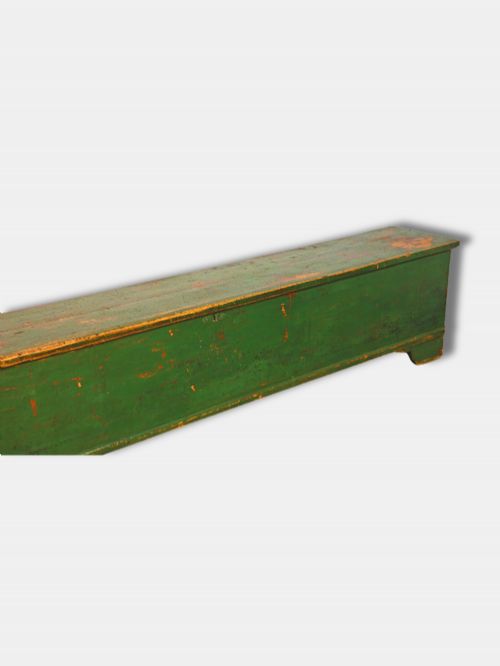
Swedish and Alpine examples often feature distinct floral folk art and marriage dates painted on bright backgrounds. Hungarian pieces frequently display vibrant teal or green pigments with characteristic panel framing.
English boxes lean towards simpler scumble finishes, grained decoration, or plain painted surfaces with minimal ornamentation. Regional hardware choices also offer clues to the workshop's geographic origin.