
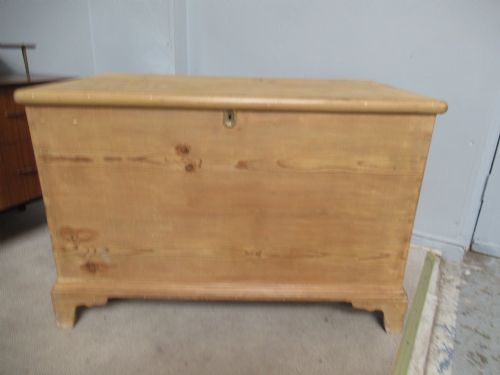
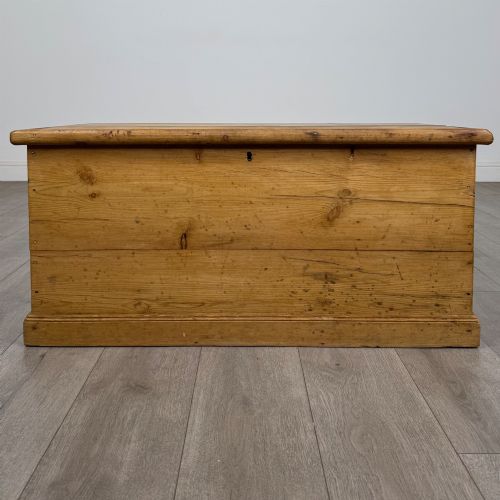
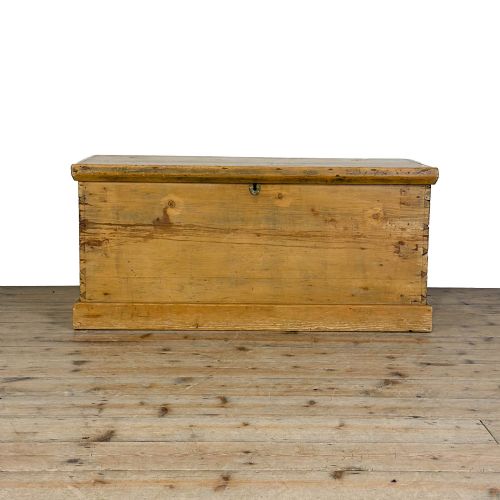
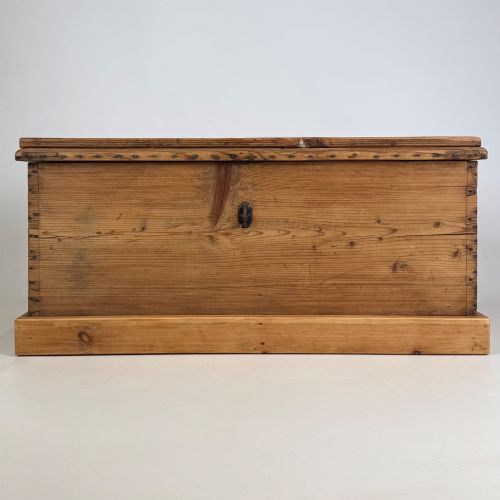
Rustic Pine Storage Trunk
A rustic pine storage trunk brings straightforward character and practical utility into a room, offering honest storage rooted in centuries of rural tradition.

Identifying a rustic pine storage trunk
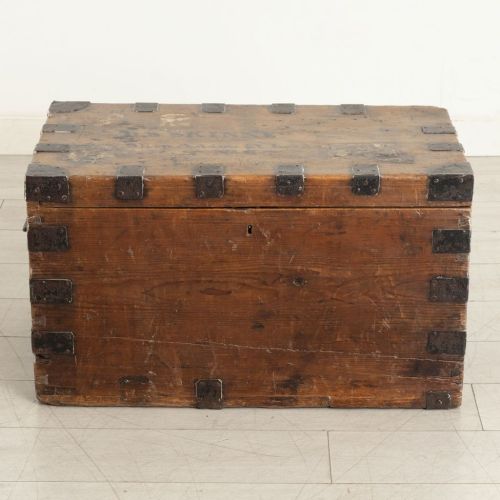
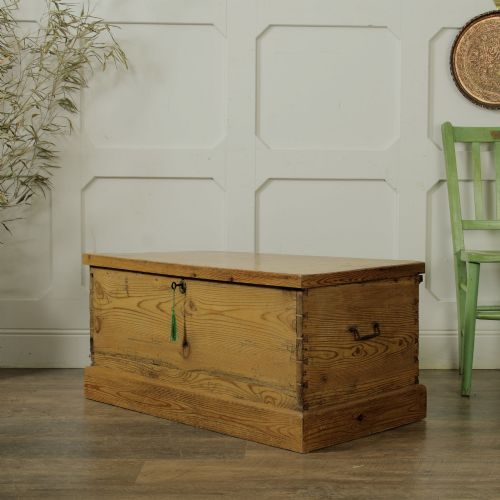
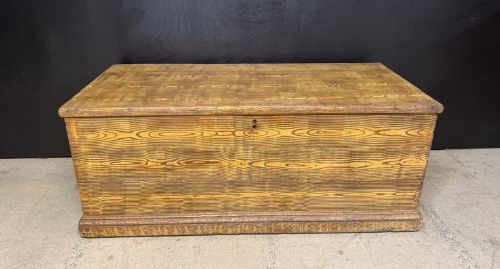
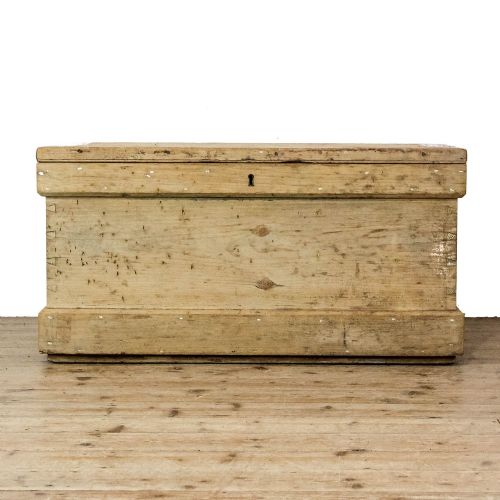
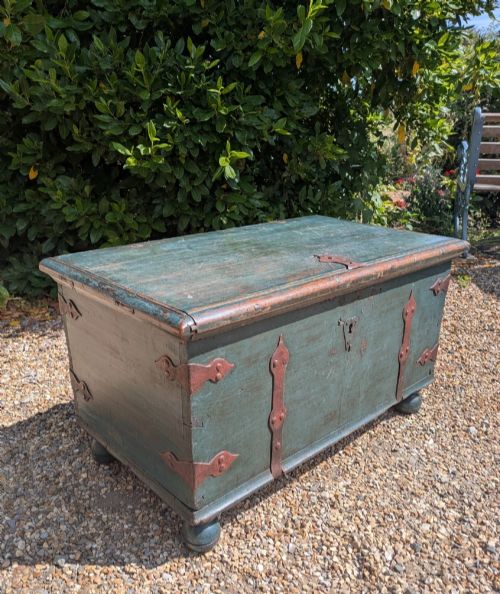
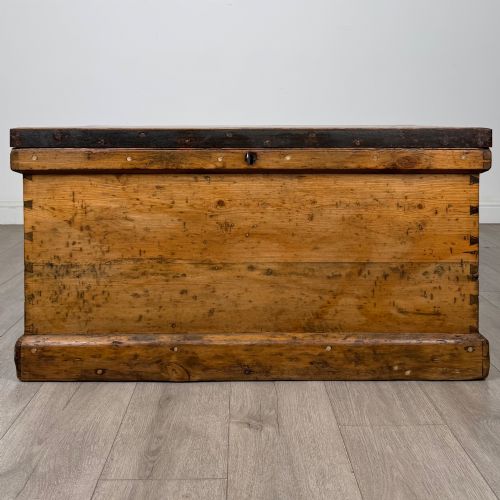
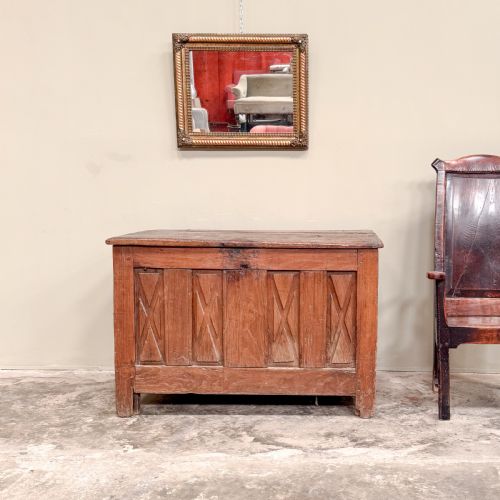
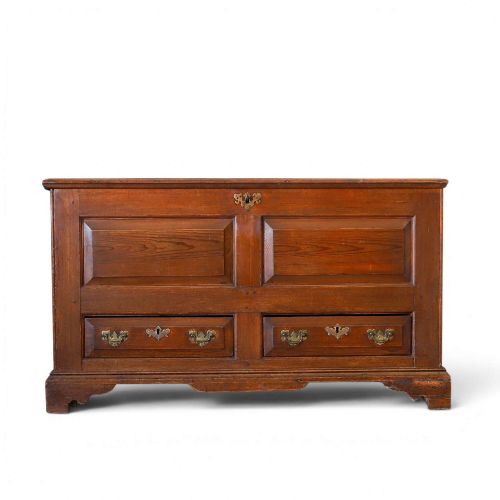
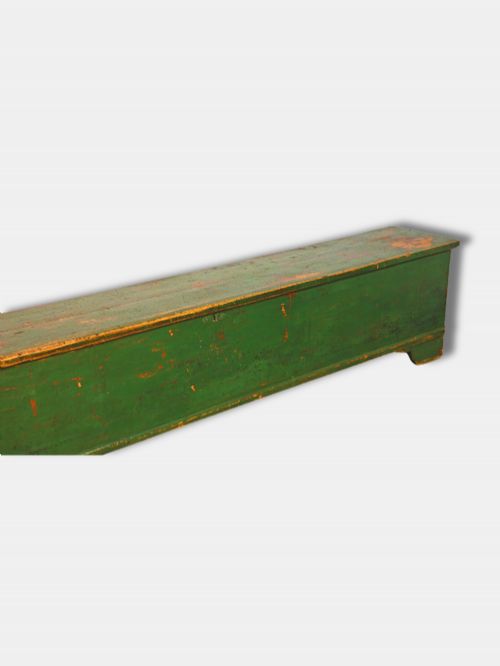
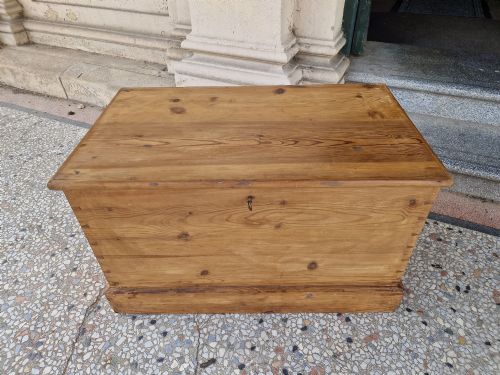
When you search for a rustic pine storage trunk, you encounter robust utilitarian boxes designed to hold household goods, textiles, and valuables. These pieces span several distinct historical eras, appearing in forms such as early coffer chests with long drawers, waxed boxes, and scumbled painted storage boxes.
The versions most commonly met on this page date from the Victorian period and the nineteenth century, alongside occasional eighteenth-century examples like early Georgian coffers. Their forms range from simple lidded boxes to chests equipped with lower drawers, reflecting the evolving storage needs of domestic spaces over time.
Originating from utilitarian country workshops rather than urban cabinetmakers, these trunks served everyday functions in domestic interiors. Their presence in traditional room schemes relies entirely on their straightforward construction and the warm, aged patination of the timber.
Materials and construction
Makers constructed these trunks primarily using solid pine, selected for its accessibility and workability in regional workshops. This timber accepts various surface treatments, allowing pieces to take on a simple wax finish or retain scumbled painted decoration.
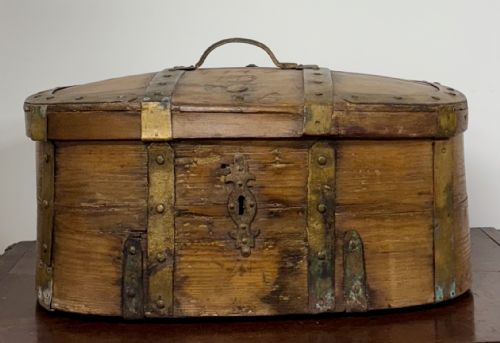
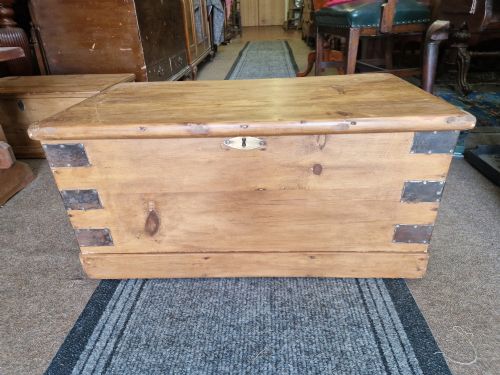
Iron and brass hardware feature prominently as functional components, securing lids, corners, and hinges on heavy-use boxes. Metalwork elements such as straps and lockplates provide structural reinforcement while contributing to the utilitarian aesthetic of each piece.
Retail Price Guide 2026
Typical UK retail prices for rustic pine storage trunk, calculated from the Sellingantiques database of over a million retail prices indexed since 2003. This retail price guide relies exclusively on Sellingantiques data; no external sources or auction records are used, so the figures do not describe the wider market.
Early pine chests often retain forgotten chalk marks on their undersides, left by carpenters measuring boards in dimly lit workshops.
Assessing quality and character
The distinction between a standard utility box and a superior example lies in the preservation of original surfaces and structural integrity. Pieces that retain their original paintwork, scumbled decoration, or early patinated wax surfaces stand apart from those stripped or altered over time.
Proportion and construction detail dictate the standing of individual chests, particularly when comparing simple lidded boxes to more complex coffer forms featuring integrated drawers. The integration of early hardware and untouched timber surfaces establishes the overall authenticity of the piece.
The Rustic Pine Storage Trunk Glossary
- Pine
- A softwood commonly used in British country furniture for its availability and resilience in daily use. It takes wax finishes and paint readily.
- Coffer
- A traditional heavy storage chest, often featuring a hinged lid and sometimes incorporating one or more drawers beneath the main compartment.
- Scumbled
- A decorative paint technique involving translucent layers dragged or brushed over a base coat to simulate finer grain patterns or create textured finishes.
- Patina
- The surface sheen and colour acquired by wood and metal through age, handling, and environmental exposure over many decades.
Frequently Asked Questions
What were pine trunks used for originally?
These trunks served as primary storage containers in domestic settings, holding blankets, clothing, and household provisions securely away from dust and pests. Their robust construction allowed them to double as benches or tables in modest homes.
Over generations, their role shifted from purely utilitarian storage to decorative furniture items valued for their historical character and practical capacity in modern rooms.
How do I care for a waxed pine trunk?
Maintenance requires occasional application of traditional beeswax to nourish the dry timber and protect the surface from moisture. Avoid placing the chest near direct heat sources to prevent timber splitting.
Regular dusting with a soft cloth preserves the accumulated patination without stripping the historic finish built up over decades of use.
How can I tell an eighteenth-century coffer from a Victorian box?
Earlier pieces from the eighteenth century, such as early Georgian coffers, often feature hand-cut joinery, pegged framing, and integrated lower drawers designed for specific domestic routines. Their proportions and construction methods reflect pre-industrial woodworking practices.
Victorian boxes tend to display simpler box constructions, machine-sawn elements, and varied surface treatments like scumbled paintwork or straightforward wax polish.
Where should I place a storage trunk at home?
A pine trunk functions effectively at the foot of a bed for holding spare linens, or as a coffee table in a living room providing hidden storage space. Their neutral timber tones blend easily with various interior styles.
Ensure the room maintains stable humidity levels to protect the antique pine and any associated iron or brass hardware from environmental stress.