


Carved Wood Coffer
A carved wood coffer brings robust storage and deep historical texture into a room, offering sturdy utility wrapped in centuries of craftsmanship.
What carved wood coffers are
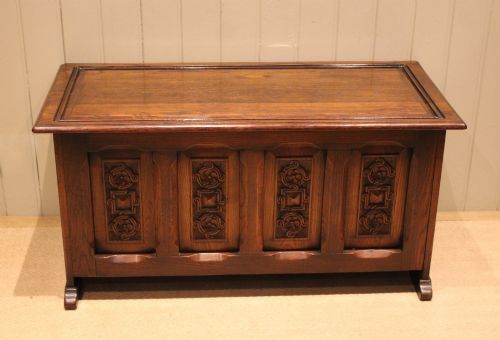
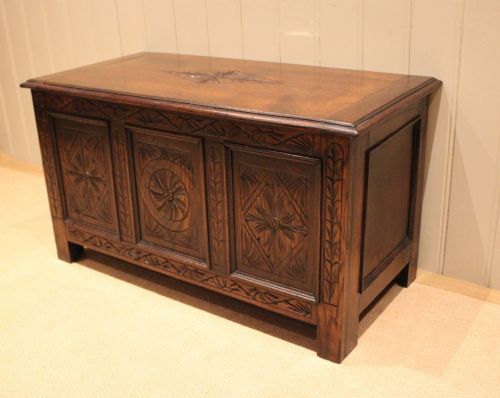
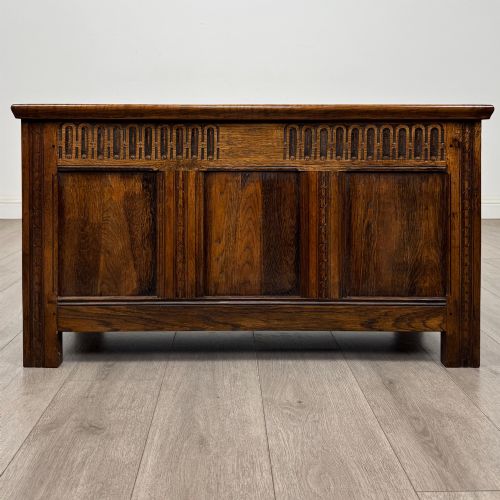
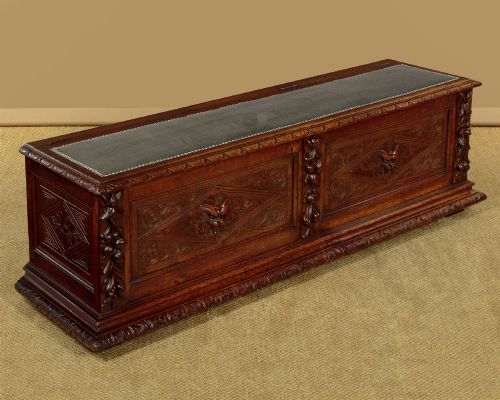
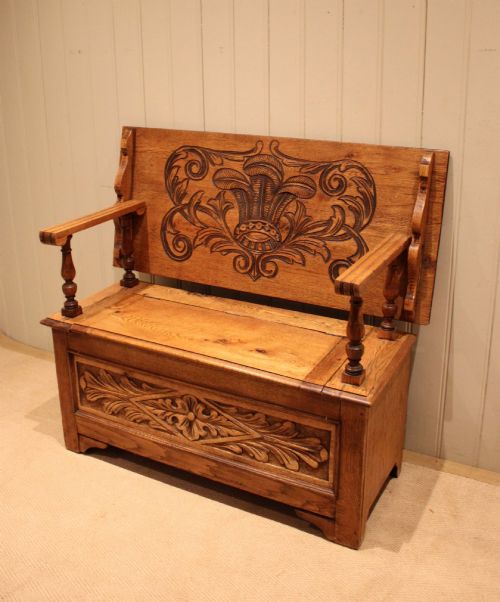
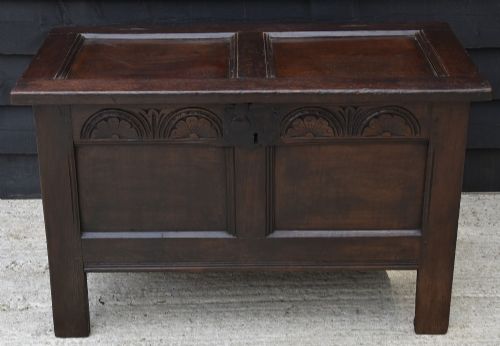
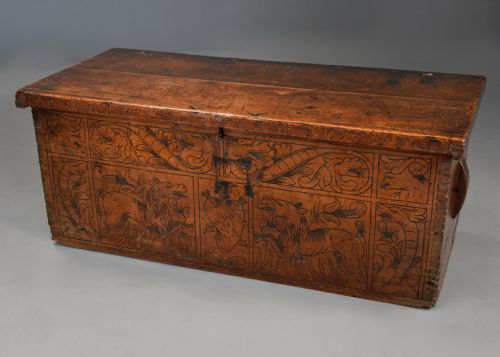
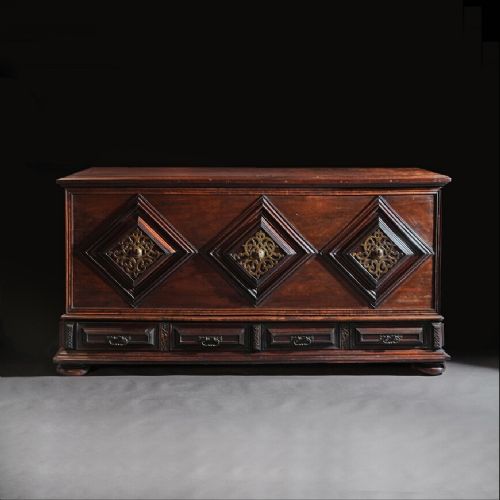
A carved wood coffer is a heavy storage chest built for domestic utility and security, appearing in domestic interiors from the seventeenth century onward. These pieces serve as blanket boxes, storage trunks, and occasional tables, adapting to modern living while retaining their traditional form.
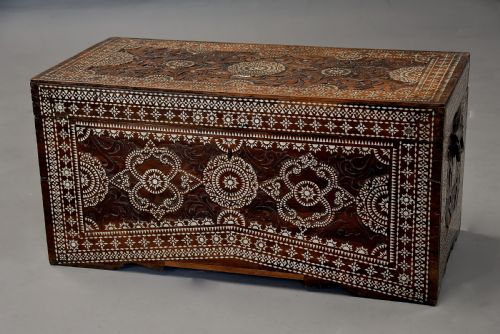
The versions most commonly met on this page span the seventeenth, eighteenth, and nineteenth centuries, featuring regional traditions from British oak panels to Chinese export camphorwood. Makers utilised indigenous timbers and exotic hardwoods alike, resulting in distinct stylistic groups such as Anglo-Indian and seventeenth-century European designs.
How they were made
Construction relies on solid timbers including oak, beechwood, cedarwood, teak, and camphorwood, joined with traditional framing techniques to withstand heavy daily use. Structural reinforcement often incorporates iron or brass hinges, locks, and corner mounts.
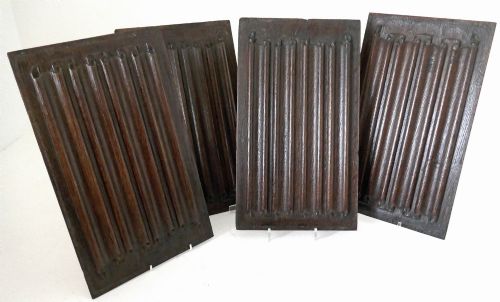
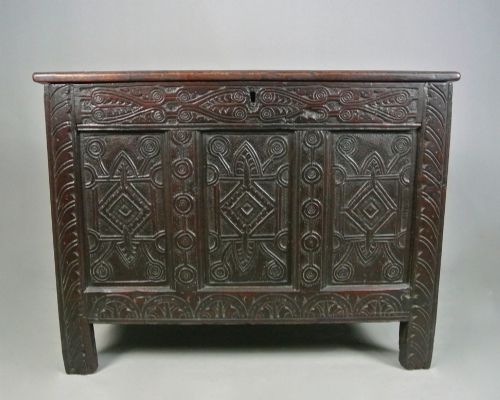
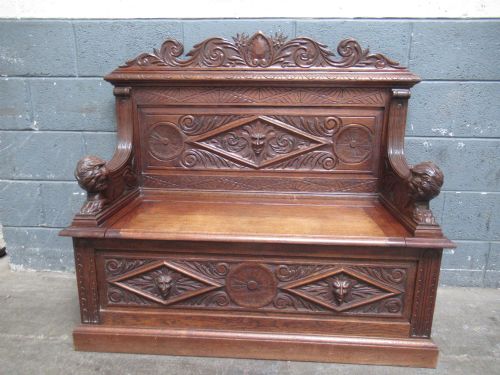
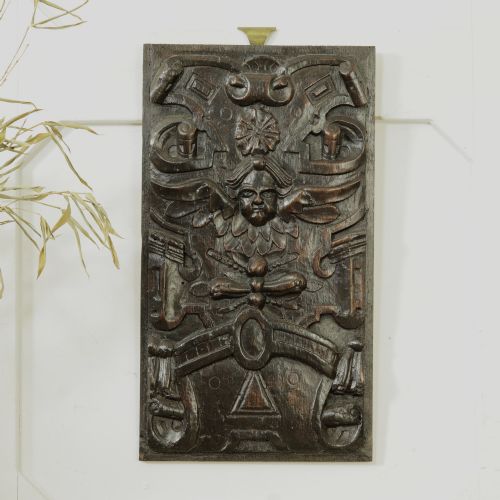
Surface ornamentation is achieved through direct carving into the solid wood, such as linen fold panels, alongside applied lacquer finishes on specific export pieces. Master artisans carved deep relief motifs directly into the timber, utilising the natural grain to accentuate the sculptural design.
Retail Price Guide 2026
Typical UK retail prices for carved wood coffer, calculated from the Sellingantiques database of over a million retail prices indexed since 2003. This retail price guide relies exclusively on Sellingantiques data; no external sources or auction records are used, so the figures do not describe the wider market.
Camphorwood coffers retain their distinct botanical scent through the centuries, smelling faintly of old voyages long after the sails have dropped.
What varies in quality
Quality rests upon the crispness of the hand-carved detail and the integrity of the timber selection, distinguishing basic utility trunks from ambitious artisan commissions. Pieces featuring deeply carved panels and well-preserved original hardware sit securely at the upper end of the range.
The preservation of original surface finishes and secondary timbers dictates the overall calibre of a coffer. Greater depth is found in examples where the regional carving style remains sharp and uncompromised by later alterations.
The Carved Wood Coffer Glossary
- Coffer
- A heavy wooden chest traditionally used for storing valuables, documents, or textiles. These sturdy receptacles often double as benches or tables in period interiors.
- Camphorwood
- An aromatic Asian timber prized for its insect-repellent properties and distinct scent. This wood is frequently encountered in nineteenth-century Chinese export trunks.
- Linen fold
- A style of relief carving that imitates folded linen cloth, popular on seventeenth-century panels. This geometric motif adds subtle texture to vertical wooden surfaces.
- Anglo-Indian
- A descriptive term for decorative objects made in India for the British market during the colonial period. These items combine British furniture forms with traditional Indian carving techniques.
Frequently Asked Questions
What is a carved wood coffer used for?
These robust chests primarily served domestic storage needs for blankets, garments, and valuables in historical households. Today, they function effectively as living room coffee tables, hallway storage benches, and decorative statement trunks.
Their solid construction allows them to endure daily interaction while concealing modern household clutter within a traditional architectural shell.
How do I identify a seventeenth-century coffer?
Seventeenth-century pieces typically exhibit heavy oak construction, pegged joinery, and characteristic decorative motifs such as linen fold panels or geometric strapwork. The timber shows deep oxidation and surface wear consistent with centuries of handling.
Examining the interior and the underside often reveals hand-pit-sawn boards and traditional blacksmith-made iron hardware that differ markedly from later manufacturing methods.
Why are some coffers made of camphorwood?
Camphorwood was selected by makers in regions such as China for its natural insect-repelling fragrance and resistance to damp conditions. This made the timber ideal for protecting delicate textiles and garments during long sea voyages.
The distinct aromatic quality often persists within the trunk, continuing to protect stored items long after its initial creation.
How do I care for an antique wooden chest?
Maintain the timber by placing the chest away from direct heat sources and drastic humidity fluctuations to prevent wood splitting. Regular dusting with a dry cloth preserves the finish without requiring heavy chemical polishes.
Allowing the wood to breathe naturally helps maintain the structural stability of the original joints and historic hardware.