


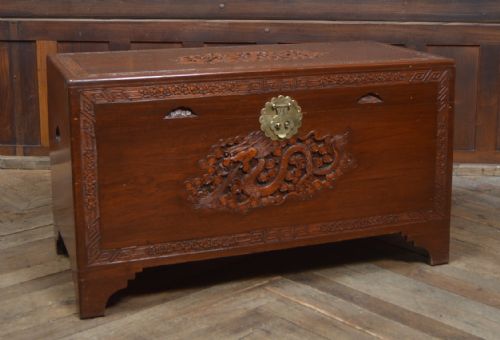


Carved Dragon Chest
A carved dragon chest brings fierce imagery and rich timber into a room, offering robust storage with deeply worked mythical motifs.
Carved Dragon Chest
When you search for a carved dragon chest, you encounter sturdy storage forms ranging from Chinese export blanket boxes to early European coffers. These pieces serve as practical household furniture while displaying intense mythological carving across their lids and panels.
The versions you are most likely to meet on this page date predominantly from the nineteenth and early twentieth centuries, though earlier European examples also appear. They span styles from Chinese Export and Qing Dynasty to Art Deco and Elizabethan oak.
Makers shaped these trunks primarily for domestic storage, utilising camphor wood, oak, and general hardwood. Many incorporate brass hardware or mother of pearl inlay to complement the dominant carved dragon motifs.
How they were made
Craftsmen built these chests using durable regional timbers such as camphor wood and oak, chosen for their strength and ability to take deep relief carving. Woodworkers joined panels securely to protect contents from moisture and pests.
Carvers worked directly onto the timber surface, cutting away backgrounds to raise fierce dragon motifs in high relief. Additional decoration often included brass fixtures and mother of pearl inlay set flush into the hardwood lids.
Carved Dragon Chest Retail Price Guide 2026
Typical asking prices for carved dragon chest among the pieces listed under this phrase on Sellingantiques today, from the lower quarter to the upper quarter. They describe what is for sale here now, not the wider market.
Some camphor wood chests still smell faintly of the forest they grew in, guarding your winter jumpers with centuries-old botanical confidence.
What varies in quality
The depth and precision of the carving separate standard storage boxes from superior examples. Master carvers created dynamic movement in the dragon scales and claws, whereas lesser pieces feature shallow, mechanical incisions.
Material selection also dictates the grade of the piece, with dense hardwoods and fragrant camphor wood commanding greater appreciation than utility timber. Furthermore, the integration of supplementary materials like mother of pearl elevates the overall execution.
The Carved Dragon Chest Glossary
- Camphor wood
- An aromatic timber frequently utilised for storage trunks to protect textiles from insects. Its distinct scent remains noticeable decades after manufacture.
- Blanket box
- A deep chest traditionally designed for storing household bedding and woollens. These forms often feature hinged lids and sturdy proportions.
- Mother of pearl
- An iridescent inner shell layer used by artisans for delicate inlay work. Craftsmen set small shaped pieces into the wood surface to create contrasting highlights.
- Chinese Export
- Goods produced in China specifically for Western markets from the eighteenth century onwards. These items often blend traditional Eastern motifs with European furniture forms.
- Relief carving
- A sculptural technique where figures project from a background plane. In these pieces, the dragon design stands proud of the surrounding timber surface.
Carved Dragon Chest: Frequently Asked Questions
What were carved dragon chests used for?
These chests primarily served as secure storage for garments, blankets, and valuable personal belongings in domestic settings. The natural aroma of woods like camphor helped protect stored textiles from moths and dampness.
Over time, some lower profiles and trunk forms also functioned as low tables or decorative furniture focal points within reception rooms.
How do I care for camphor wood?
Keep camphor wood furniture out of direct sunlight and away from direct heat sources to prevent the timber from drying out and splitting. Dust regularly with a dry cloth and avoid harsh chemical polishes that can damage the finish.
If the characteristic scent fades over time, lightly rubbing the interior with fine sandpaper can sometimes revive the natural aromatic oils in the wood.
How can I tell the period?
Dating relies on examining the timber species, construction methods, and stylistic indicators such as brass hardware or specific carving depths. Nineteenth-century export pieces often display distinct regional motifs compared to earlier European oak coffers.
Comparing the interior construction and hinge types helps separate traditional nineteenth-century production from later twentieth-century interpretations.