


Carved Wood Storage Box
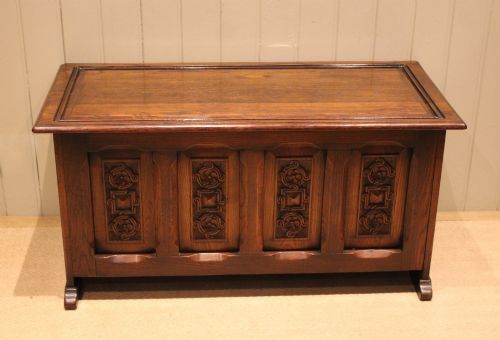
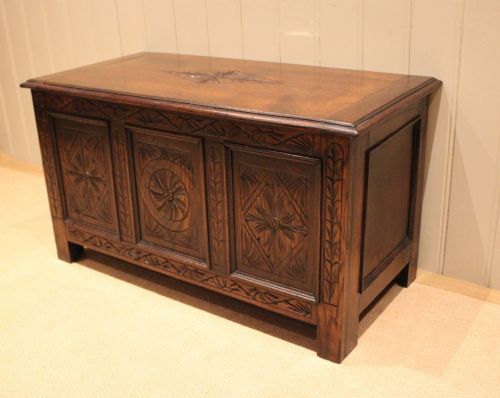
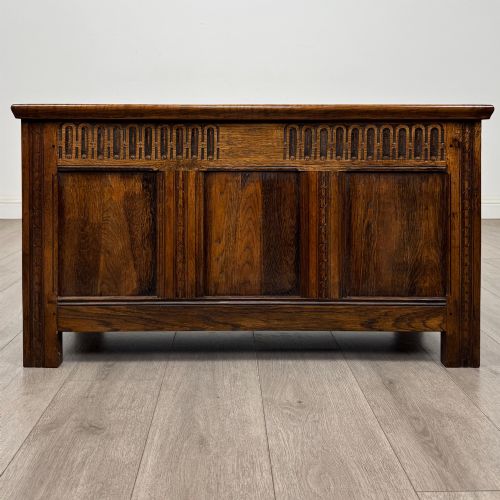
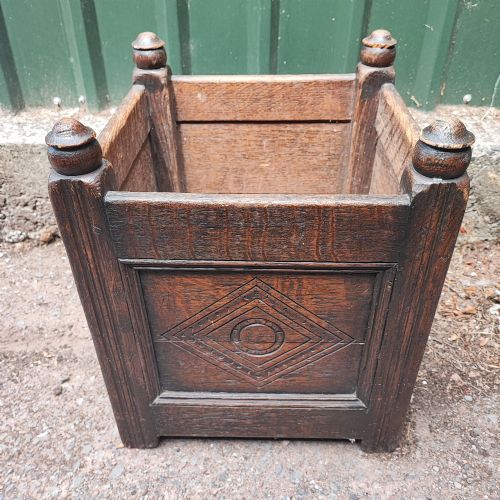
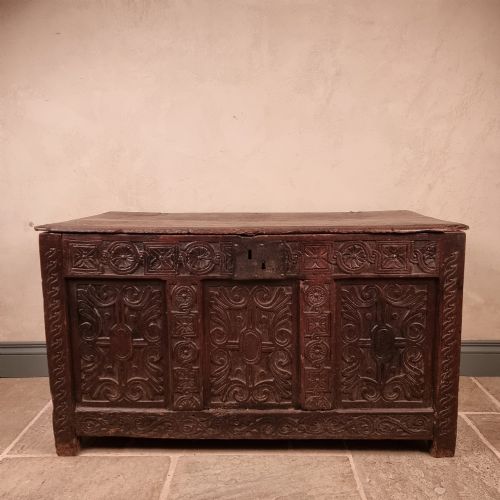
A carved wood storage box brings centuries of craft and utility into a room, offering robust containment with deeply worked relief ornamentation.
Carved Wood Storage Box
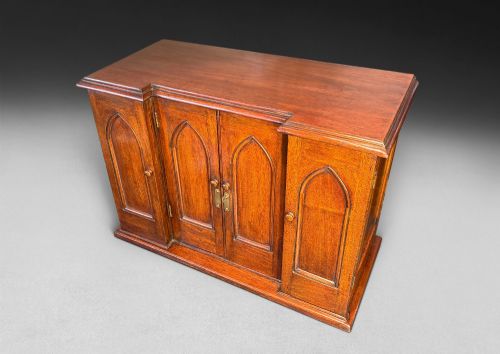
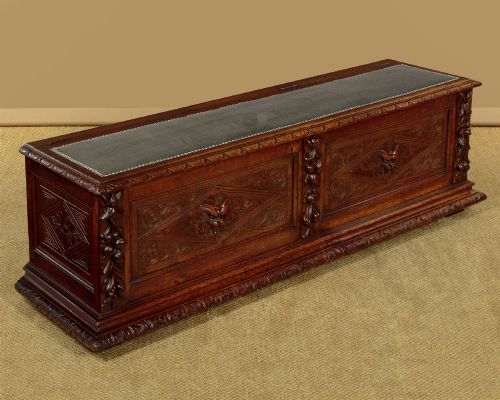
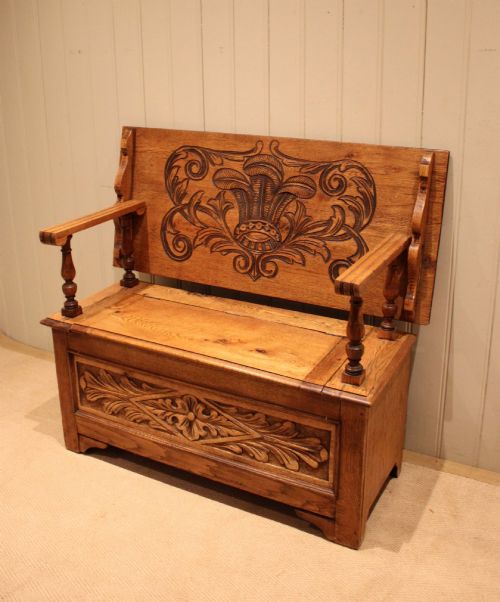
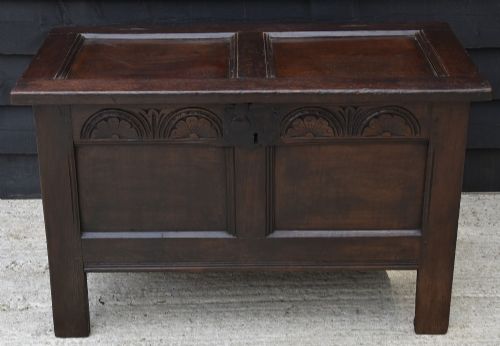
A carved wood storage box encompasses heavy utilitarian vessels, blanket chests, coffers, and small table-top collectors cabinets designed to secure household goods.
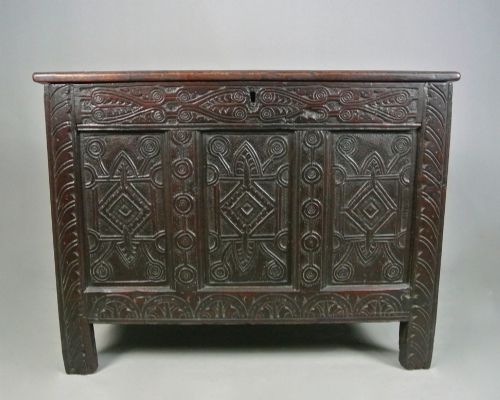
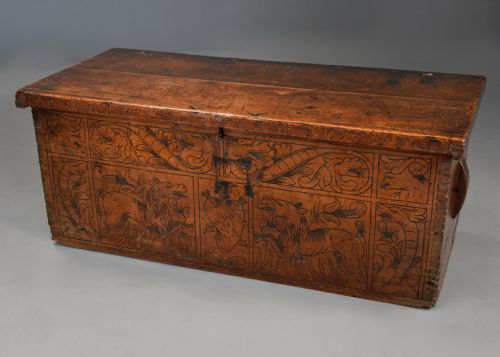
The pieces on this page lean heavily towards substantial oak coffers and chests originating from the seventeenth, eighteenth, and nineteenth centuries.
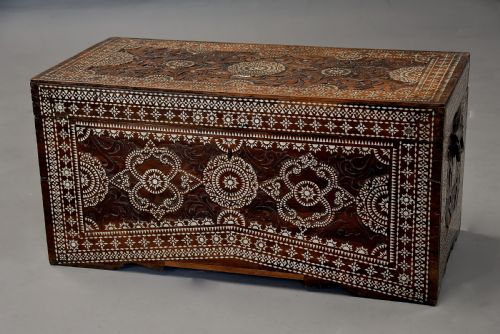
Buyers also encounter regional forms such as camphorwood trunks, mule chests in pine, and inlaid Syrian or Zanzibar vessels from later eras.
Assessing Quality
Quality rests upon the crispness and depth of the hand carving, the integrity of the timber, and the survival of an original surface finish or patina.
Early seventeenth and eighteenth-century examples command attention through authentic structural survival, original iron hinges, and uncompromised internal boarding.
Later nineteenth and twentieth-century items are judged by the complexity of their decorative schemes, including mother of pearl inlay or brass studwork.
Listings span seventeenth-century European oak coffers to twentieth-century Middle Eastern and East Asian camphorwood trunks.
The Carved Wood Storage Box Glossary
- Linen-fold
- A style of relief carving on wood panels imitating folded linen. It was popular on sixteenth and seventeenth-century panels.
- Patina
- The surface sheen and mellowing developed by wood over centuries through handling, wax, and light. It indicates genuine age.
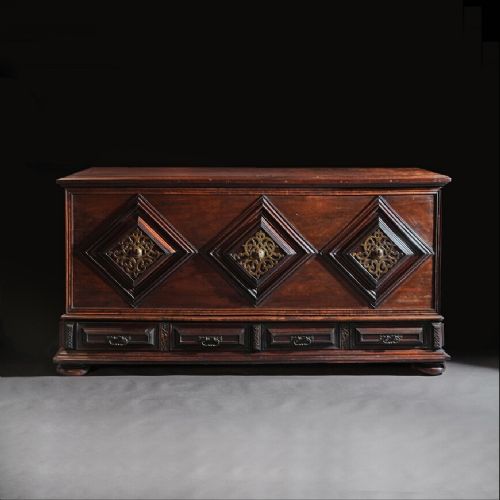
- Mule chest
- A chest featuring one or more drawers beneath the main storage well. It combines the utility of a coffer with drawer access.
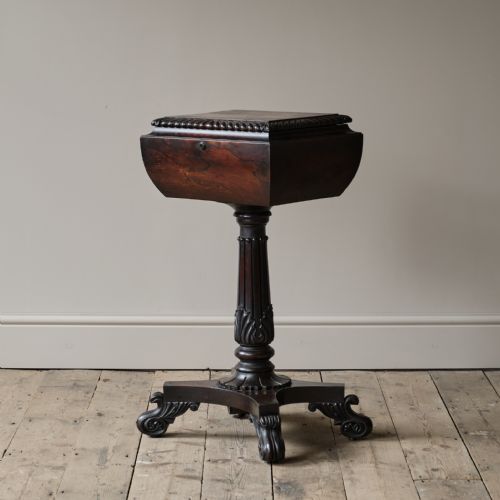
- Teapoy
- A small box or table used originally to store and dispense tea. These often sit on a central pillar or pedestal.
Carved Wood Storage Box: Frequently Asked Questions
How were these boxes used originally?
These vessels served secure storage purposes for precious textiles, church plate, documents, and personal valuables in domestic and institutional settings.
Over centuries, heavier chests also functioned as seating benches or tables within the main hall of a house.
How do I care for a historic chest?
Keep wooden storage pieces away from direct heat sources and dramatic humidity shifts to prevent timber splitting and joint movement.
Apply a microcrystalline wax sparingly to feed the grain and maintain the surface sheen without attracting dust.
How can I tell a seventeenth-century piece apart?
Seventeenth-century examples display pegged frame and panel construction with hand-riven oak boards showing irregular grain patterns.
Surface decoration relies on geometric strapwork, punchwork, or linen-fold carving rather than machine-cut mouldings.
Where should I place a trunk in a modern home?
A solid timber chest works effectively at the foot of a bed for spare linen storage or as a low coffee table in a living room.
Smaller work boxes and cabinets suit tabletops, sideboards, or dedicated display spaces where the surface detail remains visible.