

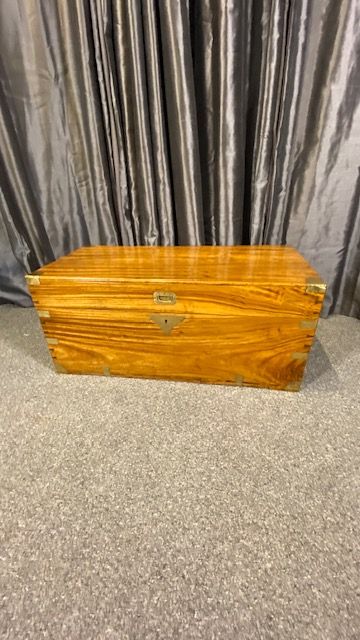
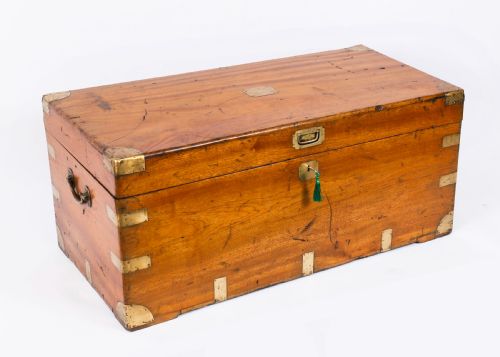
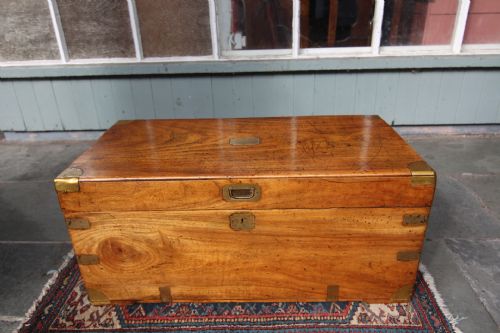

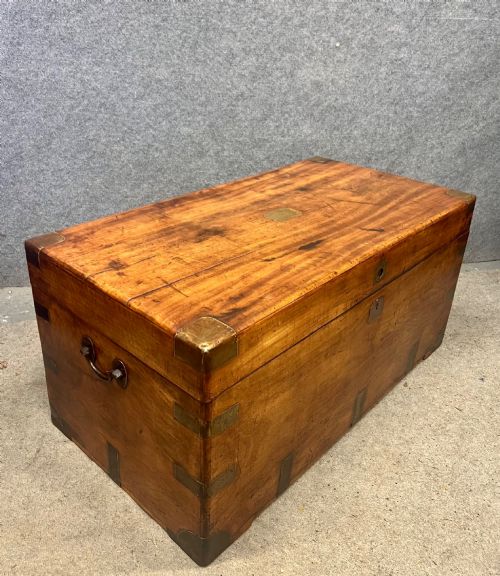
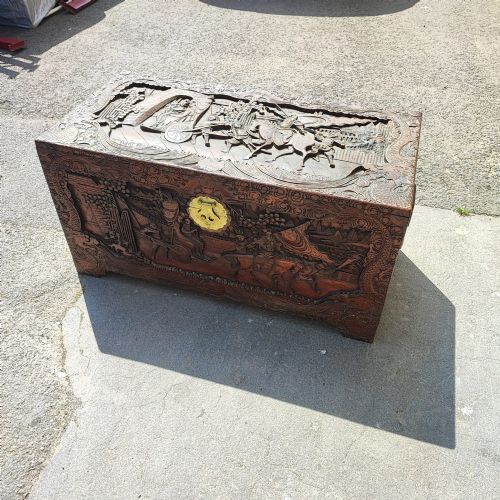


Camphorwood Blanket Box
A camphorwood blanket box brings distinct aromatic timber and robust construction into a room, offering practical storage with a rich history.
Camphorwood Blanket Box
When a buyer searches for a camphorwood blanket box, they encounter sturdy storage chests designed for travel and domestic use. These pieces originate primarily from the nineteenth century, spanning Victorian, Georgian, and campaign styles alongside Chinese export and Anglo Indian pieces.
The most common examples on this page are nineteenth-century campaign trunks and Chinese export chests. These items served officers on the move or merchants trading across empires, resulting in robust forms built to withstand long sea voyages.
Makers constructed these storage pieces to hold blankets, linens, and personal effects while protecting contents from insects thanks to the natural properties of the wood. Surviving examples range from plain utilitarian military boxes to heavily carved Oriental trunks and brass bound sea chests.
What varies in quality
Quality in these chests rests upon the crispness of the brass hardware and the tightness of the joinery. Superior examples feature heavy brass binding and flush fitting handles that sit neatly within the timber surface.
The depth and detail of the carving distinguish plain utilitarian boxes from fine decorative pieces. Finely grained timber surfaces and original structural fittings elevate certain trunks above standard storage boxes.
Camphorwood Blanket Box Retail Price Guide 2026
Typical asking prices for camphorwood blanket box among the pieces listed under this phrase on Sellingantiques today, from the lower quarter to the upper quarter. They describe what is for sale here now, not the wider market.
Listings feature camphorwood blanket boxes spanning the Georgian and Victorian eras, alongside Chinese export and Anglo Indian pieces.
The Camphorwood Blanket Box Glossary
- Campaign trunk
- A portable chest built in sections or fitted with carrying handles for military officers on active service. These boxes typically feature protective brass corners to endure frequent transport.
- Brass bound
- A method of reinforcing wooden chest edges and corners with fitted brass plates. This metalwork protects the timber from impact during travel.
- Chinese export
- Goods manufactured in China specifically for Western markets during the eighteenth and nineteenth centuries. These items often combine traditional local craftsmanship with European forms.
- Anglo Indian
- Furniture and decorative objects produced in India under British rule, frequently incorporating local timbers and traditional carving techniques. These pieces reflect a fusion of design sensibilities.
- Sea chest
- A robust wooden box utilised by sailors for personal belongings aboard ship. They usually include rope beckets or iron handles for secure storage.
Camphorwood Blanket Box: Frequently Asked Questions
Why do these chests smell strongly?
Camphor wood contains natural oils that emit a distinct, pungent aroma. This scent acts as an effective deterrent against moths and other insects.
Over decades, the timber retains this characteristic fragrance, which protects textiles stored inside the box without chemical treatments.
How do I date a campaign trunk?
Dating relies on construction methods, fastener types, and prevailing styles from specific eras. Nineteenth-century pieces often display hand-dovetailed joints and specific brass hardware designs.
Earlier Georgian and Regency examples tend to feature heavier iron or brass strapwork, whereas later Victorian items incorporate standardised recessed fittings.
Were these boxes only used by the military?
Military officers utilised campaign chests because their modular designs and protective metal corners survived arduous journeys. Civilian travellers and sailors also relied on similar trunks for long voyages.
Merchants engaged in the China trade commissioned decorated storage boxes for domestic use as well as maritime transport.
How should I care for a camphorwood chest?
Keep the timber away from direct heat sources and rapid temperature fluctuations to prevent the wood from splitting. Occasional light dusting maintains the surface finish without stripping natural oils.
Allowing air to circulate periodically inside the box helps preserve the interior condition and the characteristic wood aroma.