

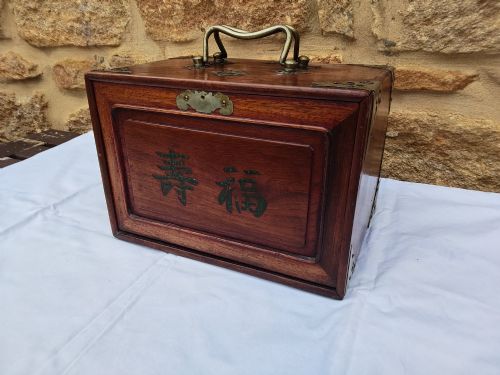
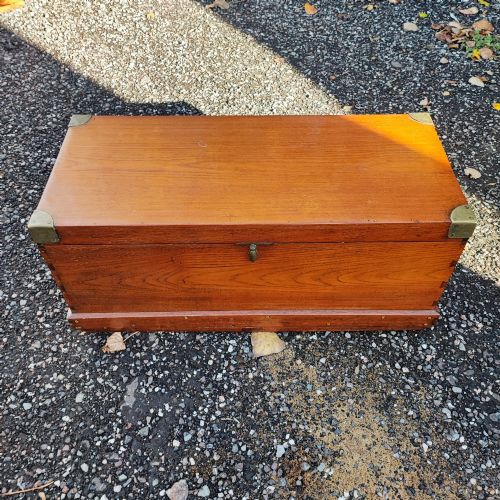
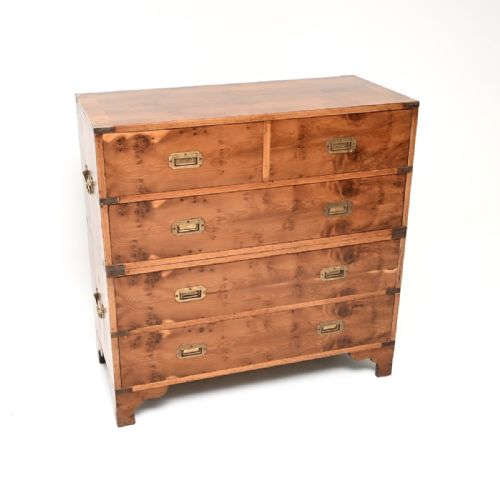
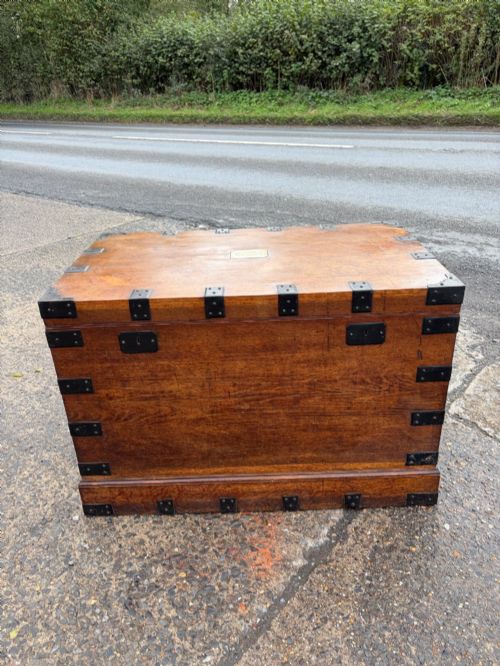
Brass Bound Wooden Chest
A brass bound wooden chest is a robust travel trunk built for officers and merchants, offering secure storage with enduring character.
Brass Bound Wooden Chest
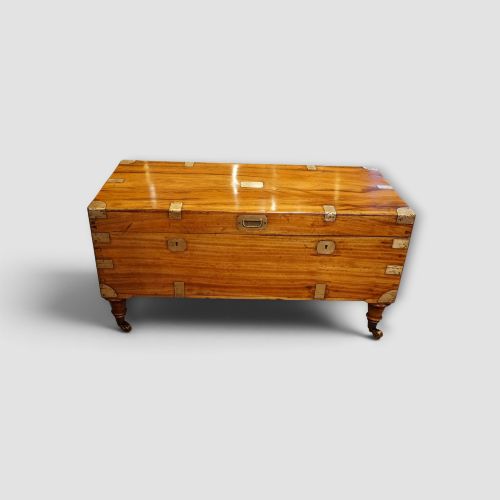
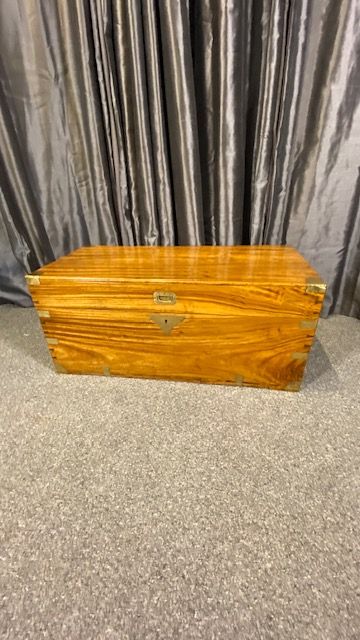
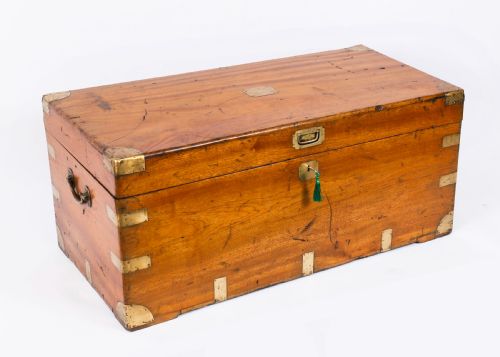
A brass bound wooden chest is a portable container designed for travel and storage during the eighteenth and nineteenth centuries. These pieces encompass military campaign trunks, merchants boxes, and colonial chests used by officers, traders, and administrators on the move.
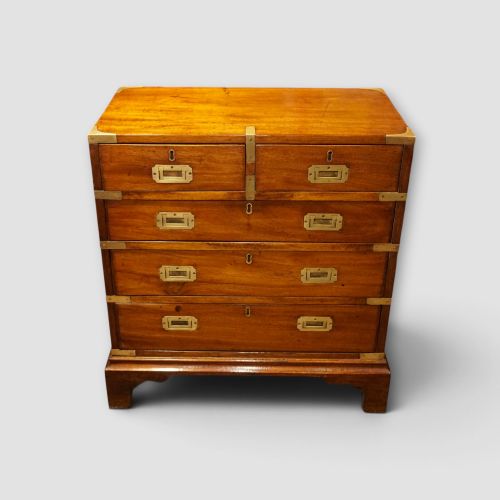
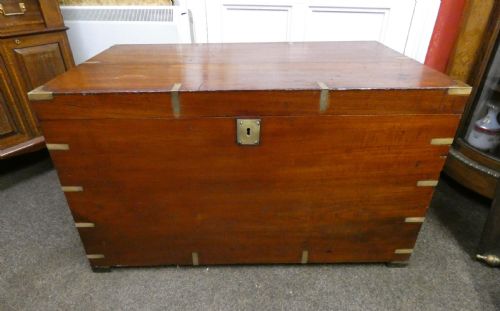
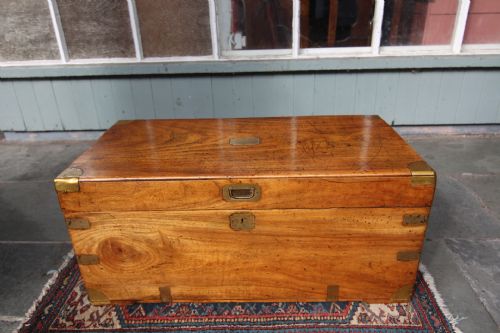
The version most commonly met on this page is the nineteenth century campaign trunk formed in camphor wood or teak. These practical storage pieces frequently display protective brass corners, strapwork, and recessed carrying handles suited for arduous journeys.
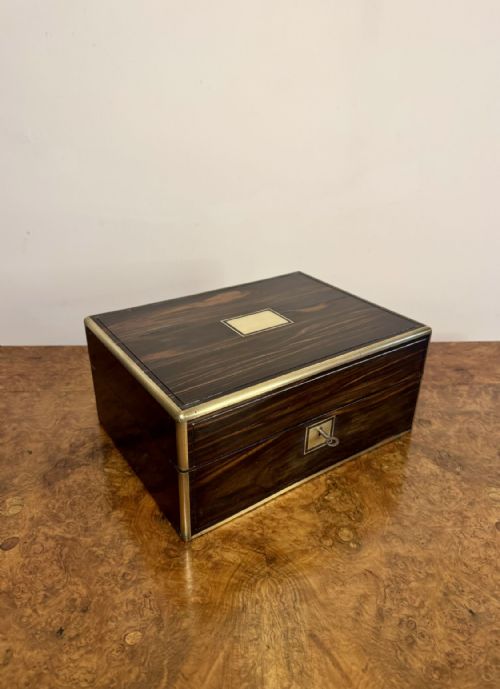
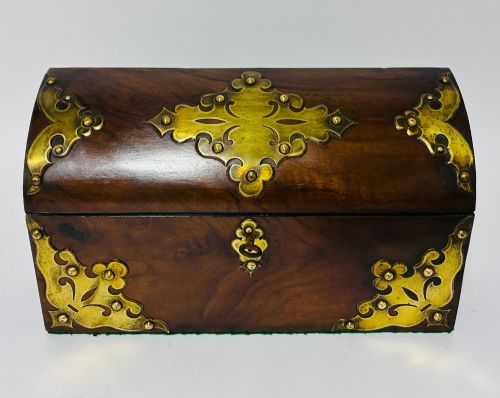
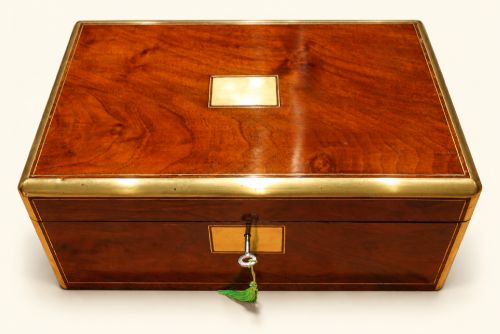
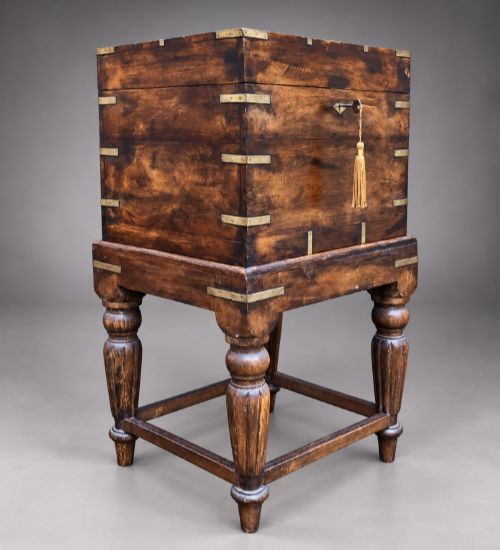
Beyond large trunks, the selection includes smaller deed boxes, wine cellarettes, and decorative caskets sharing the characteristic metal binding. These varied forms originate from diverse regions including British India, China, Portugal, and Scandinavia.
Materials and construction
The bodies of these chests employ durable timbers such as camphor wood, teak, mahogany, padouk, and walnut. Camphor wood was selected for campaign trunks to deter insects, while denser hardwoods like teak and padouk provided resilience against tropical climates and heavy handling.
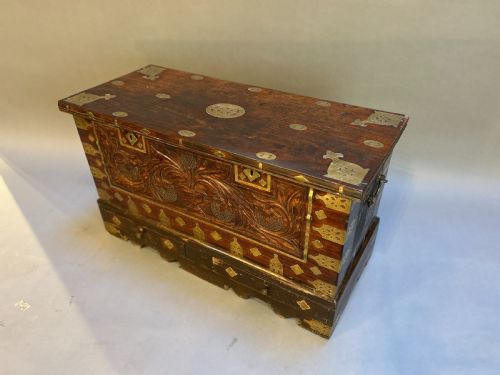
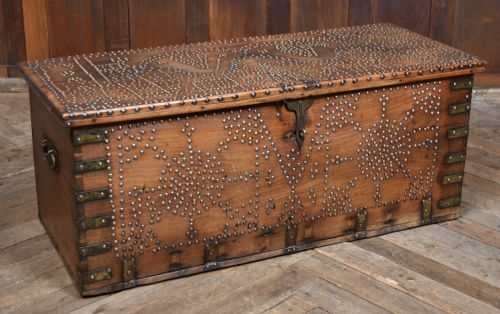
Reinforcement relied heavily on brass straps, corners, and stud work fastened with iron or brass screws. Recessed drop handles and robust locking mechanisms protected the contents and allowed stacking within cramped ships and tents.
Brass Bound Wooden Chest Retail Price Guide 2026
Typical asking prices for brass bound wooden chest among the pieces listed under this phrase on Sellingantiques today, from the lower quarter to the upper quarter. They describe what is for sale here now, not the wider market.
The listings span multiple centuries, incorporating eighteenth century Georgian and seventeenth century Portuguese colonial pieces alongside Victorian examples.
Quality variations
Quality rests in the precision of the joinery and the integration of the metal hardware. Superior pieces display flush-fitted brass corners, dovetailed joints, and original working locks with functional keys.
The selection of timber grain and the integrity of the secondary woods further distinguish finer examples. Original hardware remaining untouched through centuries elevates the historical character of a piece.
The Brass Bound Wooden Chest Glossary
- Campaign trunk
- A portable storage chest constructed in sections or with folding elements for military officers on active service. These pieces typically feature recessed brass handles and reinforced corners to withstand frequent transport.
- Camphor wood
- An aromatic hardwood utilised for nineteenth century trunks due to its natural resistance to insects and dampness. The distinct scent often lingers within the wood.
- Cellarette
- A fitted chest or box designed to hold bottles of wine securely during travel or dining. They appear in diverse woods with internal divisions.
- Cofre forte
- A strongbox or chest reinforced for securing valuables, often associated with continental European craftsmanship from earlier centuries. These examples display intricate iron or brass mountings.
- Padouk
- A heavy tropical hardwood exhibiting a reddish brown hue, frequently employed in Anglo Indian furniture and storage boxes. It offers exceptional durability.
Brass Bound Wooden Chest: Frequently Asked Questions
What were brass bound wooden chests used for?
These chests served as portable wardrobes and storage vaults for military officers, colonial administrators, and merchants travelling across distant territories. Their sturdy construction protected uniforms, documents, and personal valuables from rough handling and moisture.
Smaller boxes functioned as writing slopes, deed repositories, or wine cellarettes for domestic and travel use. Every element was designed to endure the rigours of nineteenth century transport.
How do I identify a campaign chest?
Campaign chests are identified by their modular construction, recessed brass hardware, and carrying handles intended for easy packing. They often separate into distinct sections or include folding stands for field use.
Look for durable timbers like camphor wood or teak combined with protective brass corners and strapping. These functional indicators separate military baggage from static domestic furniture.
Are camphor wood chests safe for modern homes?
Camphor wood chests integrate smoothly into contemporary living spaces as coffee tables, blanket boxes, or end-of-bed storage. Their natural aromatic properties continue to deter moths and freshen stored textiles.
Allowing adequate ventilation inside the trunk maintains the timber and preserves the interior environment. The sturdy lids provide flat surfaces suitable for lamps and books.
How do I date a brass bound chest?
Dating relies on examining the timber species, construction techniques, and the style of the brass hardware. Eighteenth century pieces often display heavier framing and hand-forged fittings, whilst Victorian examples utilise standardised machine-made screws and recessed handles.
Documentation such as inscribed brass plaques or historical association adds specific provenance. Comparing the secondary woods and lock types helps confirm the era of manufacture.