

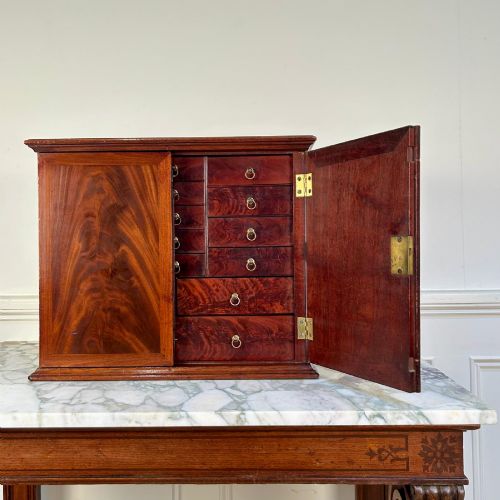
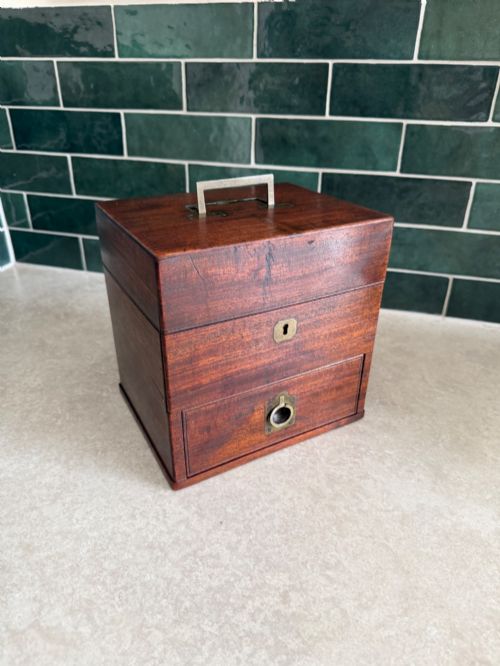
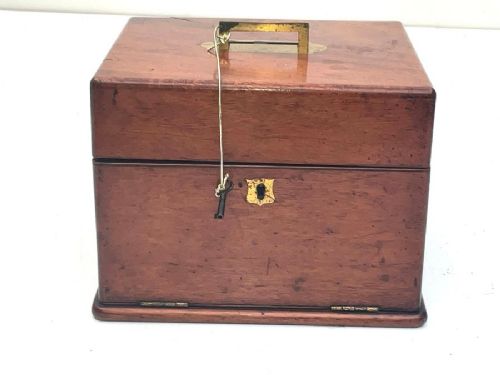
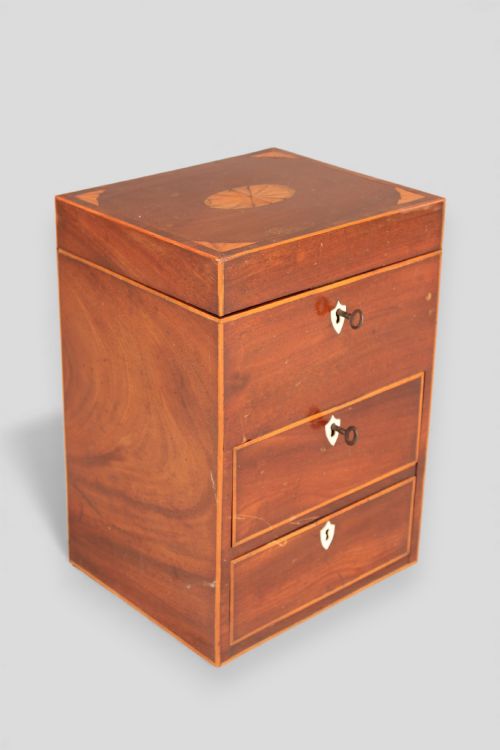


Mahogany Apothecary Box
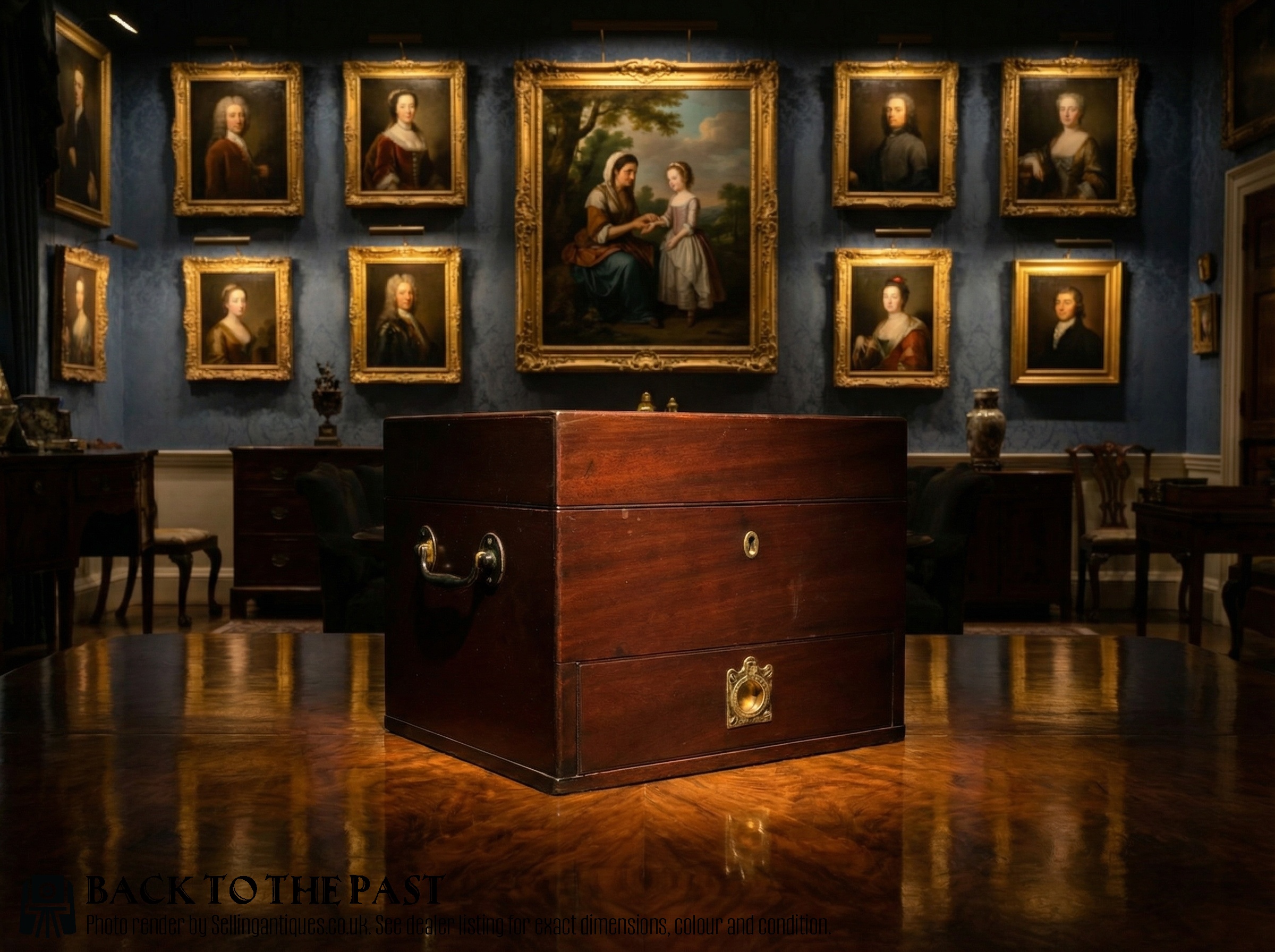
A mahogany apothecary box holds medical bottles and remedies in a compact, portable chest designed for travel or the consulting room.
Mahogany Apothecary Box
A mahogany apothecary box is a timber chest built to house medical bottles, scales and remedies securely during travel or domestic use. These pieces appear across Georgian, Regency and Victorian periods, taking forms from small portable carrying cases to larger tabletop cabinets.
Most examples met on this page date from the late eighteenth century through the nineteenth century, constructed as fitted travelling chests or countertop display cabinets. Interiors typically include compartmented sections for glass bottles, small drawers, and occasionally velvet linings or bone instruments.
How they were made
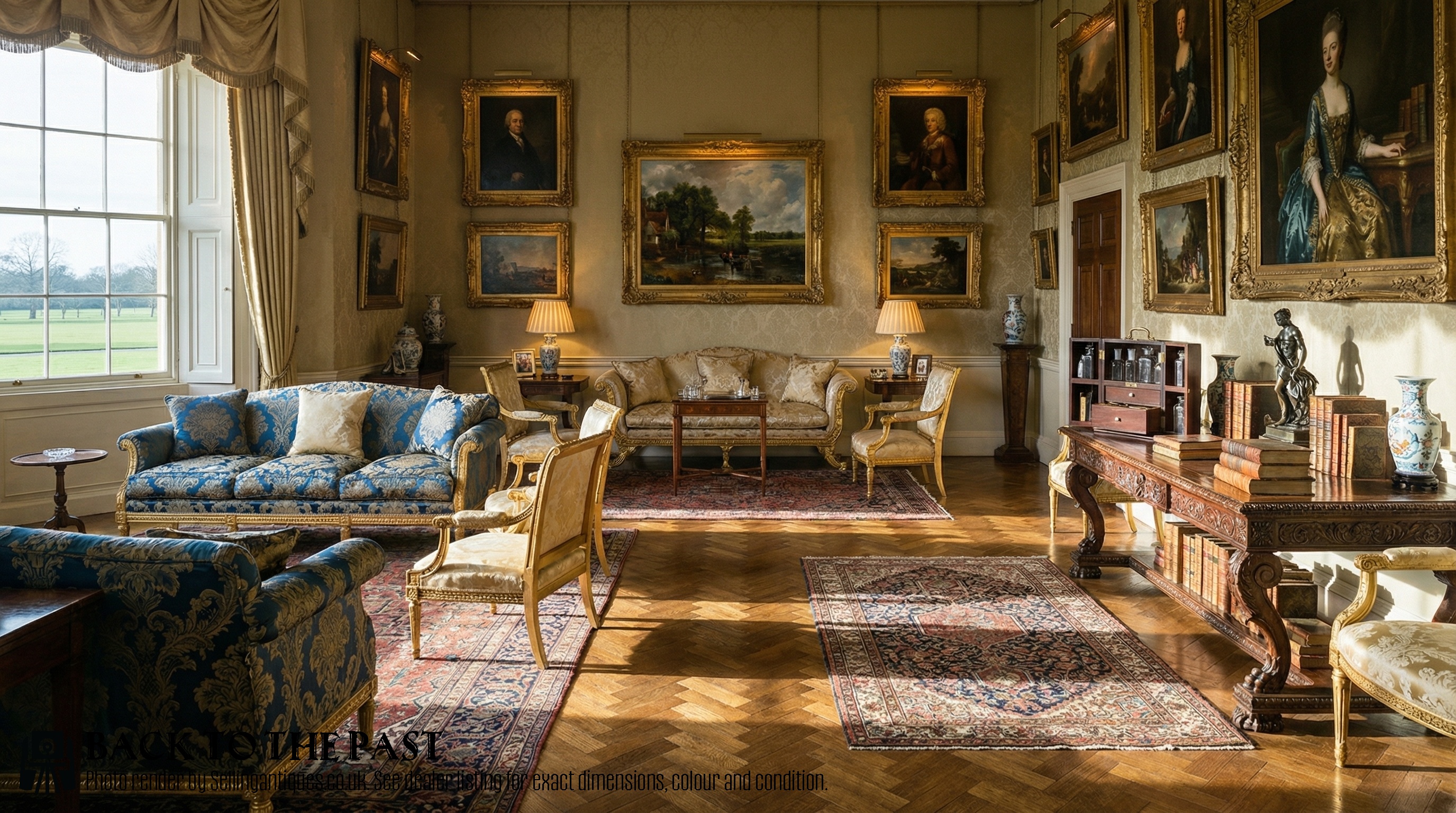
Construction relies primarily on solid mahogany and pine carcasses, frequently reinforced with brass binding, flush handles and corner brackets to withstand transit. Surfaces are finished with polished wood, while interiors utilise precision carpentry to partition space for delicate glass bottles and drawers.
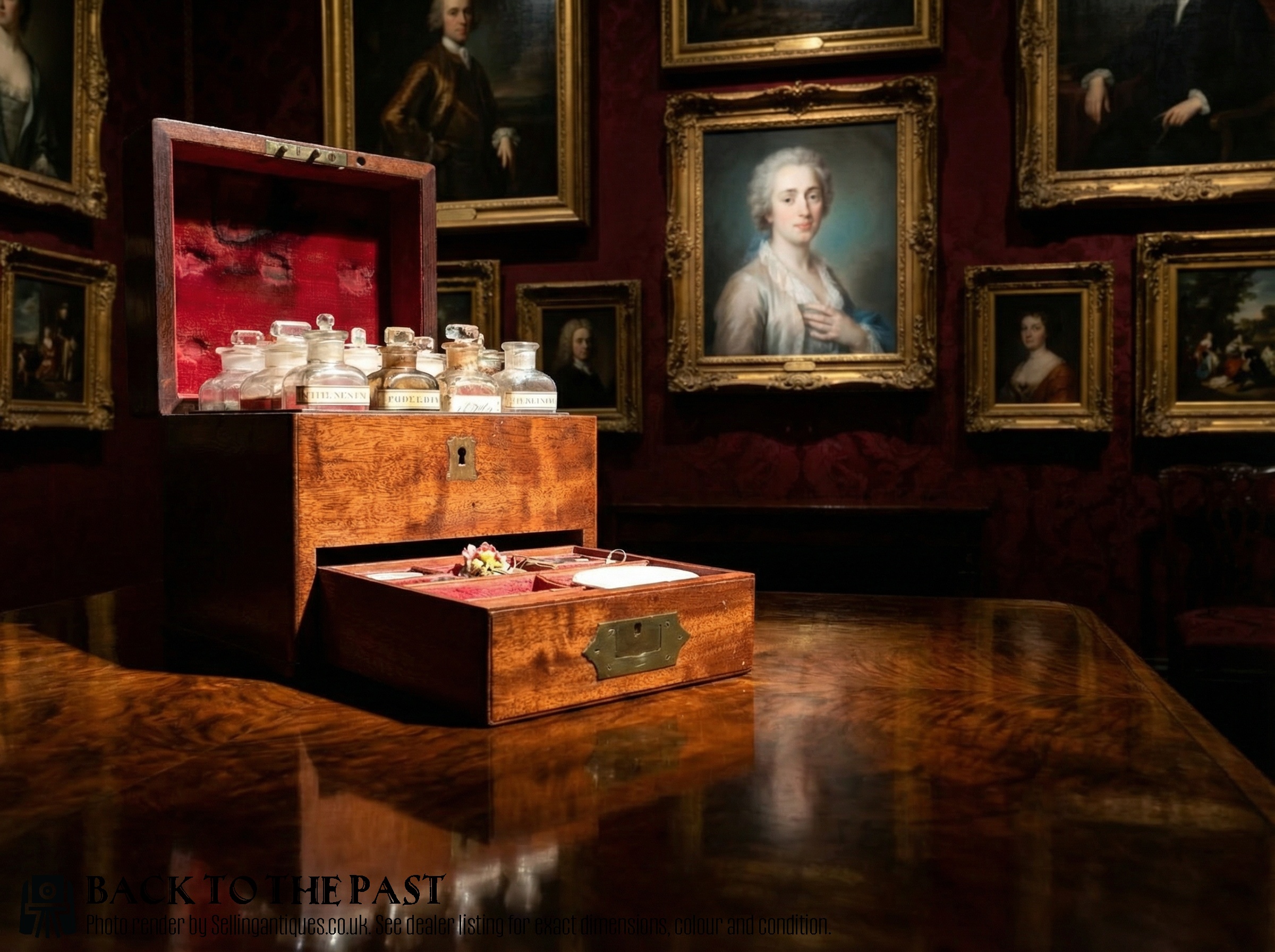
Fitted compartments often incorporate velvet linings, paper labels and bone elements alongside glass bottles, apothecary scales and brass locks. Surviving examples demonstrate joinery designed to protect medicinal contents from movement and light.
Mahogany Apothecary Box Retail Price Guide 2026
Typical asking prices for mahogany apothecary box among the pieces listed under this phrase on Sellingantiques today, from the lower quarter to the upper quarter. They describe what is for sale here now, not the wider market.
Listings feature mahogany apothecary boxes spanning the Georgian, Regency and Victorian eras alongside later twentieth-century commercial display cabinets and scientific instrument cases.
What varies in quality
Quality separates utilitarian medical chests from exceptional presentation pieces through the precision of the interior layout and the retention of original contents. Boxes retaining their complete set of original glass bottles, stoppers and scales command greater interest than adapted shells.
The choice of cabinet timber, the subtlety of brass flush hardware, and the complexity of secret drawers or concealed locking mechanisms determine the standard of manufacture. Finer examples display meticulous dovetail joinery and careful grain matching across the mahogany panels.
The Mahogany Apothecary Box Glossary
- Apothecary box
- A fitted wooden chest designed to store medicinal bottles, scales and remedies securely. These boxes range from portable campaign cases to static countertop cabinets.
- Campaign case
- A portable chest constructed with recessed brass hardware and carrying handles for ease of transport during travel. They are built robustly to endure movement.
- Precision beam scales
- Delicate weighing instruments used by chemists and apothecaries to measure exact quantities of dry ingredients. They often sit inside dedicated wooden compartments.
- Display cabinet
- A tabletop cabinet featuring glazed or open shelving intended to showcase goods or remedies in a shop environment. They appear in nineteenth and early twentieth century styles.
Mahogany Apothecary Box: Frequently Asked Questions
What did they store inside?
These chests held glass bottles filled with liquid medicines, powders, and chemical compounds required for personal or professional treatment. Many also contained scales, weights, mixing pestles, and small drawers for related instruments.
Survival of these original internal components varies significantly between pieces. Some retain full sets of labelled glass bottles, while others survive as empty wooden cases.
How do I date an apothecary box?
Dating relies on construction methods, timber choice, and hardware styles such as brass corner brackets and flush campaign handles. Georgian and Regency examples often feature simpler, heavier mahogany construction with hand-cut dovetails, whereas Victorian pieces introduce varied interior layouts.
The presence of maker stamps, paper labels inside the lid, or specific bottle shapes also helps narrow the period of manufacture.
Were these used for travel?
Many examples are explicitly constructed as campaign or travelling chests, equipped with flush brass handles and secure locking mechanisms to survive journeys. They allowed physicians, military officers, and travellers to carry essential medicines safely.
Other larger variations served as static countertop cabinets or domestic medicine chests intended to remain in one room.
Are original bottles common?
Original glass bottles appear in a portion of surviving pieces, sometimes retaining their glass stoppers or paper apothecary labels. Complete sets with matching bottles add considerable interest for collectors.
Many boxes lost their contents over time as medicines were used up or the chests were repurposed for other domestic storage needs.