





Antique Doctor Box
An antique doctor box is a fitted wooden chest or leather case designed to carry medicines and instruments, prized today for its intricate interior compartments and surviving apothecary bottles.
Antique Doctor Box
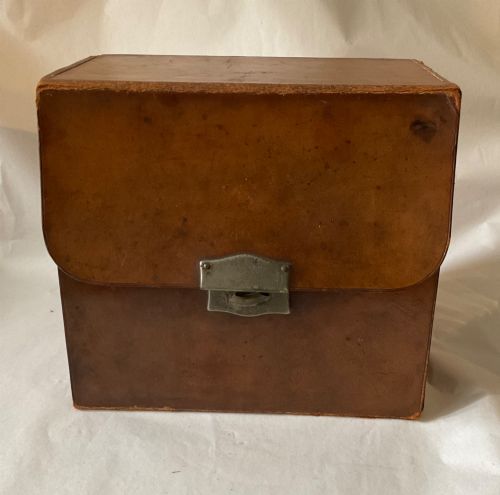
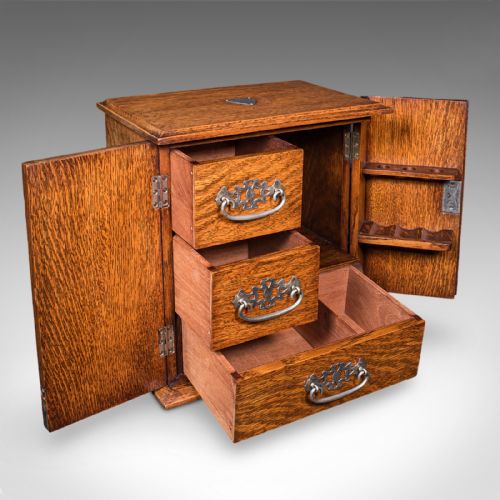
When you search for an antique doctor box, you encounter a range of medical chests, apothecary travelling cases, and smoking cabinets spanning the Georgian, Victorian, and Edwardian eras. These boxes were essential tools for physicians and surgeons on the move, designed to protect fragile glass vials and delicate instruments during travel.
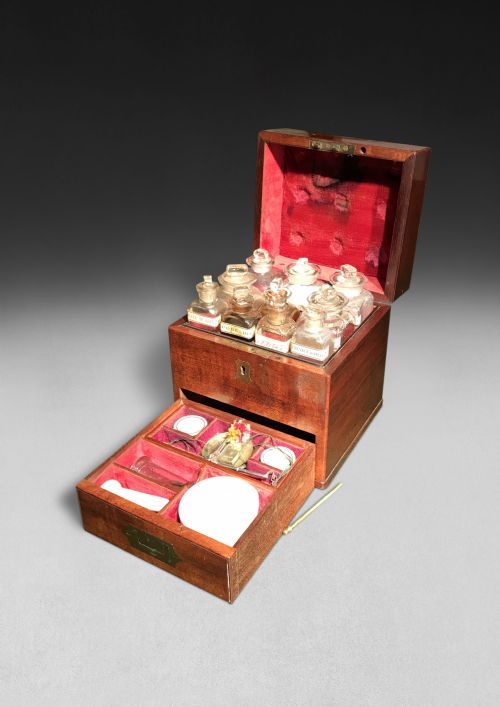
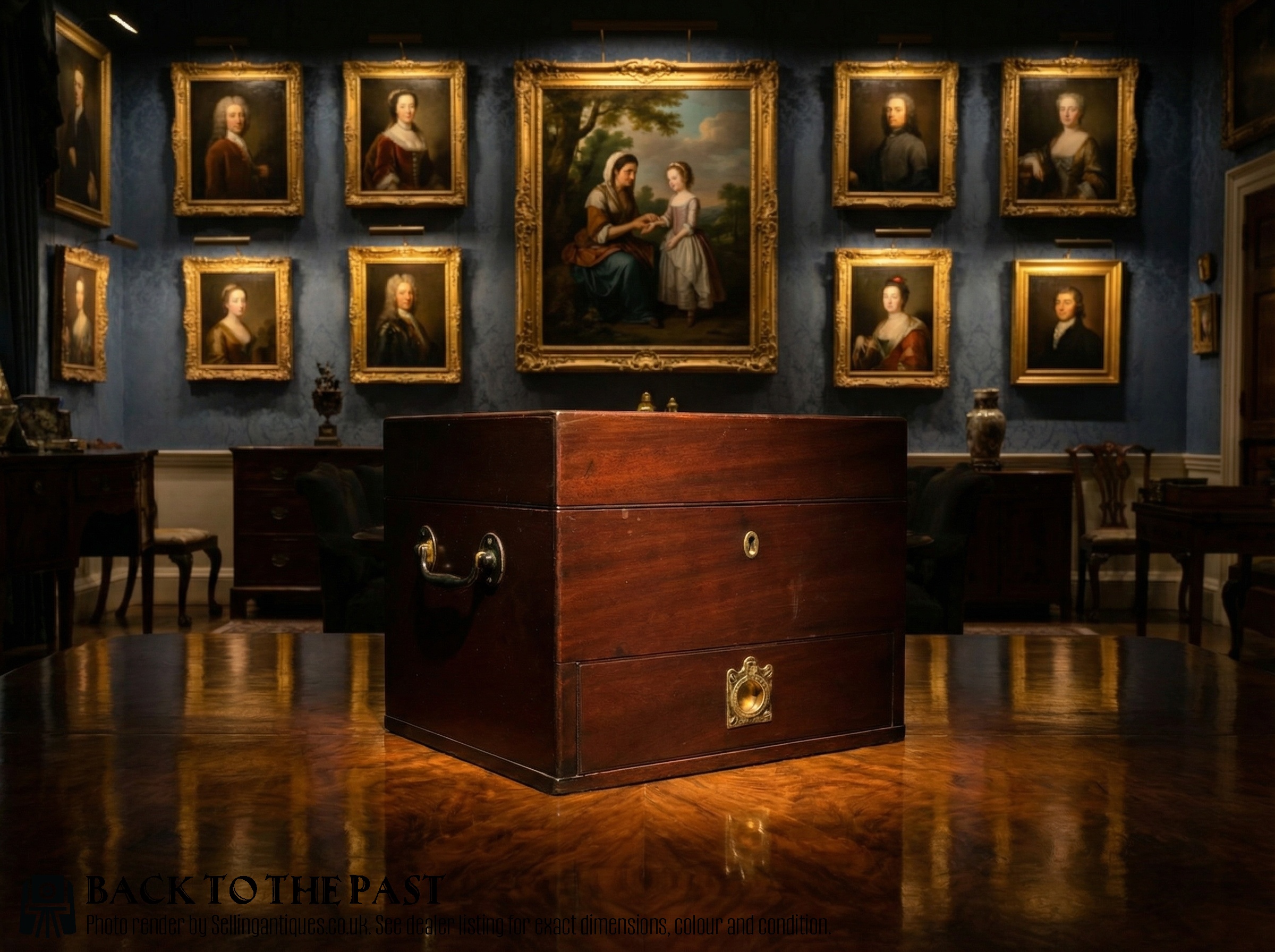
The versions you are most likely to meet on this page include mahogany apothecary boxes fitted with original glass bottles and lower drawers, alongside leather cased apothecary cases and Edwardian wooden doctor bags. Pieces vary from simple carrying chests to elaborate Georgian and Regency medicine cabinets featuring brass handles and secure locking mechanisms.
How they were made
Cabinet makers constructed these boxes primarily in mahogany, oak, and pine, frequently utilising brass for carrying handles, corner brackets, and escutcheons to withstand heavy travel. Finer examples feature meticulous boxwood stringing and mahogany veneers, demonstrating the high standard of British cabinet work during the Georgian and Regency periods.
Interiors were carefully engineered to hold glass bottles securely, often lined with velvet or leather and partitioned with fitted wooden dividers to prevent contents from shifting. Metal was employed for specialised medical sets such as cupping equipment, while copper and leather formed durable exteriors for bags and Gladstone cases.
Antique Doctor Box Retail Price Guide 2026
Typical asking prices for doctor box among the pieces listed under this phrase on Sellingantiques today, from the lower quarter to the upper quarter. They describe what is for sale here now, not the wider market.
Materials recorded across these medical items include brass, mahogany, glass, velvet, metal, oak, leather, and pine.
What varies in quality
The distinction between a standard medical chest and a superior piece lies in the completeness of its original contents and the sophistication of its internal architecture. Boxes that retain their original glass bottles, stoppers, and hidden secret drawers command greater interest than those stripped of their fittings over time.
Quality also shows in the timber selection and the precision of the joinery, particularly in how smoothly internal trays slide and how tightly hinged lids and lock mechanisms operate. Finer examples display harmonious proportions and careful timber matching across the exterior surfaces, reflecting the status of the practitioner who originally commissioned them.
John Millikin
The Antique Doctor Box Glossary
- Apothecary box
- A fitted wooden chest designed to store and transport medicinal drugs, powders, and compounding scales. These boxes typically feature numerous internal compartments and specialised slots for glass bottles.
- Cupping set
- A medical kit containing glass cups and scarificators used in 19th-century bloodletting practices. Such sets were meticulously arranged in velvet-lined fitted cases.
- Escutcheon
- A flat plate of brass surrounding a keyhole, serving both to protect the surrounding wood from wear and to enhance the appearance of the box front.
- Stringing
- A narrow line of contrasting timber inlaid into the surface of a box to create a decorative border. This technique is frequently seen on finer Georgian and Regency pieces.
Antique Doctor Box: Frequently Asked Questions
What is an antique doctor box?
An antique doctor box is a portable wooden chest or leather case designed to hold medical instruments, glass medicine bottles, and remedies. They were used by physicians and apothecaries to transport treatments safely.
These pieces range from Georgian mahogany chests to Edwardian leather doctor bags. Most feature fitted interiors with dedicated slots for delicate vials.
How were apothecary boxes used?
Apothecary boxes allowed travelling doctors to compound and dispense medicines on house calls or during military campaigns. They kept volatile liquids and powders secure during rough carriage journeys.
Lower drawers often contained scales, mortar and pestle sets, and mixing tiles. The upper compartments held rows of labelled glass bottles.
How do I date a medical chest?
Dating relies on timber choices, brass hardware styles, and the construction of the dovetail joints. Georgian and Regency pieces often use solid mahogany with brass flush handles, while Edwardian examples include simpler wooden frames and leather.
The presence of original paper apothecary labels or maker stamps can also narrow down the manufacturing decade.
How do I clean a wooden medicine chest?
Maintain the exterior timber by dusting with a dry cloth and occasionally applying a traditional beeswax polish to nourish the antique wood. Avoid using harsh chemical cleaners that can strip the original finish.
Interior velvet or leather linings require gentle care with a soft brush to remove dust without disturbing fragile old fabrics.