



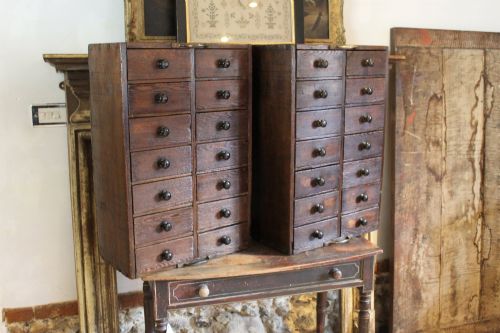
Victorian Apothecary Chest
A victorian apothecary chest brings the disciplined utility of the nineteenth-century chemist straight into modern interiors.
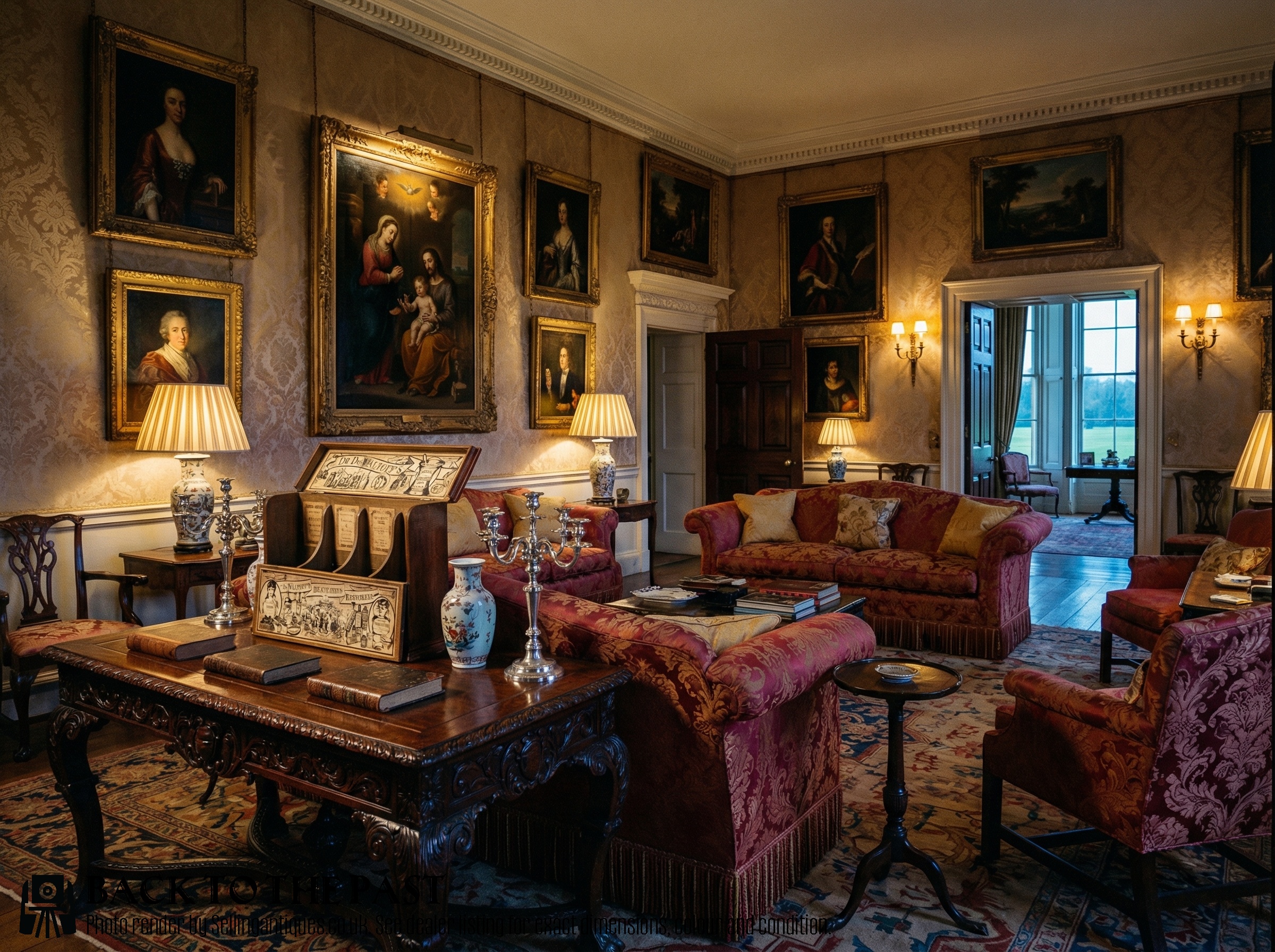
Victorian Apothecary Chest
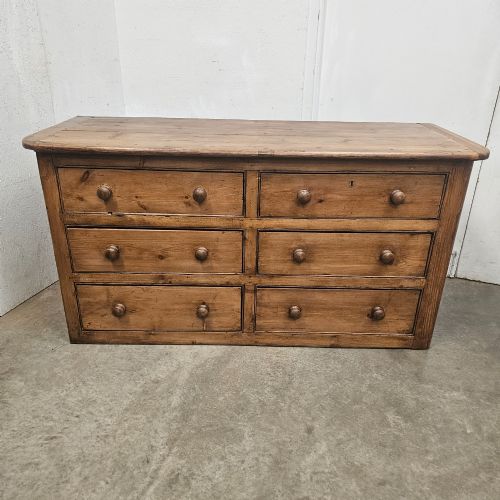
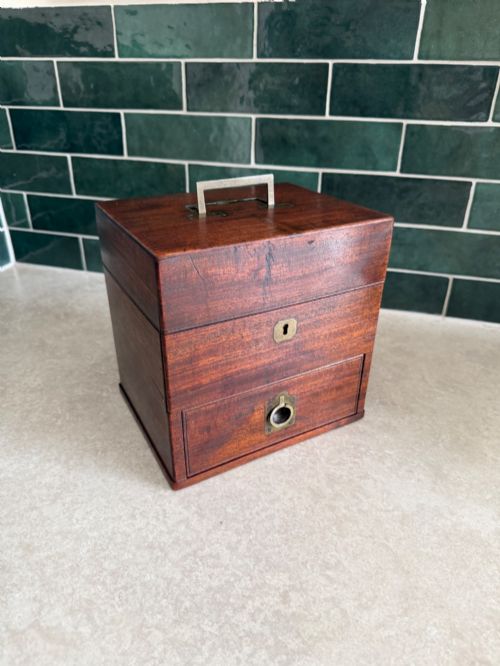
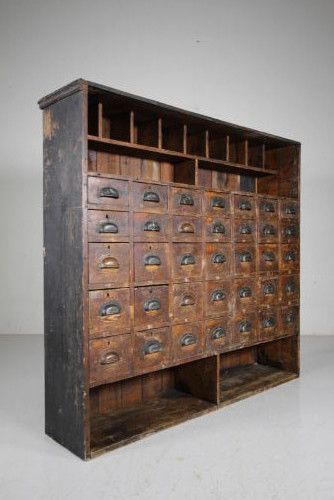
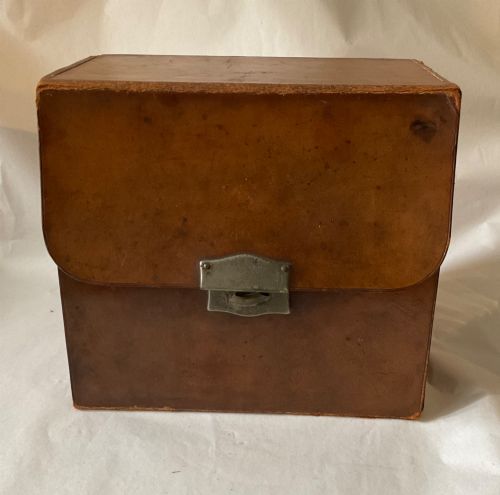
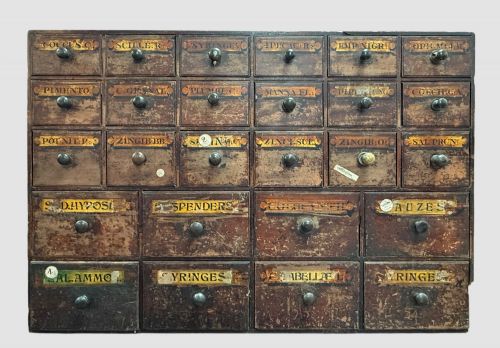
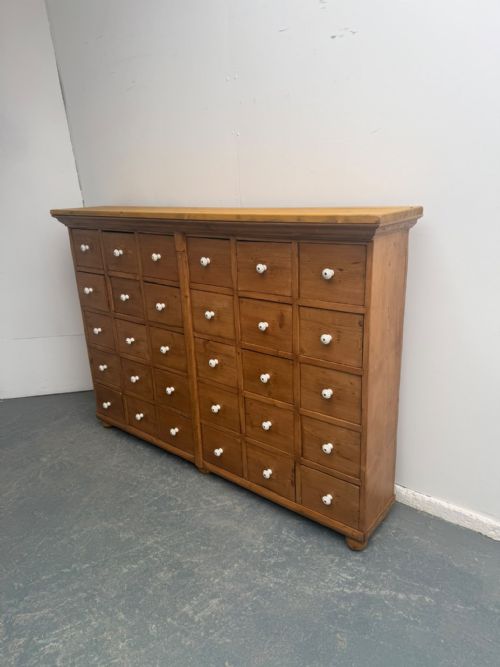
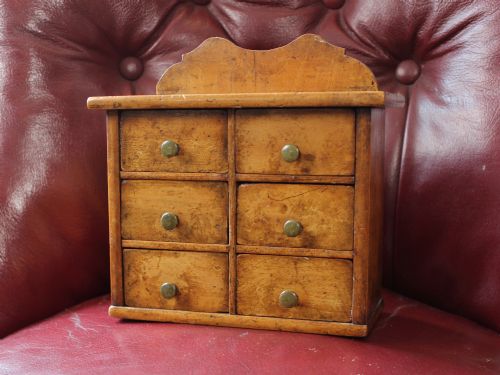
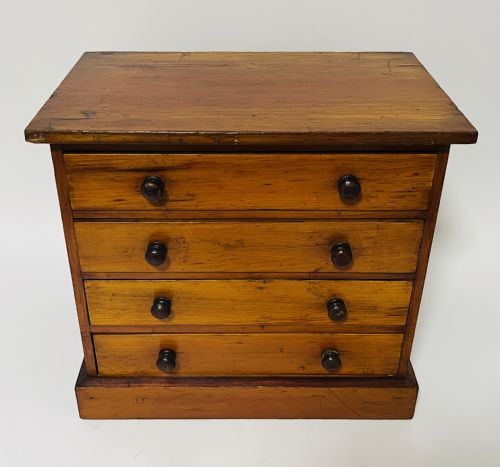
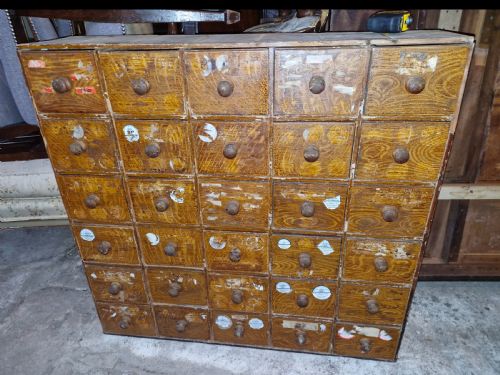
A victorian apothecary chest comprises multi-drawer cabinets, small travel boxes, and shop fittings originally utilised by chemists, pharmacists, and collectors during the nineteenth century. These pieces range from substantial banks of numerous drawers down to compact tabletop boxes fitted with internal glass bottles.
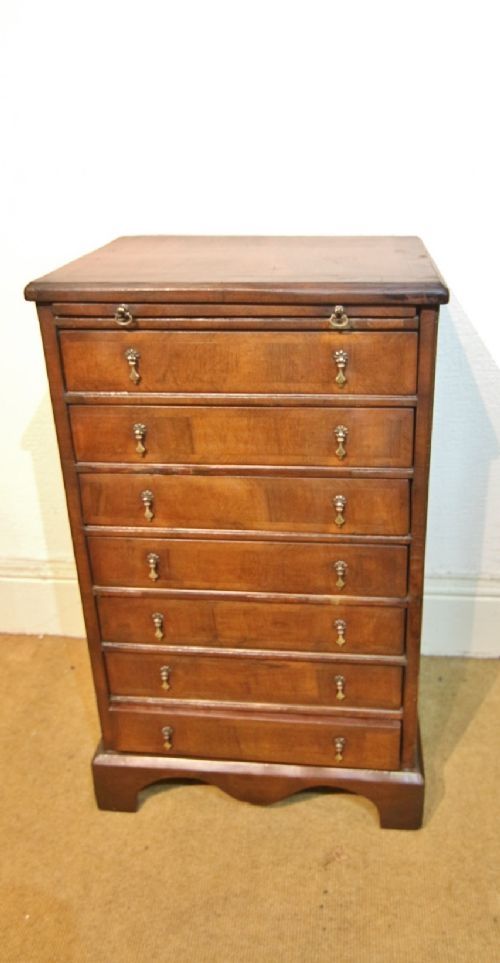
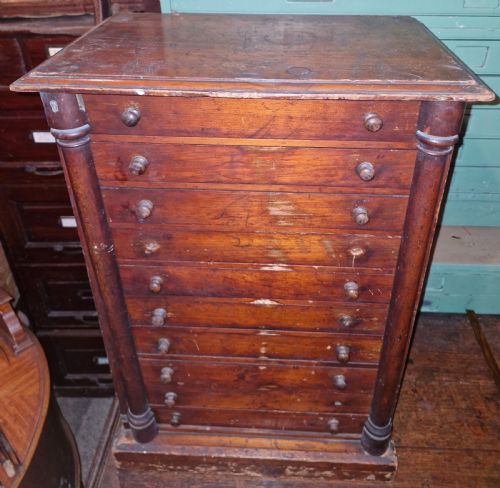
The versions most commonly met on this page are pine and mahogany banks of drawers alongside smaller leather-cased or wooden medicine boxes dating from the Victorian and Edwardian eras. Collectors also encounter specimen cabinets, spice drawers, and shop counters that share the same functional compartmentalisation.
How They Were Made
Cabinetmakers built these pieces using solid timbers such as mahogany, walnut, and pine, frequently combining woods with fruitwood or satin birch for drawer linings and internal dividers. Brass fixtures including flush carrying handles, campaign drop pulls, and small escutcheons appear across portable boxes and larger shop fittings alike.
Surfaces exhibit varying finishes from polished hardwoods to original painted surfaces in white, cream, or green on Hungarian pine shop pieces. Interior arrangements often incorporate velvet linings, glass bottles with stoppers, and precisely sized pigeonholes tailored for specific apothecary provisions.
Victorian Apothecary Chest Retail Price Guide 2026
Typical asking prices for victorian apothecary chest among the pieces listed under this phrase on Sellingantiques today, from the lower quarter to the upper quarter. They describe what is for sale here now, not the wider market.
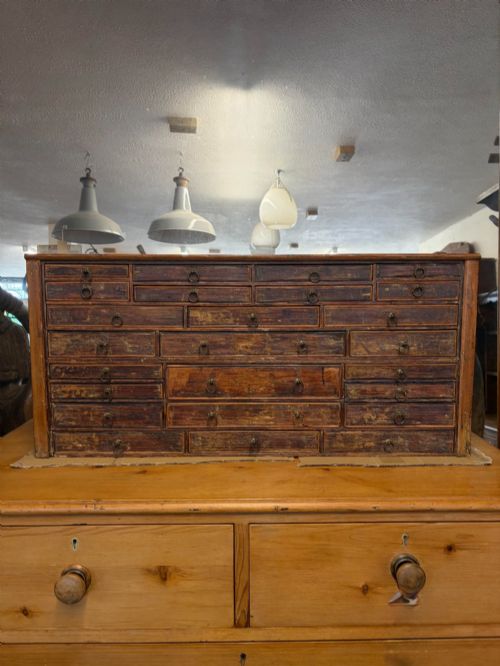
Watch and clock repairers repurposed these multi-drawer chests to keep thousands of microscopic screws from escaping forever.
What Varies in Quality
Quality rests upon the integrity of the original drawer configuration, the survival of internal glass bottles, and the proportion of the timber framework. Examples retaining their fitted interiors, maker stamps, and untouched painted or polished surfaces command greater interest.
Construction details such as dovetailed drawer joints, matching brass hardware, and secondary woods like oak or mahogany indicate workshop standards. Pieces showing heavy institutional adaptation or replaced drawer fronts diverge significantly from untouched specimens.
Luxmore s of Ilfracombe·D Napier and Sons·G Treble London·Thompson and Capper·Godfrey and Cooke
The Victorian Apothecary Chest Glossary
- Bank of drawers
- A multi-drawer storage unit designed for commercial or institutional use, featuring numerous shallow compartments for organising small items. These banks formed essential fixtures in chemist shops and apothecaries.
- Specimen cabinet
- A specialised storage piece built with tight-fitting drawers intended for housing natural history collections, geological samples, or microscope slides. They often feature dust-seals and subtle internal division.
- Campaign box
- A portable chest or box constructed for travel, equipped with recessed brass handles and corner brackets to withstand transit. Apothecary versions contained glass medicine bottles secured within fitted wooden partitions.
- Escutcheon
- A protective plate surrounding a keyhole, usually fashioned from brass on these pieces. They serve both a decorative and a structural purpose on cabinet doors and drawer fronts.
Victorian Apothecary Chest: Frequently Asked Questions
What did they store inside?
These chests originally held medicinal ingredients, herbal powders, pre-mixed pills, and compounding equipment for dispensing prescriptions to the public. Portable versions allowed doctors and travellers to carry liquid remedies safely.
Larger shop fittings housed extensive inventories behind multiple small drawers, each labelled to maintain order in a busy Victorian pharmacy.
How do I date a piece?
Dating relies on timber choices, construction methods, and hardware styles associated with the nineteenth century. Mahogany and walnut pieces often align with mid-Victorian decades, whilst painted pine shop fittings frequently reflect later Victorian or Edwardian periods.
Maker stamps, handwritten drawer labels, and original brass pull designs provide further chronological clues for specific pieces.
Are original bottles common?
Complete sets of original glass bottles remain scarce because glass easily fractured during decades of commercial use and relocation. When bottles do survive inside a box, they typically feature blown glass manufacture and ground glass stoppers.
Cabinets without bottles still offer versatile storage for modern collections, jewellery, or small dry goods in domestic settings.
Where should I place one?
Compact boxes sit comfortably on desks, sideboards, or tabletops where their small drawers can organise everyday items. Larger banks of drawers function well as freestanding sideboards or kitchen storage units.
Keeping them away from direct heat sources protects the aged timber and preserves any original painted or polished surface finishes.