


Brass Bound Wooden Trunk
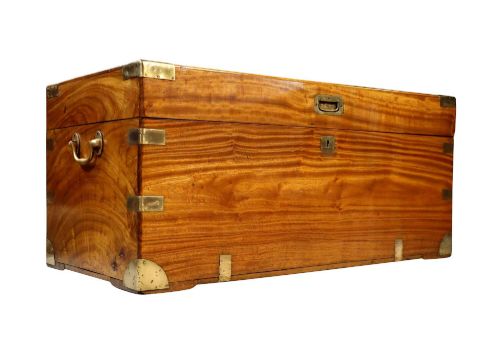
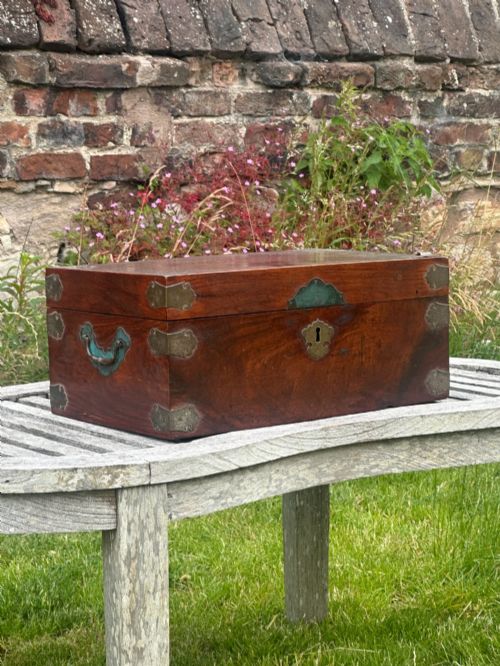
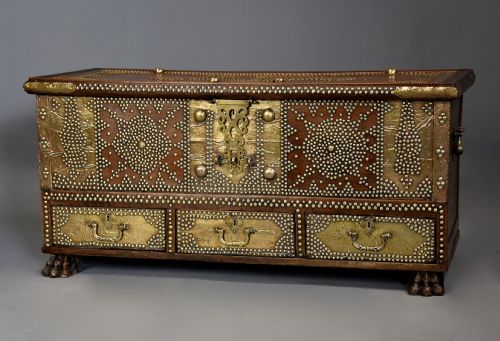
A brass bound wooden trunk serves as a robust travel companion, offering sturdy storage across centuries of military and colonial movement.
Brass Bound Wooden Trunk
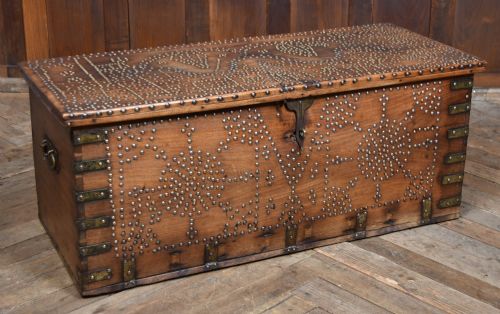
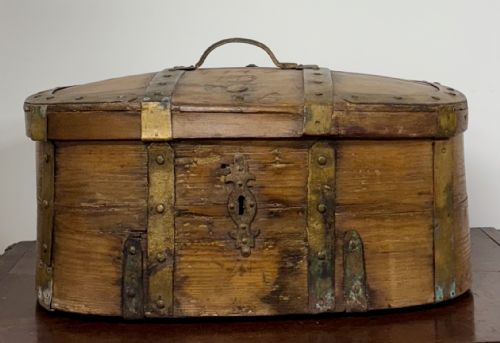
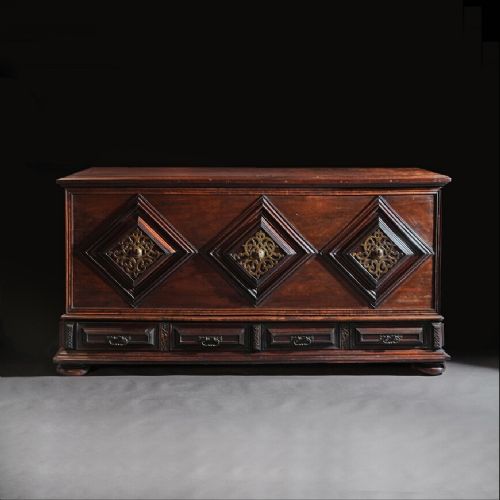
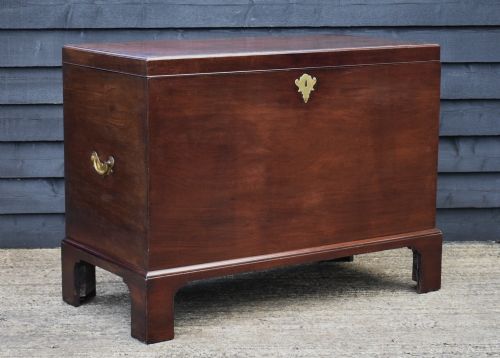
When you search for a brass bound wooden trunk, you encounter heavy storage chests designed for travel, domestic use, or trade during the Georgian, Victorian, and earlier periods. These pieces include military campaign chests, blanket boxes, and merchant chests originating from British, Anglo-Indian, Dutch Colonial, and Chinese export traditions.
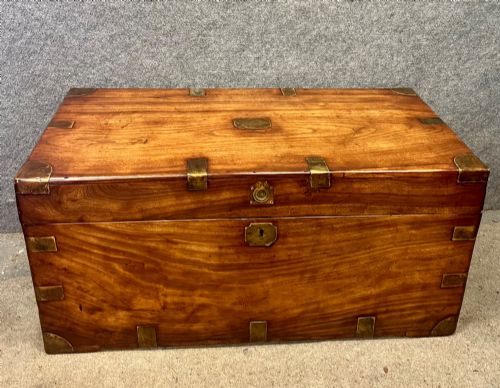
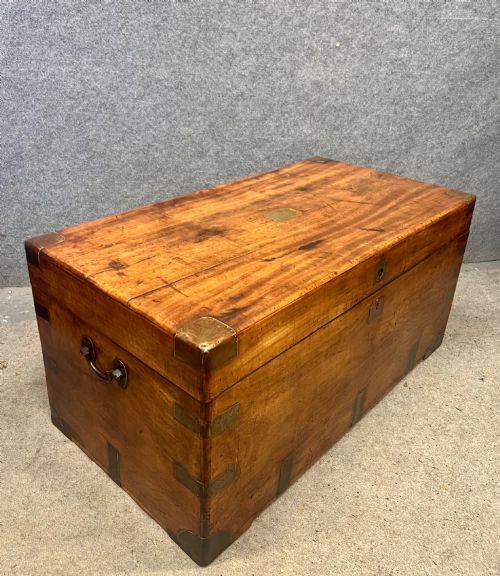
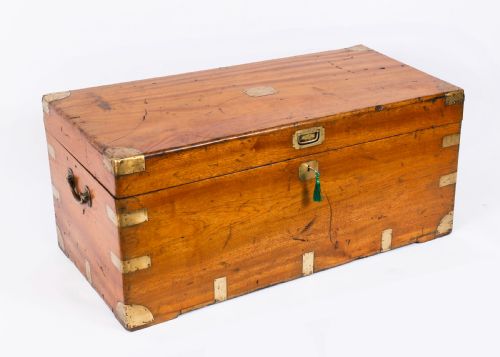
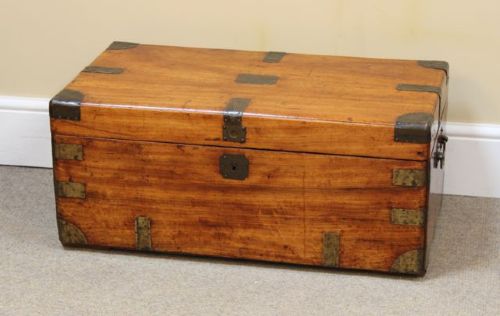
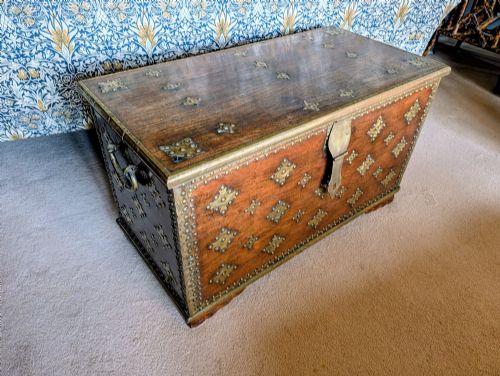
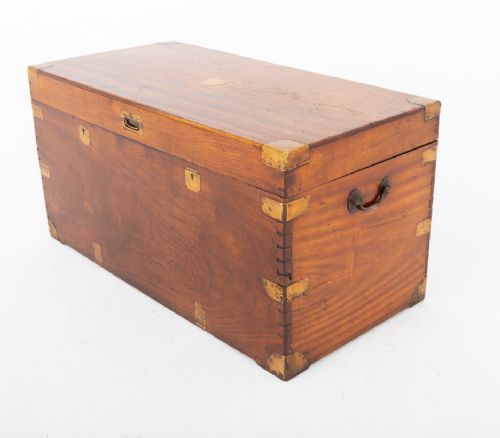
The version you are most likely to meet on this page is a 19th-century camphor wood or teak campaign trunk reinforced with brass corners, straps, and corner brackets. They also appear in mahogany, walnut, and padouk, reflecting the global reach of maritime trade and military campaigns.
How they were made
Cabinetmakers constructed these trunks using dense timbers such as camphor wood, teak, padouk, and mahogany, which resisted humidity and insect damage during long sea voyages. Woodworkers joined the main bodies with dovetail joints to withstand the stress of constant transit.
Metalworkers reinforced the timber bodies using brass straps, corners, and binding plates secured with countersunk screws or rivets. Recessed brass carrying handles and robust lock plates allowed the chests to be stacked and locked securely in transit.
Brass Bound Wooden Trunk Retail Price Guide 2026
Typical asking prices for brass bound wooden trunk among the pieces listed under this phrase on Sellingantiques today, from the lower quarter to the upper quarter. They describe what is for sale here now, not the wider market.
Origins represented include British military contexts, Anglo-Indian workshops, Scandinavian makers, Dutch colonial possessions, and Chinese export houses.
What varies in quality
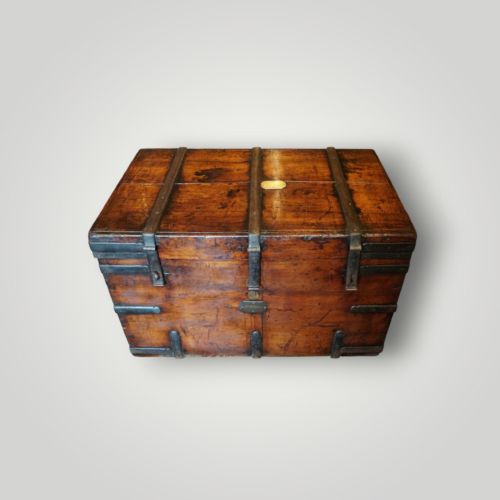
The calibre of a brass bound wooden trunk depends on the density of the primary timber and the execution of its metalwork. Superior examples utilise heavy-gauge brass for the strapping and mountings, whereas simpler variants rely on thinner brass sheeting or iron bands.
Refinement in the interior layout and the preservation of original hardware separate standard utility boxes from superior pieces. Surviving original locks, keys, recessed handles, and maker stamps elevate the standing of a trunk.
Seabrook of St Pauls London
The Brass Bound Wooden Trunk Glossary
- Campaign trunk
- A portable chest built for officers on military service, typically featuring recessed brass handles and reinforced corners for frequent travel.
- Camphor wood
- An aromatic hardwood native to Asia, prized in trunk-making for its insect-repellent properties and distinctive scent.
- Padouk
- A heavy, durable tropical hardwood with reddish tones, frequently utilised in Anglo-Indian furniture and storage boxes.
- Coffre fort
- A strongbox or chest fitted with complex locking mechanisms, often associated with export trade or valuable storage.
- Dovetail
- A joint formed by interlocking wedge-shaped fingers, providing high tensile strength at the corners of a wooden chest.
Brass Bound Wooden Trunk: Frequently Asked Questions
What is a brass bound wooden trunk?
A brass bound wooden trunk is a portable storage chest constructed from dense timbers and reinforced with brass straps and corners.
These containers were originally built for military officers, travellers, and merchants requiring durable luggage for long journeys by land and sea.
How were campaign trunks used?
Campaign trunks served as luggage and mobile wardrobes for military officers moving between postings across the British Empire.
Their uniform sizes and flat tops allowed them to be easily stacked inside tents, carriages, and ships during transit.
Why use camphor wood for trunks?
Camphor wood naturally repels moths and silverfish, protecting stored uniforms, documents, and textiles from insect damage.
The timber also resists moisture, making it practical for maritime transport across tropical climates.
How do I date an antique trunk?
Dating relies on identifying the primary wood species, construction techniques like dovetailing, and the style of the brass hardware.
Earlier pieces from the eighteenth century often display hand-forged iron or simpler brass mounts, while Victorian examples feature standardised recessed brass fittings.