
Oak Coffer with Drawers
An oak coffer with drawers provides deep blanket storage topped by integrated base drawers, bringing centuries of vernacular craft directly into daily domestic use.
Oak Coffer with Drawers
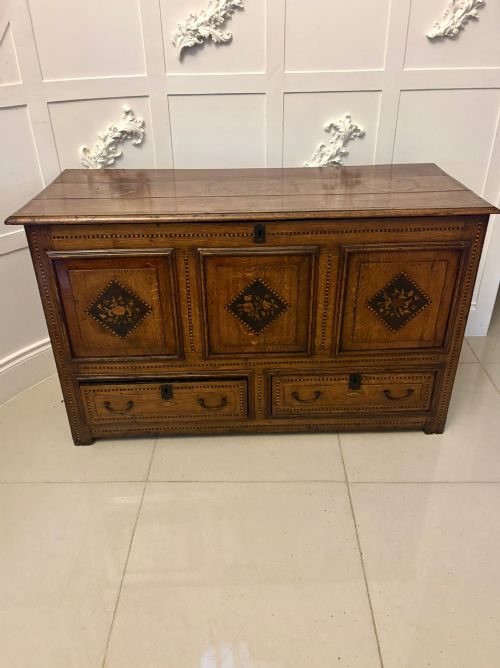
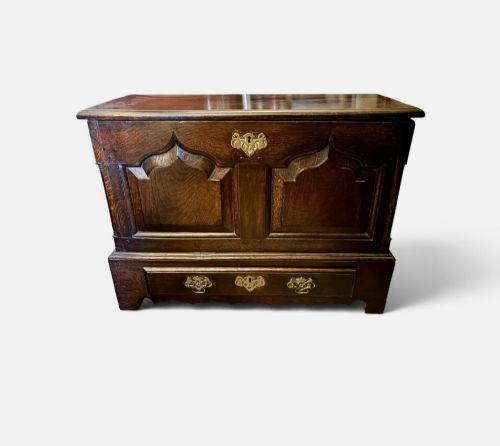
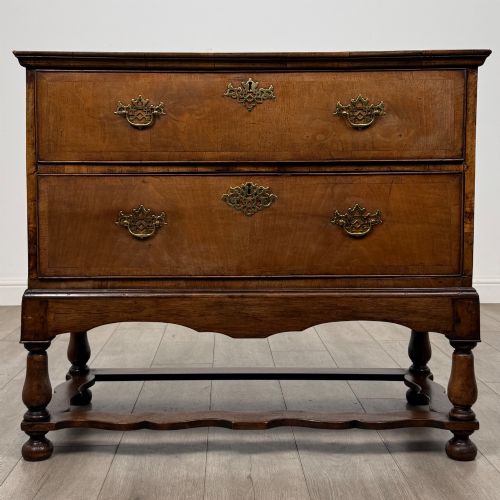
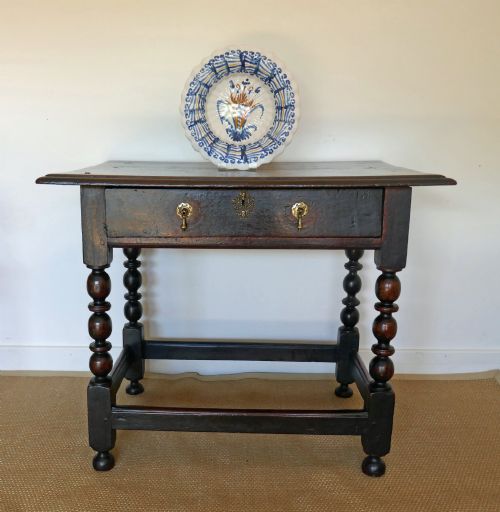
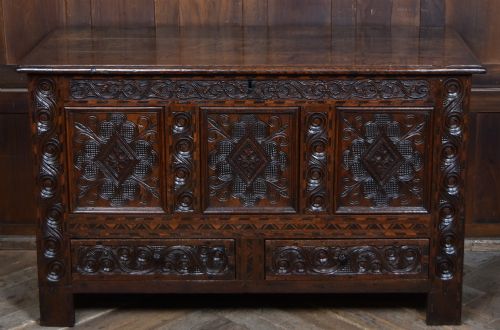
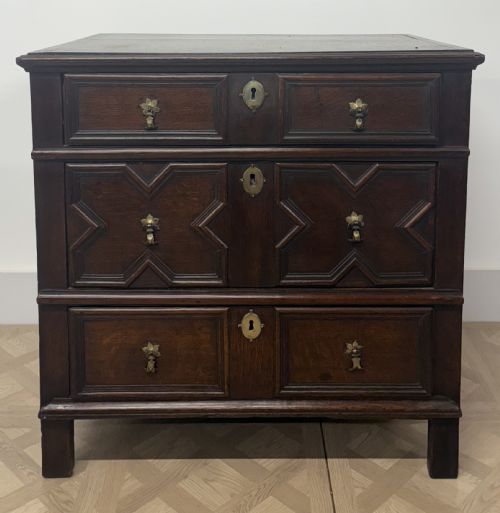
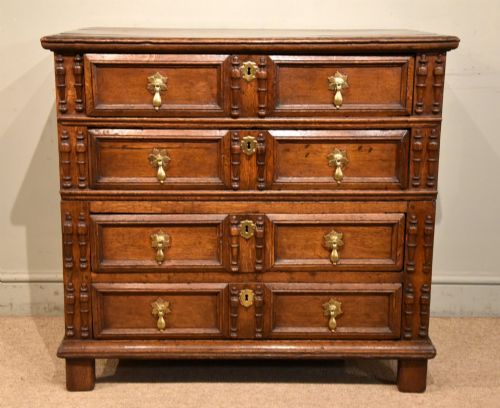
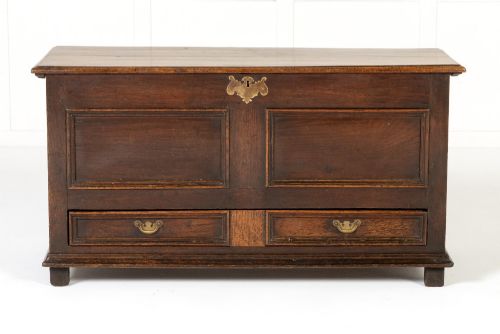
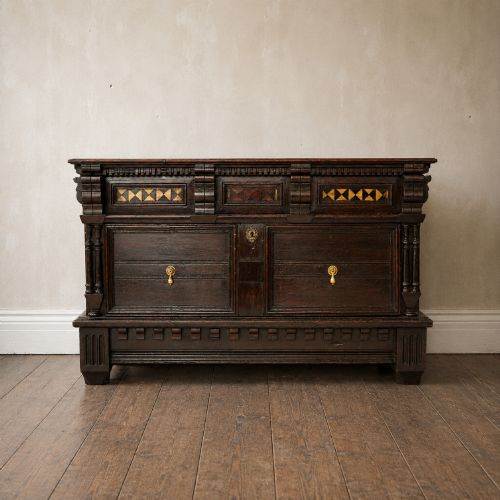
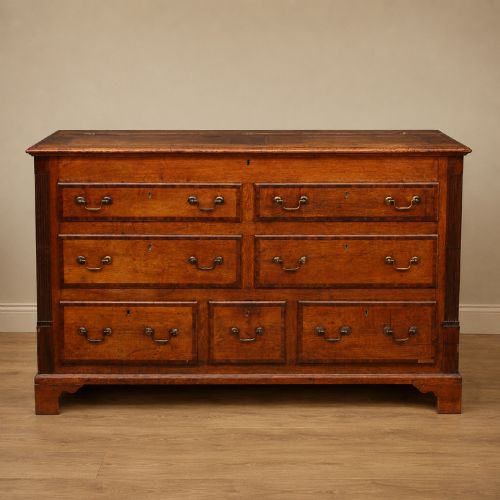
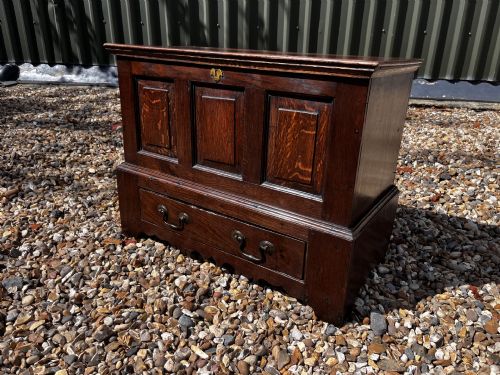
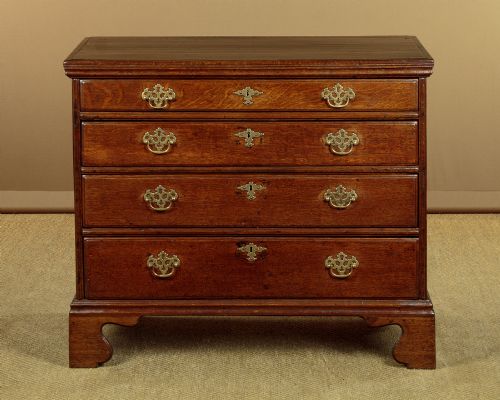
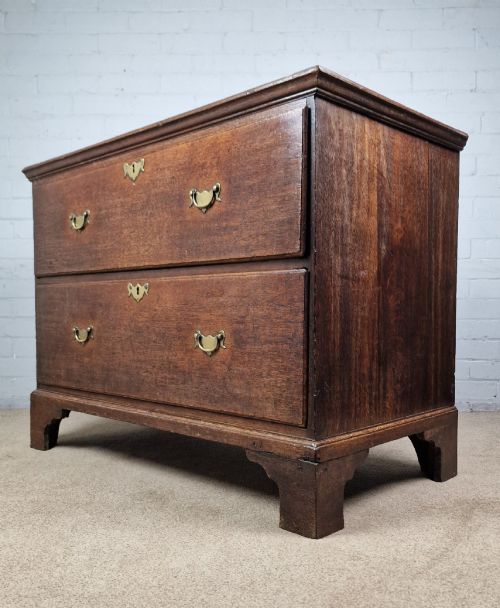
An oak coffer with drawers combines a hinged top compartment for bulky textiles with one or more lower drawers for smaller garments. The pieces seen here span the seventeenth, eighteenth, and nineteenth centuries, often categorised as mule chests or regional country furniture.
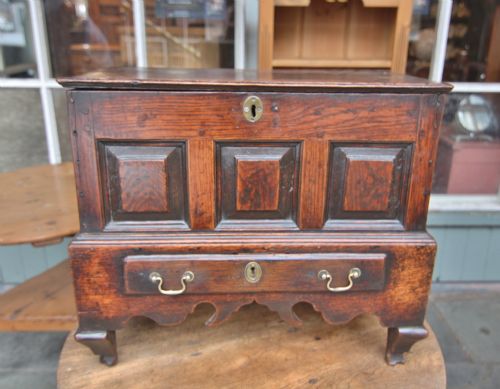
Welsh vernacular pieces such as the coffer bach appear frequently alongside English provincial examples, demonstrating regional variations in scale and construction. Makers ranged from country joiners utilising local timber to urban workshops producing sophisticated geometric mouldings.
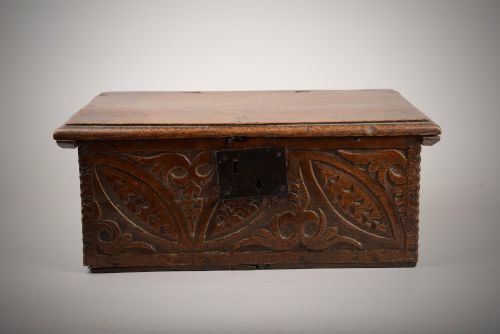
Domestic storage evolved through these hybrid forms, bridging the simple boarded chest and the modern chest of drawers. Buyers encounter both large four-panel trunks and miniature tabletop versions designed for precious documents or linen.
Materials and Technique
Solid oak forms the primary structural material across nearly all examples, frequently paired with secondary timbers like burr elm, fruitwood, and snakewood for decorative contrast. Panels sit within grooved framework, allowing the timber to expand and contract naturally with seasonal humidity changes.
Joinery relies on pegged mortise and tenon joints for the main carcase, while drawer construction utilises hand-cut dovetails. Iron hinges and brass pull handles secure the moving parts, with some seventeenth-century pieces retaining original cast brasses and escutcheons.
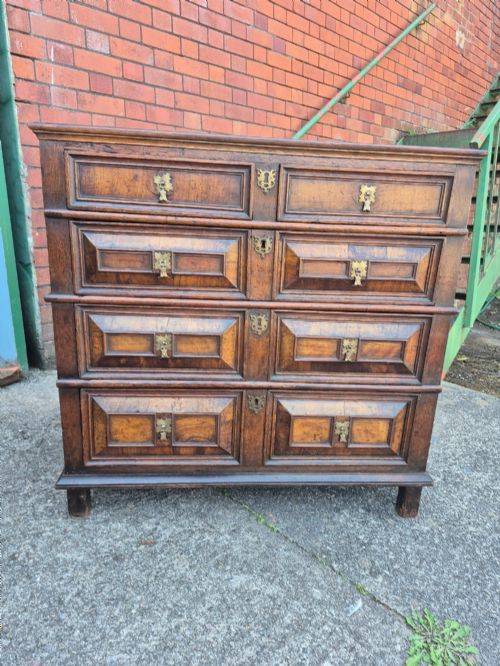
Surface ornamentation ranges from geometric mouldings and chip carving to intricate marquetry inlay. Many surfaces exhibit a faded patination accumulated through centuries of wax polishing and handling.
Oak Coffer with Drawers Retail Price Guide 2026
Typical asking prices for oak coffer with drawers among the pieces listed under this phrase on Sellingantiques today, from the lower quarter to the upper quarter. They describe what is for sale here now, not the wider market.
Several examples incorporate hidden internal compartments behind sliding panels, originally designed to keep family gold safe from wandering highwaymen.
Judging Quality
Quality rests upon the integrity of the original construction and the survival of the surface skin. Pieces retaining their original panel backs, drawer bottoms, and floorboards command greater interest than those subjected to extensive timber replacement or re-polishing.
The sophistication of the joinery and carving distinguishes standard provincial work from exceptional commissions. Crisp mouldings, well-proportioned drawer arrangements, and harmonious timber selection elevate certain examples above utility items.
The Oak Coffer with Drawers Glossary
- Coffer bach
- A Welsh miniature coffer used for holding valuables or linens. These small boxes typically sit on short feet or small bracket bases.
- Mule chest
- A storage chest featuring one or more drawers built into the base beneath the main lift-top compartment. This hybrid form emerged when joiners realised base drawers improved access to stored textiles.
- Marquetry
- Decorative inlay work using various coloured woods to create intricate patterns on the surface. Craftsmen cut thin veneers and fitted them into recessed channels on the panels.
- Patina
- The deep surface sheen and colour acquired by wood over centuries of exposure to light, air, and wax. A desirable surface shows gentle softening rather than harsh chemical stripping.
- Stile
- The vertical upright member in panelled joinery. These form the outer structural frame holding the floating central panels in place.
Oak Coffer with Drawers: Frequently Asked Questions
What fits inside an oak coffer with drawers?
The upper lift compartment accommodates bulky items like heavy blankets, quilts, and winter bedding. Lower drawers suit smaller folded garments, linens, or personal documents.
Dividers sometimes appear internally, alongside small auxiliary candle boxes fitted inside the main well. This division keeps frequently used items accessible without disturbing the primary storage above.
How do I maintain the wood surface?
Apply a traditional beeswax polish sparingly and buff with a soft cloth to nourish the dry timber. Avoid modern silicone sprays and keep the piece away from direct heat sources and strong sunlight.
Natural movement occurs in ancient oak as ambient humidity fluctuates. Regular gentle waxing protects the historic surface patina without building up greasy residue.
Where should I place it at home?
Bedrooms and landings suit the original storage purpose, offering practical utility for spare linens and winter covers. Living rooms utilise the flat top surface for display while keeping clutter concealed within.
Ensure adequate clearance above the lid for safe opening without striking wall surfaces or pictures. Miniature versions function well on side tables or deep windowsills.
How can I tell the period?
Seventeenth-century examples often display heavy geometric mouldings, joined panel construction, and pegged frames. Eighteenth-century pieces frequently introduce mahogany elements, crossbanding, and fitted base drawers.
Tool marks inside the drawers and the construction of the internal base boards provide further clues. Hand-sawn boards and irregular dovetails point toward earlier vernacular manufacture.