


Antique Panelled Coffer
An antique panelled coffer offers solid timber construction and historic domestic storage, bringing seventeenth-century craftsmanship directly into modern interiors.
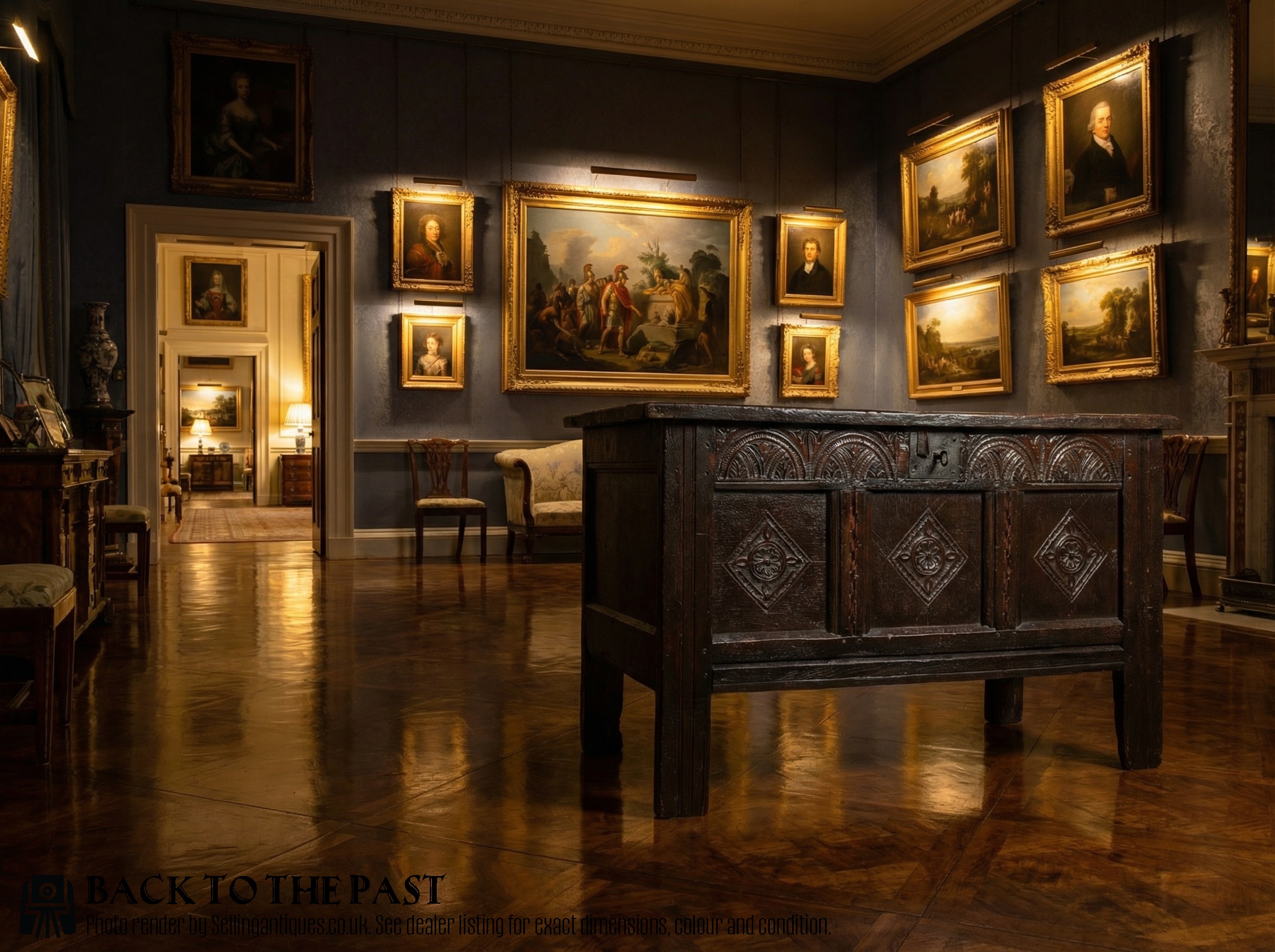
Antique Panelled Coffer
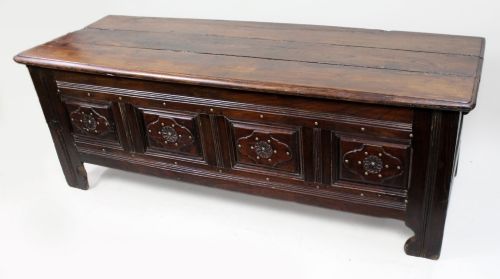
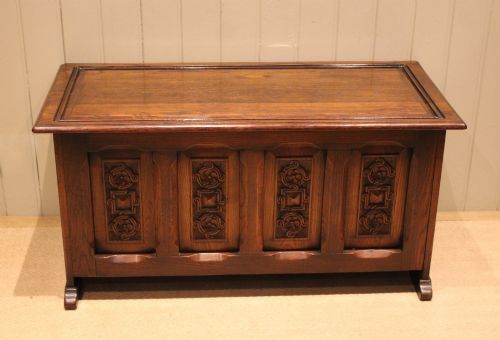
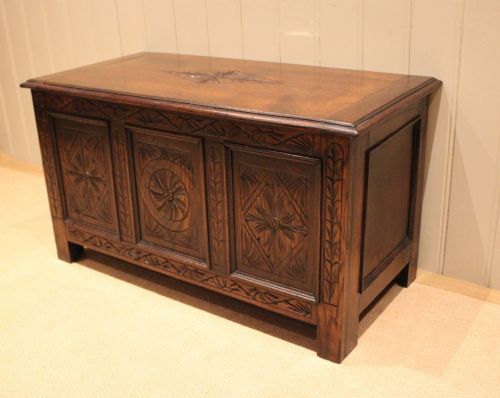
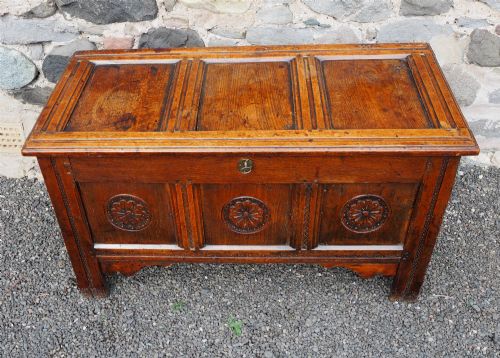
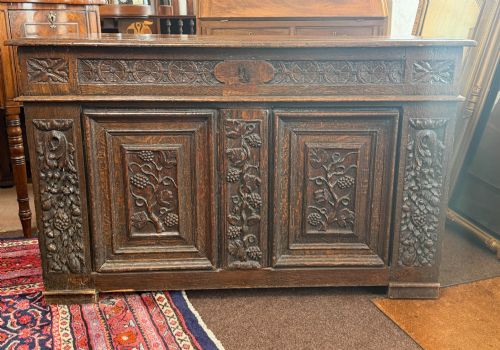
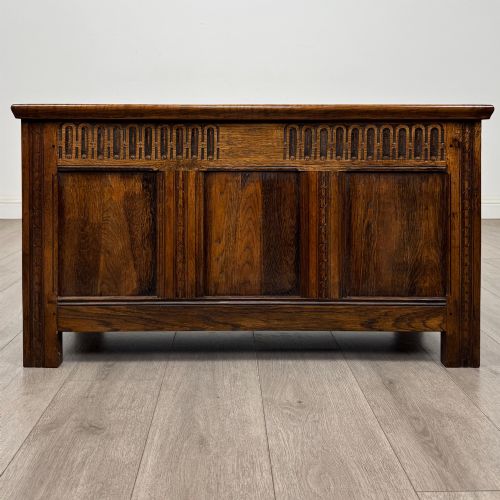
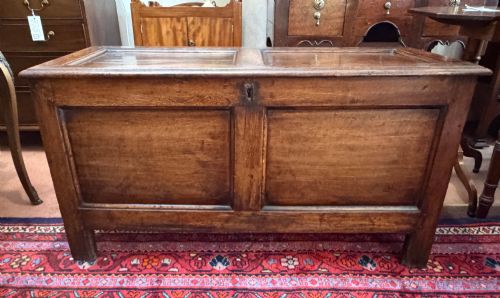
An antique panelled coffer is a heavy storage chest built with frame-and-panel construction, designed to hold household goods, textiles, and valuables. The pieces on this page span from the sixteenth century through the Georgian era and into later revival styles, reflecting centuries of domestic utility.
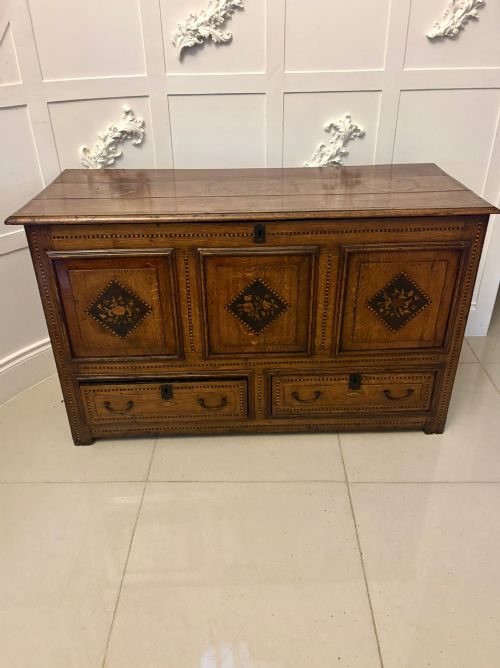
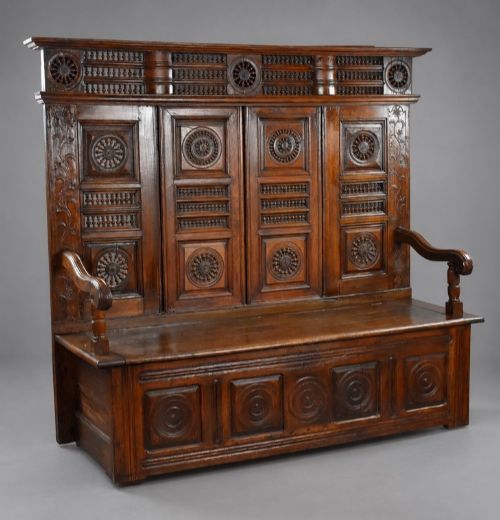
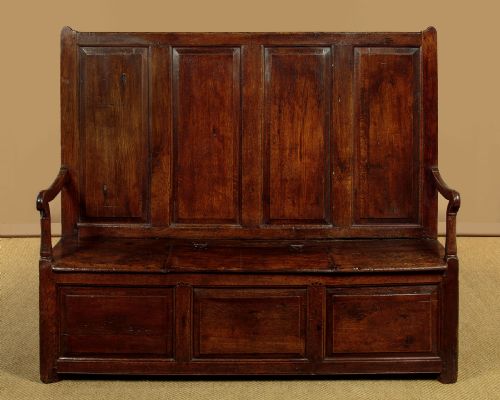
The most common examples encountered here are fashioned from native oak, often originating from English, Welsh, or French provincial workshops. Alongside standard rectangular storage chests, buyers will frequently find mule chests featuring lower drawers, box settles with high panelled backs, and smaller regional variants such as the Welsh coffer bach.
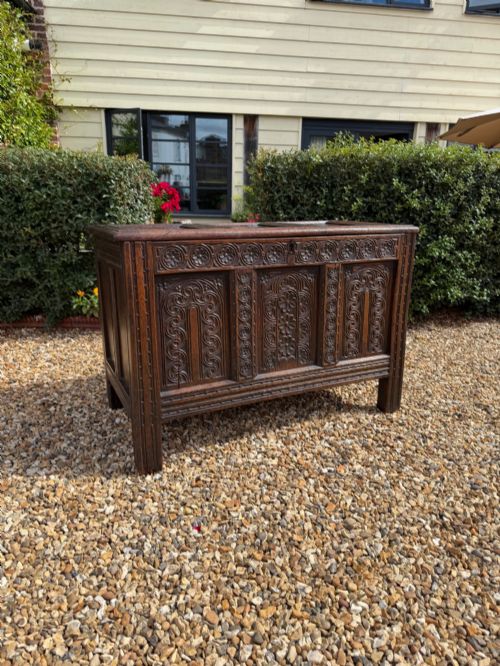
Dated specimens from the seventeenth century showcase early joined construction techniques, while eighteenth-century examples display refined Georgian proportions and occasional marquetry inlay. Later nineteenth-century and 1930s revivals continue these traditional forms using older stylistic motifs.
Materials and Construction
Joiners built these chests primarily using solid oak, occasionally supplemented by ash, pine, and ebonised wood for secondary elements or decorative contrasts. Timbers were cleft or sawn by hand, producing irregular grain patterns and sturdy framing that accommodated seasonal wood movement without warping the main structure.
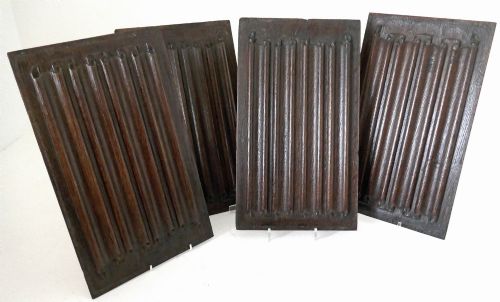
The defining structural method is the frame and panel system, where grooved stiles and rails capture floating central panels to form the front, sides, and lid. Iron hinges, brass escutcheons, and hand-carved details such as linenfold motifs, geometric mouldings, or relief carvings completed the construction.
Several seventeenth-century chests still bear the faint scorch marks where hasty owners used them as impromptu bedside tables near open candles.
Evaluating the Pieces
Quality in these chests is largely determined by the integrity of the original joined frame and the crispness of the hand-carved panels. Pieces retaining their original floor timbers, lid boards, and wrought iron or brass hardware command greater appreciation among collectors.
The depth and execution of surface decoration also set examples apart, ranging from plain geometric mouldings to intricate seventeenth-century relief carvings or refined marquetry inlay. Furthermore, the development of a rich, warm surface patina over centuries of handling distinguishes superior specimens from later reproductions or heavily restored items.
The Antique Panelled Coffer Glossary
- Coferer
- An official charged with the care and transportation of royal household coffers and valuables in medieval and early modern times. This historical role highlights the primary status these chests held before built-in closets became standard.
- Joined coffer
- A chest constructed using mortise and tenon joints rather than simple board-and-nail assembly. This technique represents an advance in cabinetmaking that provided greater structural longevity.
- Linenfold
- A style of wood carving adorning panels to resemble folded parchment or linen cloth. It appears frequently on sixteenth-century examples.
- Mule chest
- A storage chest fitted with one or more drawers beneath the main compartment. The addition of drawers bridges the evolution between the traditional coffer and the chest of drawers.
- Coffer bach
- A small Welsh chest, translating literally as little coffer, often featuring a single drawer beneath the main lidded box. These diminutive pieces were traditionally made as marriage gifts or presentation items.
Antique Panelled Coffer: Frequently Asked Questions
What were antique panelled coffers used for?
These chests originally served as secure storage for valuable household textiles, garments, legal documents, and dry foodstuffs before fitted wardrobes and closets existed.
Because of their sturdy flat lids, they also functioned as impromptu benches, tables, or sleeping platforms for servants within the great hall or bedchamber.
How do I date an oak coffer?
Dating relies on examining the construction methods, such as the transition from boarded chests to joined frame-and-panel techniques during the late sixteenth and seventeenth centuries.
Stylistic clues like carved date inscriptions, linenfold panels, geometric mouldings, and the type of iron or brass hardware also provide clear chronological markers.
Where were most of these chests made?
The majority of the pieces recorded here originate from English, Welsh, and French regional workshops, reflecting local vernacular woodworking traditions.
Distinctive regional styles include Welsh vernacular pieces from the Gower Peninsula and provincial French provincial chests utilising local fruitwoods alongside oak.
How do I care for a waxed oak coffer?
Maintain the timber by applying a traditional beeswax polish sparingly to nourish the dry wood and preserve the historic surface patina.
Keep the chest away from direct heat sources and dramatic humidity fluctuations to prevent the old oak panels from splitting or warping.