
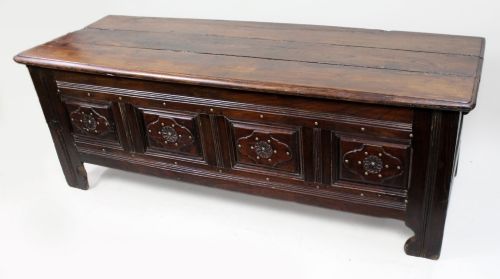
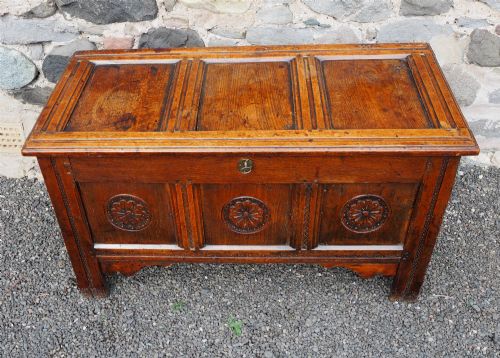
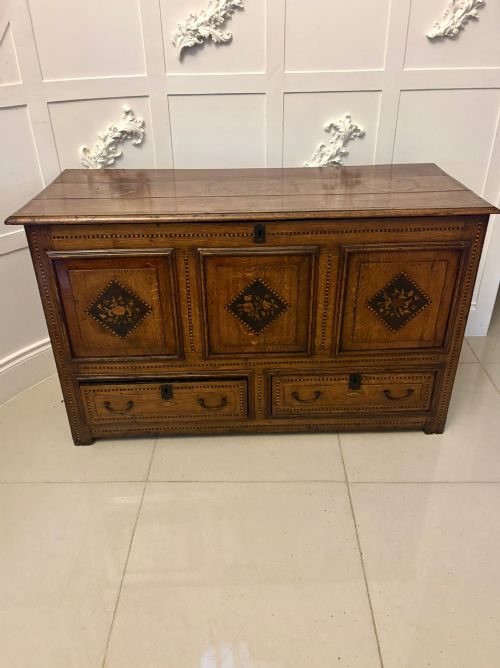


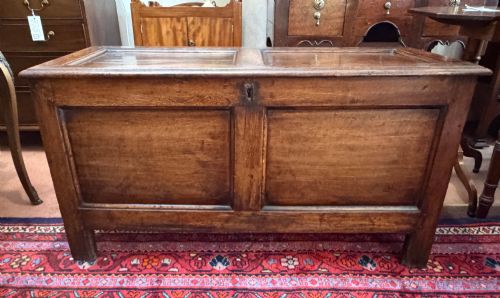
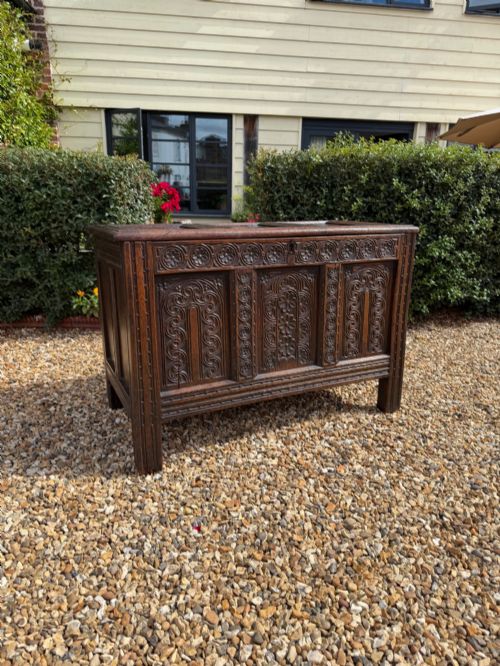
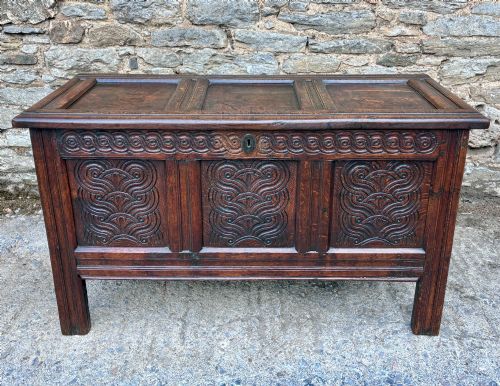
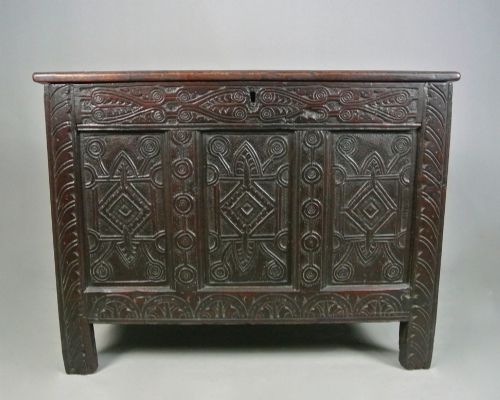
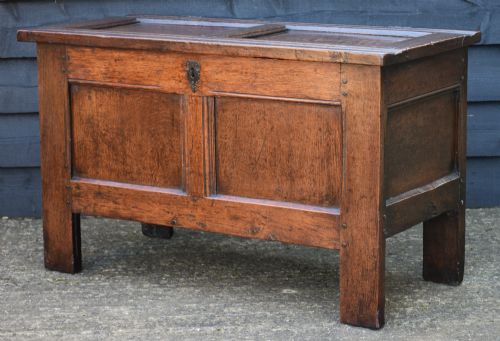
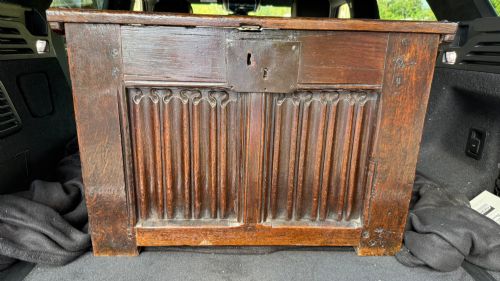
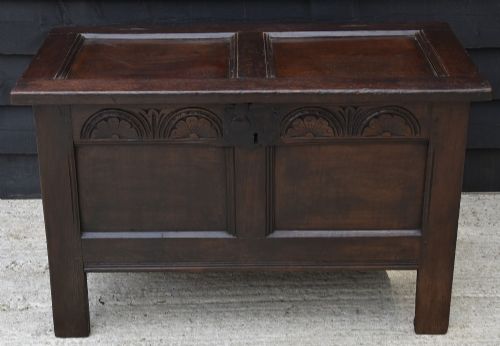
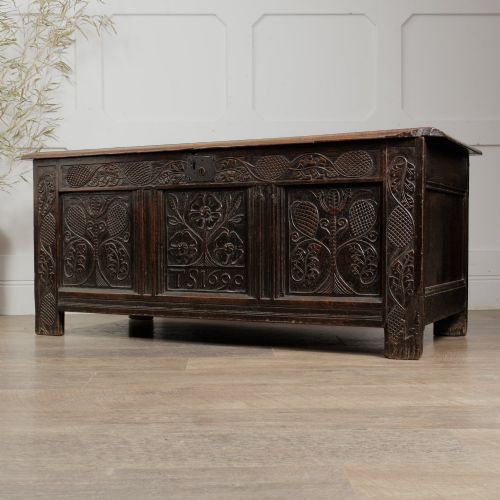
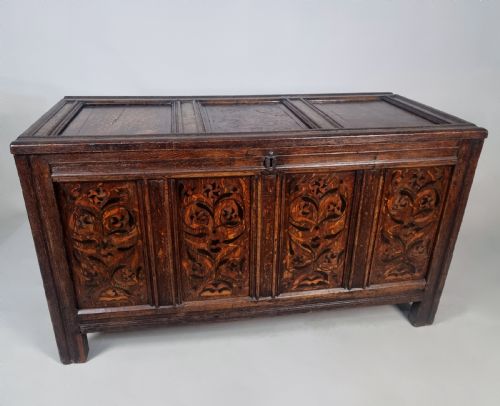
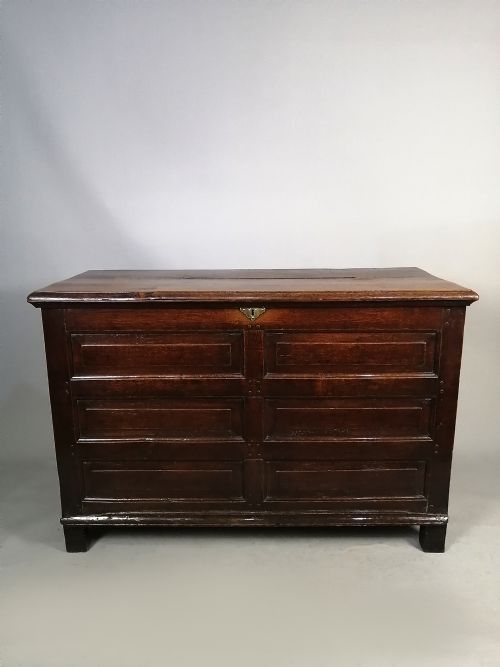
Period Oak Blanket Box
A period oak blanket box brings the tactile weight of seventeenth-century and Georgian domestic life directly into a modern room.
What They Are
A period oak blanket box is a heavy timber chest designed for storing household textiles, valuables, and family belongings. When people search for a period oak blanket box, they want a substantial piece of furniture with genuine age, deep patination, and functional storage capacity.
The pieces available here span the seventeenth century and the Georgian era, encompassing forms such as single panel coffers, box stools, and blanket storage chests. They originate from English workshops and reflect traditional vernacular woodworking traditions.
Most examples you encounter date from the late seventeenth century up to the Georgian period, often described simply as antique coffers or linen chests. Their sturdy construction explains their survival through centuries of domestic use.
How They Were Made
These items are constructed from solid oak, chosen for its durability and abundant supply in British woodlands. Makers shaped the timber using hand tools, relying on traditional joinery techniques such as mortise and tenon frames.
Iron fittings, hinges, and occasional locks provide structural integrity and security to the heavy lids and panelled bodies. The surfaces display the natural grain of the wood, enhanced over generations through waxing and handling.
Retail Price Guide 2026
Typical UK retail prices for period oak blanket box, calculated from the Sellingantiques database of over a million retail prices indexed since 2003. This retail price guide relies exclusively on Sellingantiques data; no external sources or auction records are used, so the figures do not describe the wider market.
Listings span the seventeenth century and the Georgian era, featuring solid oak and iron materials across various coffer and chest forms.
What Varies Across the Range
The distinction between a standard vernacular piece and a finer example lies in the crispness of the timber preparation and the sophistication of any carved or panelled details. Earlier seventeenth-century pieces often display hand-cleaved boards and simpler joinery compared to later Georgian iterations.
Survival of original ironwork, untouched timber surfaces, and structural integrity without extensive modern timber replacement elevate an example. The depth of the natural colour and the texture of the patination tell the story of each object's age and use.
The Period Oak Blanket Box Glossary
- Coffer
- A heavy wooden chest traditionally used for storing valuables or documents. These form the architectural foundation for many early storage boxes.
- Box Stool
- A dual-purpose domestic seat featuring a hinged lid and internal storage cavity. Seventeenth-century examples combine seating with practical utility.
- Panelling
- Framework construction where smaller boards are fitted into grooved stiles and rails to accommodate wood shrinkage. This technique prevents large timber panels from splitting.
- Patina
- The surface sheen and colour developed on wood through decades of handling, light, and waxing. It serves as a visual indicator of genuine age.
- Charles I Period
- The era spanning the reign of Charles I from sixteen twenty-five to sixteen forty-nine. Pieces from this time show distinct early seventeenth-century joinery characteristics.
Frequently Asked Questions
What is a period oak blanket box?
A period oak blanket box is a traditional timber chest built for storing textiles and household goods during the seventeenth or eighteenth centuries.
These pieces utilise solid oak and sturdy joinery, making them resilient furniture items that double as functional storage and surface space.
How old are these chests?
The pieces available range from seventeenth-century examples up to the Georgian period, with construction dates spanning several hundred years.
Earlier items date back to the Charles I period, while others originate from the late seventeenth century and the early eighteenth century.
How were they used historically?
Households utilised these heavy wooden boxes to store valuable textiles, blankets, linen, and personal belongings away from damp floors and pests.
Certain forms, such as box stools, also served as seating within the home while simultaneously concealing storage underneath the lid.
How do I care for antique oak?
Maintain antique oak by keeping it away from direct heat sources and sudden temperature fluctuations that can dry out the timber.
Apply a traditional beeswax polish occasionally to nourish the wood and preserve the natural surface patination.
What materials are used?
The primary material is solid oak, selected for its structural strength and distinctive grain patterns in early British furniture making.
Original iron hardware, including hinges and occasional strapwork, frequently accompanies the timber construction.