
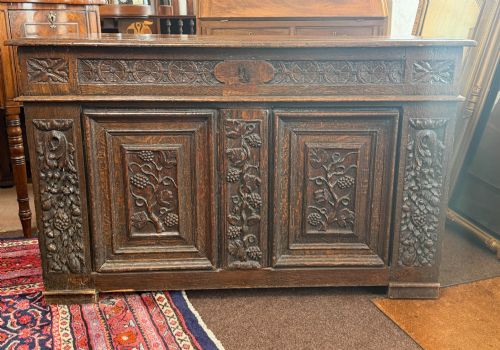
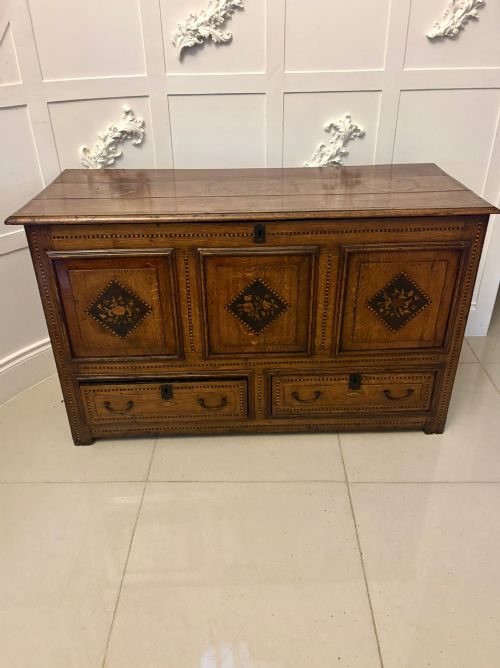


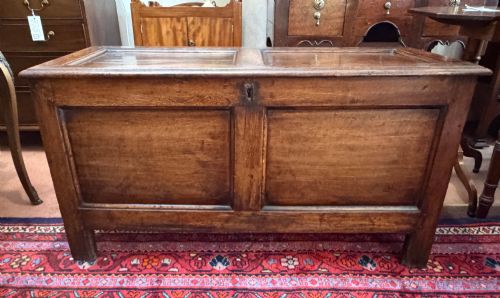
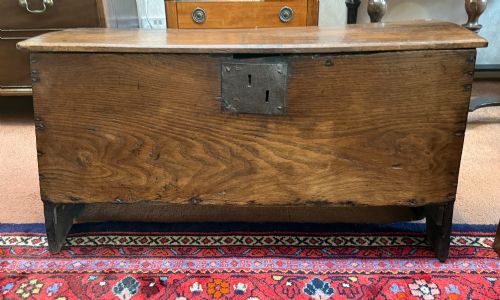
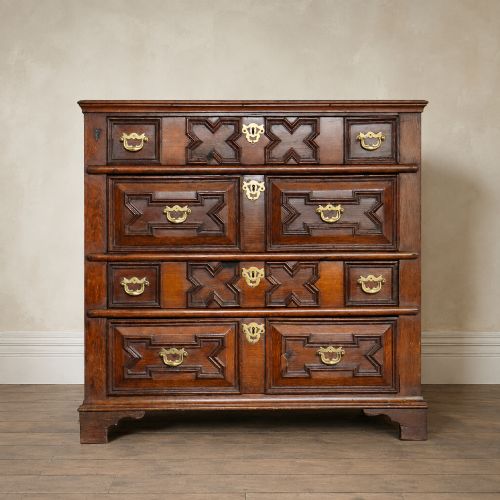
17th Century Storage Chest
A 17th century storage chest brings solid historic character and robust utility straight into a modern interior.
What these pieces are
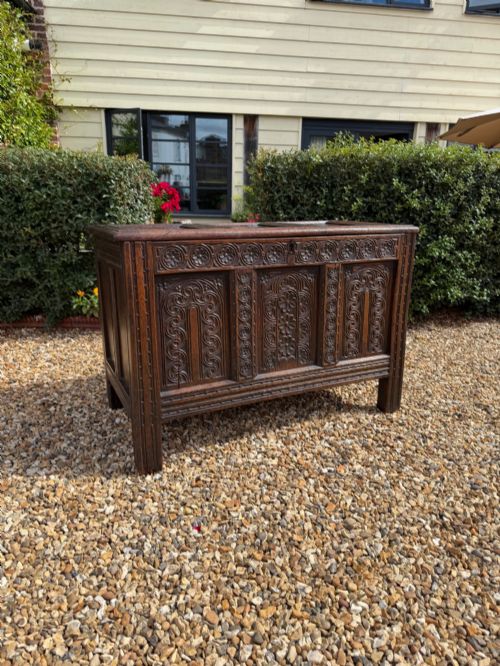
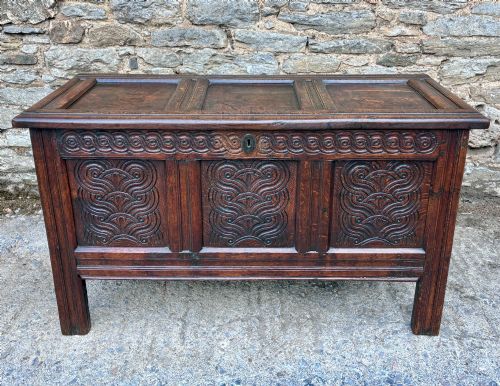
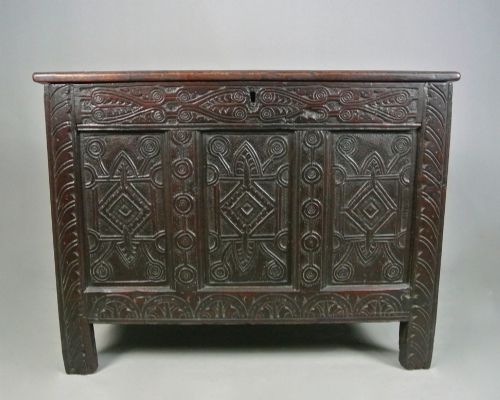
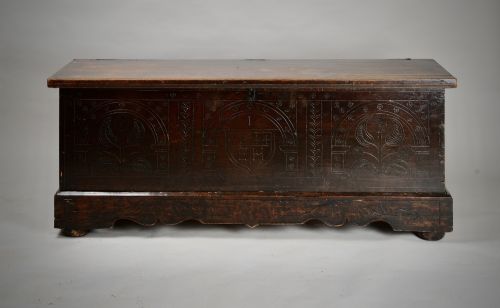
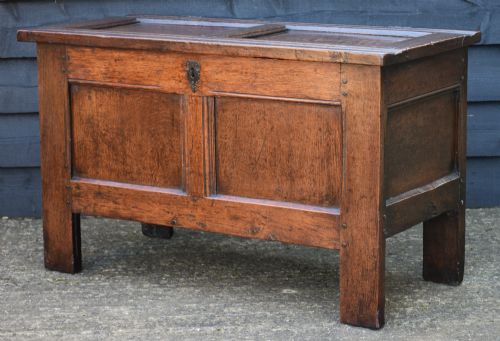
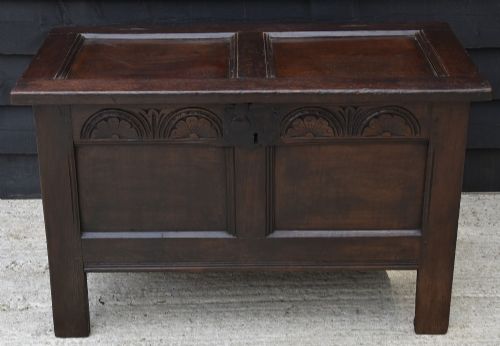
A 17th century storage chest primarily takes the form of an oak coffer or mule chest, shaped by centuries of domestic use. These sturdy boxes served families for holding linens, documents, and valuables before fitted wardrobes and cupboards became common.
Most examples found here date from the 17th century or around 1700, reflecting the heavy vernacular woodwork of the Jacobean and William III periods. Buyers frequently encounter simple boarded constructions alongside larger mule chests equipped with lower drawers.
How they were made
Carpenters constructed these pieces predominantly from solid oak, utilising heavy timber planks joined by pegged mortise and tenon frames. Iron and brass hardware, including strap hinges and lock plates, fastened lids and secured contents.
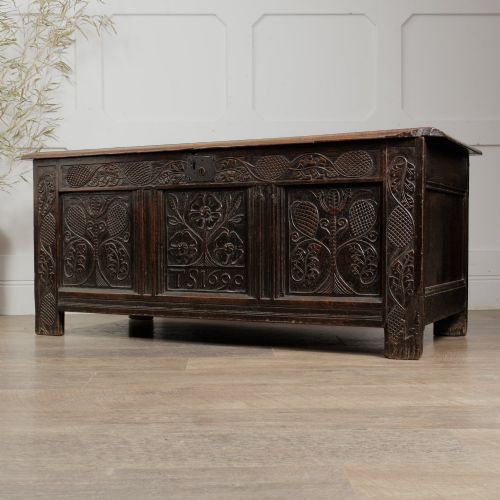
Surface decoration relied on hand carving, panel moulding, and simple chip carving applied directly to the timber rather than applied veneers. Boards were cleft or sawn by hand, leaving characteristic tool marks across internal and external surfaces.
Retail Price Guide 2026
Typical UK retail prices for 17th century storage chest, calculated from the Sellingantiques database of over a million retail prices indexed since 2003. This retail price guide relies exclusively on Sellingantiques data; no external sources or auction records are used, so the figures do not describe the wider market.
What varies in quality
Quality rests on the integrity of the timber, the crispness of the original joinery, and the proportion of untouched historic material remaining in the piece. Pieces retaining their original floor boards, hinges, and locks command greater respect from collectors.
Proportion and surface patination distinguish finer examples from plain utilitarian boxes, as deep warm tones develop over centuries of handling and polishing. Heavy alterations or extensive timber replacement diminish the historic cohesion of the piece.
The 17th Century Storage Chest Glossary
- Coffer
- A heavy wooden chest with a hinged lid, traditionally used for storing valuables. These form the core of early storage furniture.
- Mule chest
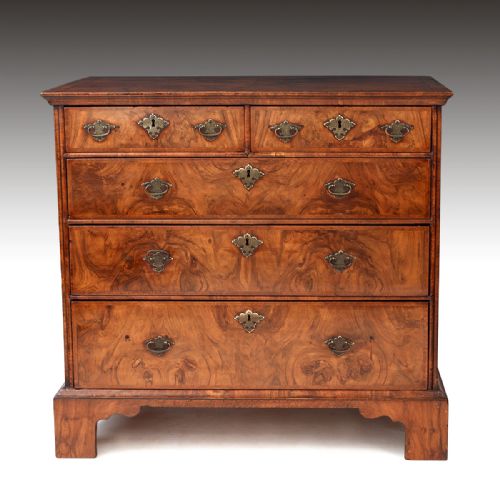
- A storage chest featuring one or more drawers beneath the main compartment. This form bridges the traditional coffer and the modern chest of drawers.
- Jacobean
- An early seventeenth-century design style characterised by solid proportions and formal carved ornamentation. It represents the dominant aesthetic of the period.
- William III
- A transitional style bridging the late seventeenth and early eighteenth centuries. Pieces from this era show shifts in moulding profiles and hardware.
Frequently Asked Questions
How were 17th century storage chests originally used?
These chests functioned as secure household vaults for storing textiles, winter blankets, silver, and important legal documents. Families often used them as benches or window seats when space was tight.
Over generations, their robust flat lids also served as temporary tables for folding laundry or displaying household objects within the main hall or bedroom.
What is the difference between a coffer and a mule chest?
A standard coffer consists of a single deep compartment accessed entirely by lifting the top lid. This represents the older and simpler form of domestic storage.
A mule chest incorporates one or more drawers built into the base beneath the main trunk, allowing access to items without disturbing objects stacked on top.
How do I care for historic oak furniture?
Keep wooden storage chests away from direct sunlight and strong heat sources such as radiators to prevent the dry timber from splitting or warping. Maintain a stable indoor humidity where possible.
Apply a traditional beeswax polish occasionally to nourish the dry oak and preserve the natural surface patination without sealing the pores.
Can I use an antique chest as a coffee table?
Solid oak chests work well as coffee tables or window seats because their heavy plank construction provides a stable and durable surface. Ensure any items placed on top are protected from moisture marks.
Measure the height and length carefully against your seating to guarantee comfortable proportions within the room.