



Boarded Oak Coffer
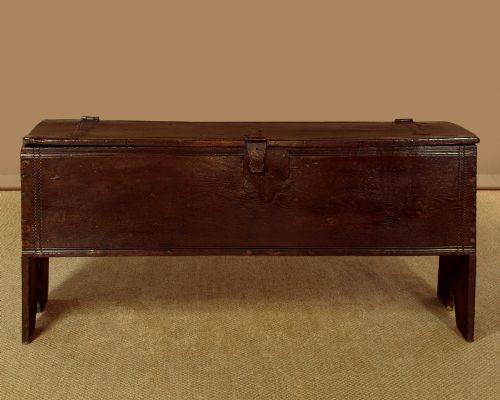
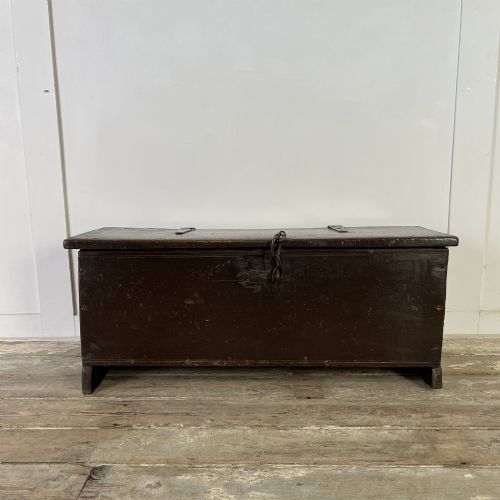
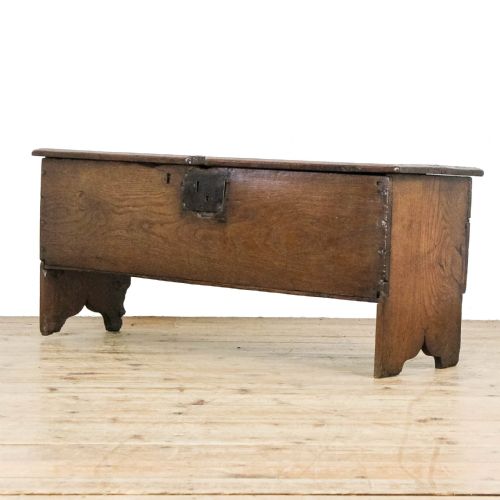
A boarded oak coffer is a robust early storage piece built from solid planks, offering an authentic glimpse into sixteenth and seventeenth-century domestic life.
Boarded Oak Coffer
When you search for a boarded oak coffer, you are looking at utilitarian boxes constructed from thick timber boards joined with pegs or dovetails rather than elaborate frame-and-panel assemblies. These pieces span the sixteenth, seventeenth, and eighteenth centuries, with sixteenth and seventeenth-century examples appearing frequently in various dimensions.
Forms range from compact five-plank and six-plank constructions to longer sword chests and rapier chests designed for specific arms storage. Regional vernacular variations, including Welsh vernacular pieces from Montgomeryshire, sit alongside English examples from the West Country and other regional workshops.
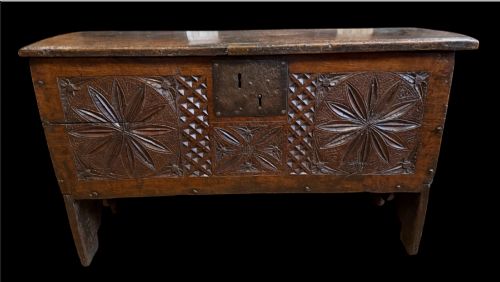
Styles represented across these items include Elizabethan, Jacobean, Tudor, and Georgian periods, alongside Charles I and Charles II eras. You will encounter both plain planked surfaces and carved decorations reflecting the prevailing aesthetic of their manufacturing period.
What varies in quality
Quality in a boarded oak coffer rests on the proportion of the timber, the retention of original boards, and the integrity of the joints. Heavy oak boards that retain their thickness without excessive replacement indicate a higher standard of survival.
The presence of period wrought ironwork, original hinges, and untouched surface patination separates exceptional survivals from pieces with extensive timber replacement or altered hardware. Carved decoration, where present, exhibits varying levels of crispness and depth executed by regional hands.
Many early coffers feature internal candle boxes hidden beneath the lid, keeping tallow dips safe from wandering mice.
The Boarded Oak Coffer Glossary
- Boarded coffer
- A storage chest constructed from thick planks joined directly at the edges rather than set into a frame. This method represents one of the earliest forms of wooden chest construction.
- Six plank coffer
- A simple chest made from six individual boards forming the front, back, sides, bottom, and lid. These pieces rely on vertical end boards that often extend to form feet.
- Sword chest
- A narrow, elongated coffer designed specifically to accommodate sidearms such as rapiers and swords. Their proportions are noticeably longer and shallower than standard blanket chests.
- Vernacular furniture
- Domestic items made by local country joiners using regional traditions and readily available native timbers. These pieces often display distinct local construction traits rather than metropolitan styles.
- Trammel hinge
- An iron hinge mechanism allowing heavy lids to pivot smoothly on pintles. They are frequently forged by hand from wrought iron.
Boarded Oak Coffer: Frequently Asked Questions
What is a boarded oak coffer used for?
These pieces served as secure storage for valuables, documents, clothing, and weapons in early households. Their sturdy construction allowed them to double as benches or tables.
Today, they function well as living room storage chests, hallway furniture, or blanket boxes at the foot of a bed.
How do I date an early oak coffer?
Dating relies on observing construction methods, tool marks, timber selection, and stylistic carving details. Sixteenth and seventeenth-century pieces typically display hand-riven oak boards and primitive ironwork.
Comparing the proportions and joinery details to documented examples from the Elizabethan, Tudor, or Stuart periods helps narrow the manufacturing window.
What is the difference between a coffer and a chest?
In historical terminology, a coffer often implies a more secure box fitted with a lid lock and heavy iron bands for travel or safekeeping. A chest generally refers to general household storage.
In modern usage, the terms are frequently interchanged when describing early oak box furniture.
Are these coffers made of solid oak?
Yes, period examples utilise solid native oak throughout the entire carcass, lid, and baseboards. Secondary timbers are rarely found in authentic early pieces.
The thickness of the oak boards contributes significantly to the substantial weight of the furniture.
How do I care for an antique oak coffer?
Keep the wood away from direct heat sources and sudden humidity changes to prevent timber splitting and shrinkage. Feeding the dry oak with appropriate wax polish helps maintain the surface finish.
Avoid placing damp items directly onto the interior baseboards.