


Small Oak Storage Trunk
These small oak storage trunks offer compact historical utility, bringing centuries of robust construction and simple timber grain into a modern room.
Small Oak Storage Trunk
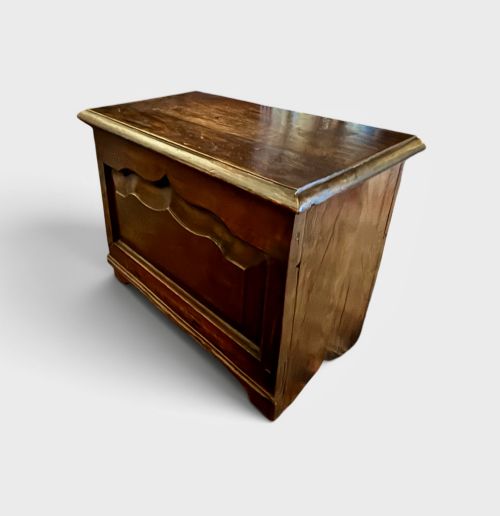
A small oak storage trunk answers the search for compact domestic receptacles built to hold linen, blankets, and personal valuables. These pieces appear primarily as coffers, coffer bachs, and miniature mule chests spanning from the sixteenth century through the Georgian era and into the nineteenth century.
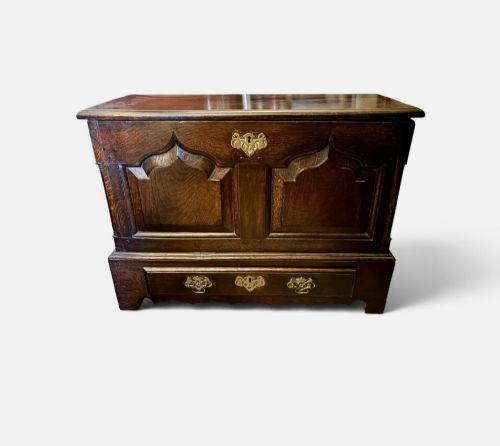
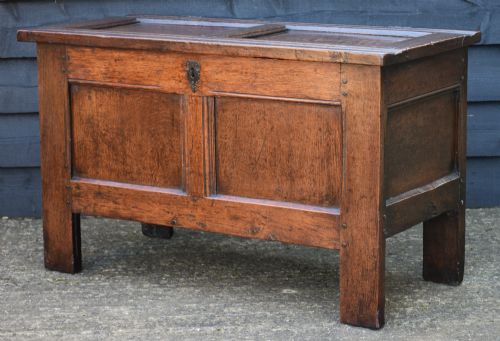
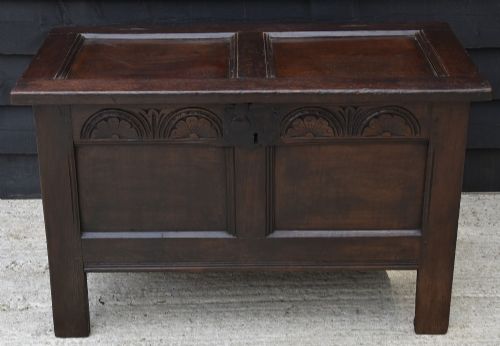
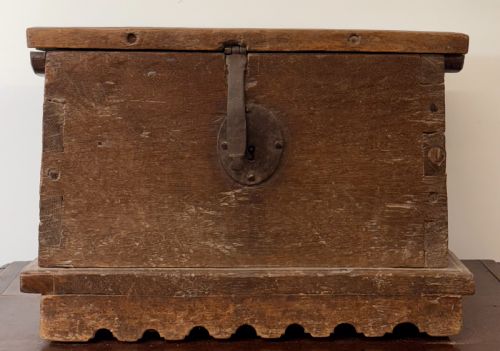
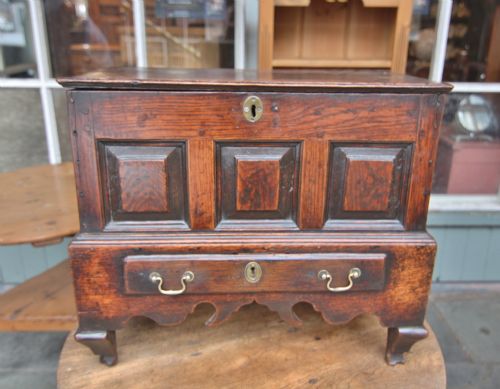
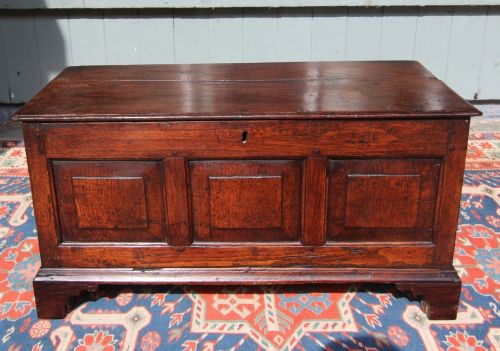
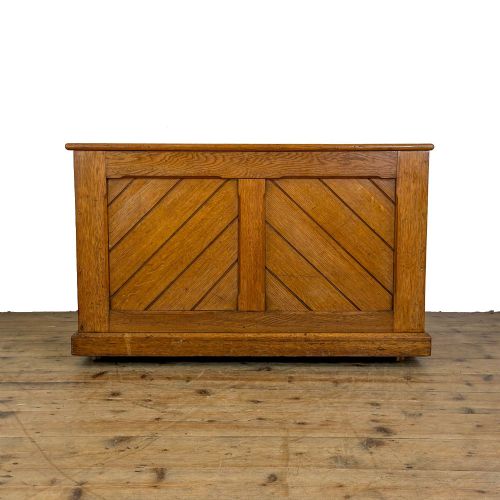
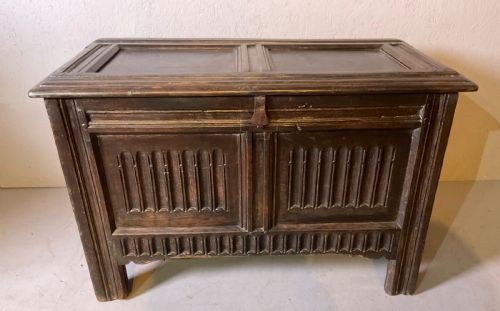
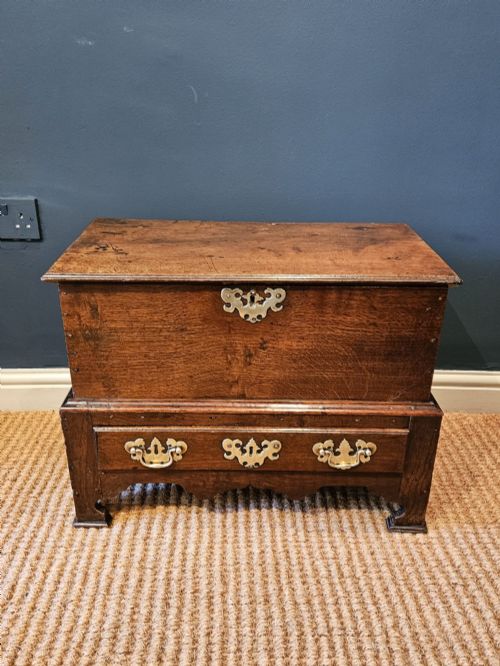
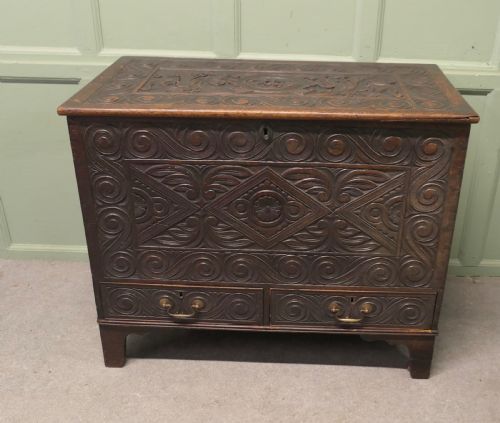
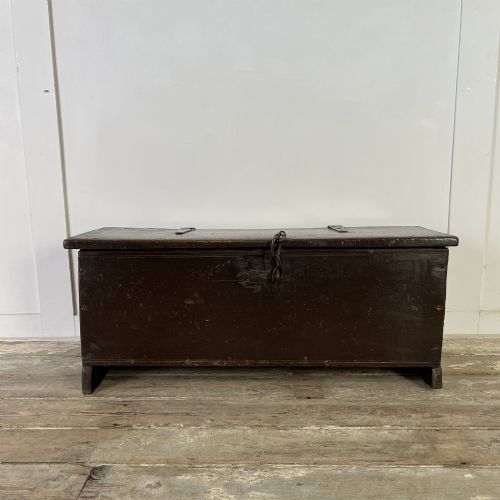
The regional variety proves extensive, including Welsh country pieces and Flemish examples alongside standard English vernacular work. Buyers encounter items ranging from simple seventeenth-century boarded boxes to panelled designs and small receptacles fitted with drawers at the base.
How They Were Made
Carpenters constructed these trunks predominantly from solid oak, utilising pegged frame and panel joinery to accommodate the natural movement of the timber over centuries. Workshops reinforced many examples with wrought iron hinges, brass fittings, and ironbound brackets to secure the lids and corners.
Surface finishes remain straightforward, relying on the natural ageing of the oak, though occasional examples show historical painted wood surfaces or carved details such as linen fold panels and green man motifs.
The listings span periods from the sixteenth century through the Georgian era to the nineteenth century, built primarily from solid oak with iron and brass hardware.
What Varies in Quality
The standard of carving and proportion dictates the distinction between ordinary domestic utility items and finer regional pieces. Well-executed vernacular proportioning and crisp joinery separate modest country boxes from superior workshop productions.
Originality of timber, hinges, and internal partitions heavily influences the standing of a piece. Trunks retaining their early ironwork and untouched surfaces hold greater integrity than those altered or excessively restored over time.
The Small Oak Storage Trunk Glossary
- Coffer bach
- A small Welsh tabletop or miniature chest used for storing valuables and personal linen. These diminutive pieces often feature a small drawer beneath the main compartment.
- Linen fold
- A carved wooden panel motif resembling folded cloth, popular on sixteenth and seventeenth-century furniture. This decorative technique creates vertical folds that mimic textile drapery.
- Kist
- A traditional regional term for a chest or box used for domestic storage. The word shares roots with older Germanic storage receptacles.
- Mule chest
- A chest fitted with one or more drawers at the base beneath the main storage compartment. This form bridges the evolution between simple blanket boxes and modern drawer chests.
- Boarded construction
- A method of building boxes by joining solid planks directly at the edges rather than using a separate frame and panel assembly. This represents an older, simpler carpentry technique.
Small Oak Storage Trunk: Frequently Asked Questions
What were small oak storage trunks used for?
These receptacles served domestic households for holding precious textiles, legal documents, silver, and personal clothing near the fireside or bed. Their compact proportions allowed owners to transport valuables easily or keep them secure within smaller rooms.
Over generations, families adapted them for various household storage needs, shifting from linens to general household items while keeping their contents protected from dampness and pests.
How do I tell a coffer bach apart from a standard chest?
A coffer bach is distinctly smaller in scale, traditionally designed to sit upon a table, desk, or dresser rather than directly on the floor. Most regional examples incorporate a small drawer beneath the primary lidded compartment.
Standard chests are built for floor placement and lack the miniature proportions characteristic of these Welsh and English tabletop storage boxes.
How should I care for an antique oak trunk?
Keep the timber away from direct heat sources and sudden humidity changes to prevent the solid oak panels from splitting or warping. Maintain the dry surface with occasional applications of appropriate beeswax to nourish the wood grain.
Avoid heavy liquid polishes that can build up within carved recesses or darken the historical patina accumulated over the centuries.
How can I distinguish seventeenth-century oak from later pieces?
Seventeenth-century examples display hand-split or quarter-sawn oak timber featuring visible medullary rays, coupled with pegged frame and panel joinery. Tool marks left by adzes and pit saws remain evident upon close inspection of the interior boards.
Later nineteenth-century reproductions or adaptations often utilise machine-sawn timber, modern hinges, and standardised fixings that differ from seventeenth-century construction methods.