
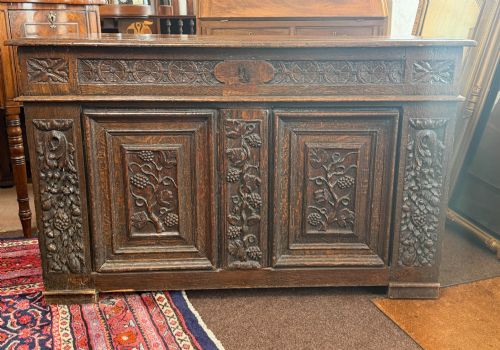
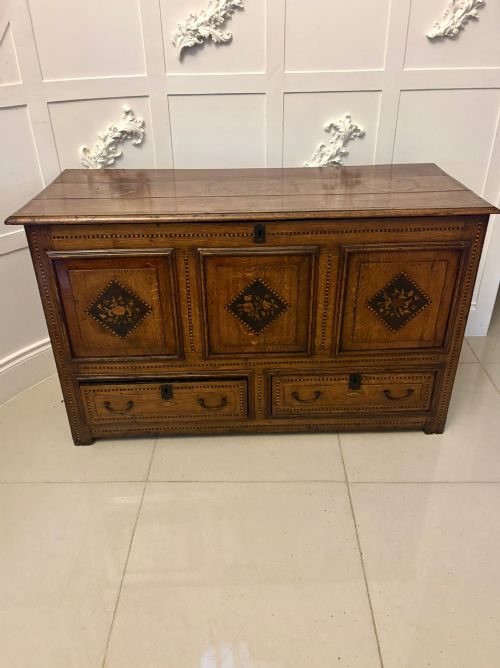
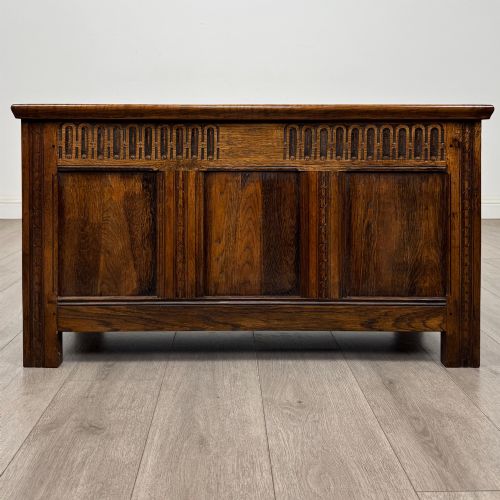


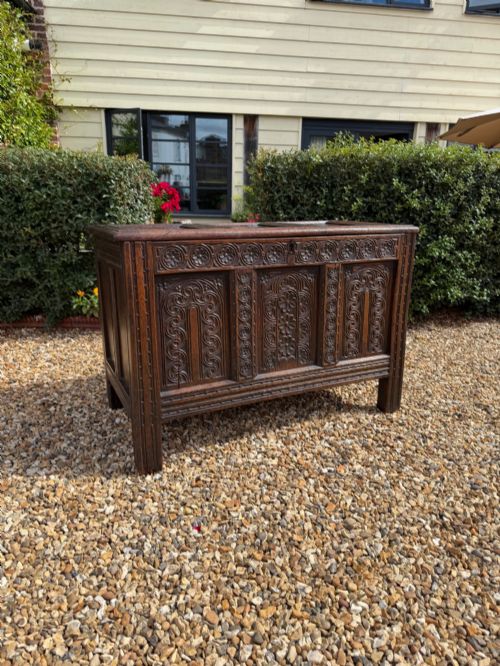
Carved Panel Trunk
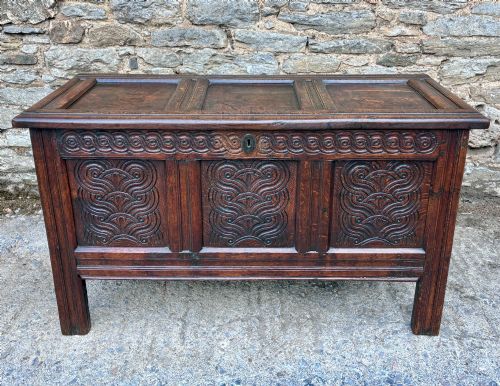
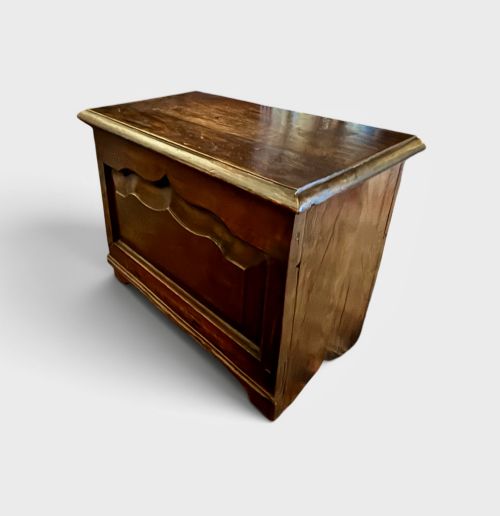
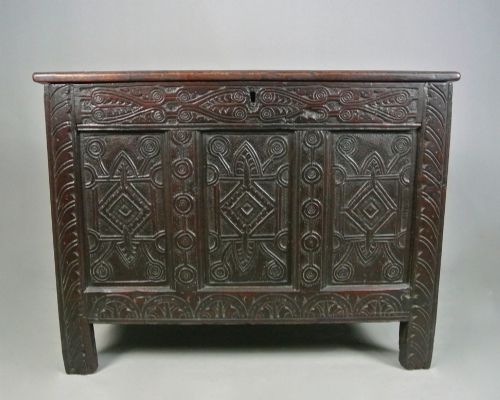
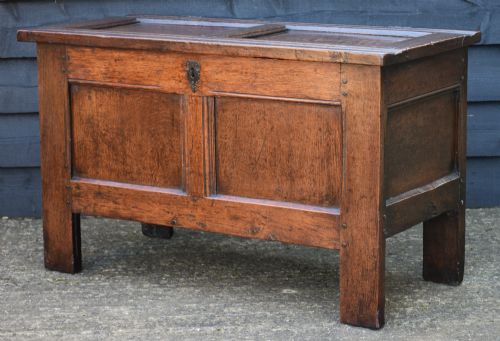
A carved panel trunk is a sturdy timber chest built to store household valuables, prized for its robust joinery and decorative relief work.
Carved Panel Trunk
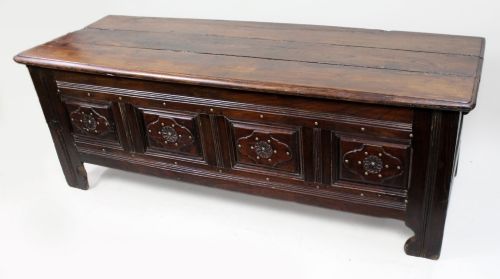
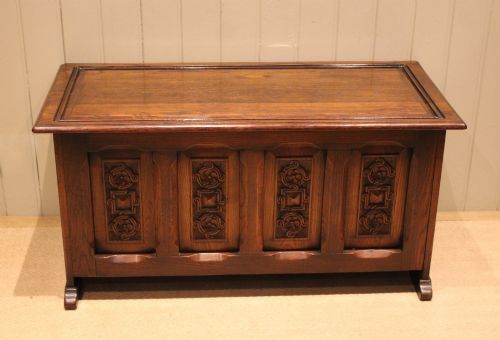
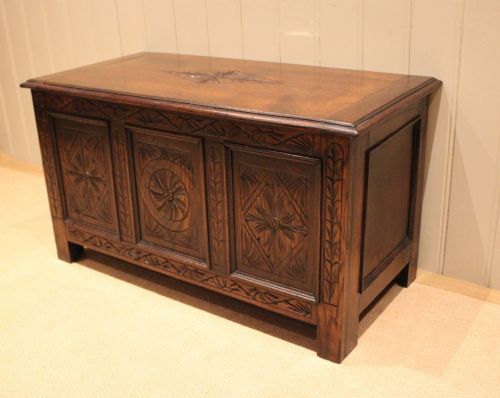
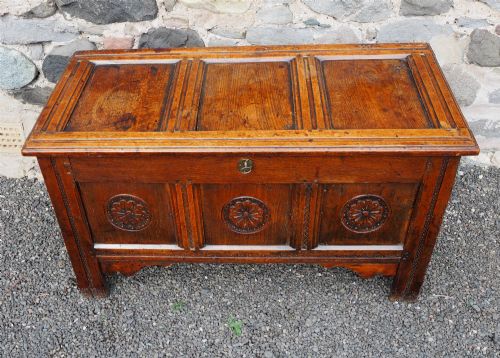
A carved panel trunk serves domestic storage needs with a hinged lid and a compartmentalised interior. When people search for a carved panel trunk, they encounter heavy timber boxes designed for blankets, linen, and valuables.
The pieces on this page span several eras, appearing most frequently in 17th Century and 18th Century forms. Makers constructed these chests as practical furniture that doubled as seating or display surfaces in traditional homes.
How they were made
Joiners relied primarily on solid oak, shaping panels with hand chisels and securing joints with wooden pegs. Workshops also utilised mahogany, pine, and ebonised wood alongside iron and brass hardware.
Surface decoration involved geometric carving, chip carving, and occasional marquetry inlay or wood inlay. Artisans assembled frames using stile and rail construction to accommodate seasonal timber movement.
Carved Panel Trunk Retail Price Guide 2026
Typical asking prices for carved panel trunk among the pieces listed under this phrase on Sellingantiques today, from the lower quarter to the upper quarter. They describe what is for sale here now, not the wider market.
Some chests retain ecclesiastical Gothic carvings, suggesting they spent their early days tucked inside damp parish vestries.
What varies in quality
The depth and crispness of the relief carving determine much of the visual merit, distinguishing simple utilitarian boxes from elaborate commissions. Greater skill shows in the precision of the panel fits and the retention of original iron or brass hinges and locks.
Proportion and scale influence desirability, as smaller or more slender proportions command attention from collectors. The survival of an untouched surface patina indicates how carefully a chest has been preserved through successive centuries.
The Carved Panel Trunk Glossary
- Coffer
- A heavy wooden chest traditionally used for storing valuables, documents, or clothes. These objects often feature hinged lids and sturdy frame construction.
- Mule chest
- A storage chest that incorporates one or more drawers beneath the main lift-top compartment. This form bridges the gap between the simple trunk and the modern chest of drawers.
- Marquetry inlay
- Decorative patterns formed by fitting contrasting veneers into prepared recesses in the wood surface. Craftsmen applied this technique to enhance the visual richness of principal panels.
- Stile and rail
- A method of frame construction where vertical stiles and horizontal rails hold a central floating panel in place. This allows the timber to expand and contract without splitting.
- Jacobean
- A design style spanning the early 17th century characterised by solid proportions and geometric carved ornamentation. Pieces from this period display robust joinery and dark finishes.
Carved Panel Trunk: Frequently Asked Questions
What were carved panel trunks used for?
These chests served primarily to store heavy textiles, blankets, church silver, and important family documents away from damp floors.
Households also utilised them as seating benches near windows or as tables when space demanded multi-functional furniture.
How do I date a carved panel trunk?
Examination of the joinery methods provides the most reliable guide to age, noting whether makers used hand-riven timber, wooden pegs, or machine-cut nails.
Stylistic markers such as Jacobean geometric mouldings, Gothic carvings, or Georgian panel proportions also point toward specific decades of manufacture.
Are these trunks suitable for daily use?
Solid oak and robust frame construction make these pieces exceptionally durable for modern storage requirements. Placing them away from direct heat sources prevents the historic timber from drying out or splitting.
What is the difference between a coffer and a trunk?
The terms are often used interchangeably in historical listings to describe lidded storage boxes. Strictly speaking, a coffer implies heavy timber construction with framed panels rather than a hollowed or bentwood trunk.