
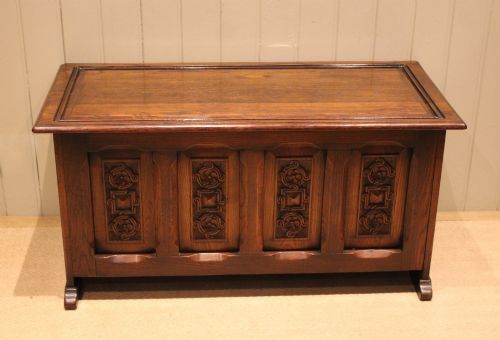
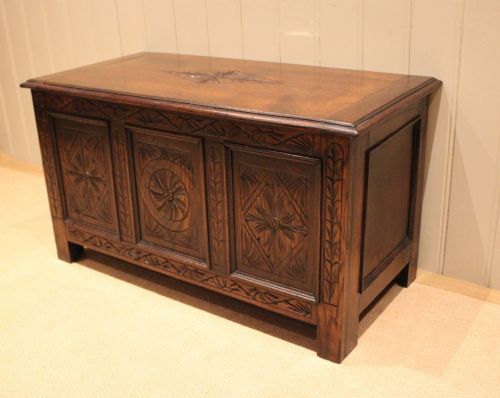
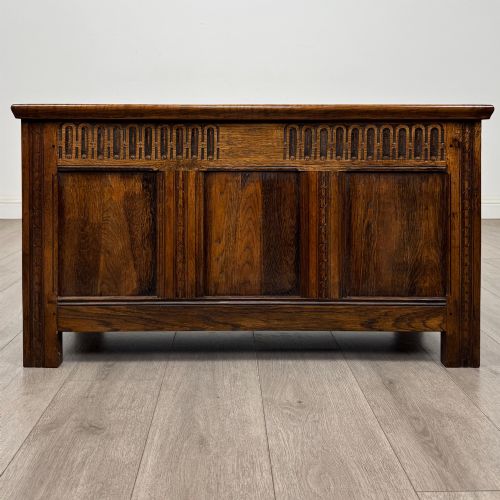
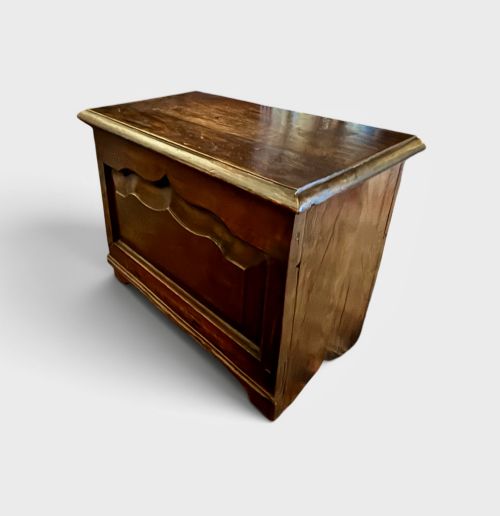
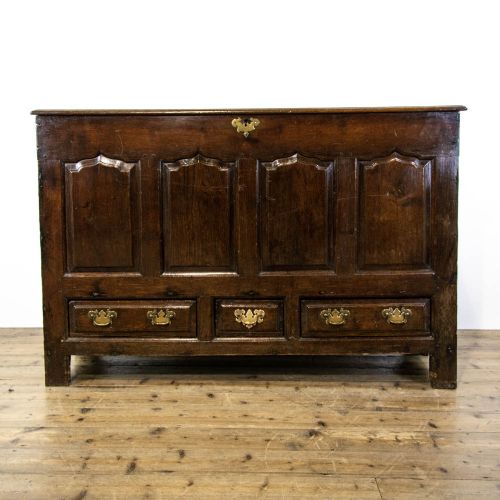
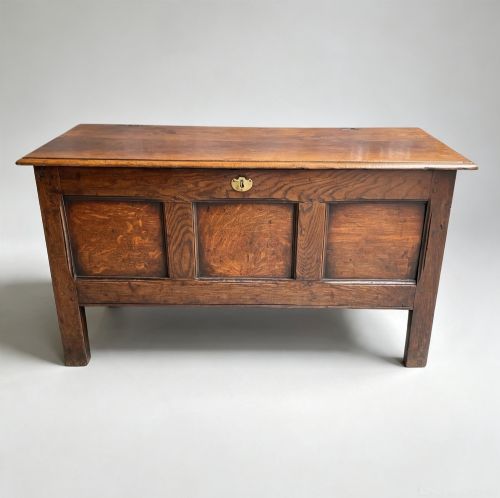
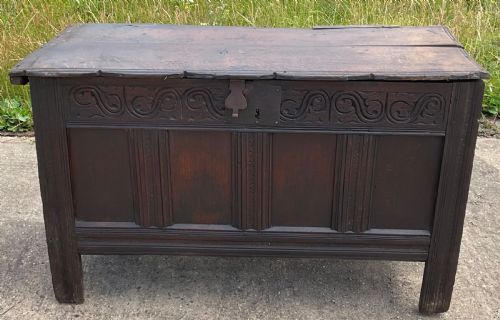
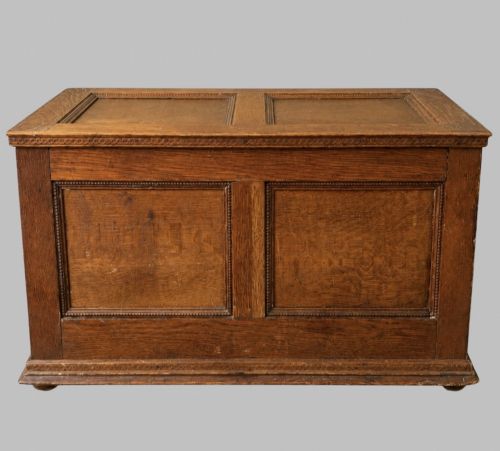
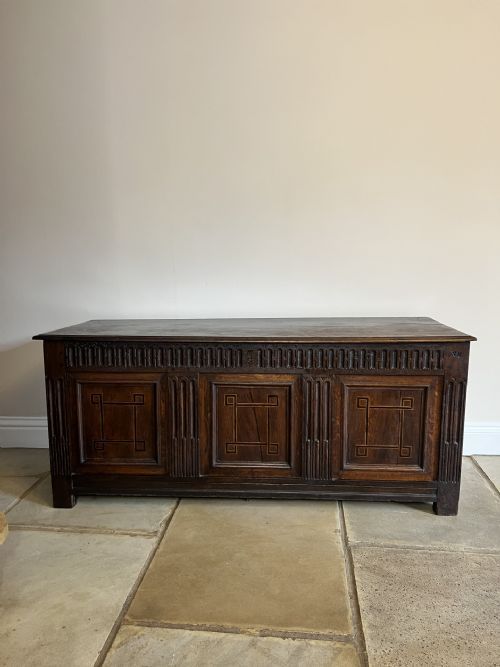
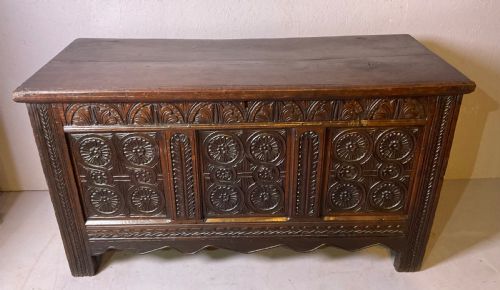

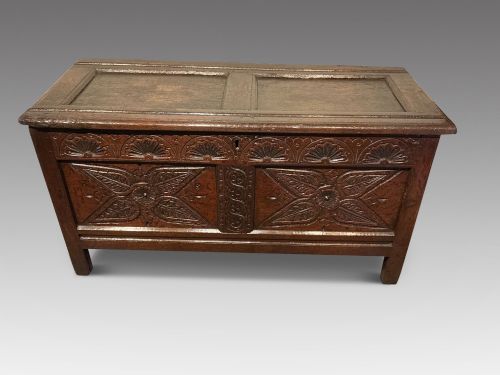
Carved Oak Bedding Chest
A carved oak bedding chest brings robust utility and centuries of texture into a room.

Identifying a carved oak bedding chest
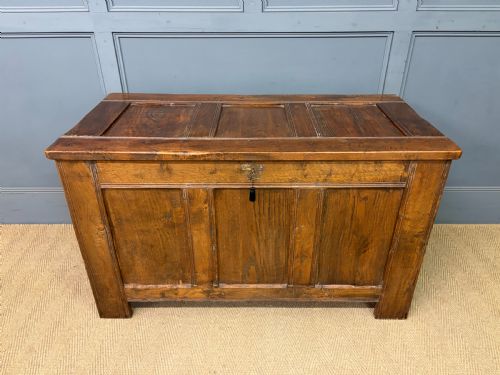
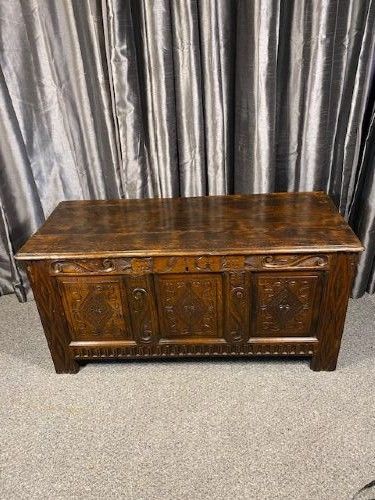
A carved oak bedding chest serves as a sturdy storage piece defined by its heavy timber construction and surface decoration. These objects appear in forms such as coffers and storage chests, offering deep interior space suited for blankets and linens.
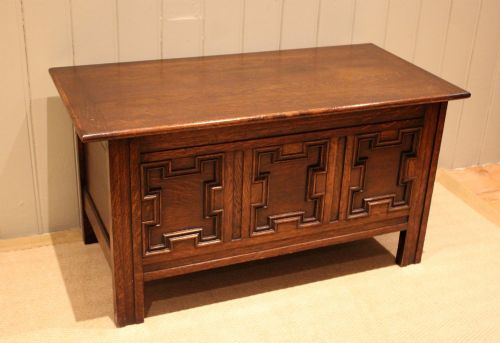
Most examples found here date from the seventeenth century or the eighteenth century, alongside later revivals from nineteen thirty. Regional pieces, including Yorkshire examples, display distinct local carving patterns and structural proportions.
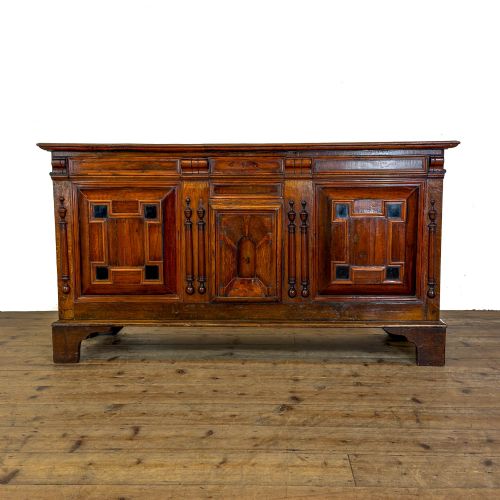
The primary forms range from plain boarded boxes to elaborately panelled coffers with hinged lids. Buyers encounter both period originals bearing historic tool marks and revival pieces built in the twentieth century to echo earlier aesthetics.
Construction and materials
Construction relies heavily on native oak, chosen for its density and durability. Joinery techniques typically involve mortise and tenon joints secured with wooden pegs, creating a rigid frame that withstands heavy daily use.
Surface decoration is worked directly into the timber using gouges, chisels, and hand-held punches. Hardware components such as hinges, latches, and sometimes lock plates are forged from iron or cast in brass.
Retail Price Guide 2026
Typical UK retail prices for carved oak bedding chest, calculated from the Sellingantiques database of over a million retail prices indexed since 2003. This retail price guide relies exclusively on Sellingantiques data; no external sources or auction records are used, so the figures do not describe the wider market.
Early makers occasionally hid tiny carved signatures or protective symbols beneath the lid rim to ward off unwanted spirits.
Assessing quality in carved chests
Quality rests on the crispness and depth of the carved ornament, where confident hand-cut details elevate a piece far above shallow or mechanical tooling. The integration of original iron or brass hardware also contributes significantly to the overall integrity of the object.
The condition of the timber, particularly the presence of original boards without extensive modern replacements, dictates the historical value. Well-preserved surfaces retain natural patination accumulated over centuries of handling and polishing.
The Carved Oak Bedding Chest Glossary
- Coffer
- A traditional heavy wooden chest used for storage, typically fitted with a flat lid. These pieces formed essential furniture in early homes before fitted wardrobes became common.
- Jacobean
- A design style spanning the early seventeenth century, characterised by geometric panelling and strapwork carving. Revival versions of this style appeared later in the twentieth century.
- Mortise and tenon
- A fundamental joint where a projecting tongue fits snugly into a matching cavity, locked securely with a wooden pin. This method forms the skeleton of early oak furniture.
- Patina
- The surface sheen and softening of edges developed by wood and metal over long periods of use. It results from natural oils, wax, and handling.
- Strapwork
- A carved decorative motif resembling intersecting flat bands or leather straps, frequently seen on seventeenth-century panels.
Frequently Asked Questions
What were carved oak bedding chests used for?
These chests functioned primarily as secure storage for valuable textiles, garments, and bedding in domestic households. Their heavy construction also allowed them to double as benches or tables when space was limited.
Over generations, they adapted to hold household documents and winter coverings, protecting contents from dampness and pests.
How do I care for an oak chest?
Keep the timber away from direct heat sources and dramatic humidity shifts to prevent the oak from splitting or warping. Feed the surface occasionally with a traditional beeswax polish to maintain the natural finish.
Avoid modern liquid cleaners or silicone sprays, which can penetrate the grain and damage historic patination.
How can I tell a seventeenth-century piece from a revival piece?
Examine the tool marks and the way the wood has aged, looking for hand-cut inconsistencies rather than uniform machine work. Construction methods also offer clues, as period examples use hand-rived timber and early fastening techniques.
Nail types, saw marks, and the nature of the wear patterns help distinguish authentic seventeenth-century construction from nineteen-thirty revivals.
Are these chests heavy to move?
Solid oak is an exceptionally dense hardwood, making these chests remarkably heavy and solid. Most require two people to lift and reposition safely within a room.
Their substantial weight keeps them firmly planted on the floor, contributing to their enduring stability over centuries.