


Charles II Oak Coffer
A charles ii oak coffer provides honest seventeenth-century storage, bringing sturdy timber and carved panels straight into a room.
What they are
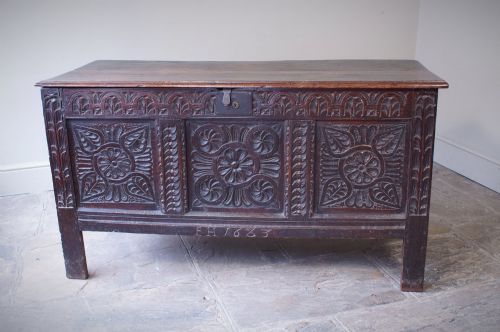
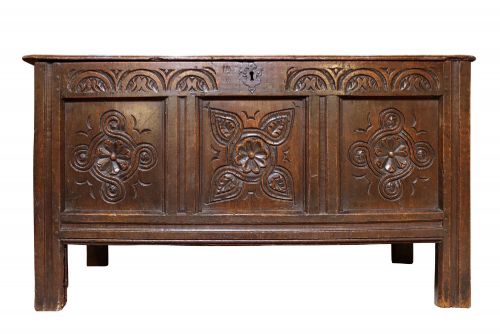
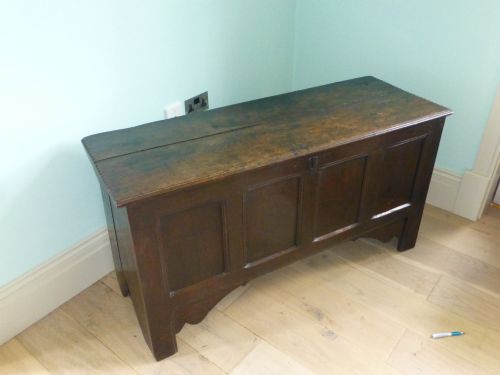
A charles ii oak coffer is a heavy wooden storage chest built during the seventeenth century, most frequently encountered with panelled construction and regional English origins. These pieces served households as blanket boxes, trunks, and blanket chests, designed to withstand daily domestic use.
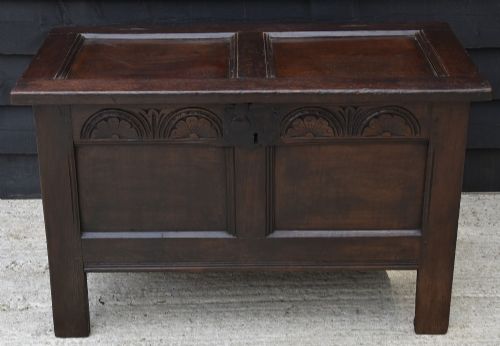
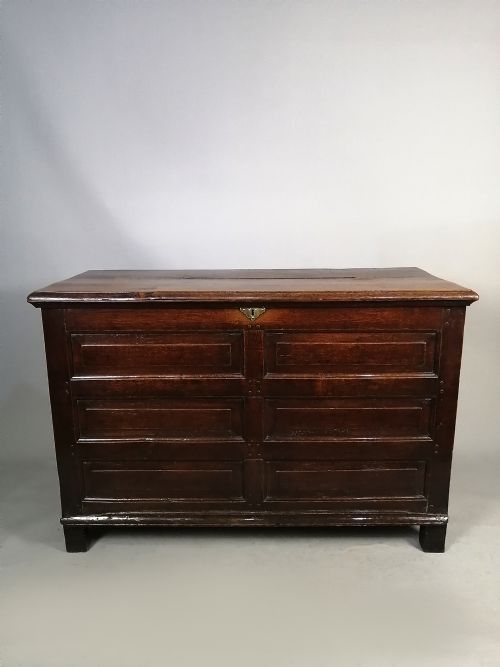
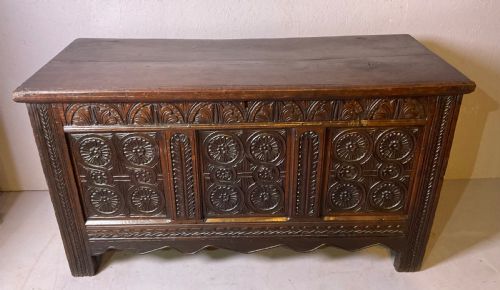
The versions most likely to meet a buyer on this page date from the middle to the late seventeenth century, often featuring three panels or two panels on the front elevation. Examples span from joined structures with carved decoration to simpler six-plank boarded sword chests.
Regional variations appear across England, with pieces carrying specific characteristics from Lancashire, Yorkshire, the West Country, Wales, and the Home Counties. These origins reveal local joinery traditions while maintaining a consistent utilitarian form.
How they were made
These pieces are constructed primarily from native oak, supplemented by iron and brass fittings such as hinges, latches, and lock plates. Joiners utilised traditional framing methods, setting panels into grooved stiles and rails to accommodate the natural seasonal movement of the timber.
Decoration on carved variants was executed by hand using gouges and chisels directly into the solid oak. Some examples feature inlaid details or solid plank lids fitted to the top of the chest.
Retail Price Guide 2026
Typical UK retail prices for charles ii oak coffer, calculated from the Sellingantiques database of over a million retail prices indexed since 2003. This retail price guide relies exclusively on Sellingantiques data; no external sources or auction records are used, so the figures do not describe the wider market.
All listed pieces belong to the seventeenth century, spanning joined panelled coffers and boarded sword chests.
What varies in quality
The refinement of the carved ornament separates basic utilitarian chests from more ambitious commission work, with crisp detail in the foliage and geometric motifs indicating skilled joinery. Proportion also dictates standing, as smaller or miniature child's coffers demand precise scaling compared to larger domestic trunks.
The integrity of the original oak timber and the survival of secondary elements, such as boarded lids and iron hardware, distinguish well-preserved examples from heavily altered pieces.
The Charles II Oak Coffer Glossary
- Cofer
- An early term for a strongbox or chest used for transporting valuables and storing household textiles.
- Joined oak
- Furniture constructed using mortise and tenon joints secured with wooden pegs rather than simple nailed boards.
- Six-plank
- A chest constructed from six individual boards joined directly at the edges to form a simple rectangular box.
- Stile
- The vertical upright member in a panelled wooden frame.
- Rail
- The horizontal framing member fitted between stiles in panelled construction.
Frequently Asked Questions
What is a charles ii oak coffer?
A charles ii oak coffer is a seventeenth-century wooden storage chest made from solid timber, typically featuring carved panels or boarded sides.
These pieces were utilised in early homes for storing textiles, blankets, and household valuables securely.
How do I date a charles ii oak coffer?
Dating relies on construction methods, such as joined frames versus simple planking, alongside stylistic markers like carved geometric or floral motifs.
Regional traits and seventeenth-century joinery techniques help narrow the period of manufacture.
Where were these coffers made?
They were produced by local joiners across various English regions, including Yorkshire, Lancashire, the West Country, and the Home Counties.
Each region imparted distinct carving patterns and construction details onto the oak timber.
How do I live with a charles ii oak coffer?
These chests function well as living room coffee tables, hallway blanket boxes, or bedroom storage trunks.
Keep them away from direct heat sources to protect the historic oak from drying out.