

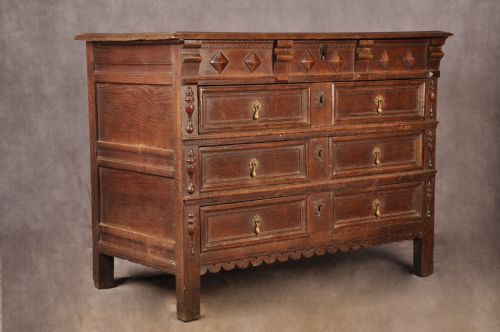
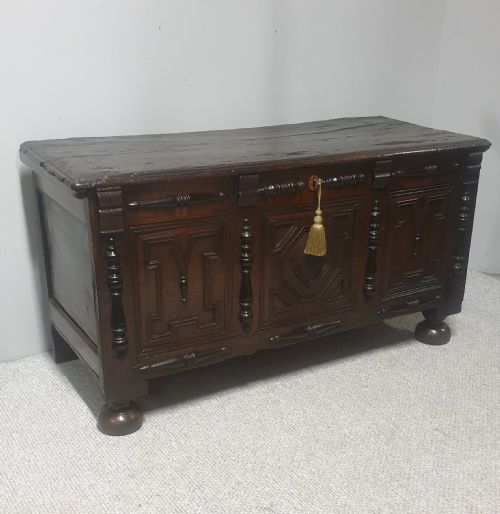
Split Baluster Oak Chest
A split baluster oak chest brings seventeenth-century timber architecture directly into a modern room with rich geometric relief and deep patination.
What split baluster oak chests are
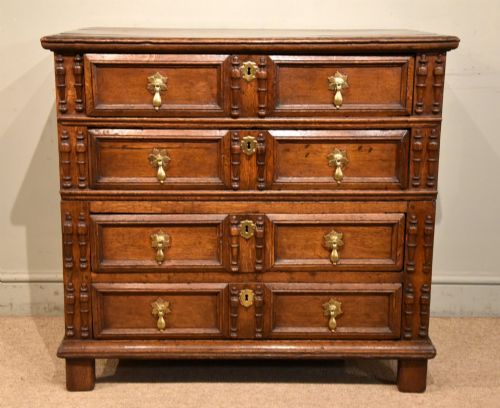
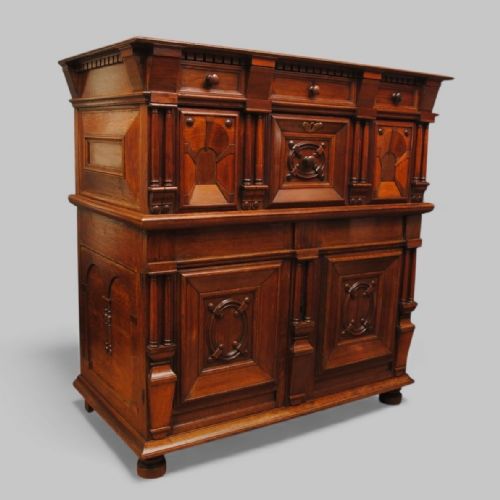
A split baluster oak chest is a sturdy storage piece defined by applied wooden turnings that break the flat plane of the facade. These pieces appear from the seventeenth century onward, encompassing both period examples and later revival interpretations.
The primary forms include chests of drawers and coffers, frequently featuring panelled construction and timber framing. These items served domestic storage needs in early English interiors and continue to function as focal points in period settings.
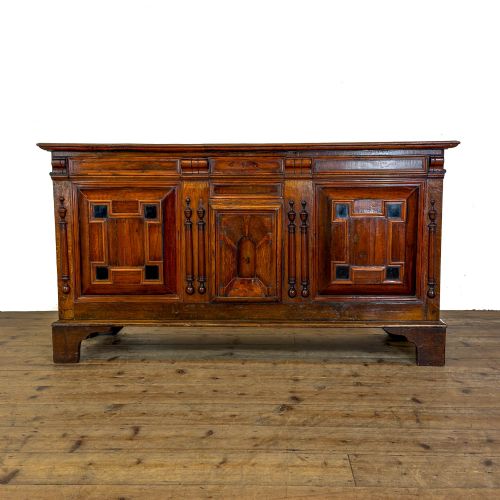
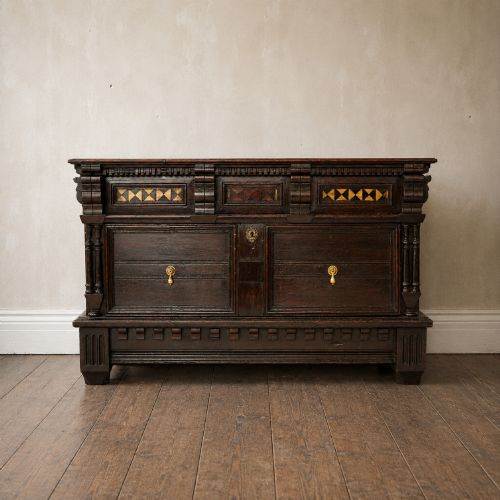
Surviving examples span genuine seventeenth-century craftsmanship and twentieth-century Jacobean revival work, including pieces incorporating later elements. The visible surface often combines plain timber panels with ebonised wood details.
How they were made
Maker workshops built these chests using solid oak, employing traditional frame and panel joinery to accommodate seasonal wood movement. Structural integrity relied on pegged mortise and tenon joints rather than metal fasteners.
Decorative split balusters were produced by turning wooden spindles on a lathe and cleaving them down the middle before applying them to the drawer fronts or stiles. Some surfaces incorporate ebonised wood highlights and wood inlay to create stark contrast against the pale oak.
Retail Price Guide 2026
Typical UK retail prices for split baluster oak chest, calculated from the Sellingantiques database of over a million retail prices indexed since 2003. This retail price guide relies exclusively on Sellingantiques data; no external sources or auction records are used, so the figures do not describe the wider market.
The documented pieces combine solid oak with brass hardware, ebonised wood accents, and wood inlay across seventeenth-century and revival periods.
What varies in quality
Quality rests in the harmony of the timber selection and the crispness of the applied turnings. Period pieces demonstrate the deep, organic patination of centuries, while revival interpretations rely on the fidelity of their Jacobean styling.
The treatment of secondary woods and the integration of later repairs influence the character of each piece. Superior examples maintain balanced proportions where the split balusters and panel mouldings complement the overall architectural structure.
The Split Baluster Oak Chest Glossary
- Split baluster
- A turned wooden spindle sawn lengthwise down the middle and applied as a decorative moulding to furniture facades. This technique creates rhythmic geometric relief across drawer fronts and stiles.
- Coffer
- A large heavy box or chest used primarily for storage, often predating the widespread use of drawer chests. Early examples feature hinged lids and sturdy boarded or panelled construction.
- Ebonised wood
- Timber treated with a dark stain or finish to imitate ebony. Seventeenth-century makers utilised this contrast to accentuate mouldings and turnings against pale oak.
Frequently Asked Questions
How do I date a split baluster oak chest?
Dating relies on examining the construction methods, tool marks, and timber shrinkage visible on the interior and underside of the piece. Seventeenth-century examples show hand-riven boards and pegged joints that differ from twentieth-century revival techniques.
Secondary woods and hardware placement also provide clues to whether a piece belongs to the seventeenth century or a later revival period.
What is the difference between a coffer and a chest of drawers?
A coffer is a deep storage box accessed via a hinged lid at the top, representing an earlier form of domestic furniture. A chest of drawers incorporates horizontal sliding compartments accessed from the front.
Both forms utilise oak construction and decorative split baluster appliques to break up the flat wooden surfaces.
How should I care for an antique oak chest?
Keep the timber away from direct heat sources and sudden humidity changes to prevent the solid oak panels from splitting. Apply a microcrystalline wax periodically to nourish the surface and preserve the historic patination.
Avoid modern liquid polishes that can penetrate open grain and build up undesirable residues on the ebonised wood elements.
What does ebonised wood mean on these chests?
Ebonised wood refers to light-coloured timber treated to achieve a dense black finish that mimics expensive exotic ebony. Makers used this contrast to highlight specific turnings and geometric mouldings.
This decorative choice is characteristic of seventeenth-century joinery and reappears in later revival pieces.