



Inlaid Oak Dresser Base
An inlaid oak dresser base brings robust timber and quiet decorative contrast into a room, serving as a practical surface and deep storage.
Inlaid Oak Dresser Base
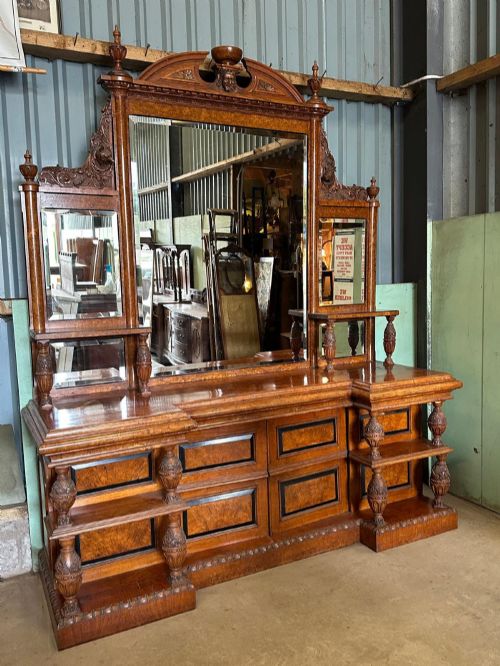
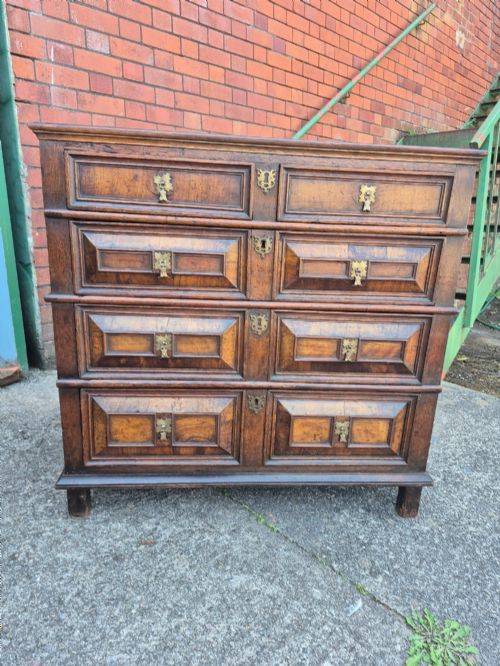
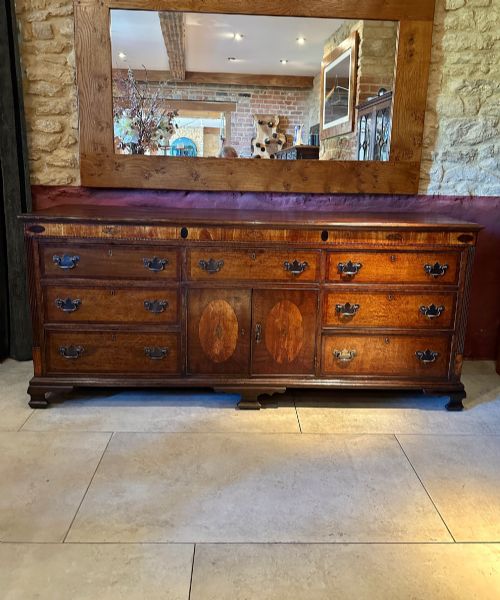
When you search for an inlaid oak dresser base, you are looking at substantial utilitarian furniture designed for domestic storage and display, originating from several distinct eras of British woodworking. The examples on this page span the seventeenth, eighteenth, nineteenth, and twentieth centuries, capturing both provincial craftsmanship and refined formal design.
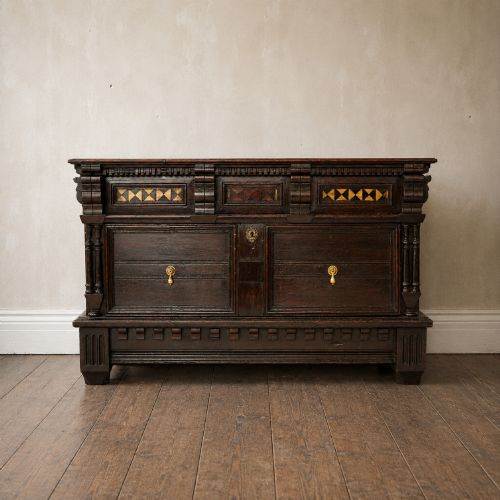
The form typically presents a low, heavy timber body featuring multiple drawers above cupboards or an open potboard base. Regional variations such as Lancashire and Welsh formats appear alongside classic Georgian and earlier Jacobean styles, showing how local workshops adapted the basic sideboard shape.
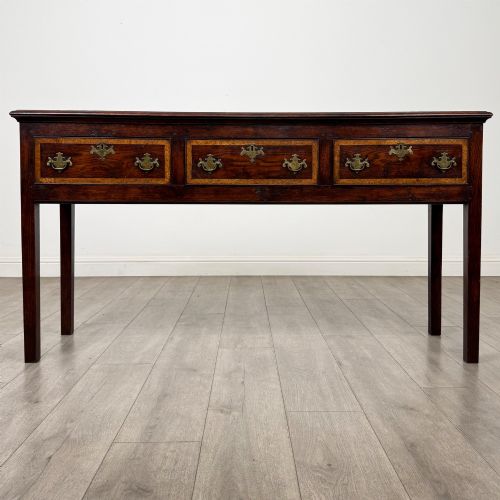
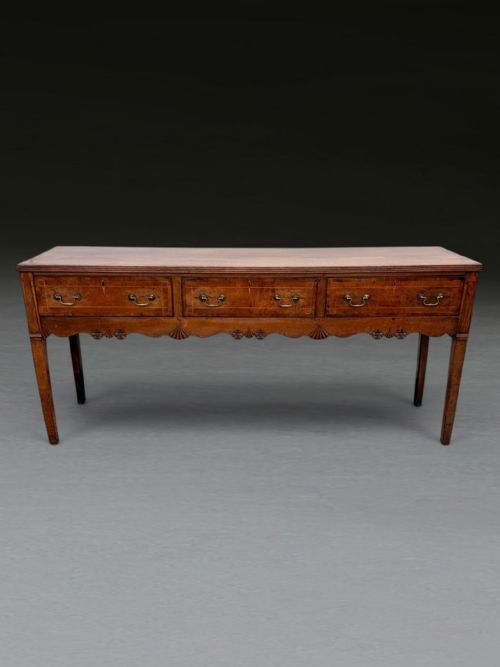
Most pieces combine a solid oak primary structure with contrasting wood inlay, utilising walnut, mahogany, and burr elm to create geometric patterns or floral marquetry. Buyers frequently encounter examples dated to the George III period and the nineteenth century, reflecting sustained demand for durable dining room furniture.
How they were made
Cabinetmakers built these pieces using heavy oak planks for the main framework, drawer linings, and top boards, joined with traditional pegged mortise and tenon construction. This dense primary timber provided the structural weight needed for daily kitchen or dining room use.
Surface decoration relies on skilled inlay techniques, inserting contrasting woods like walnut and burr elm into recessed channels within the oak. Brass hardware such as swing handles and escutcheons completes the construction, though many period pieces retain evidence of later alterations.
Some seventeenth-century drawers shut so tightly they retain the scent of centuries-old beeswax and stored linens.
What varies in quality
Quality in these pieces depends heavily on the crispness of the timber selection and the integration of the inlay work. Finer examples display carefully matched grain patterns across the drawer fronts and precise execution of geometric or marquetry motifs without excessive filler.
The proportion of later replacement timber relative to original seventeenth or eighteenth-century structure also determines desirability. Pieces retaining their original potboards, brasses, and untouched surface patination command greater appreciation among traditional collectors.
The Inlaid Oak Dresser Base Glossary
- Dresser base
- A low cabinet featuring drawers and sometimes cupboards or a potboard beneath, designed for storage without the upper plate rack.
- Potboard
- An open lower shelf built into the base of a dresser, originally intended for storing heavy pots and ceramic dishes.
- Marquetry
- The art of applying decorative veneer pieces in wood to a structural surface to form intricate pictures or abstract patterns.
- Geometric
- A style of ornamentation utilising repeating lines, squares, and polygonal shapes, frequently seen on seventeenth-century drawer fronts.
- Burr elm
- A highly figured timber harvested from tree growths, prized by cabinetmakers for its swirling grain patterns used in decorative panels.
Inlaid Oak Dresser Base: Frequently Asked Questions
What is a dresser base?
A dresser base is a low, sturdy piece of furniture equipped with drawers and sometimes lower cupboards or shelves for kitchen and dining storage.
Unlike a standard sideboard, it originates from the traditional kitchen furniture family where heavy food preparation and serving took place.
How do I tell periods apart?
You can distinguish periods by looking at the construction methods, handle styles, and specific decorative inlay patterns used on the timber.
Seventeenth-century pieces often feature geometric mouldings, while Georgian examples lean toward cleaner lines with mahogany or burr elm highlights.
Where were these pieces used?
These pieces traditionally stood in the kitchens, sculleries, or dining halls of large houses and farmhouses for everyday utility.
Today they function effectively in modern dining rooms, hallways, or living spaces as serving surfaces and media storage consoles.
What woods are involved?
Oak forms the primary structural carcass and top boards for almost all pieces found in this category.
Secondary inlay timbers include walnut, mahogany, and burr elm, providing contrast against the warm brown tones of the main body.