

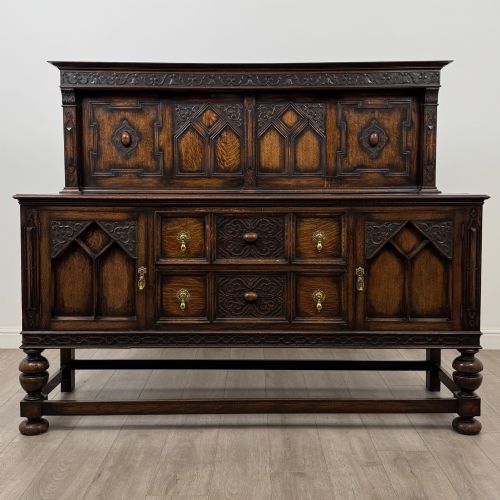
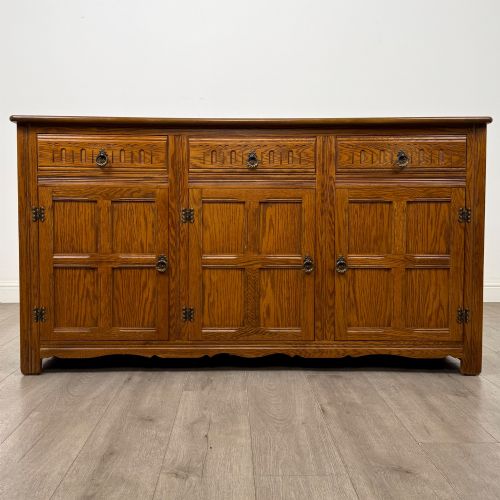
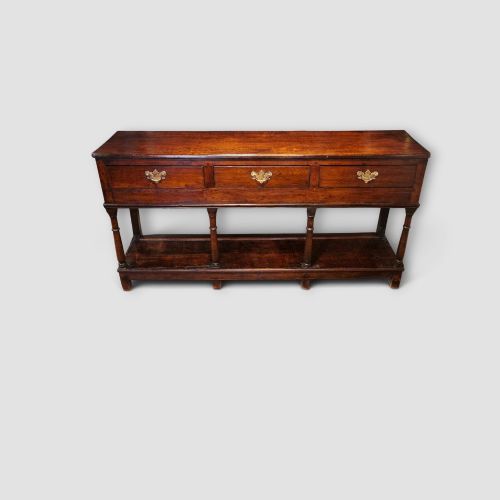
Oak Dresser Server
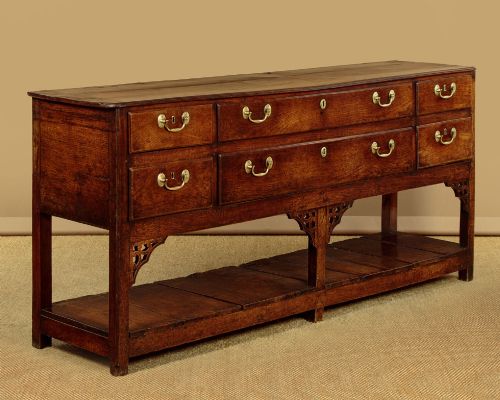
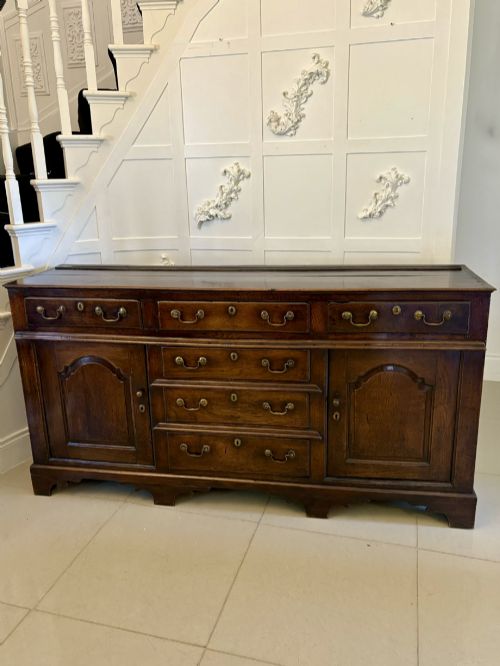
An oak dresser server brings sturdy proportions and timber storage into a dining space, uniting the utility of a serving table with deep drawers and open potboards.
Oak Dresser Server
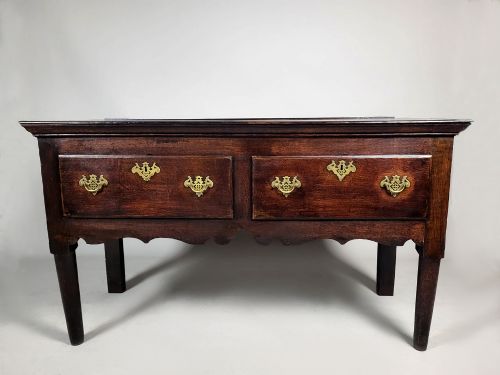
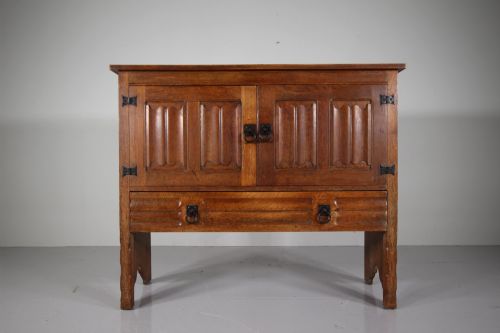
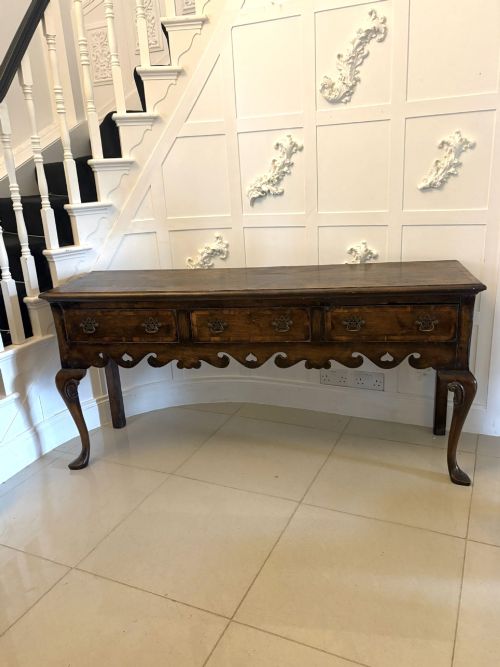
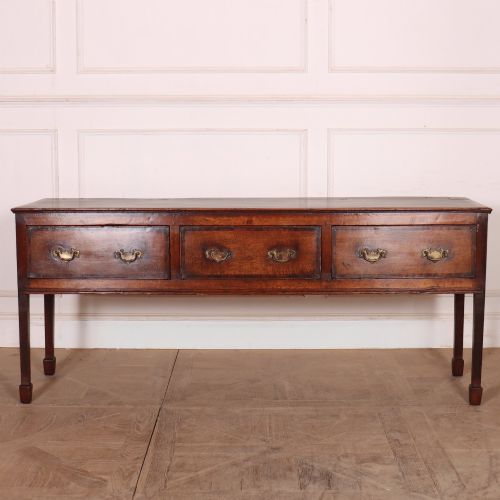
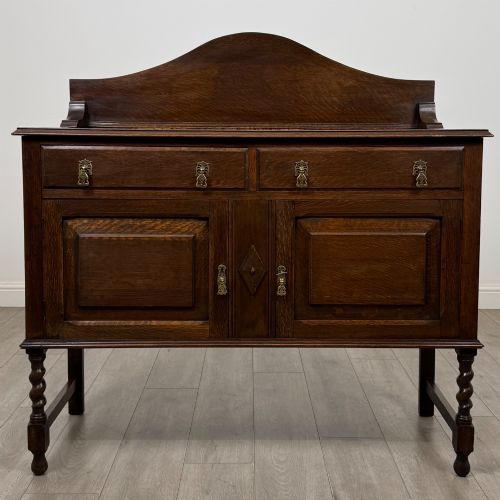
An oak dresser server is a substantial storage and serving piece rooted in centuries of domestic use, appearing as low bases, potboards, and formal sideboards. When searching for an oak dresser server, buyers encounter vernacular country pieces alongside revival designs from later decades.
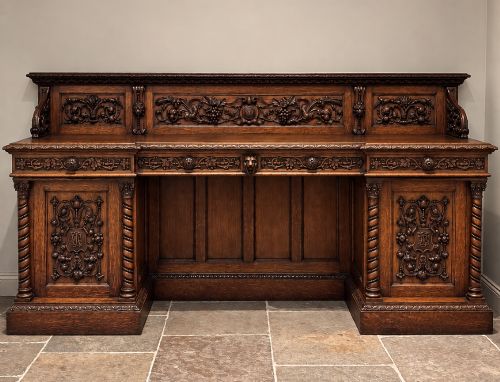
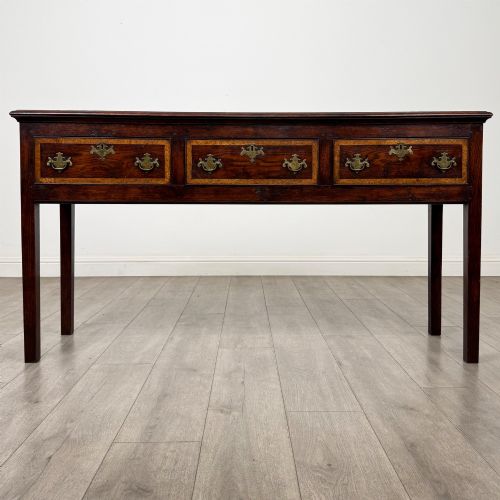
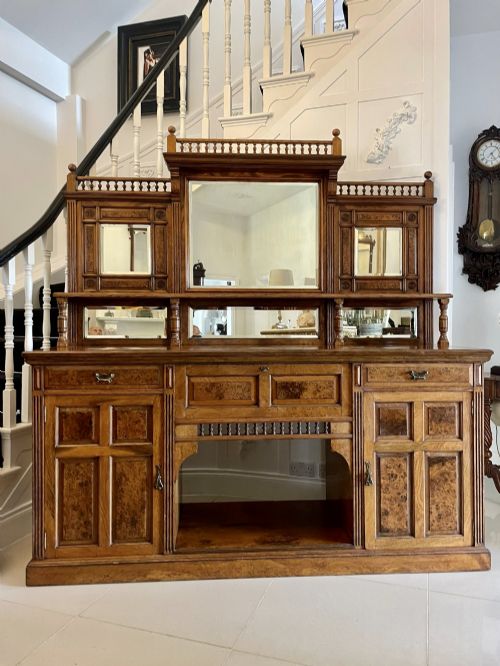
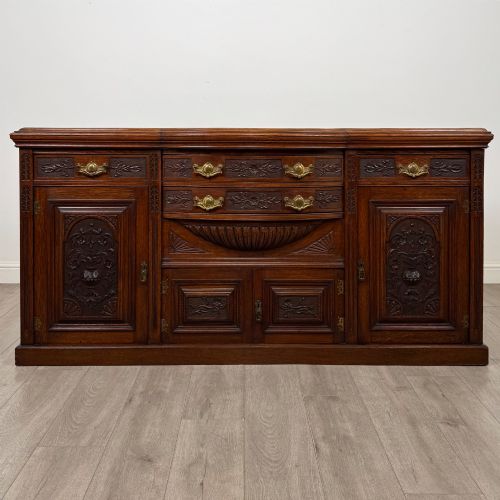
The selections span centuries of British and continental craftsmanship, ranging from eighteenth-century Georgian country furniture to Edwardian interpretations. Early examples often feature open lower potboards and deep drawer arrangements, while Victorian and Edwardian iterations favour heavy carved decoration and mirror backs.
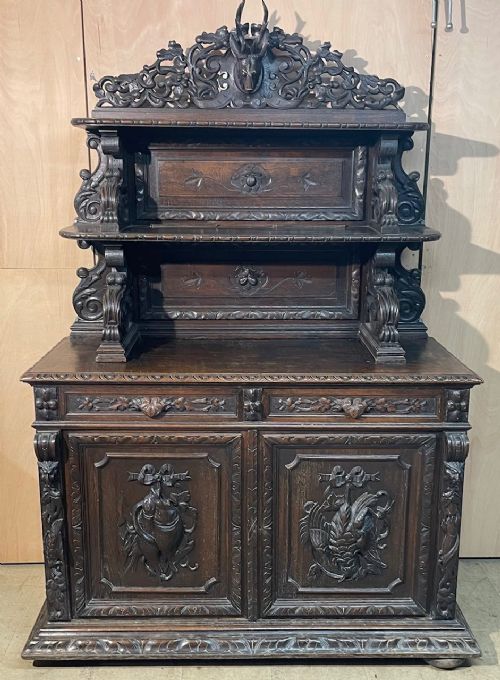
Regional variations emerge across the selection, including Welsh and Border counties formats alongside French buffets and hunting sideboards. These forms serve primarily as functional serving surfaces while anchoring dining rooms with heavy timber presence.
Materials and Construction
Construction relies heavily on solid oak timber, frequently accented with secondary woods like elm, maple, and cherry. Timber surfaces display varied finishes, from raw golden oak to polished dark patinas and occasional painted treatments.
Joinery techniques define the structural integrity, utilising joined frames, pegged joints, and hand-cut drawer construction. Hardware elements incorporate cast brass handles and iron fittings, securing doors and drawers built for heavy daily service.
Listings span eight distinct periods, led by eighteenth-century examples and Edwardian revivals.
Evaluating the Pieces
Quality rests upon timber selection, surface patination, and the integrity of original construction. Pieces exhibiting deep, untouched patinas on solid boards stand apart from later replacements or heavily altered surfaces.
Carving depth and execution differentiate standard production from superior workshop output, particularly in revival styles where hand-chiseled detail replaces mechanical shaping. Original brassware and intact potboard bases further elevate the standing of individual examples.
Ambrose Heal·Heal And Son·Maple And Co·C Pratts
The Oak Dresser Server Glossary
- Potboard
- An open lower shelf beneath a dresser base traditionally used for displaying heavy crockery or pewter. This feature distinguishes many country kitchen servers from formal dining room sideboards.
- Dresser Base
- The lower section of a kitchen dresser functioning independently as a sideboard or serving table. These sturdy units typically incorporate multiple drawers above cupboards or open shelves.
- Barley Twist
- A turned woodwork detail resembling a rope wound tightly into a spiral. This decorative motif appears frequently on table legs and supports during the Edwardian period.
- Linenfold
- A style of carved wood panel resembling folded parchment or fabric. Cabinet makers utilised this decorative relief pattern extensively on cupboard doors.
- Cabriole Leg
- A furniture leg featuring a double curve, bowing outward at the knee and tapering inward at the foot. This classic shape supports several Georgian period servers.
Oak Dresser Server: Frequently Asked Questions
How are dresser servers used?
These versatile pieces function primarily as serving tables during meals while providing enclosed storage for dining linen and tableware.
Surface tops accommodate serving dishes and display items, while lower cupboards and drawers organise cutlery and kitchen accessories.
What defines a potboard dresser?
A potboard dresser incorporates an open lower shelf positioned close to the floor beneath the main cabinet structure.
This distinct lower platform provided practical storage for heavy pots and pans in traditional kitchens before enclosed cupboards became standard.
How do I identify a Georgian server?
Georgian servers exhibit restrained proportions, fielded drawer fronts, and classic timber patination without heavy Victorian carving.
Many examples feature straight legs or cabriole supports, displaying hand-cut dovetail joinery inside the drawers.
Where were regional dressers made?
Makers constructed these regional items across British country districts, with distinct styles emerging from Wales, Scotland, and English border counties.
Local timber choices such as elm and regional joinery methods help attribute pieces to specific geographic traditions.