

Oak Commode Drawers
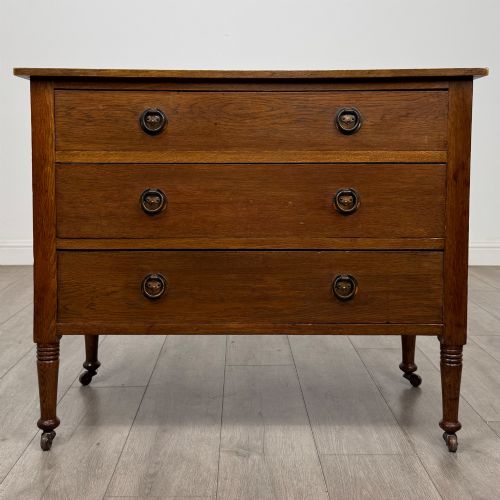
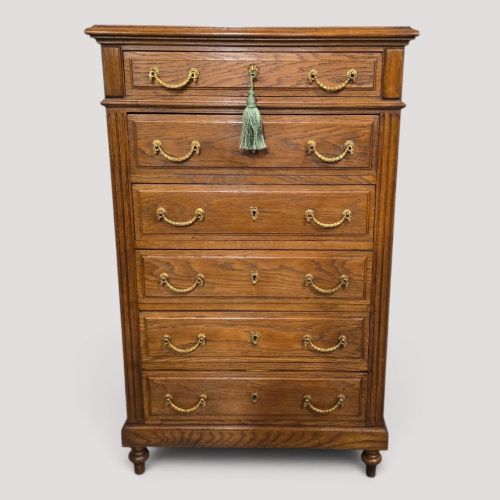
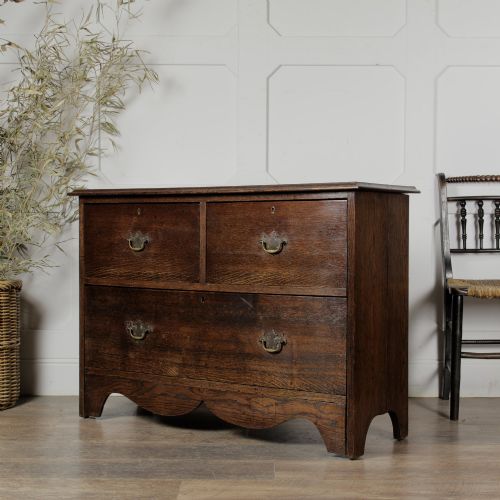
Oak commode drawers bring substantial timber storage into a room, uniting the utility of a chest with the presence of period French and English cabinet-making.
Oak Commode Drawers
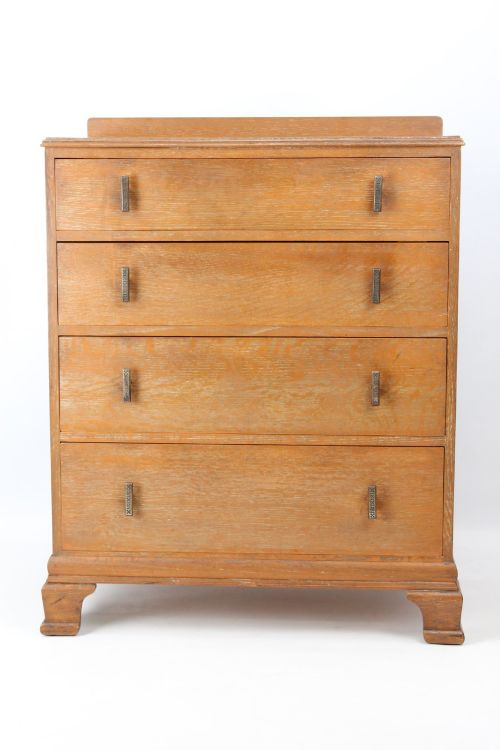
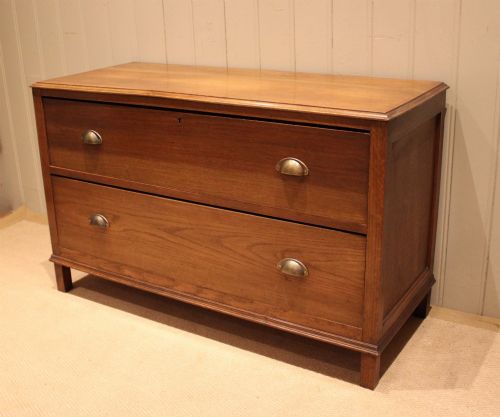
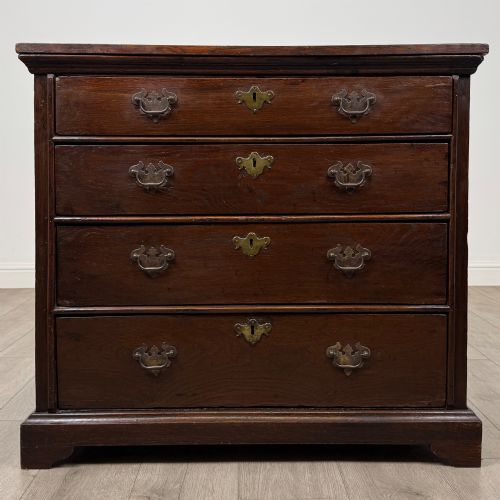
When searching for oak commode drawers, you encounter a substantial range of timber furniture spanning from the seventeenth century through to the Edwardian era and the 1920s. These pieces function primarily as chests of drawers, bedside cabinets, and close stools, taking inspiration from English country, French provincial, and Georgian design traditions.
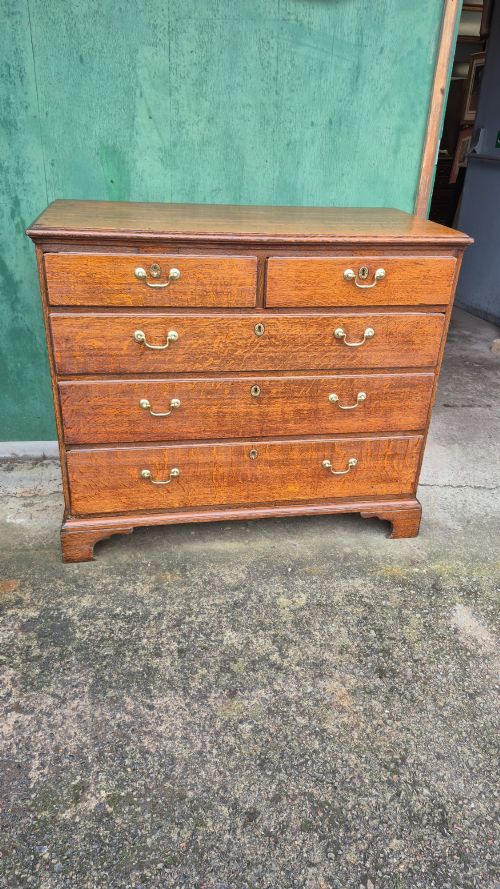
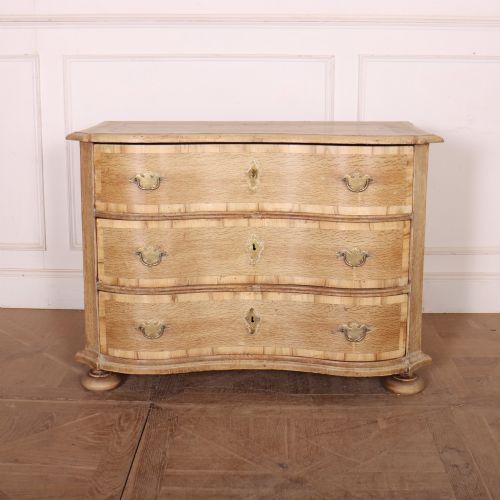
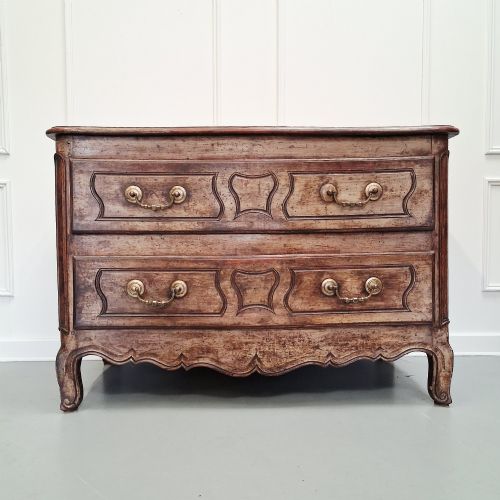
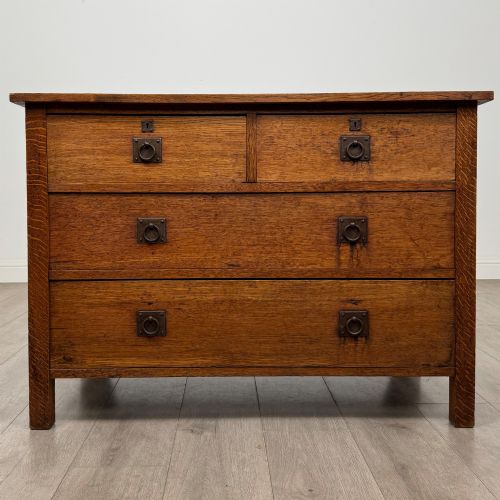
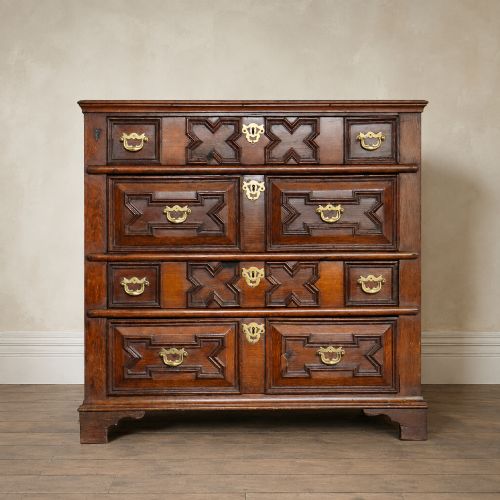
The versions most commonly met on this page include sturdy seventeenth-century Charles II examples with geometric mouldings, eighteenth-century Georgian golden oak pieces, and continental French commodes fashioned from scrubbed or bleached oak. Later manifestations stretch into Edwardian and early twentieth-century low chests, maintaining the heavy timber construction of their predecessors.
Materials and Construction
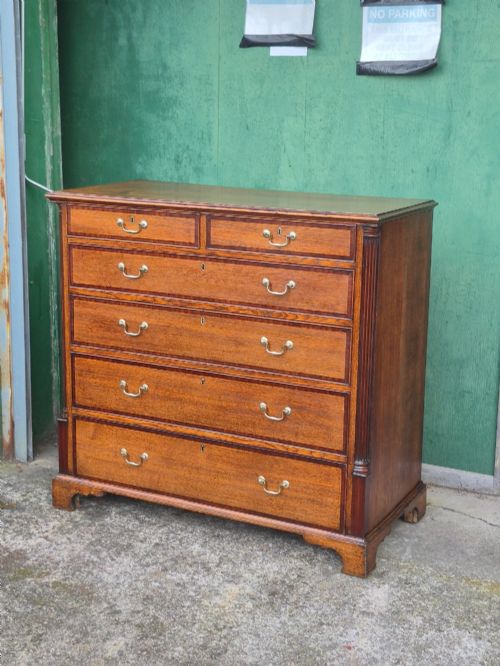
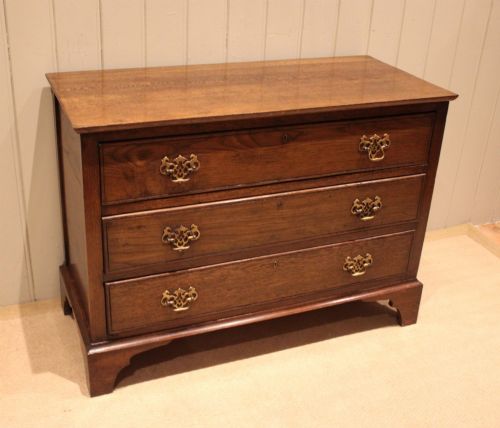
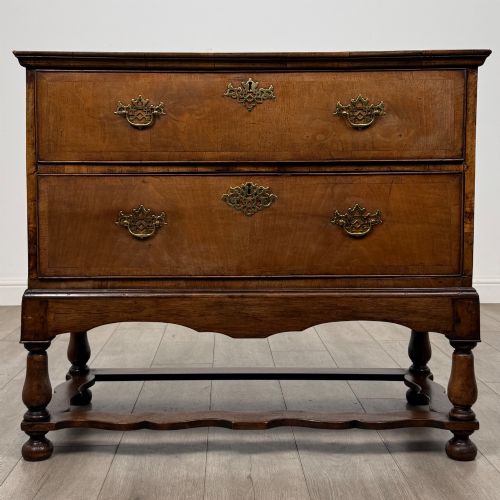
Makers built these pieces predominantly using solid oak, frequently augmented by fruitwood inlay, walnut, or mahogany crossbanding to provide contrast on drawer fronts and top surfaces. Metal and iron hardware, along with brass drop handles and escutcheons, secure the structural joints and operate the drawers.
Techniques varied from early geometric mouldings and carved panels to later surface treatments such as oyster veneering, bleaching, and diamond-point commode facades. Joinery relied on heavy timber framing to support multiple drawers without warping over centuries of use.
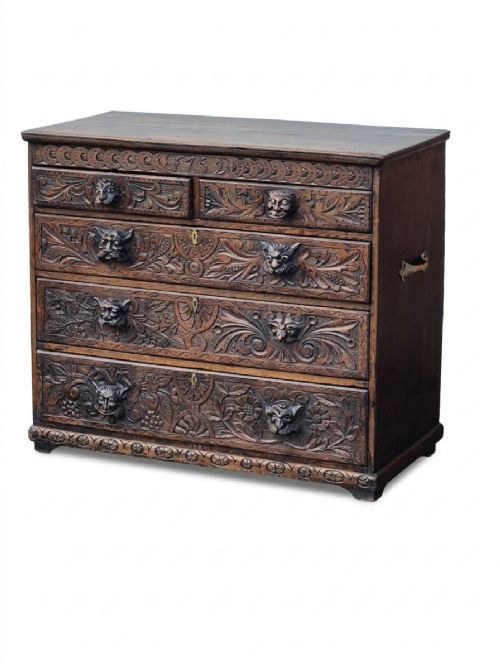
Some Victorian pieces secretly harbour a Green Man face peering out from the carved oak foliage.
Judging Quality in Timber and Joinery
Quality rests in the selection of the timber grain, whether dealing with a figured golden oak Georgian chest or a heavily carved seventeenth-century Charles II piece. Superior examples display tight, stable joints and harmonious grain patterns across the drawer tiers without mismatched replacement boards.
The integrity of the secondary woods, the retention of original brass or iron hardware, and the crispness of carved details or geometric mouldings dictate the standing of a piece within its period. Later twentieth-century interpretations rely more heavily on utilitarian execution, whereas earlier centuries demand meticulous hand-planing and fitted drawer linings.
The Oak Commode Drawers Glossary
- Commode
- A low chest of drawers or cabinet originating from French furniture forms. These items sit lower than standard tallboys and offer wide surface areas.
- Crossbanding
- A decorative border technique where thin strips of veneer, such as mahogany, run perpendicular to the main grain of the oak surface. This frames the drawer fronts with contrasting timber tones.
- Geometric Moulding
- Raised applied mouldings arranged in geometric patterns across drawer fronts, typical of seventeenth-century joinery. These profiles create deep shadows and tactile relief on the timber face.
- Oyster Veneer
- Slices cut transversely across small branches or roots to produce circular or oval patterns resembling oyster shells. This technique creates intricate surface movement on walnut and oak carcases.
- Serpentine
- A curved front profile that undulates inward and outward in a continuous flowing line. It demands precise carpentry to shape the solid oak or veneered drawers to the curved carcase.
Oak Commode Drawers: Frequently Asked Questions
How do I identify seventeenth-century oak drawers?
Seventeenth-century examples typically display heavy frame-and-panel construction, hand-split oak boards, and geometric mouldings fixed to the drawer fronts. They often utilise pegged joinery rather than modern metal fasteners.
Hardware on these early pieces generally consists of iron drop handles on small plates, reflecting the prevailing domestic hardware of the Charles II period.
What is the difference between a chest and a commode?
In this category, a commode frequently refers to continental European forms, particularly French designs with a lower, wider stance and decorative carved details. English chests of drawers often present a taller, more rectilinear profile.
Both terms describe multi-drawer storage furniture, but continental commodes frequently incorporate serpentine fronts or painted finishes alongside traditional oak.
Where should I place an oak chest in a home?
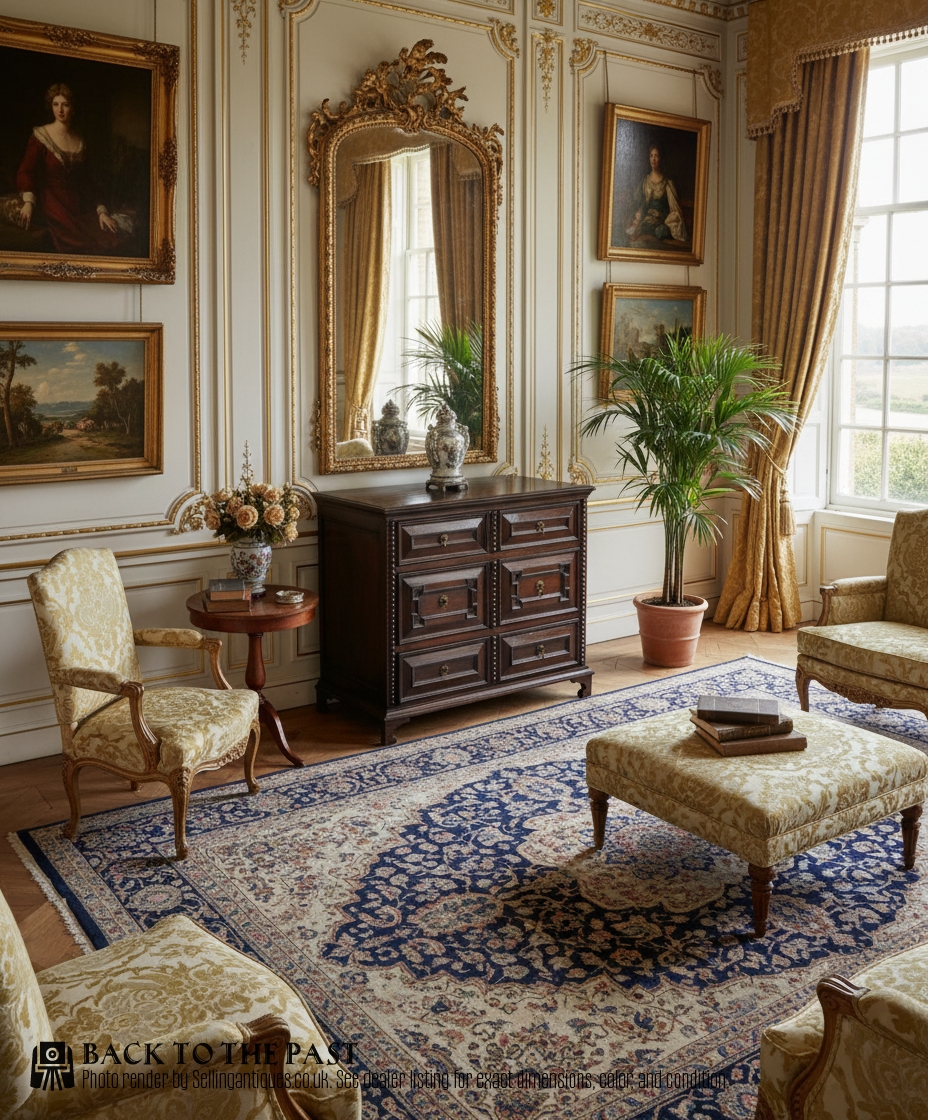
These robust timber pieces anchor bedrooms, hallways, and living spaces, offering deep drawer capacity for linens, clothing, or daily objects. Their neutral oak tones suit both traditional period interiors and modern minimalist rooms.
Keep them away from direct heat sources and strong sunlight to protect the aged timber and prevent the oak from drying out or splitting.
How do I care for antique oak furniture?
Maintain the timber by applying traditional beeswax sparingly and buffing with a soft cloth to nourish the grain. Avoid silicone sprays and modern chemical polishes that build up sticky residues on the surface.
Maintain stable room humidity to ensure the solid oak and any secondary walnut or fruitwood veneers do not expand or contract excessively.