


Oak Coffer on Chest
An oak coffer on chest combines deep storage with elevated proportion, bringing utility and solid timber character to any interior.
Oak Coffer on Chest
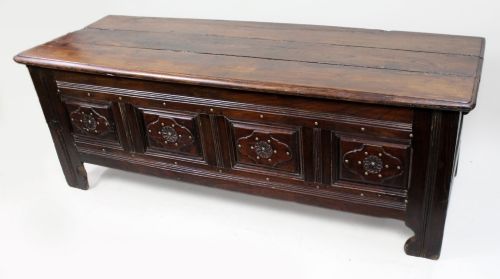
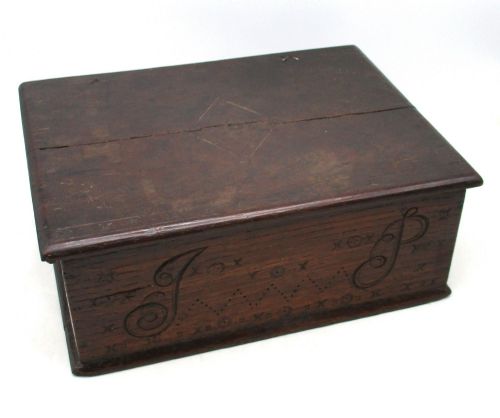
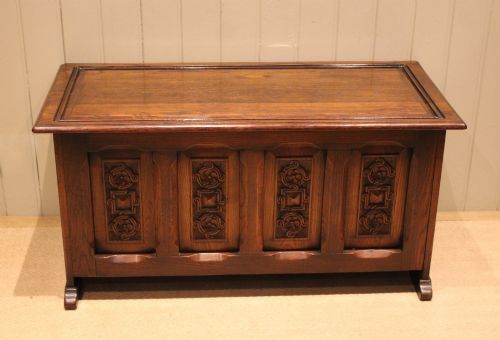
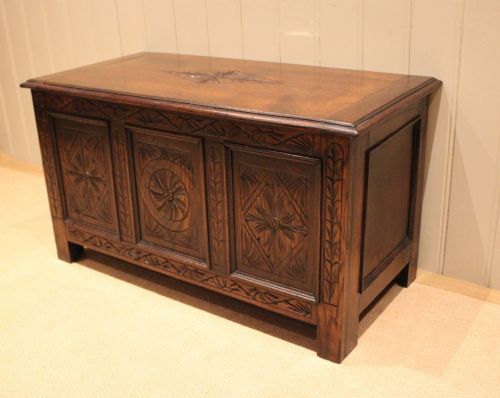
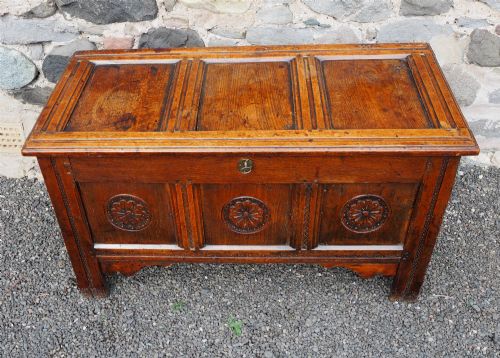
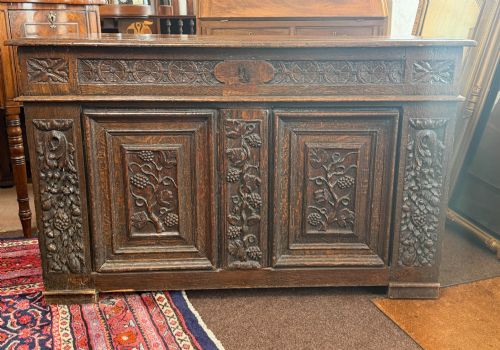
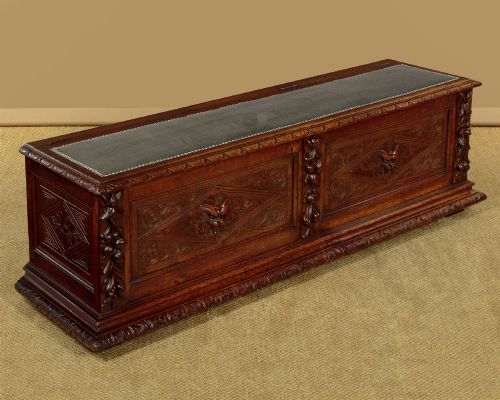
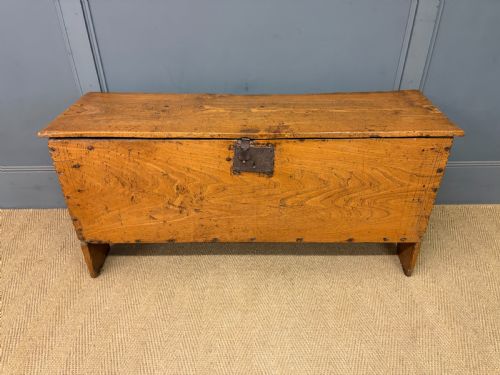
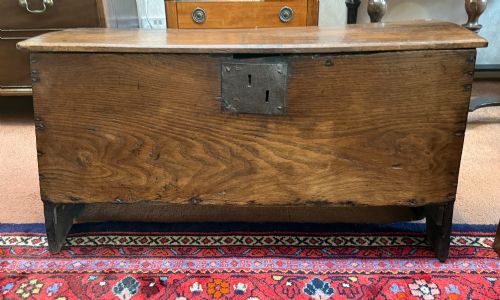
The search phrase oak coffer on chest brings together two fundamental forms of vernacular storage, uniting a lidded trunk with base drawers. These hybrid pieces emerge primarily in regional workshops during the 17th and 18th centuries, evolving from simple blanket boxes into taller multi-tier furniture. On this page, buyers encounter everything from early plank constructions to later revival interpretations.
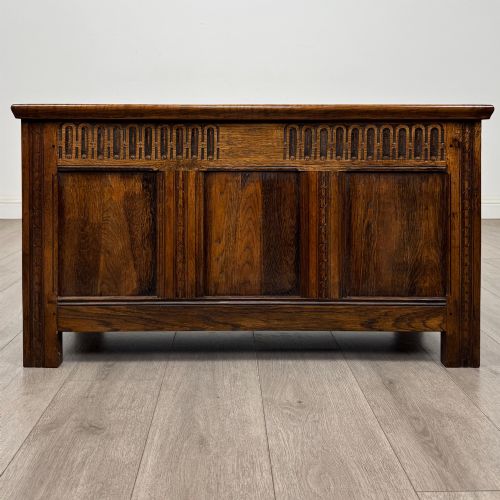
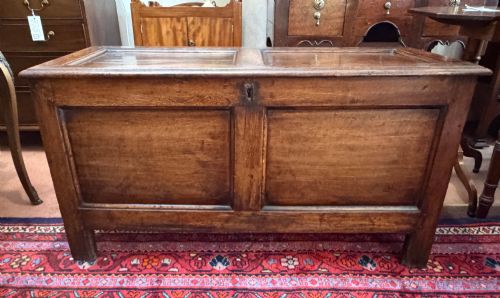
The typical example pairs a panelled upper box for textiles or valuables with one or two drawer tiers beneath. Surviving variants show regional characteristics, such as Welsh proportions or Flemish framing, reflecting local tastes in timber joining. Collectors value the balance between the lift-top compartment and the accessible drawer space below.
Materials and construction methods
Makers relied on solid oak as the primary structural timber, often supplemented by elm for internal boards or secondary timbers. Panels were tongue-and-groove jointed within heavy frames, allowing the wood to expand and contract naturally across seasonal changes without splitting the joints.
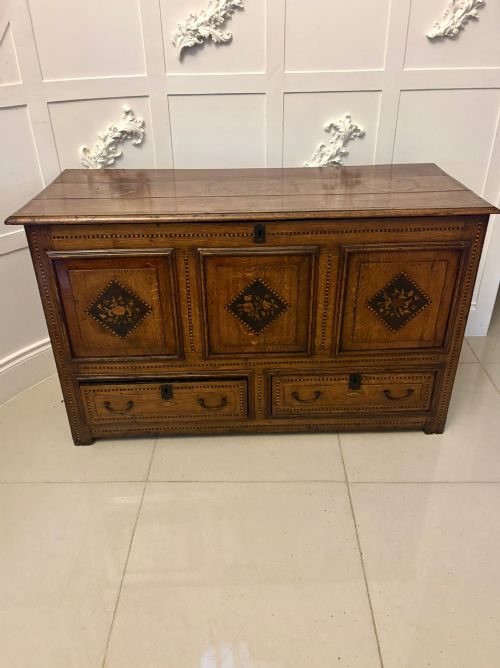
Metalwork played a vital role in securing the assembly, utilising hand-beaten iron hinges, strapwork, and original locks. Decorative surface work occasionally incorporated wood inlay and marquetry, setting geometric or floral patterns into the dark grain of the primary timber.
Materials across the inventory highlight solid oak, elm, and iron, enriched by decorative wood inlay and marquetry.
Distinguishing quality in traditional storage
Quality rests upon the integrity of the original construction and the preservation of the timber surface. Pieces retaining their initial boarded bottoms, hand-forged ironwork, and unreplaced hinges command greater respect among collectors.
The depth of carving and the precision of the joinery separate standard vernacular items from exceptional workshop output. Patina accumulated through centuries of daily use distinguishes untouched surfaces from later stripped or heavily restored examples.
The Oak Coffer on Chest Glossary
- Coffer
- A heavy wooden chest traditionally used for storing valuables, documents, or textiles. These sturdy boxes frequently served as benches or tables in early domestic interiors.
- Mule chest
- A traditional storage chest featuring one or more drawers fitted beneath the main lidded compartment. This form bridges the gap between the simple coffer and the chest of drawers.
- Marquetry
- The art of applying decorative veneer pieces in wood to form intricate patterns or pictures on a surface. This technique added decorative contrast to plain timber facades.
- Panelling
- A method of framing thin wooden boards within thicker grooved stiles and rails to prevent warping. This construction method defines the visual rhythm of 17th-century case furniture.
- Patina
- The deep surface sheen and mellow colour developed by wood and metal over centuries of handling and light exposure. This characteristic indicator of age cannot be easily replicated by artificial means.
Oak Coffer on Chest: Frequently Asked Questions
What is an oak coffer on chest used for?
These versatile pieces served historical households as secure storage for linens, woollens, and precious documents while doubling as seating furniture. Modern homes utilise them as striking focal points that swallow clutter in hallways, bedrooms, or living spaces.
The deep upper compartment accommodates bulky blankets, while lower drawers keep smaller items organised and accessible without lifting the lid.
How do I date an antique oak coffer?
Dating relies on observing construction techniques, tool marks, and hardware styles across the piece. Early 17th-century examples often feature boarded plank construction or pegged frame-and-panel assemblies with hand-wrought iron hinges.
Later 18th-century pieces incorporate more refined mouldings, dovetail joints within the drawers, and brass hardware rather than heavy iron strapwork.
Are these chests suitable for everyday modern living?
Solid timber construction makes these robust items exceptionally durable for daily household use. Their generous proportions provide practical storage solutions that easily integrate into contemporary interiors.
Placing them away from direct heat sources and maintaining stable room humidity protects the aged wood from drying out or splitting.
What distinguishes regional styles in oak furniture?
Regional workshops developed distinct stylistic markers based on local timber availability and vernacular traditions. Welsh pieces often display compact proportions and particular carving motifs, whereas Flemish examples incorporate deeper relief work and geometric panel layouts.
These local variations help historians trace the geographic origins of unmarked pieces through characteristic moulding profiles and construction quirks.