

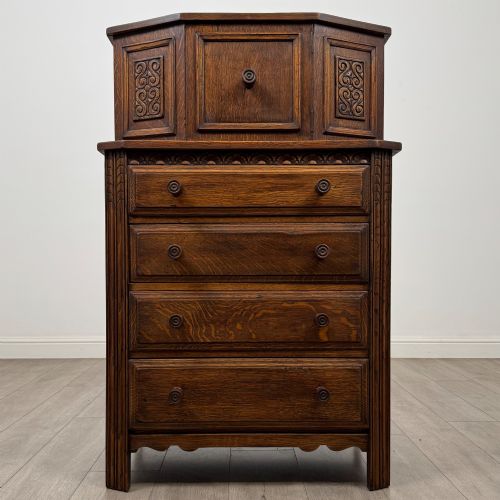
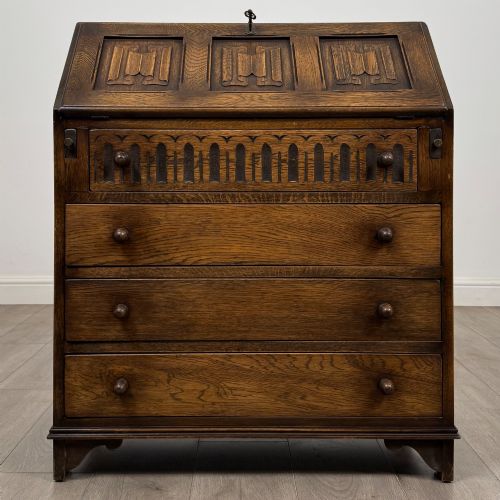
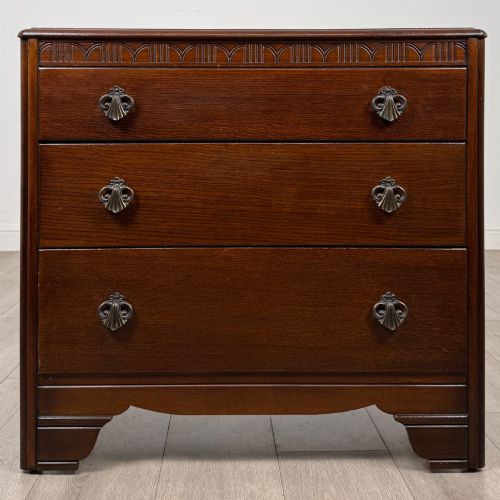

Jacobean Oak Chest of Drawers
A jacobean oak chest of drawers brings sturdy seventeenth-century proportion and rich timber grain into a modern interior.
Jacobean Oak Chest of Drawers
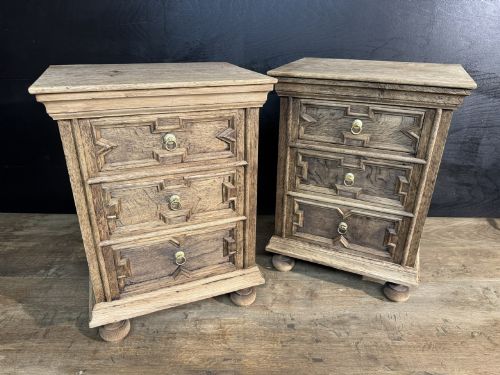
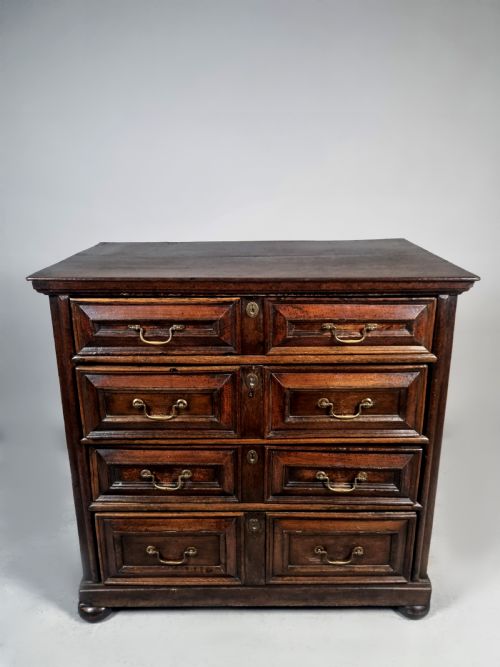
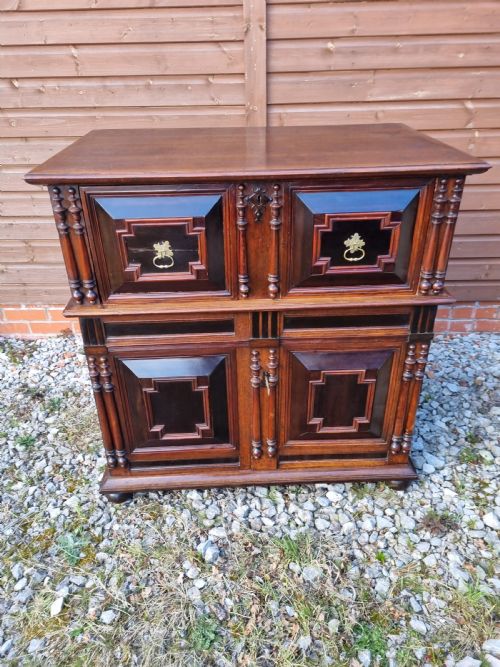
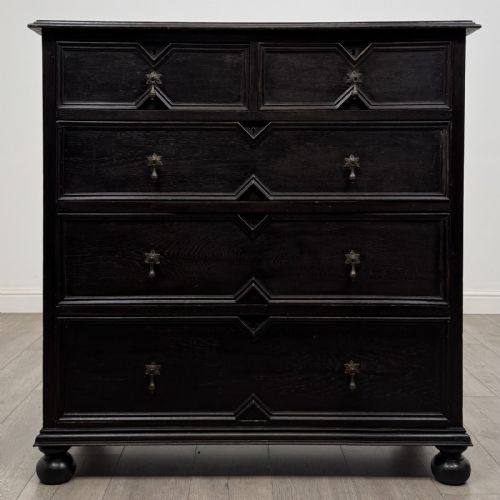
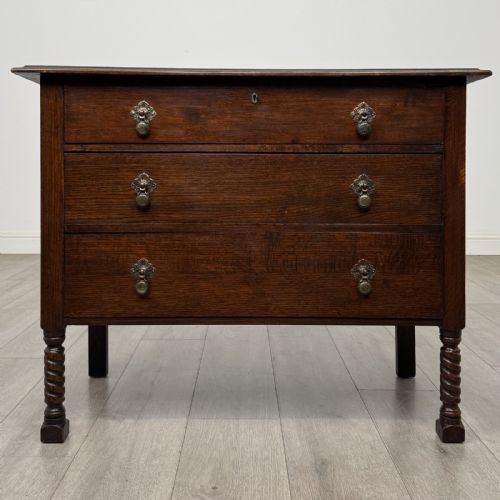
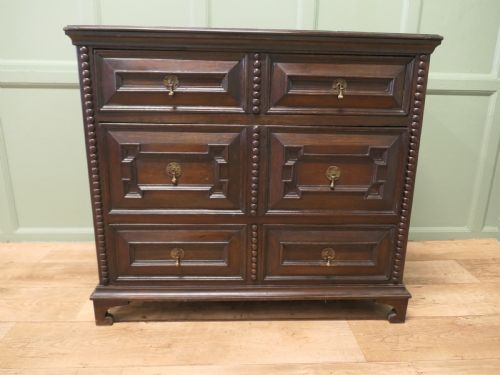
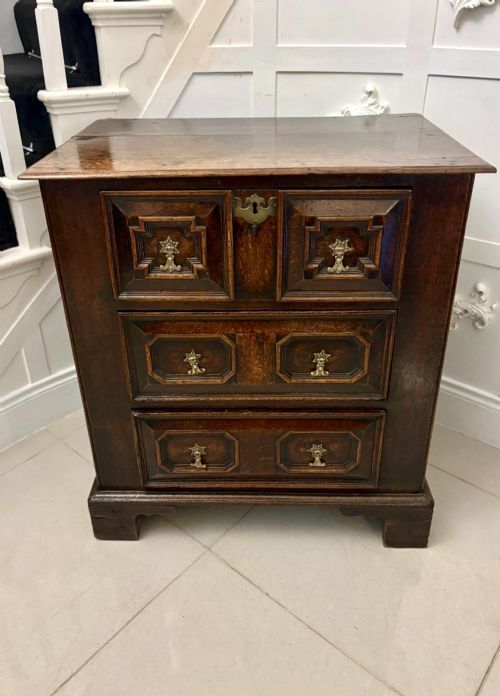
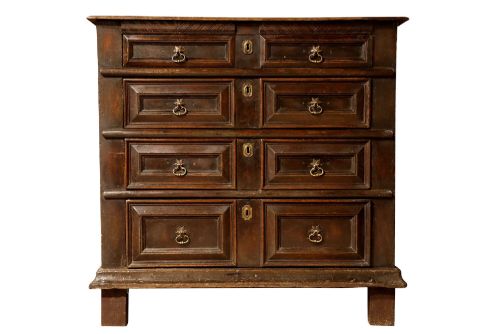
When searching for a jacobean oak chest of drawers, buyers encounter authentic seventeenth-century survivals alongside later revival pieces from the Edwardian era and the early twentieth century. Original period examples date primarily from the seventeenth century and the reigns of Charles II, displaying practical storage configurations divided into multiple drawers or two-part formats.
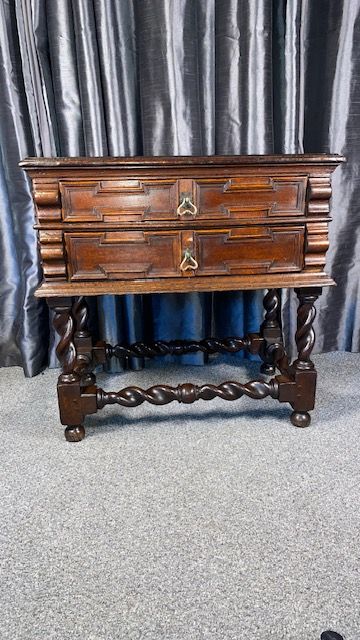
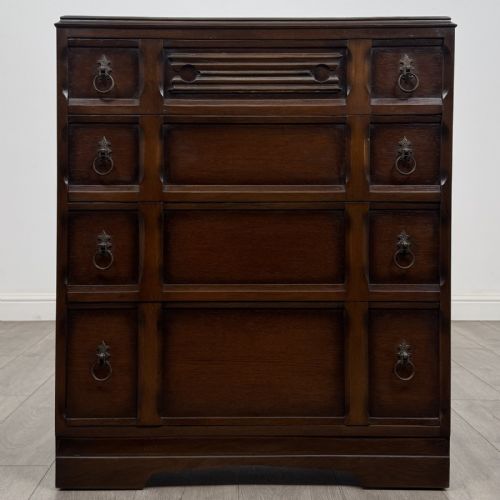
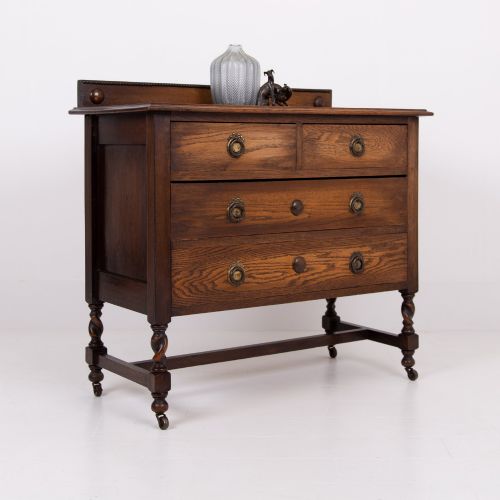
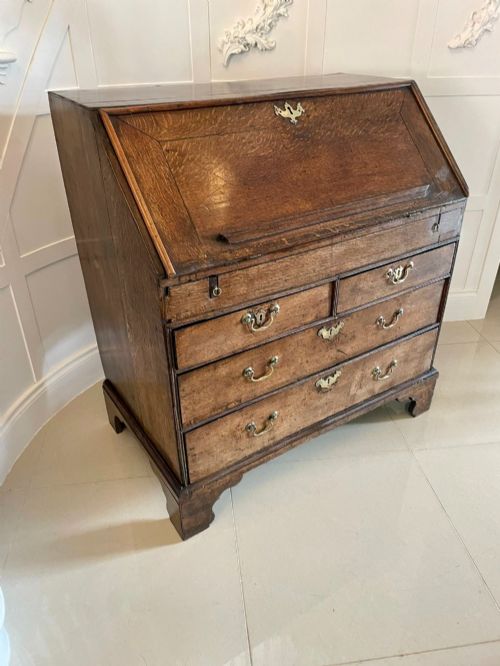
The selection ranges from robust seventeenth-century originals featuring geometric mouldings to Edwardian Jacobean Revival interpretations built with similar timber and architectural detailing. Alongside standard drawer configurations, related forms like mule chests, dressing tables, and chests on stands appear within the broader stylistic category.
Evaluating quality and proportion
Quality rests in the crispness of the hand-carved details, the depth of the geometric mouldings, and the integrity of the timber frame. Pieces that retain their original brass hardware, unblemished surface patina, and structurally sound timber joints command greater interest from collectors.
Edwardian revival versions vary according to how closely the maker adhered to seventeenth-century proportions and solid timber construction methods. Original seventeenth-century examples derive their standing from the survival of their primary boards, backboards, and interior drawer linings.
Jacobean Oak Chest of Drawers Retail Price Guide 2026
Typical asking prices for jacobean oak chest of drawers among the pieces listed under this phrase on Sellingantiques today, from the lower quarter to the upper quarter. They describe what is for sale here now, not the wider market.
The Jacobean Oak Chest of Drawers Glossary
- Geometric moulding
- Raised wooden bars applied to drawer fronts in rectilinear patterns. This technique defined the decorative vocabulary of late seventeenth-century case furniture.
- Mule chest
- A storage chest fitted with one or more drawers at the base. It bridges the gap between traditional blanket chests and modern drawer units.
- Linenfold
- A style of relief carving on wooden panels that resembles folded linen fabric. It appears frequently on revival pieces from the Edwardian period.
- Two-part chest
- A cabinet constructed as two separate horizontal sections stacked vertically. This design aided transport in seventeenth-century households.
- Patina
- The surface sheen and colour developed by aged timber through decades of handling and waxing. A desirable patination shows natural wear without modern chemical stripping.
Jacobean Oak Chest of Drawers: Frequently Asked Questions
How do I spot a seventeenth-century original?
Original seventeenth-century pieces display hand-cut joinery, pegged joints, and timber shrinkage consistent with age. Look for hand-riven oak boards and period-appropriate iron or brass fixings.
Revival pieces often reveal twentieth-century saw marks, machine-cut dovetails, or standardised modern fixings upon closer inspection of the drawer interiors and backboards.
Were these chests used in bedrooms?
Seventeenth-century households placed large case furniture in various rooms, including parlours and halls, for storing linens, documents, and valuables. Dedicated bedroom placement became more common by the Georgian and Edwardian periods.
Their robust construction made them suitable for heavy storage long before fitted wardrobes altered domestic interiors.
How do I care for antique oak furniture?
Maintain antique oak by applying traditional beeswax sparingly and buffing with a soft cloth to preserve the surface sheen. Avoid placing timber furniture near direct heat sources or in fluctuating humidity.
Stable indoor environments prevent the solid oak boards from splitting and protect historic surface patinas.
What is the difference between Jacobean and Charles II styles?
Strictly speaking, the Jacobean period covers the early seventeenth century, while the Charles II era falls later in the same century under Carolean influence. Furniture from the later period frequently incorporates more pronounced geometric mouldings and walnut elements.
Market terminology often groups these closely related seventeenth-century stylistic shifts together under the broader Jacobean umbrella.