

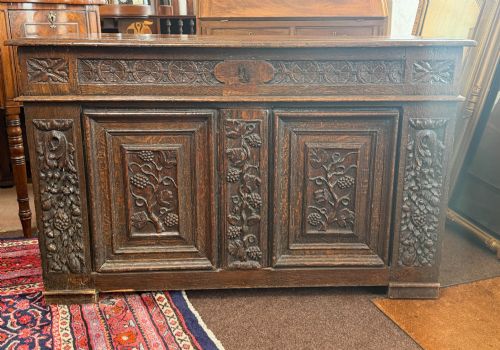
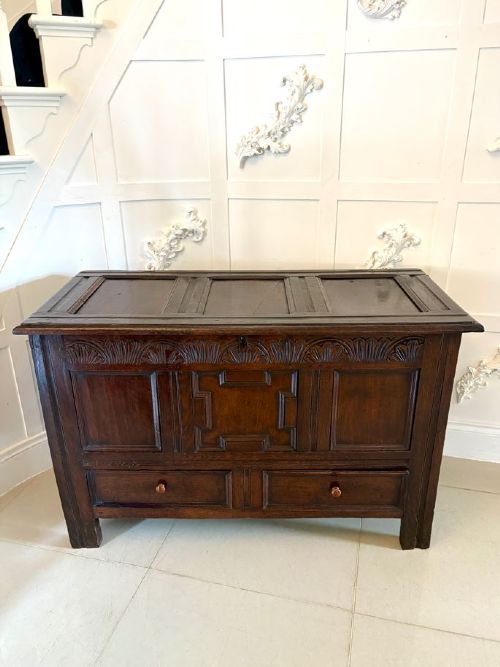

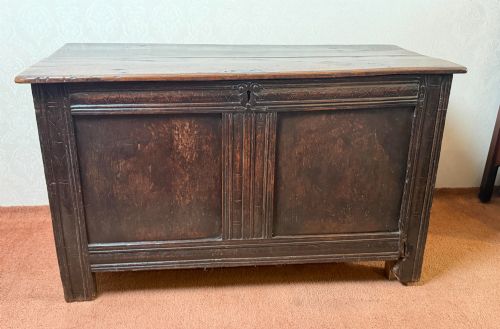
17th Century Oak Trunk
A 17th century oak trunk provides enduring utility and grounded historic presence, offering robust storage built to last.
17th Century Oak Trunk
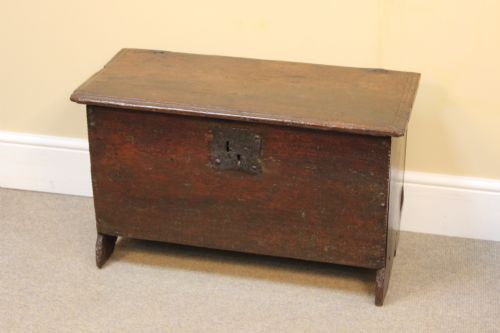
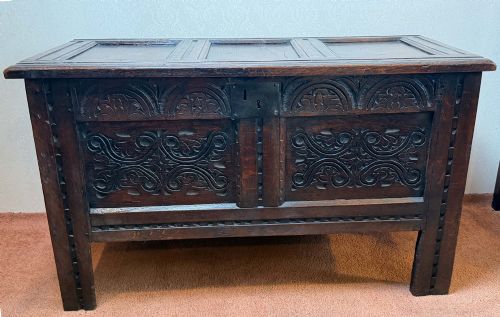
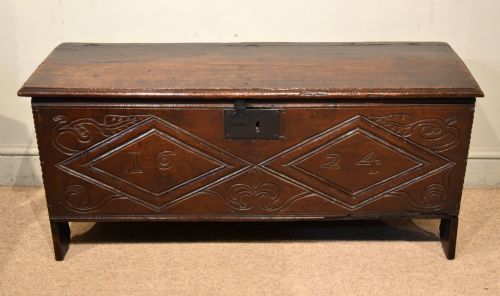
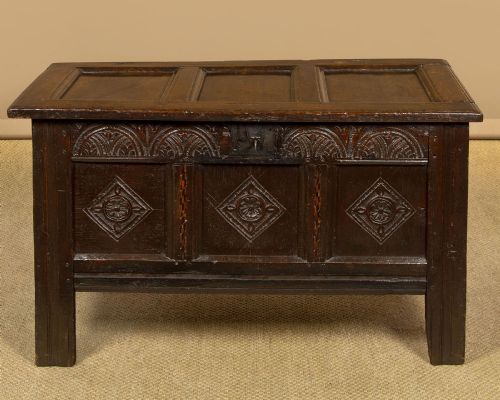
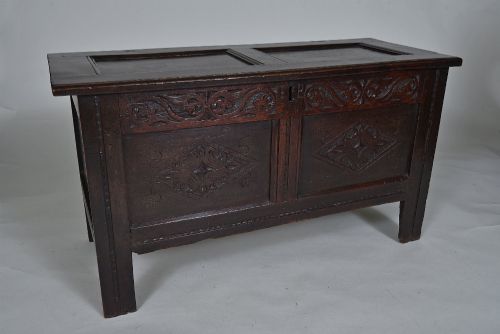
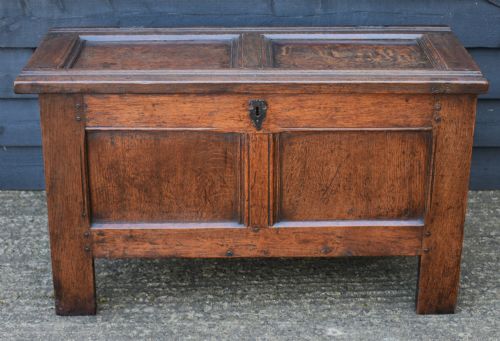
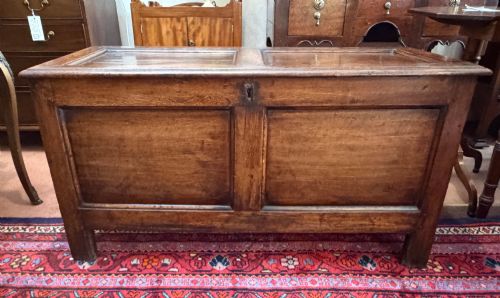
A 17th century oak trunk encompasses heavy storage forms such as coffers, blanket boxes, and mule chests designed for domestic storage. These sturdy pieces served households for linens, documents, and valuables, adapting over centuries into practical interior furnishings.
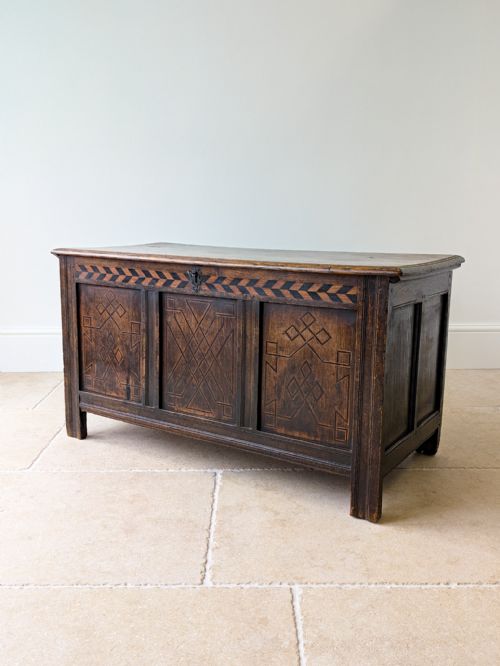
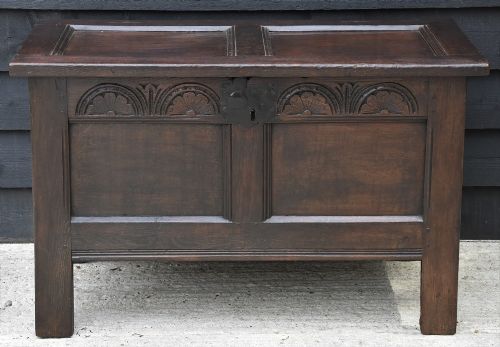
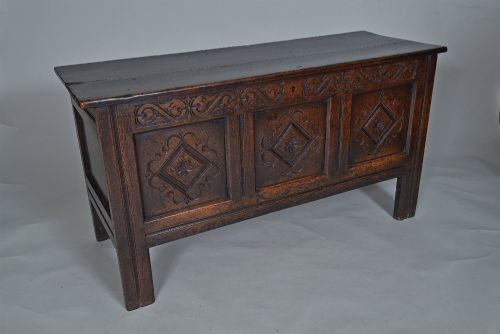
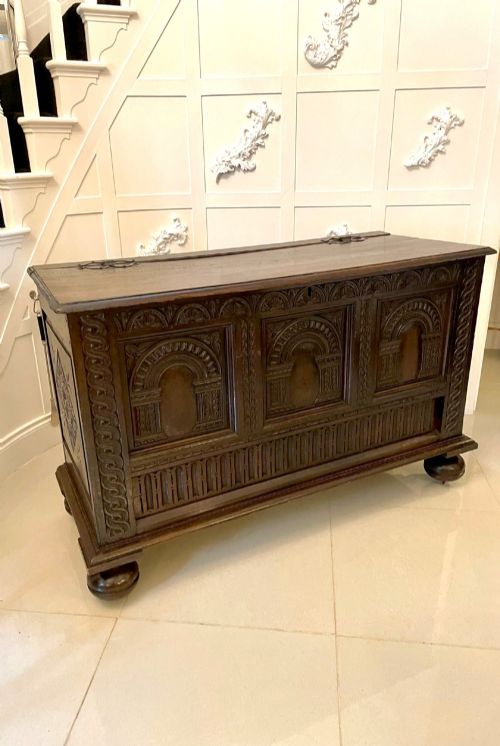
The most common version met on this page is the joined or panelled oak coffer dating from the 17th century, frequently featuring carved decoration or regional characteristics from English and Welsh workshops. Simpler plank forms and sword chests also appear regularly alongside later revival pieces.
Regional variations appear across the listings, including Welsh examples from the Gower Peninsula and Cornish ecclesiastical pieces bearing gothic carving. These variants demonstrate local stylistic preferences while maintaining a heavy timber construction.
Materials and construction
Solid oak forms the structural foundation of these pieces, frequently supplemented by elm in certain boards or boxes. Joinery relies on traditional frame-and-panel construction and sturdy plank assembly designed to withstand heavy daily use.
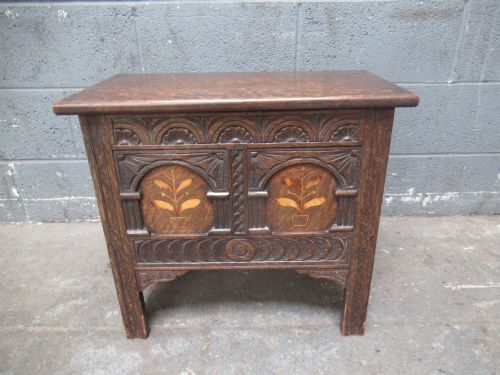
Iron and brass hardware, including wrought iron hinges, strapwork, and locks, secure the lids and add functional reinforcement. Marquetry inlay and mixed inlay woods appear on select decorative examples to enrich the oak surfaces.
Carving techniques ornament the front panels with geometric motifs, linen fold designs, or vegetal relief work. Ebonised wood details provide sharp contrast on specific decorated surfaces.
17th Century Oak Trunk Retail Price Guide 2026
Typical asking prices for 17th century oak trunk among the pieces listed under this phrase on Sellingantiques today, from the lower quarter to the upper quarter. They describe what is for sale here now, not the wider market.
Several trunks retain enough historic weight to double as impromptu seating for generations of muddy boots.
Quality variations
The sophistication of the surface carving and the crispness of the joinery distinguish finer examples from plain utilitarian chests. Crisp relief work and balanced proportions indicate superior craftsmanship in the original workshop.
The integrity of the timber and the survival of original hardware, feet, and hinges significantly influence the character of each piece. Minimal timber replacement preserves the historical authenticity of the construction.

The 17th Century Oak Trunk Glossary
- Coffer
- A heavy wooden chest traditionally used for storing valuables, linens, or documents. It represents the primary form found within these early domestic listings.
- Mule chest
- A chest featuring one or more drawers beneath the main storage compartment. This form bridges the traditional coffer and the modern drawer chest.
- Plank chest
- A primitive storage box constructed from thick boards joined at the edges rather than a framed panel structure. These simple chests often served military or ecclesiastical functions.
- Linen fold
- A carved wooden panel motif imitating folded cloth. This decorative technique is characteristic of early vernacular furniture styles.
- Joined oak
- Furniture construction utilising mortise and tenon joints to secure uprights and rails around a floating panel. This method provides superior structural stability for heavy timber.
17th Century Oak Trunk: Frequently Asked Questions
What were 17th century oak trunks used for?
These robust chests served primarily as secure household storage for valuable textiles, garments, blankets, and important family documents. Their heavy lids and sturdy locks protected contents from dust, dampness, and theft in early domestic settings.
Over time, households also utilised them as impromptu benches, window seats, or flat surfaces for serving and displaying objects within the main living quarters.
How do I live with a trunk?
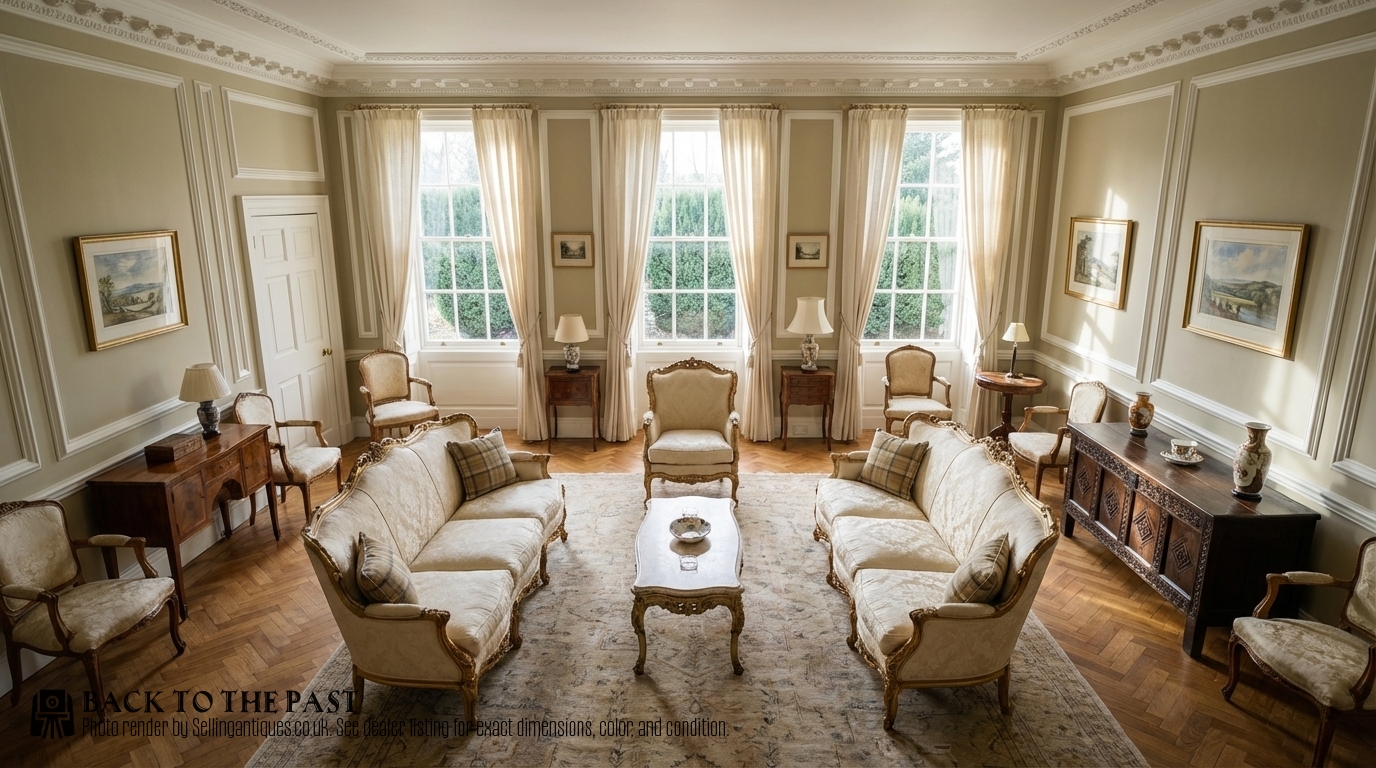
Integrating an early oak chest into a modern interior works well at the foot of a bed, beneath a window, or as a low coffee table in a reception room. Their flat tops provide convenient surface space while the interior conceals everyday clutter.
Keep the timber away from direct heat sources and sudden humidity shifts to protect the antique oak and original iron hardware from movement or splitting.
How do I tell periods apart?
Distinguishing periods relies on observing construction methods, carving styles, and timber preparation. Early 17th-century pieces often display bold geometric or strapwork carving associated with the Jacobean era, while plainer plank chests can span multiple decades of vernacular production.
Revival pieces from the late 19th and early 20th centuries generally feature standardised machine machining, lighter weight, and different surface patination compared to genuine 17th-century work.
What is a mule chest?
A mule chest is a hybrid storage piece that combines the deep upper compartment of a traditional blanket box with one or more lower drawers. This design evolved to allow easier access to smaller items without lifting the heavy main lid.
Mule chests frequently incorporate marquetry inlay or geometric panelling on the front elevation, reflecting decorative trends of the late 17th century.