


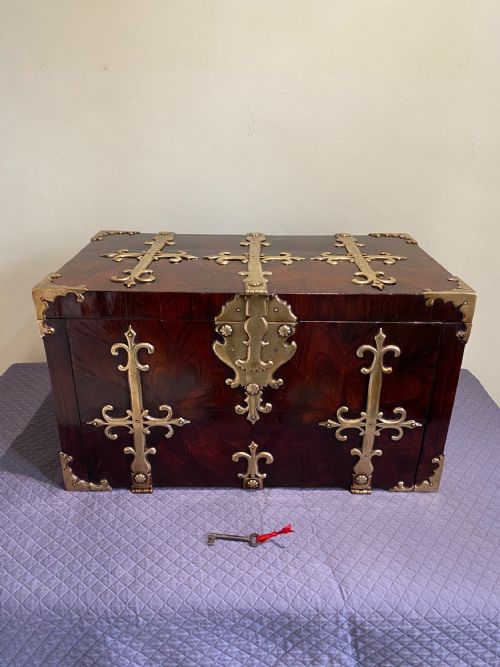

17th Century Style Chest
A 17th century style chest brings heavy timber presence and centuries of fitted storage into a modern room.
Identifying these chests
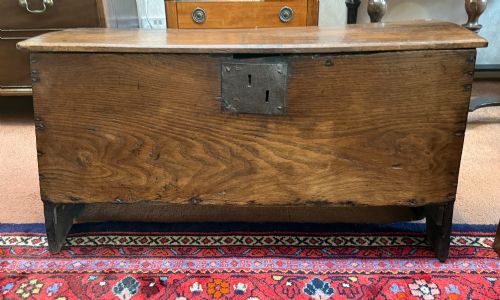
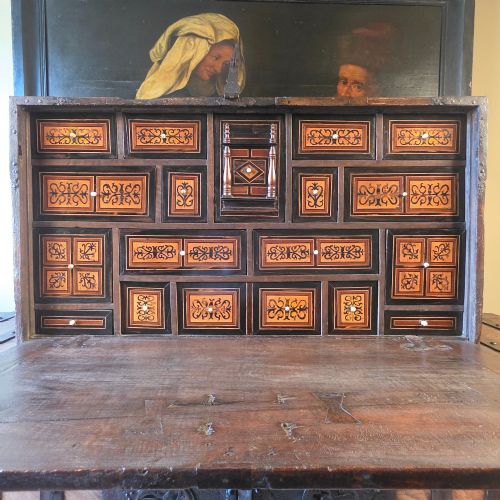
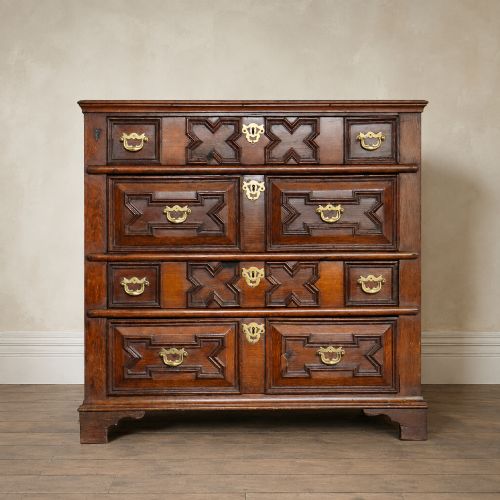
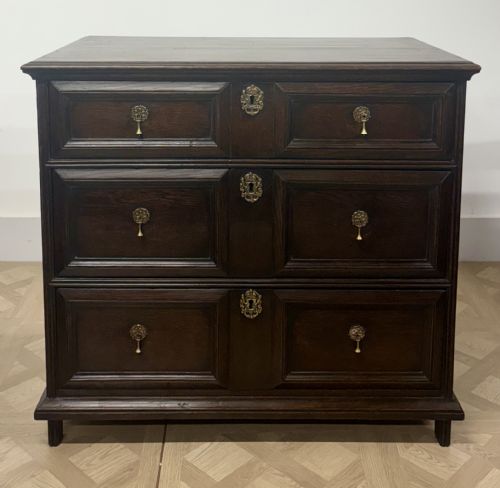
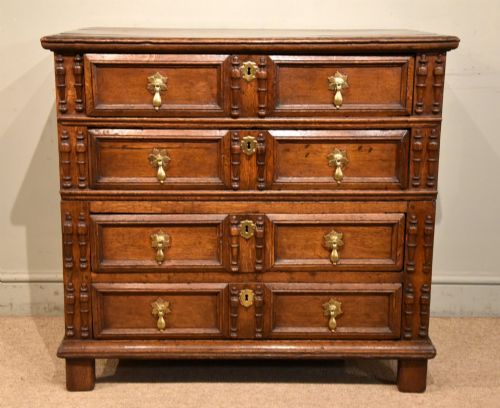
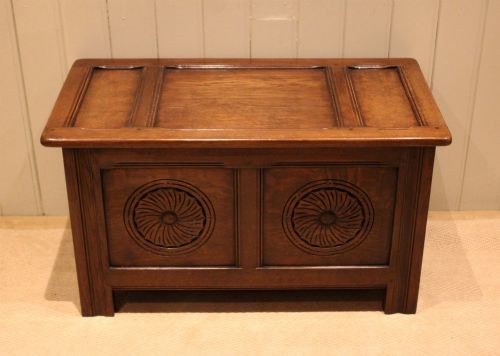
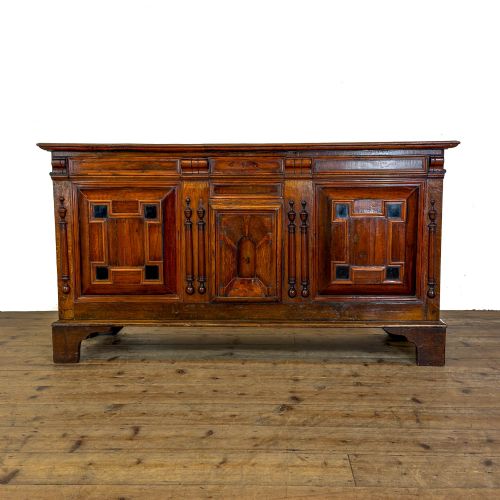
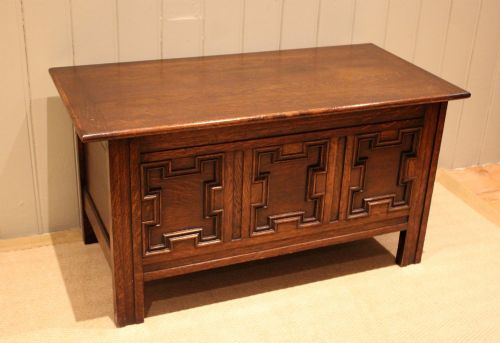
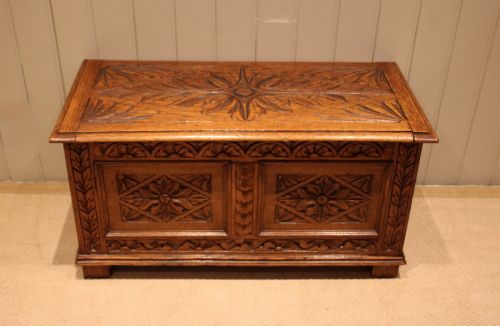
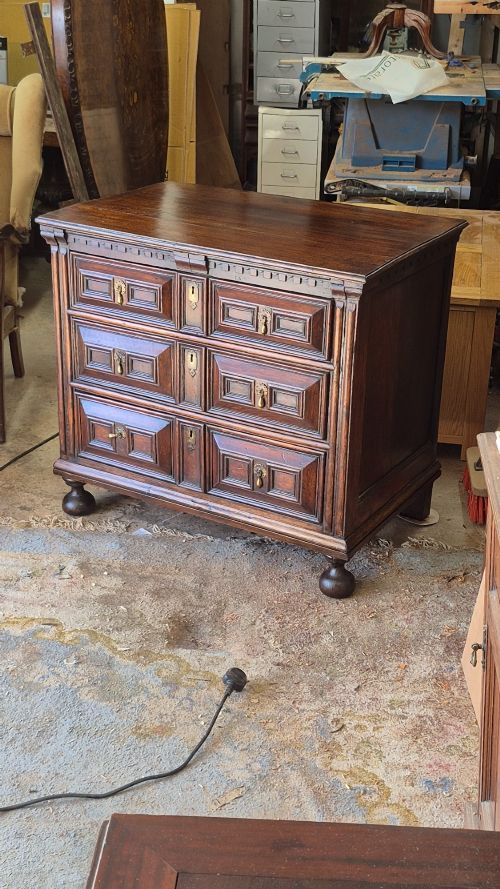
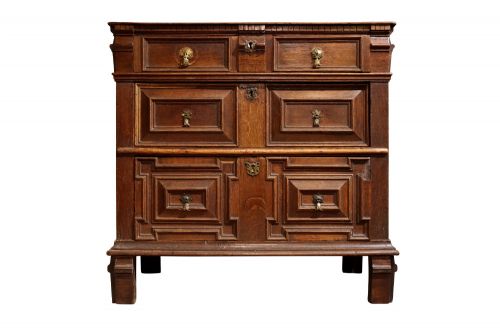
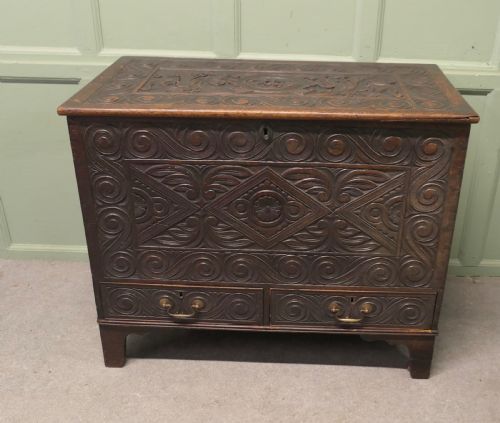
A 17th century style chest encompasses robust storage items including coffers, blanket chests, bible boxes on stands, and chests of drawers. These pieces draw primarily from Jacobean Revival and William & Mary traditions, channelling earlier domestic utility through later craftsmanship.
The versions most commonly met on this page span actual 17th century execution alongside 18th century examples and later revivals from the 1920s and 1930s. Oak dominates the material record, frequently paired with iron and brass hardware to anchor the substantial forms.
Construction and materials
Makers built these pieces predominantly in solid oak, utilising heavy timber frames for coffers and panelled construction for blanket chests and drawers. Geometric mouldings and carved details required patient hand work using chisels and gouges rather than mechanical routers.
Hardware played an integral structural and decorative role, with iron and brass utilised for hinges, escutcheons, and locking plates. Surfaces received traditional finishes that emphasised the natural grain and dark tones of the wood.
Retail Price Guide 2026
Typical UK retail prices for 17th century style chest, calculated from the Sellingantiques database of over a million retail prices indexed since 2003. This retail price guide relies exclusively on Sellingantiques data; no external sources or auction records are used, so the figures do not describe the wider market.
Listings on this site feature oak as the primary timber, complemented by brass and iron hardware across multiple centuries.
Assessing quality
Quality rests in the crispness of the hand-carved decoration and the precision of the geometric mouldings applied to drawer fronts and panels. Pieces where the timber has been selected for striking grain patterns sit at the upper end of the range.
Construction methods dictate longevity, with tight joinery in the framing separating superior items from more utilitarian boxes. The integration of period brass or ironwork also distinguishes finer examples from later replacements.
The 17th Century Style Chest Glossary
- Coffer
- A large wooden chest traditionally used for storing valuables, linen, or documents. These sturdy boxes often feature hinged lids and raised feet.
- Jacobean Revival
- A design movement that revived the heavy, carved oak styles of the early 17th century. Makers in later centuries frequently drew on these motifs for domestic furniture.
- Geometric moulding
- Raised wooden profiling applied in repeating geometric patterns to drawer fronts and panel faces. This technique added depth and visual texture to plain timber surfaces.
- Bible box
- A small, slope-lidded desk or chest designed to hold family texts and writing materials. They are often mounted on dedicated stands to create a compact desk.
Frequently Asked Questions
How do I date a chest?
Dating relies on examining the tool marks, timber shrinkage, and joinery techniques visible across the piece. Later revivals often show machine cutting or uniform wear that differs from hand-worked antique timber.
Hardware styles and secondary woods used in internal linings also provide reliable clues to the exact decade of manufacture.
Are these chests heavy?
These items are constructed from solid hardwoods like oak and walnut, making them exceptionally heavy and sturdy. Moving them typically requires two people to prevent strain on the historical joints.
Their substantial weight helps anchor them securely in hallways, bedrooms, or living spaces as permanent fixtures.
How should I clean the wood?
Maintenance requires only a soft cloth and occasional applications of quality beeswax to nourish the dry oak. Avoid modern liquid polishes containing silicones that can penetrate and damage aged timber surfaces.
Keeping the piece away from direct heat sources prevents the panels from splitting or warping over time.
What is a cassone?
A cassone is a large Italian chest traditionally decorated with carvings, paintings, or inlay work for marriage ceremonies. They served as luxury storage for a bride's dowry items.
Unlike simpler English oak coffers, these continental pieces often feature walnut construction and ornate classical motifs.