


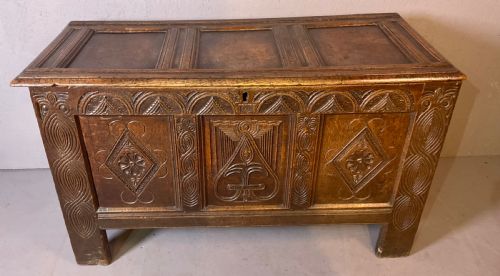
English Oak Blanket Box
An English oak blanket box brings centuries of solid craftsmanship and rich domestic history directly into a modern home.
English Oak Blanket Box
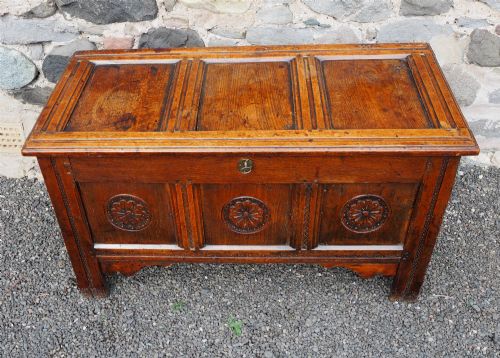
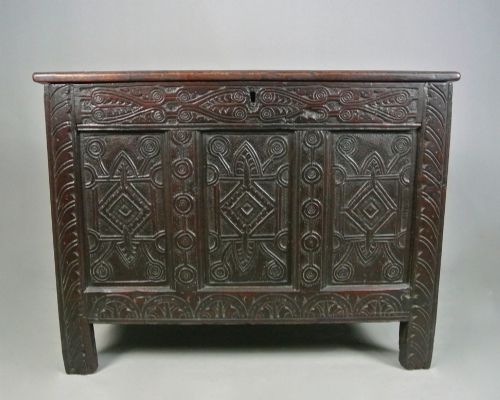
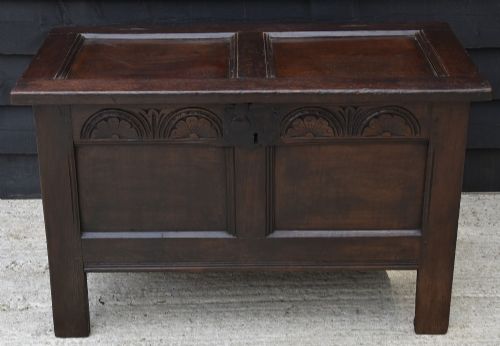
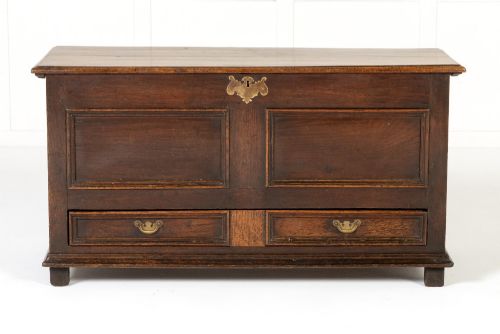
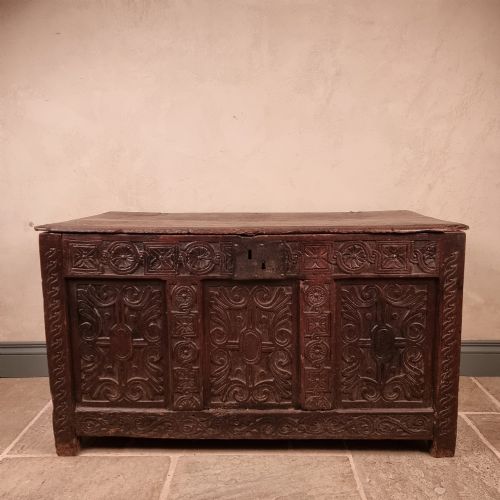
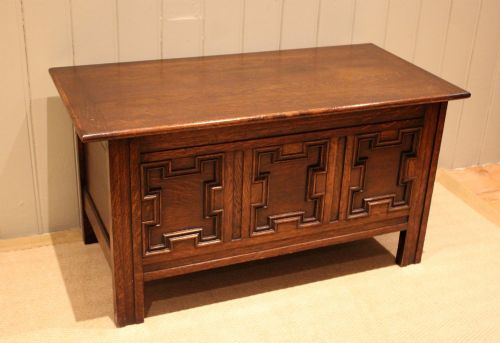
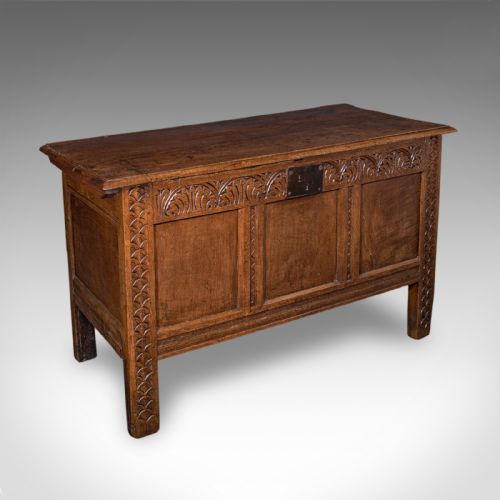
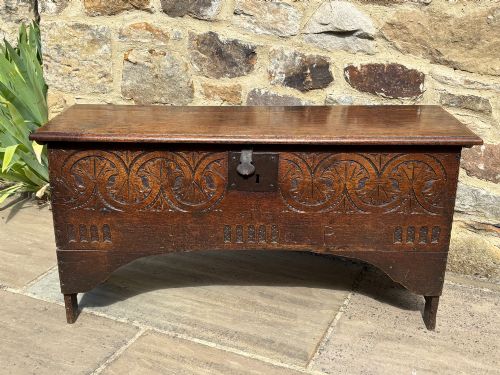
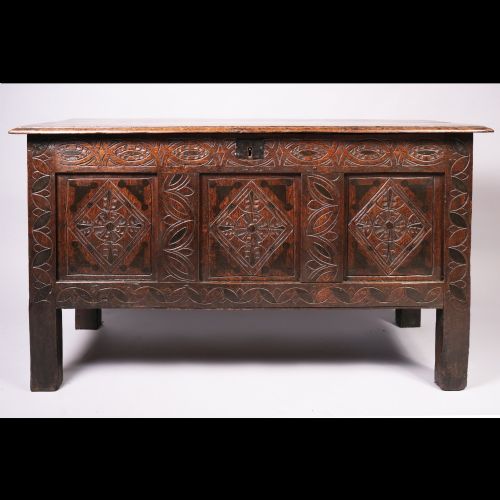
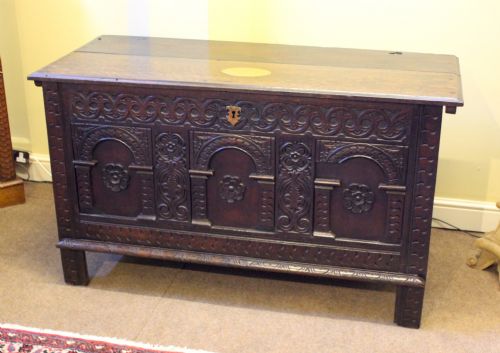
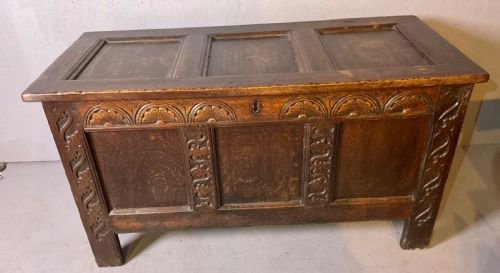
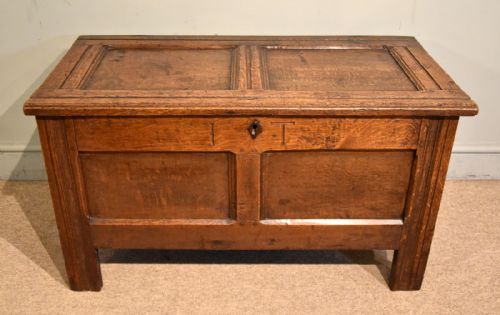
When searching for an English oak blanket box, buyers encounter robust storage furniture that spans from the sixteenth century through the Georgian and Victorian eras. These pieces appear primarily as panelled coffers, boarded chests, and mule chests fitted with lower storage drawers.
The survival of these items reflects their original utility for holding textiles, linen, and valuables in domestic settings. Examples range from simple six-plank boards to elaborately carved Jacobean and Charles II designs displaying arcaded fronts and geometric panelling.
Originating across English country workshops and regional centres such as Dorset, these chests showcase vernacular styles influenced by Tudor, Elizabethan, and William and III aesthetics. Many pieces demonstrate small proportions suitable for use as window seats or occasional tables today.
Materials and Construction Techniques
Makers utilised solid native oak joined through pegged mortise and tenon frames, ensuring structural longevity across centuries of domestic use. Early boarded examples rely on heavy planks secured with iron nails and reinforced edges.
Surface ornamentation involved hand-carving techniques, including relief panels, lunettes, and chip-carved motifs applied directly to the timber. Metalwork fixtures such as wrought iron hinges, brass escutcheons, and steel reinforcement bands frequently complete the construction.
English Oak Blanket Box Retail Price Guide 2026
Typical asking prices for english oak blanket box among the pieces listed under this phrase on Sellingantiques today, from the lower quarter to the upper quarter. They describe what is for sale here now, not the wider market.
Materials recorded across the inventory include native oak, structural iron, brass hardware, steel reinforcements, and occasional wood inlay details.
Evaluating Quality and Authenticity
The standard of an English oak blanket box depends heavily on the integrity of its timber, the depth and crispness of the original hand-carving, and the survival of primary structural elements. Pieces retaining their original boarded lids, floorboards, and period hardware command greater appreciation among collectors.
Proportion and surface patination further distinguish finer examples, where natural waxing and age-related oxidation create a deep, warm tone across the oak grain. Alterations to feet, replaced hinges, or heavily restored panels alter the historical continuity of the piece.
The English Oak Blanket Box Glossary
- Coffer
- A heavy wooden chest traditionally used for storing valuables, documents, or garments. These sturdy receptacles often feature hinged lids and raised feet.
- Mule Chest
- A storage chest featuring one or more drawers built into the base beneath the primary compartment. This hybrid form emerged to combine the capacity of a coffer with accessible drawer storage.
- Arcaded
- A decorative architectural motif carved onto wooden panels to resemble a sequence of arches supported by columns. This style frequently appears on seventeenth-century woodwork.
- Six Plank
- A primitive form of chest constructed from six individual boards joined directly at the edges. This technique represents an early method of box-making before framed panelling became standard.
- Panelling
- A construction method utilising vertical stiles and horizontal rails to frame inset wooden panels. This technique accommodates the natural expansion and contraction of solid oak.
English Oak Blanket Box: Frequently Asked Questions
What is the difference between a coffer and a mule chest?
A coffer is a traditional storage chest with a single top-opening compartment enclosed by solid sides and a lid.
A mule chest incorporates one or more drawers beneath the main upper compartment, combining trunk storage with drawer accessibility.
How can I date an antique oak chest?
Dating relies on observing construction methods, such as pegged mortise and tenon joints versus machine-cut elements, alongside stylistic clues like carved arcading or geometric panelling.
Changes in hardware styles and the overall wear patterns on the oak timber also help narrow down the period of manufacture.
Where were these blanket boxes originally used?
These chests served primarily in domestic chambers and halls for storing household textiles, woollens, and precious family linens. Wealthy households also utilised robust iron-bound variants for shipping valuables and silver.
How do I incorporate an antique chest into a modern interior?
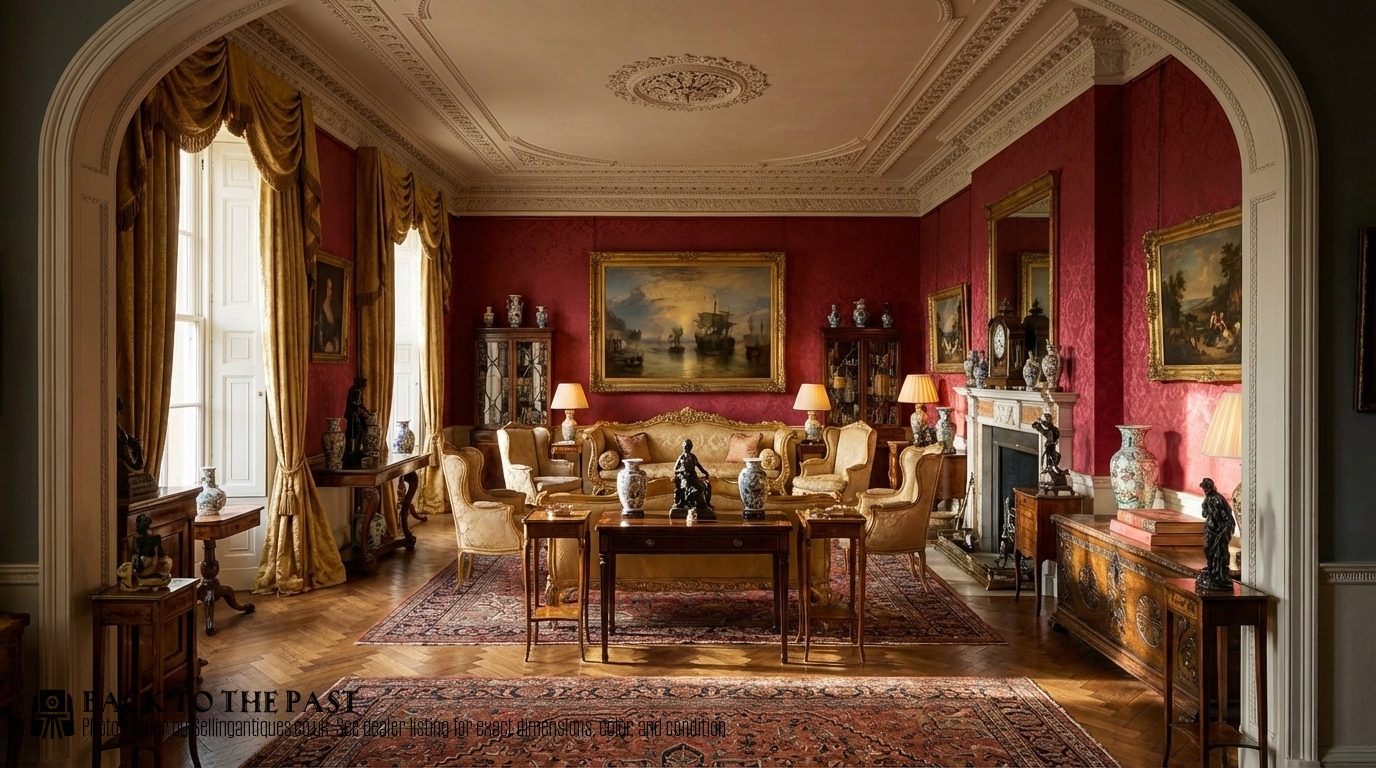
An antique chest functions effectively as a coffee table, hallway storage bench, or window seat while keeping contemporary living spaces organised.
The durable oak surface and natural patination allow these pieces to anchor both traditional and contemporary room schemes.