


Early Oak Chest
An early oak chest brings centuries of domestic history into a room through solid timber and honest joinery.
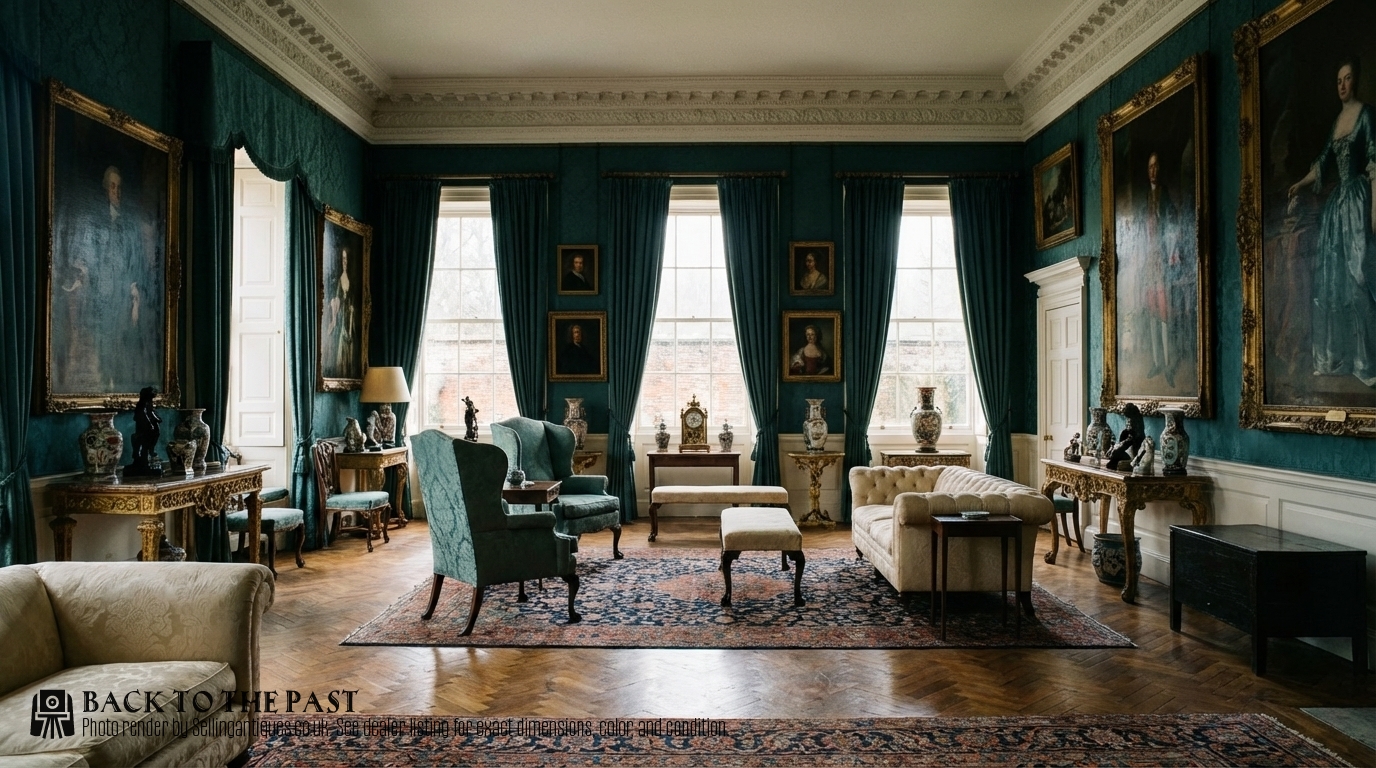
Early Oak Chest
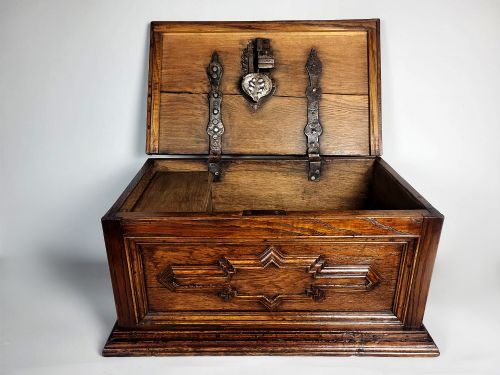
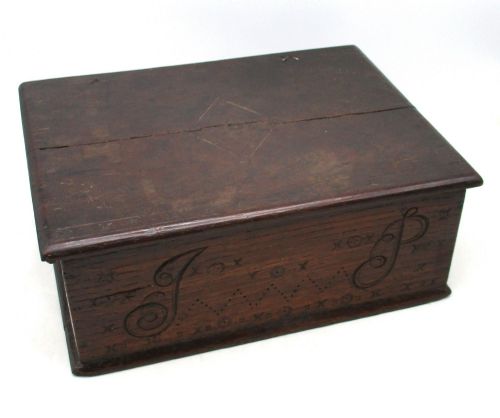
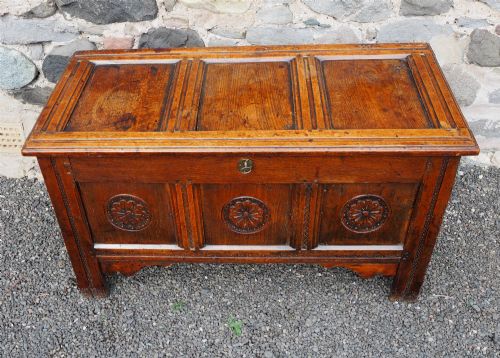
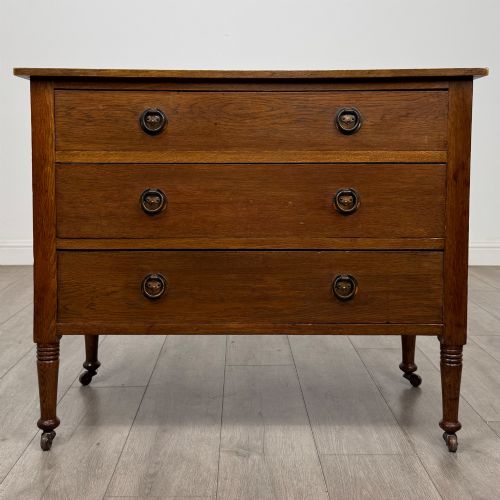
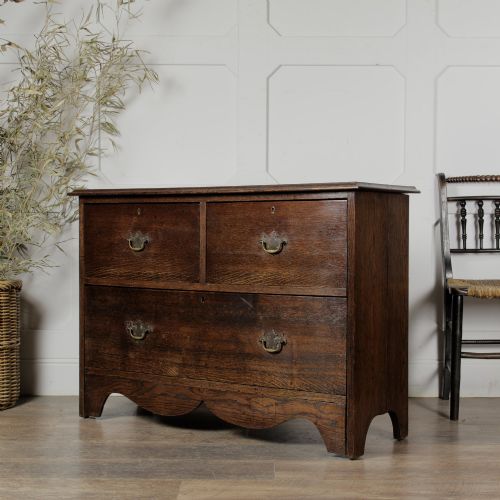
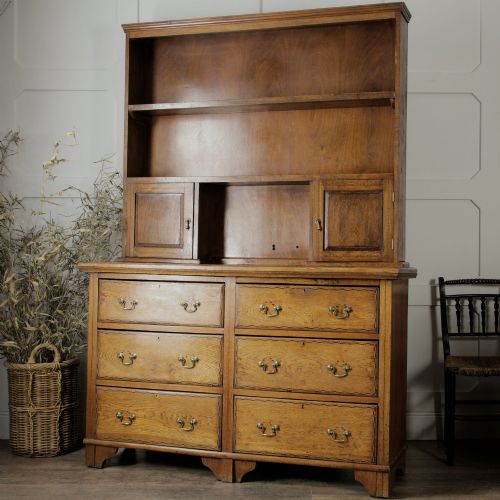
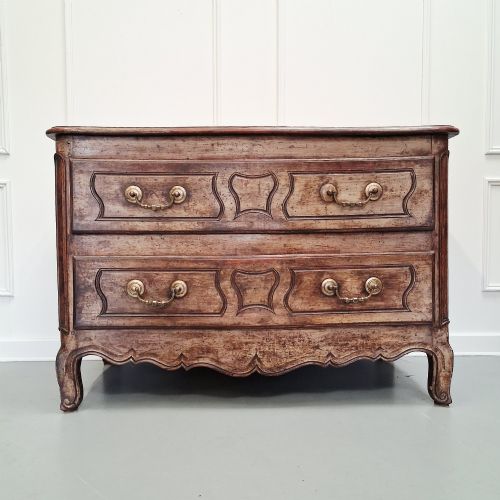
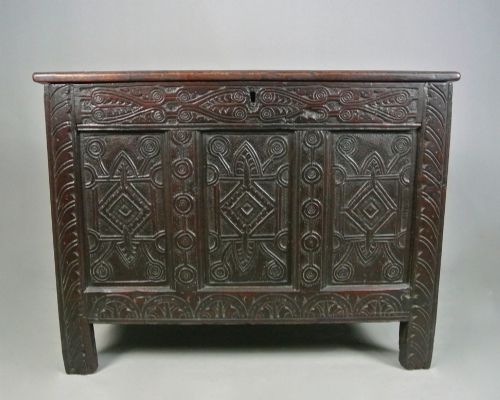
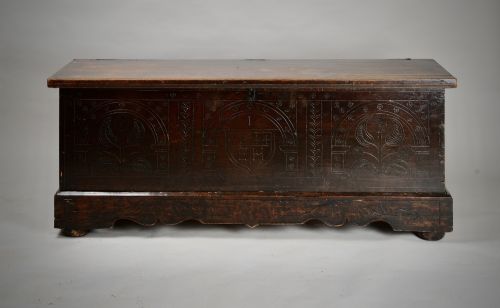
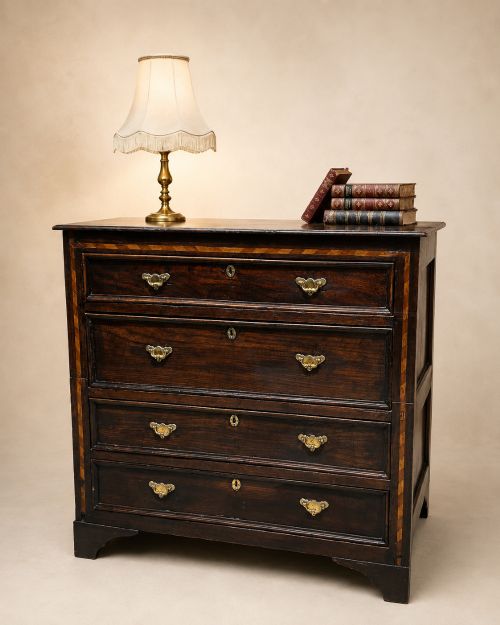
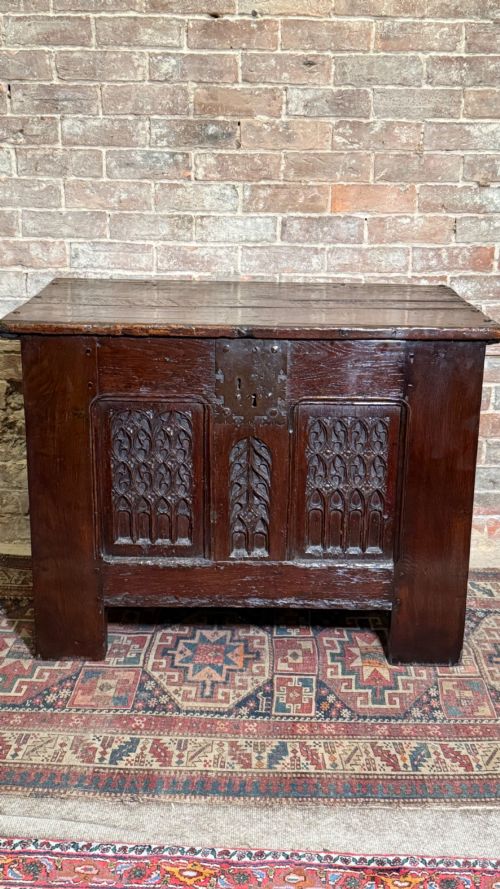
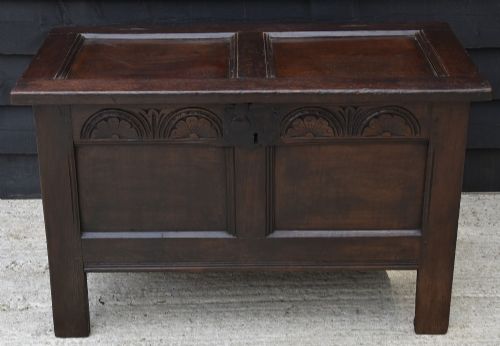
An early oak chest serves as a foundational storage piece, originating in domestic and institutional settings from the sixteenth century onwards. These forms encompass six-plank coffers, panelled blanket boxes, mule chests fitted with drawers, and multi-drawer chests from the seventeenth and eighteenth centuries.
Buyers browsing this selection encounter robust joinery designed for utility, ranging from simple medieval coffers to geometric moulded chests of drawers and tallboys. The tradition extends through provincial workshops into later revivals, preserving utilitarian forms built to contain textiles, documents, and valuables.
How they were made
Joiners built these pieces primarily using native oak, often supplemented by secondary timbers such as elm, fruitwood, and occasional burr veneers. Construction relied on frame-and-panel techniques, pegged mortise and tenon joints, and six-plank assembly secured with iron nails or wooden dowels.
Surface decoration derived from hand-carved panels featuring geometric moulding, fluting, or stylised foliage, finished with beeswax or polish that developed a deep patina over centuries. Hardware such as brass drop handles, steel locks, and iron hinges were hand-forged and fitted directly to the timber.
Recorded styles span from sixteenth-century carved panels to Edwardian oak chests of drawers and twentieth-century workshop iterations.
What varies in quality
The integrity of the construction and the degree of original surface preservation dictate the standing of each piece. Surviving examples retain their original backs, floors, locks, and hardware, whereas altered pieces show replaced boards or later-cut drawer apertures.
Depth of carved detail and precision of joinery distinguish utilitarian items from ambitious workshop commissions. Timbers that have aged naturally without excessive sanding display the varied grain patterns and rich colour prized by collectors.
Heals·Gordon Russell·Simpoles of Manchester
The Early Oak Chest Glossary
- Coffer
- A large wooden chest used for storing valuables, linen, or documents, typically constructed with a hinged lid. Early versions utilise six boards joined at the edges.
- Mule chest
- A storage chest featuring one or more functional drawers built into the base beneath the primary compartment. This form bridges the gap between the simple coffer and the chest of drawers.
- Patina
- The surface sheen and colour developed by timber over long periods through handling, waxing, and exposure to light. A deep surface indicates decades of continuous care.
- Mortise and tenon
- A joint formed by inserting a projecting tongue into a tightly fitted cavity, secured with a wooden peg. This method provides the structural framework for panelled furniture.
- Geometric moulded
- Surface decoration formed by applying small lengths of moulded wood in repeating patterns onto drawer fronts or panel faces. This style appears frequently on seventeenth-century case furniture.
Early Oak Chest: Frequently Asked Questions
How do I date an early oak chest?
Dating relies on observing construction methods, tool marks, and hardware types. Six-plank construction and hand-carved panels generally point to sixteenth or seventeenth-century origins, while the introduction of multiple drawers indicates later periods.
Changes in timber preparation, such as the shift from cleft to sawn boards, help narrow down the decade of manufacture. Original locks, hinges, and keys provide further chronological markers.
What is a mule chest?
A mule chest combines the top-opening compartment of a traditional coffer with one or more drawers built into the base. This hybrid form emerged to offer easier access to stored clothing without disturbing items piled on top.
Such pieces date primarily from the seventeenth and eighteenth centuries in regional workshops across Britain. They frequently incorporate elm or fruitwood alongside the primary oak framework.
Where were these chests used?
These pieces functioned as essential storage furniture in domestic dwellings, farmhouses, and institutional settings such as churches. People used them to safeguard heavy textiles, household linen, legal documents, and silver.
In domestic spaces, they doubled as seating benches near hearths or windows when fitted with flat lids. Their sturdy build allowed them to serve multiple roles within a single room.
How do I care for antique oak?
Maintaining antique oak requires stable environmental conditions away from direct heat sources and sudden humidity shifts. Regular application of a traditional beeswax polish feeds the dry timber and preserves the surface sheen.
Avoid modern liquid cleaners or silicone polishes, which penetrate open wood grains and alter the natural finish. Gentle dusting with a soft cloth keeps the surface clear without wearing down the edges.