

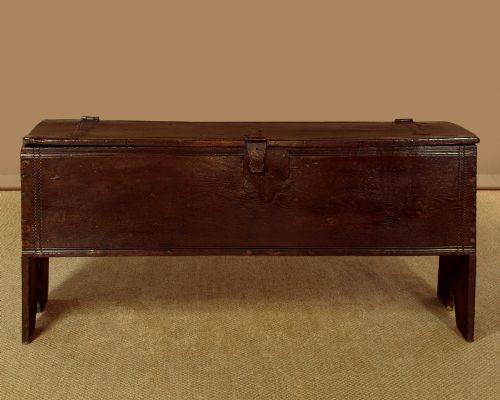
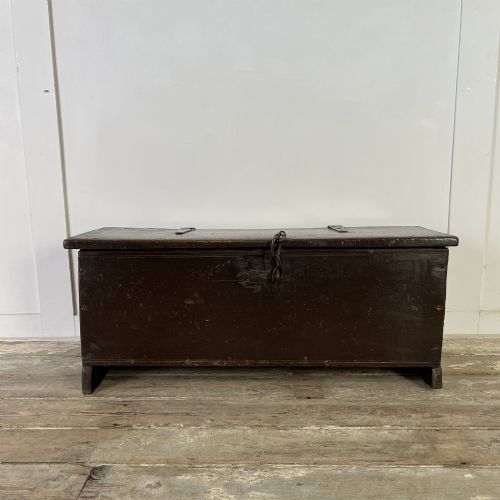
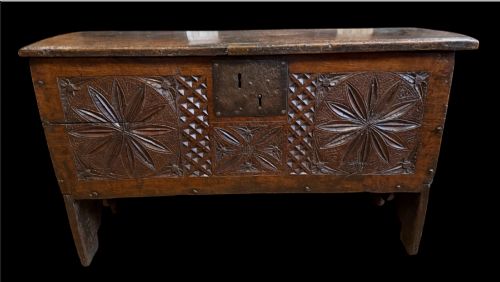
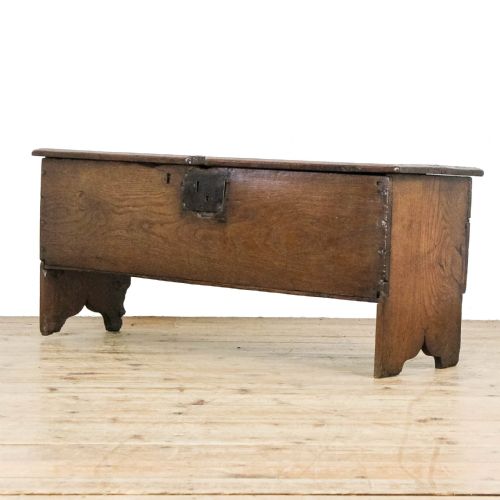


Boarded Oak Chest
When you search for boarded oak chest, you are looking at utilitarian domestic storage built from thick timber planks joined directly together.
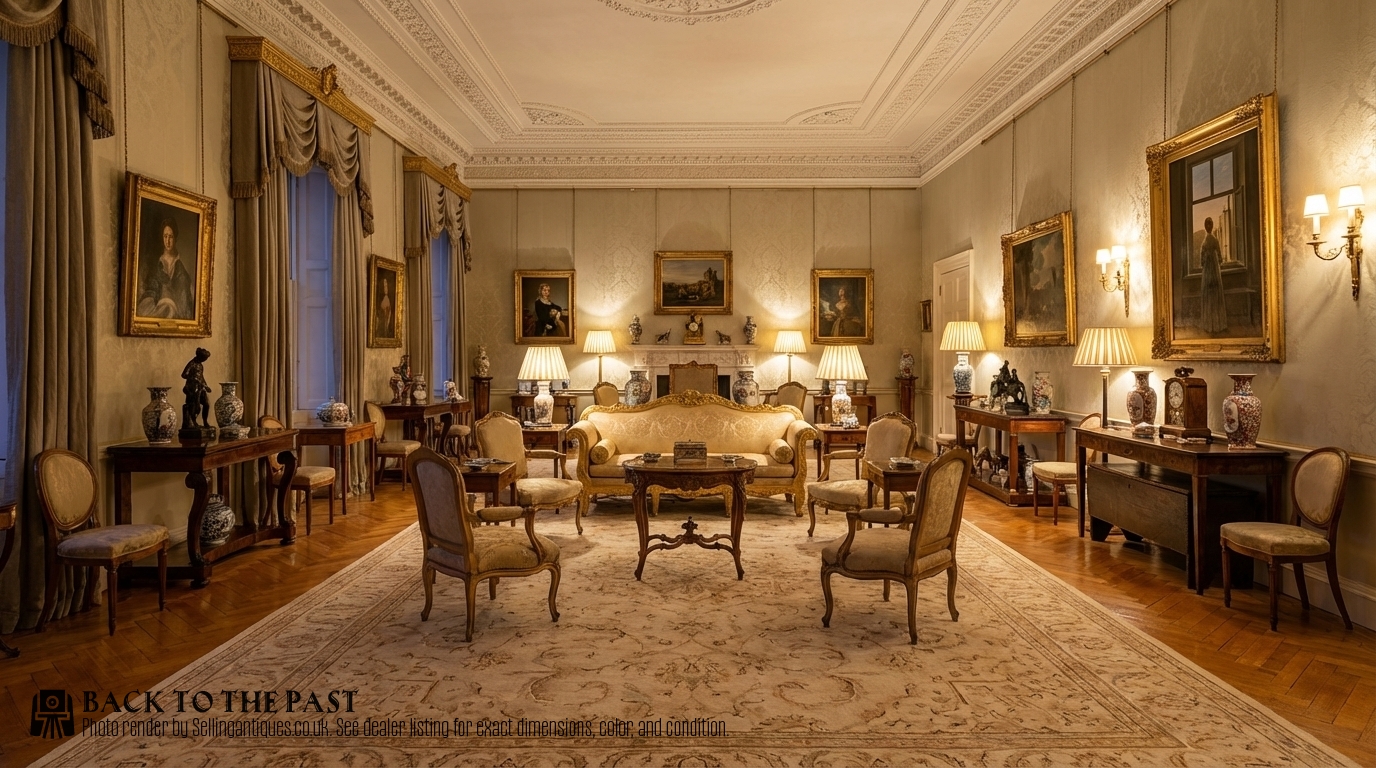
Boarded Oak Chest
A boarded oak chest is a simple box construction formed of vertical planks pinned together rather than framed in panels. The pieces on this page span the sixteenth, seventeenth, eighteenth, and nineteenth centuries, reflecting a long tradition of British vernacular joinery.
You will encounter regional variations including Welsh examples and pieces from the West Country, alongside specialised forms like sword chests and meal arks. These objects served domestic needs from storing bedding to keeping dry goods.
The material is predominantly solid oak, frequently augmented with wrought iron hinges, straps, and hasps. Their forms remain resolutely utilitarian, showing the direct application of carpenter's tools to heavy timber.
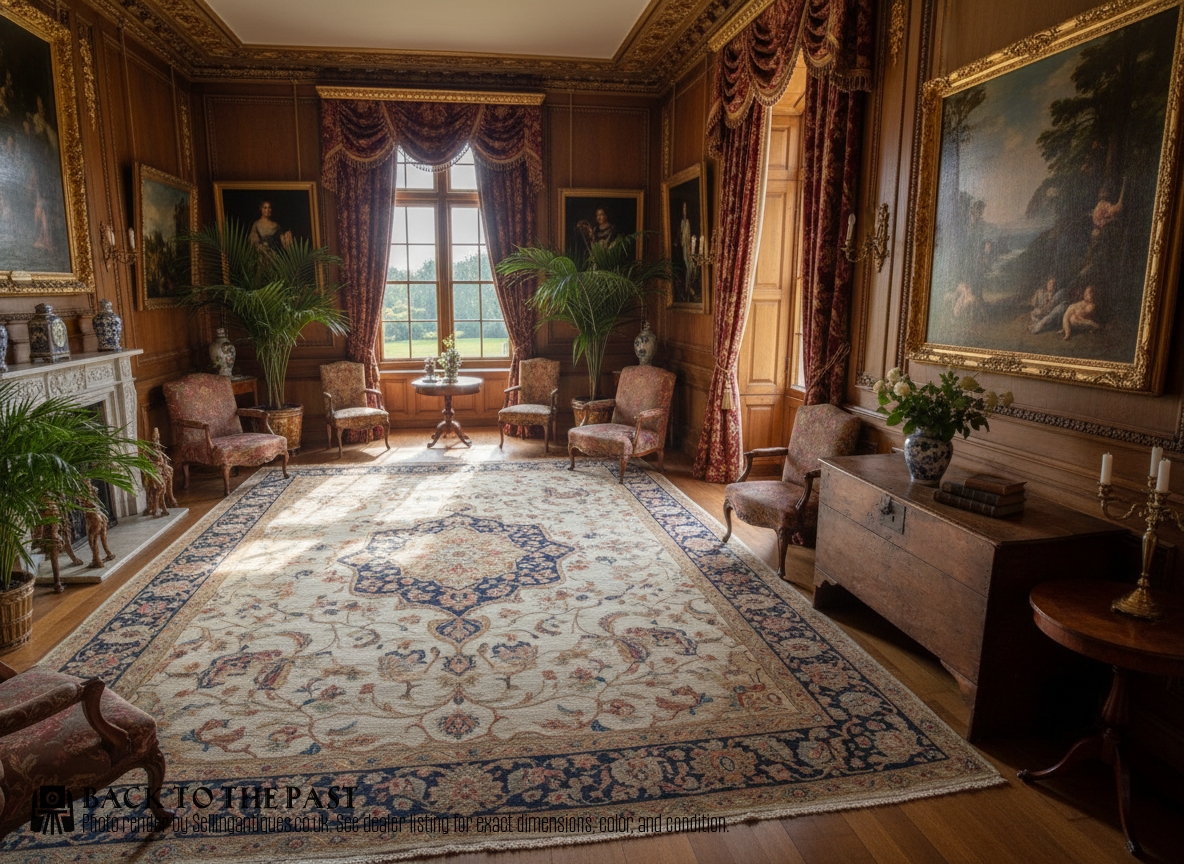
Construction and Materials
These chests rely on thick planks of oak joined at the edges with pegs, nails, or dovetails, creating a rigid box without internal framing. The wood was typically split or sawn from local trees, leaving the natural grain visible across the broad surfaces.
Wrought iron hardware such as strap hinges and locking hasps were hand-forged by local blacksmiths to secure the lids and corners. The surfaces often bear the tool marks of adzes and saws used to flatten and shape the heavy boards.
Retail Price Guide 2026
Typical UK retail prices for boarded oak chest, calculated from the Sellingantiques database of over a million retail prices indexed since 2003. This retail price guide relies exclusively on Sellingantiques data; no external sources or auction records are used, so the figures do not describe the wider market.
The listings on this site feature oak chests spanning the sixteenth to nineteenth centuries, including regional Welsh and West Country examples.
Factors of Quality
Quality in these chests lies in the integrity of the original oak boards and the degree of survival in the ironwork. Pieces retaining their original wrought iron hinges and unreduced feet stand apart from those altered or repaired over centuries.
Proportion and scale distinguish the domestic forms, where narrower boards or longer sword chests require careful timber selection to prevent warping. The presence of early regional characteristics, such as specific Welsh or West Country construction traits, adds depth to the individual piece.
The Boarded Oak Chest Glossary
- Boarded chest
- A storage box constructed from vertical planks pinned at the edges rather than set into a frame. This method represents an early and direct form of cabinet making.
- Six plank coffer
- A basic chest made from six distinct boards forming the front, back, sides, bottom, and lid. It is the most common format for early vernacular storage.
- Meal ark
- A specialised chest or bin used for storing grain or meal, often featuring a sloping lid to shed dust and debris. These were essential items in rural domestic kitchens.
- Wrought iron
- Iron shaped by hammering while hot, used to create durable hinges, straps, and locks for early furniture. The hammer marks remain visible on the surface.
- Vernacular furniture
- Domestic items built by local craftsmen using regional styles and readily available materials rather than following court or metropolitan fashions.
Frequently Asked Questions
What were boarded oak chests used for?
These chests served primarily for storing household textiles, clothing, valuables, and sometimes dry foodstuffs like meal. Their robust construction kept contents secure from pests, damp, and theft in early homes.
In larger formats, they accommodated specific items such as swords or rapiers, reflecting the need to store personal weapons safely.
How do I date an oak chest?
Dating relies on examining the construction methods, tool marks, and ironwork style used across different reigns and centuries. Six-plank designs and clamp-front assemblies point towards sixteenth and seventeenth-century production.
Changes in hinge design, lock mechanisms, and the seasoning of the oak timber further help separate Elizabethan and Stuart examples from later eighteenth-century work.
Where were these chests made?
They were produced across Britain by local carpenters and joiners working with regional timbers. Specific vernacular styles link surviving pieces to locations like the Welsh borders, Montgomeryshire, and the West Country.
Local workshops utilised available oak and forged iron to supply nearby farms, castles, and town houses without relying on centralized London guilds.
How do I live with an antique oak chest?
Place the chest away from direct heat sources and dramatic humidity fluctuations to prevent the heavy oak planks from splitting or warping. Maintain stable indoor conditions to preserve the integrity of the wood and the old ironwork.
Use the interior for gentle storage while keeping the heavy lids balanced when opened to protect the antique hinges from strain.