
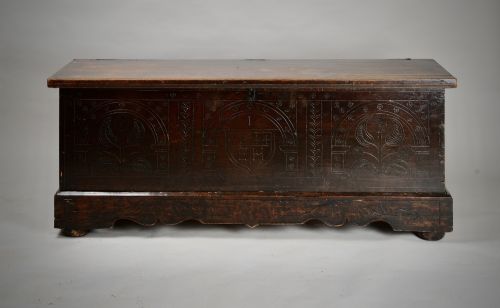
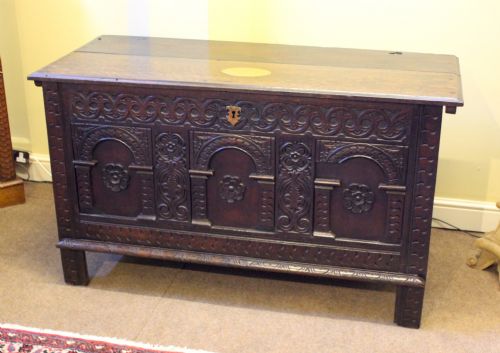


Carved Oak Marriage Chest
A carved oak marriage chest is a sturdy domestic store made to mark a union, carrying centuries of deep relief work and substantial joinery.
Carved Oak Marriage Chest
When you search for a carved oak marriage chest, you find substantial receptacles built to hold household linen, textiles, and domestic treasures for a new household. These pieces appear across the seventeenth, eighteenth, and nineteenth centuries, often designated as coffers, mule chests, or cassones depending on their regional origin and layout.
The versions most common on this page are heavy wooden boxes fashioned from solid oak, frequently augmented with panels, drawers, and intricate chisel work. British and continental examples display variations in scale, from long low chests to taller mule chests featuring storage drawers beneath the main lidded compartment.
How they were made
The primary material across these listings is solid oak, supplemented occasionally by walnut, chestnut, and iron or brass hardware. Joiners utilised traditional frame and panel construction to accommodate the natural expansion and contraction of timber over decades of domestic use.
Surface ornamentation relied on hand-carved relief work, chip carving, and inlay techniques executed with simple gouges and chisels. Metal hinges, lockplates, and handles forged from iron or cast in brass provided both structural reinforcement and functional security.
Some marriage chests preserve the secret initials of newlyweds carved so deeply into the oak that future generations had to live with them.
What varies in quality
Quality in a carved oak marriage chest rests upon the crispness of the hand-carving and the integrity of the original timber construction. Pieces retaining their original boards, hinges, and structural fastenings command greater attention from collectors than those rebuilt with later timber.
The sophistication of the decorative programme also distinguishes finer examples, where proportional balance and deep relief work demonstrate the skill of the original maker. The presence of secondary timbers, historic repairs, and patination accumulated through years of handling further define the standing of each piece.
The Carved Oak Marriage Chest Glossary
- Cassone
- A traditional Italian chest used for storing household goods, often highly decorated with carved panels. These forms frequently crossed borders and influenced British cabinetmakers.
- Mule chest
- A storage chest featuring one or more drawers built into the base beneath the main compartment. This form emerged as makers sought to improve accessibility to stored textiles.
- Coffer
- A heavy wooden box with a hinged lid, traditionally utilised for safekeeping valuables and documents. In early periods, the terms coffer and chest were often used interchangeably.
- Frame and panel
- A method of construction where a central floating panel is fitted within a grooved outer frame. This technique prevents splitting as the wood responds to changes in humidity.
- Green Man
- A decorative architectural motif depicting a face carved from or entwined with leaves and vines. This pagan symbol appears frequently in traditional folk carving across European woodwork.
Carved Oak Marriage Chest: Frequently Asked Questions
What is a mule chest?
A mule chest is a storage box that combines the deep lidded compartment of a traditional chest with one or more drawers fitted in the base. This layout allowed owners to access smaller garments without lifting heavy items stored in the top.
Mule chests appeared frequently in seventeenth and eighteenth-century homes as domestic storage needs grew more complex.
How old is an oak coffer?
Oak coffers on this page span from the seventeenth century through to the nineteenth century, with distinct styles marking each era. Earlier pieces often display simpler joined frames while later examples incorporate elaborate panels and drawer bases.
Examining the construction methods, tool marks, and wear patterns helps determine the likely period of manufacture.
Where were marriage chests used?
Marriage chests served as important household possessions across Britain and continental Europe, constructed to hold the dowry or wedding linens of a bride. They sat in the main rooms of domestic dwellings as functional furniture and symbols of family standing.
Regional styles varied from English traditional country work to continental cassones and Breton furniture.
How do I care for antique oak?
Antique oak benefits from stable indoor environments away from direct heat sources and dramatic humidity fluctuations. Regular dusting with a dry cloth helps preserve the surface patination built up over centuries.
Applying occasional natural wax feeds the dry timber without building up heavy chemical residues.