


English Oak Blanket Chest
An english oak blanket chest brings centuries of domestic history into a modern room, offering sturdy storage with a rich, time-worn grain.
English Oak Blanket Chest
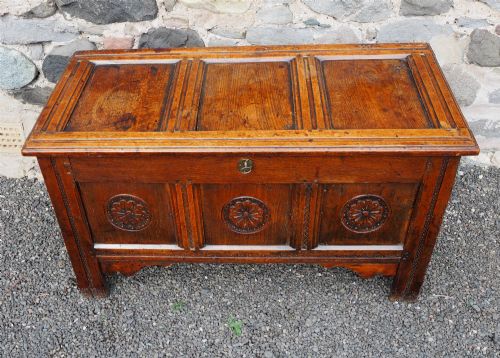
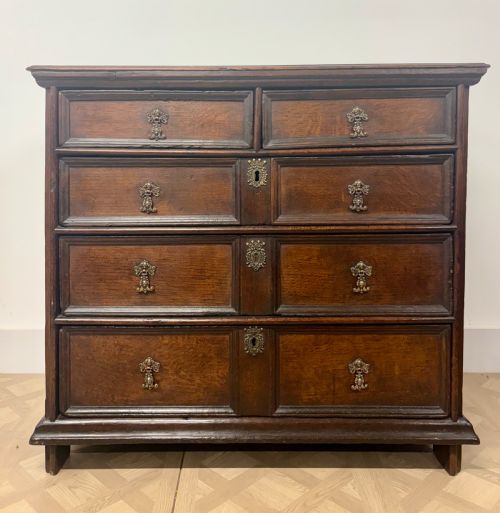
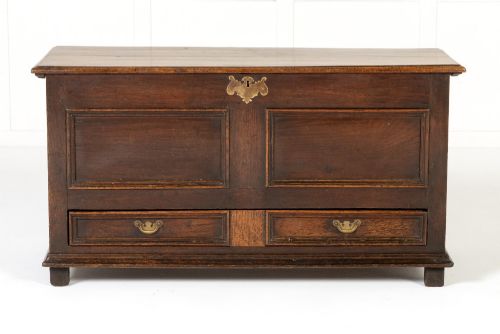
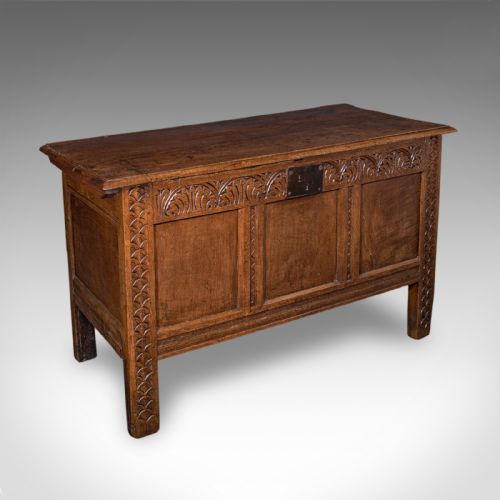
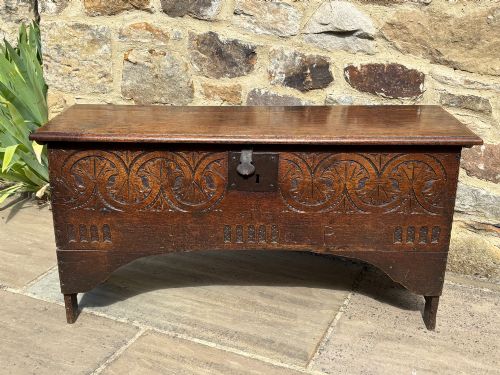
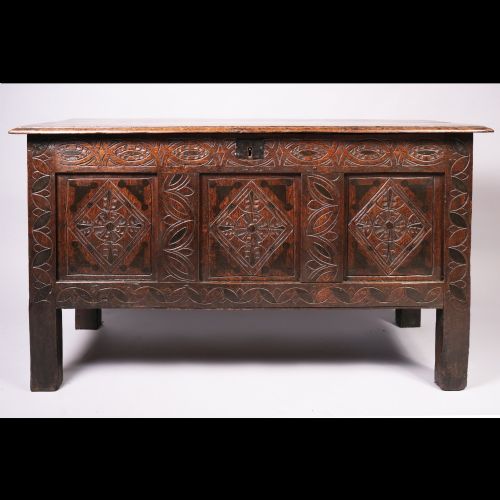
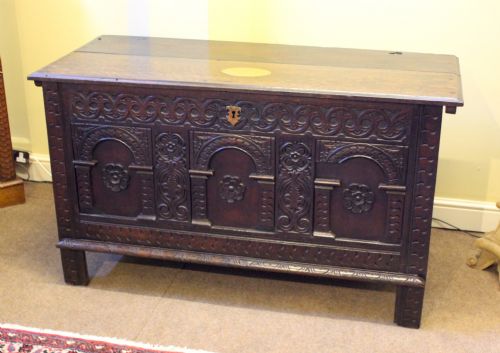
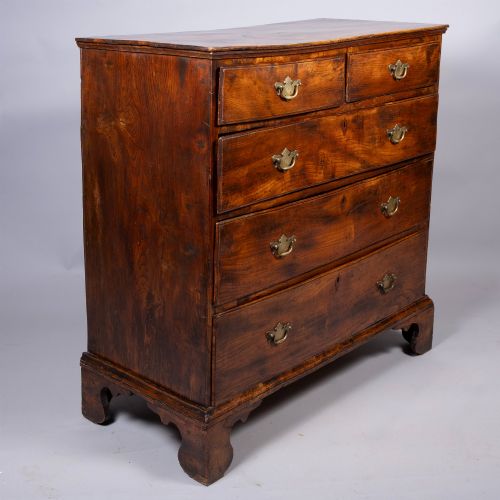
The search for an english oak blanket chest leads to robust storage furniture historically used for safeguarding textiles, valuables, and household documents. These utilitarian pieces range from early boarded storage boxes to panelled coffins and mule chests featuring integrated base drawers.
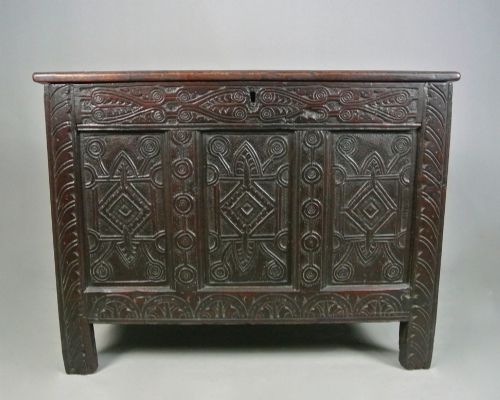
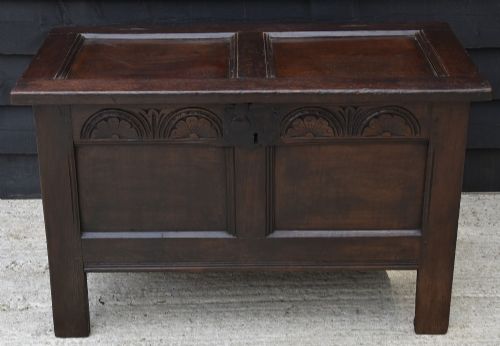
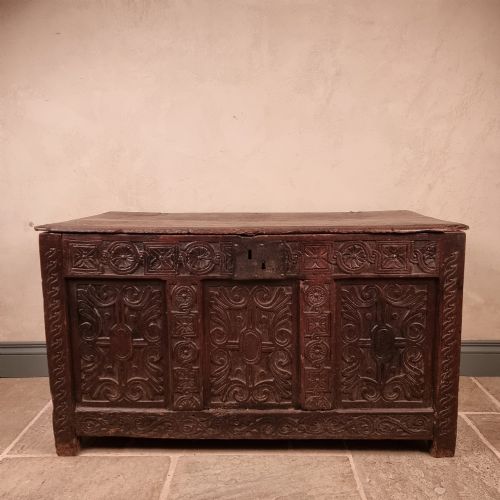
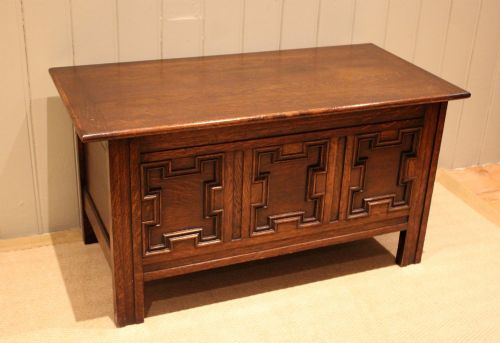
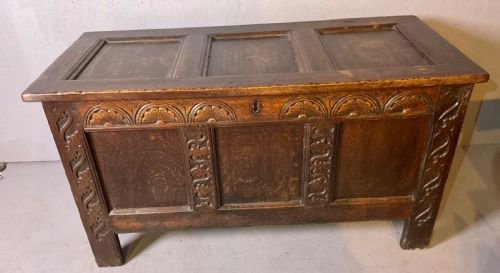
Examples on this page span the sixteenth century through the Georgian and Victorian eras, alongside later interpretations. The seventeenth-century panelled coffer remains the most frequent discovery, often displaying carved friezes or geometric mouldings across the front boards.
Materials and Construction
Makers built these pieces primarily using native British oak, sometimes incorporating secondary timbers like elm or fruitwood for panels and interior partitions. Construction relied on pegged mortise and tenon joints for panelled frames, while the earliest surviving formats utilised heavy six-plank boarded construction joined by dovetails or iron nails.
Hardware played an essential structural role, utilising hand-forged iron hinges, strap work, and brasses. Surfaces received simple wax or oil finishes that developed a deep patina over centuries of handling and environmental exposure.
Listings feature robust construction methods including boarded, joined, and panelled variants spanning the sixteenth to the twentieth centuries.
Assessing Quality and Integrity
Evaluation rests upon the proportion of original timber remaining, as centuries of domestic use frequently necessitate timber replacement in lids, bases, and feet. Untouched surfaces retain the tool marks and varied oxidation that distinguish genuine early examples from later restorations.
The sophistication of the joinery and carving further separates regional vernacular pieces from elite workshop commissions. Crisp arcaded panels, deep chip-carving, and intact original hinges elevate the standing of a coffer within its period.
The English Oak Blanket Chest Glossary
- Coffer
- A heavy wooden chest traditionally used for storing valuables, linens, and documents. These sturdy boxes frequently served as benches or tables within early homes.
- Mule Chest
- A storage chest featuring one or more drawers built into the base beneath the primary upper compartment. This hybrid form emerged as domestic storage needs evolved during the late seventeenth and eighteenth centuries.
- Arcading
- A decorative motif carved into woodwork to resemble a sequence of arches supported by columns. This architectural detail frequently dates seventeenth-century panels.
- Boarded Construction
- A primitive method of building chests by joining solid planks directly at the edges using nails, dowels, or dovetails without an internal frame. Six-plank examples represent the earliest surviving iterations of this technique.
- Strap Hinge
- A long, flat metal hinge fixed across the lid and front of a chest to distribute weight. These functional iron or steel components often provide clues to the age of the hardware.
English Oak Blanket Chest: Frequently Asked Questions
How were these chests used historically?
Households utilised these heavy chests to store valuable textiles, woollens, and household silver securely away from damp stone floors. They doubled as seating benches by windows or served as impromptu tables within multi-use living spaces.
Over generations, their robust lids provided a safe flat surface for folding laundry or displaying household items. In merchant settings, similar lidded trunks transported goods before settling into domestic service.
How do I care for antique oak furniture?
Maintain the timber by applying traditional beeswax sparingly to nourish the dry wood and protect the aged surface. Avoid placing chests near direct heat sources or modern radiators, which cause oak to split and joints to loosen.
Keep the interior clean and well-aired to prevent musty odours from affecting stored linens. Gentle dusting with a dry cloth preserves the accumulation of historical patina.
How can I tell a seventeenth-century coffer from later copies?
Examine the construction methods and the colour of the timber beneath the surface wax. Seventeenth-century examples display hand-split or pit-sawn oak boards, irregular peg placements, and genuine hand-forged ironwork rather than machine-cut screws.
Look for natural shrinkage and wear patterns around the feet and lid edges that indicate centuries of use. Later nineteenth-century revival pieces often feature overly uniform milling marks and machine-tooled joints.
What is the difference between a coffer and a mule chest?
A traditional coffer consists solely of an upper lidded compartment supported by stile feet or resting directly on the floor. Access to the interior requires lifting the heavy top lid entirely.
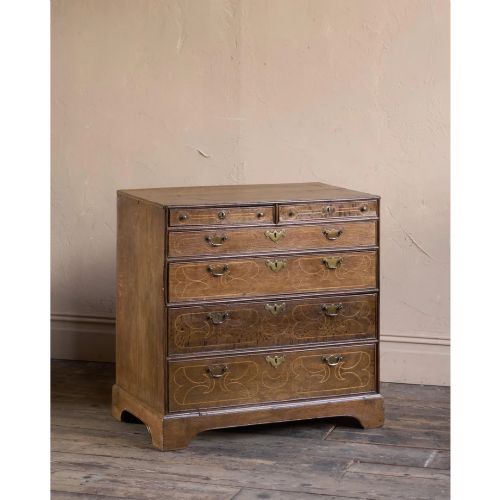
A mule chest incorporates one or more drawers beneath the main storage well, allowing access to frequently used items without disturbing objects stacked on top. This development bridged the gap between the simple chest and the modern chest of drawers.