

Antique Coffer Trunk
An antique coffer trunk provides sturdy domestic storage built to endure centuries of daily household use.
Antique Coffer Trunk
An antique coffer trunk bridges the gap between household storage and defensive travel utility. When searching for this phrase, buyers encounter heavy timber joined chests designed to secure linen, valuables, or military kit across centuries of domestic and campaign life.
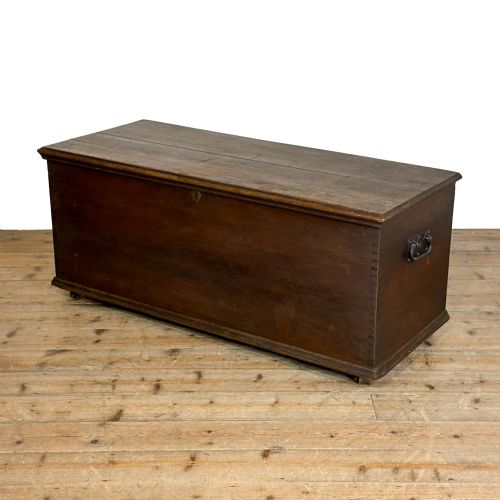
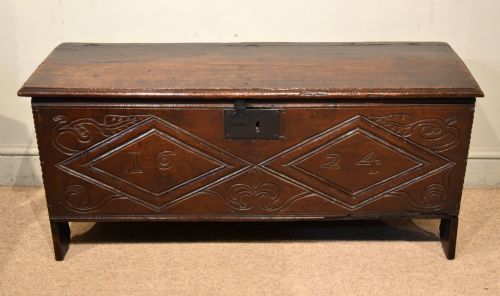
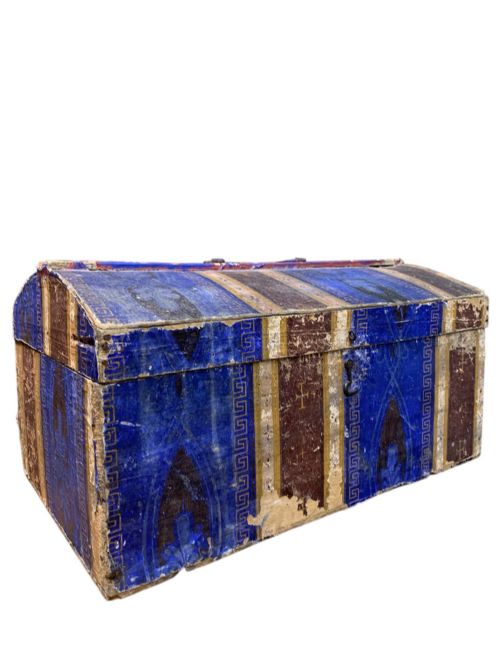
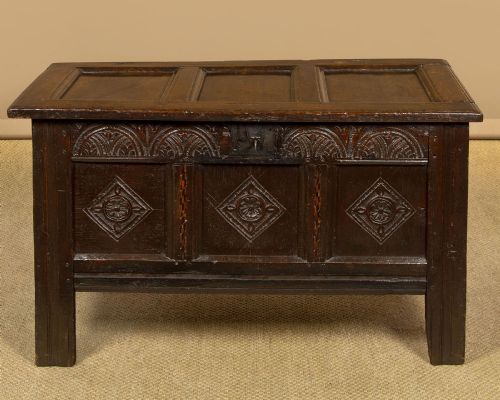
The versions most frequently met on this page span the seventeenth through the nineteenth centuries, shifting from joined oak panels to camphor wood and brass-bound travel chests. Simpler pine blanket boxes and elm boarded chests also appear regularly alongside elaborately carved regional forms.
Early examples originate from domestic English and Welsh workshops, whilst nineteenth-century variants often reflect overseas transport. Each piece records the functional demands of its era, functioning variously as blanket stores, travel lockers, or low seating.
How They Were Made
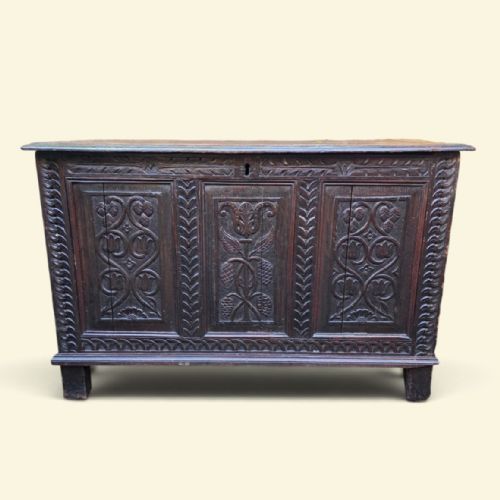
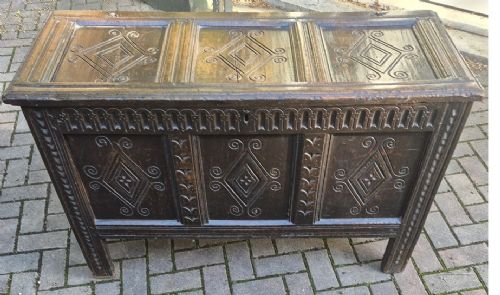
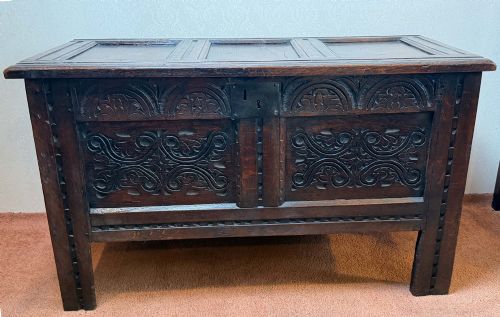
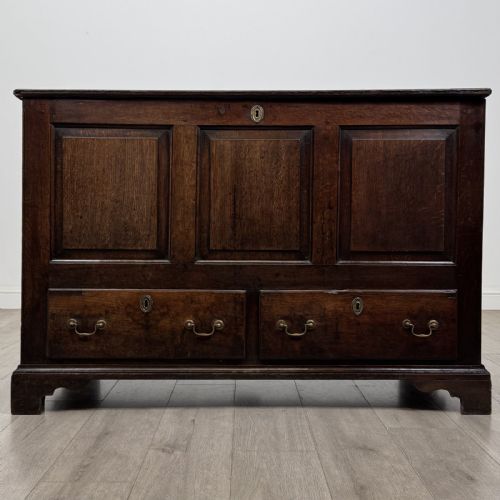
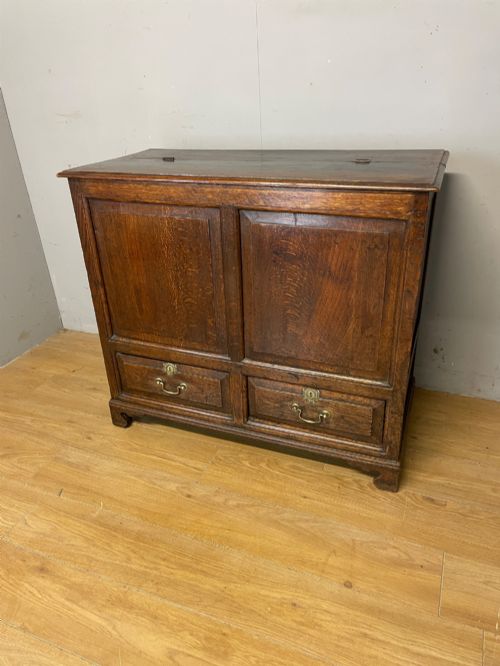
Carpenters constructed early pieces from solid oak using pegged mortise and tenon joints to frame raised panels. This method allowed the seasoned timber to expand and contract naturally with seasonal humidity changes without splitting.
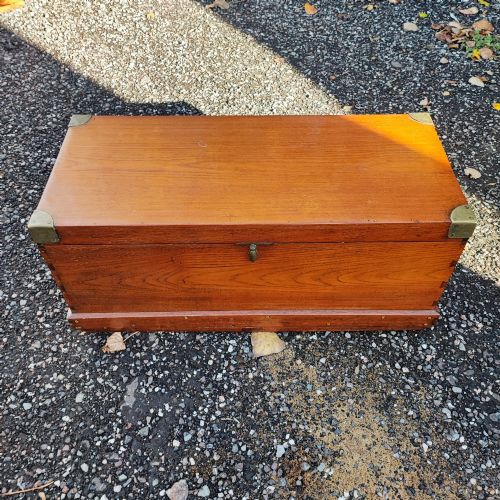
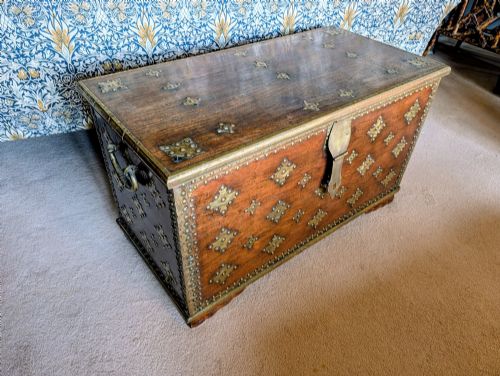
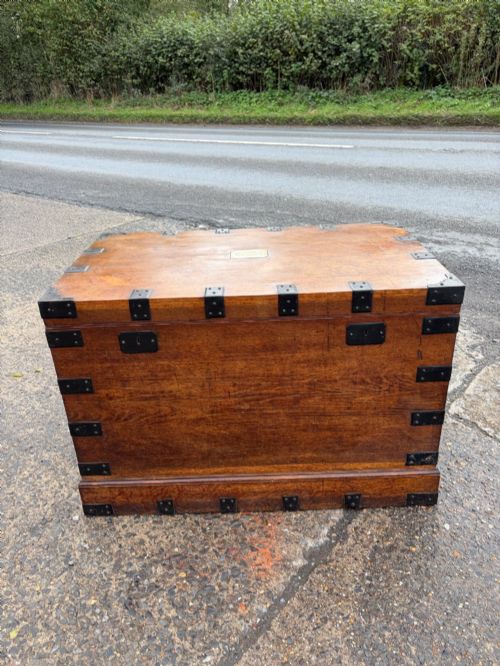
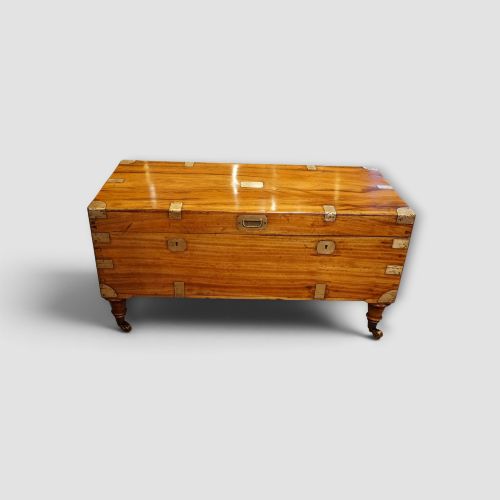
Later travel trunks utilised dense camphor wood or pine boards reinforced with brass bands, iron straps, and studded leather for overseas resilience. Dovetail corners and heavy iron hinges provided the structural strength required for frequent transit.
Antique Coffer Trunk Retail Price Guide 2026
Typical asking prices for coffer trunk among the pieces listed under this phrase on Sellingantiques today, from the lower quarter to the upper quarter. They describe what is for sale here now, not the wider market.
Some seventeenth-century oak coffers still retain faint chalk carpenter marks scrawled inside the lid to help fit the panels together.
What Varies in Quality
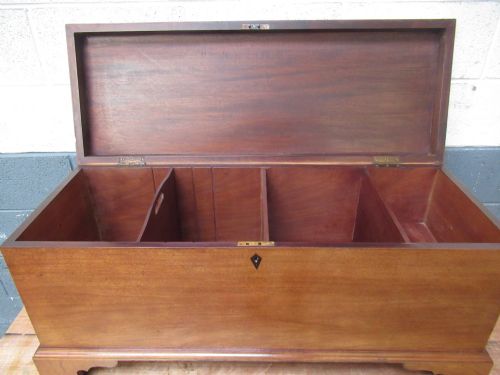
The integrity of timber selection and original joinery sets exceptional examples apart from utilitarian work. Superior pieces retain their original boarded lids, floorboards, and hand-forged iron or brass hardware without extensive timber replacement.
Carving depth and layout discipline distinguish high workshop output from provincial work. Crisp geometric panels or intricate marquetry inlay indicate skilled regional craftsmanship rather than hurried assembly.
Samuel Pratt
The Antique Coffer Trunk Glossary
- Mule chest
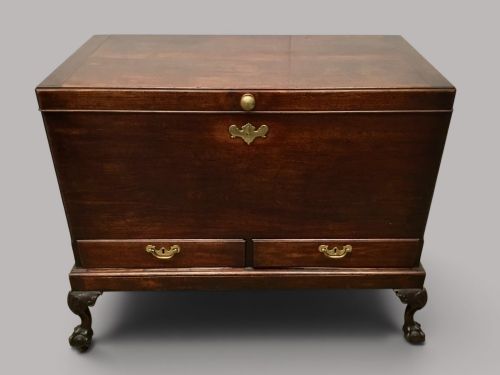
- A storage chest fitted with one or more drawers beneath the main internal compartment. This form bridges the evolution between the simple trunk and the modern chest of drawers.
- Six-plank
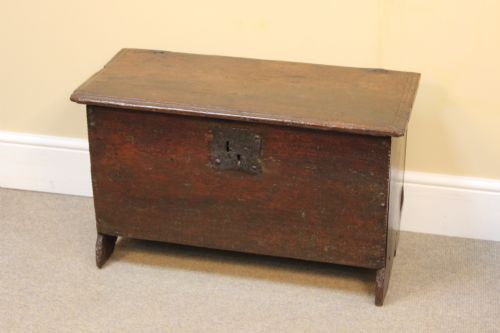
- A primitive chest construction method utilising six individual boards joined simply at the edges with nails or dowels. This style represents early domestic box-making.
- Campaign trunk
- A portable storage chest designed for military officers on active service. These pieces typically feature recessed brass handles, corner brackets, and durable exotic woods like camphor.
- Cassone
- An Italian Renaissance marriage chest intended to hold a bride's trousseau. These are frequently decorated with carved relief work or decorative panels.
- Marquetry
- The art of applying decorative veneer pieces to a structural surface to form intricate geometric or floral patterns. It requires precise woodworking skill.
Antique Coffer Trunk: Frequently Asked Questions
What is an antique coffer trunk used for?
These pieces served historically for storing household linens, woollens, and valuables securely within domestic or travel settings. Today, they function effectively as coffee tables, blanket boxes, or foundational storage furniture in living spaces.
Their robust flat lids allow them to double as occasional seating or display surfaces while keeping contents entirely hidden away.
How do I tell a seventeenth-century coffer from a later revival piece?
Early seventeenth-century examples display hand-split oak panels, pegged joinery, and natural timber oxidation acquired through centuries of exposure. Tool marks left by pit saws and adzes remain visible upon close inspection of internal surfaces.
Revival pieces often feature machine-sawn timber uniformity, standardised modern fixings, and cleaner internal board surfaces lacking genuine age-related wear patterns.
Were campaign trunks made for military use?
Camphor wood and brass-bound trunks were constructed specifically for British military officers travelling across overseas postings during the nineteenth century. The dense timber naturally repelled insects whilst metal reinforcements protected the corners during rough transit.
These chests often feature inset brass carrying handles and robust locks designed to withstand harsh colonial climates and frequent transport.
How do I care for antique timber storage chests?
Maintain stable indoor humidity levels and keep wooden coffers away from direct heat sources to prevent timber shrinkage and panel splitting. Regular light applications of traditional beeswax help nourish dry historic surfaces without building up heavy chemical residues.
Avoid placing damp textiles directly inside unlined antique timber interiors for extended periods to protect the internal wood grain.