


Panelled Oak Storage Chest
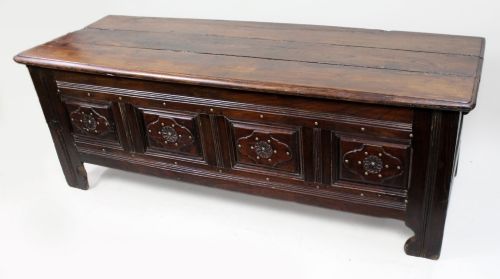
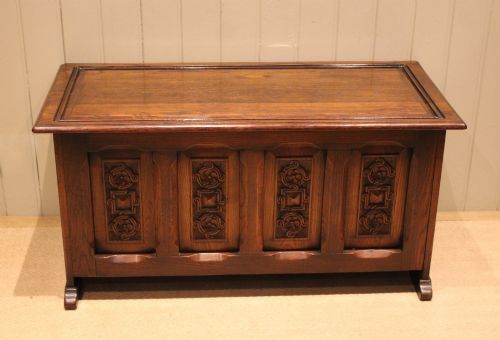
A panelled oak storage chest brings centuries of utility and sturdy charm into a room, offering robust storage built from timber that deepens in character over time.
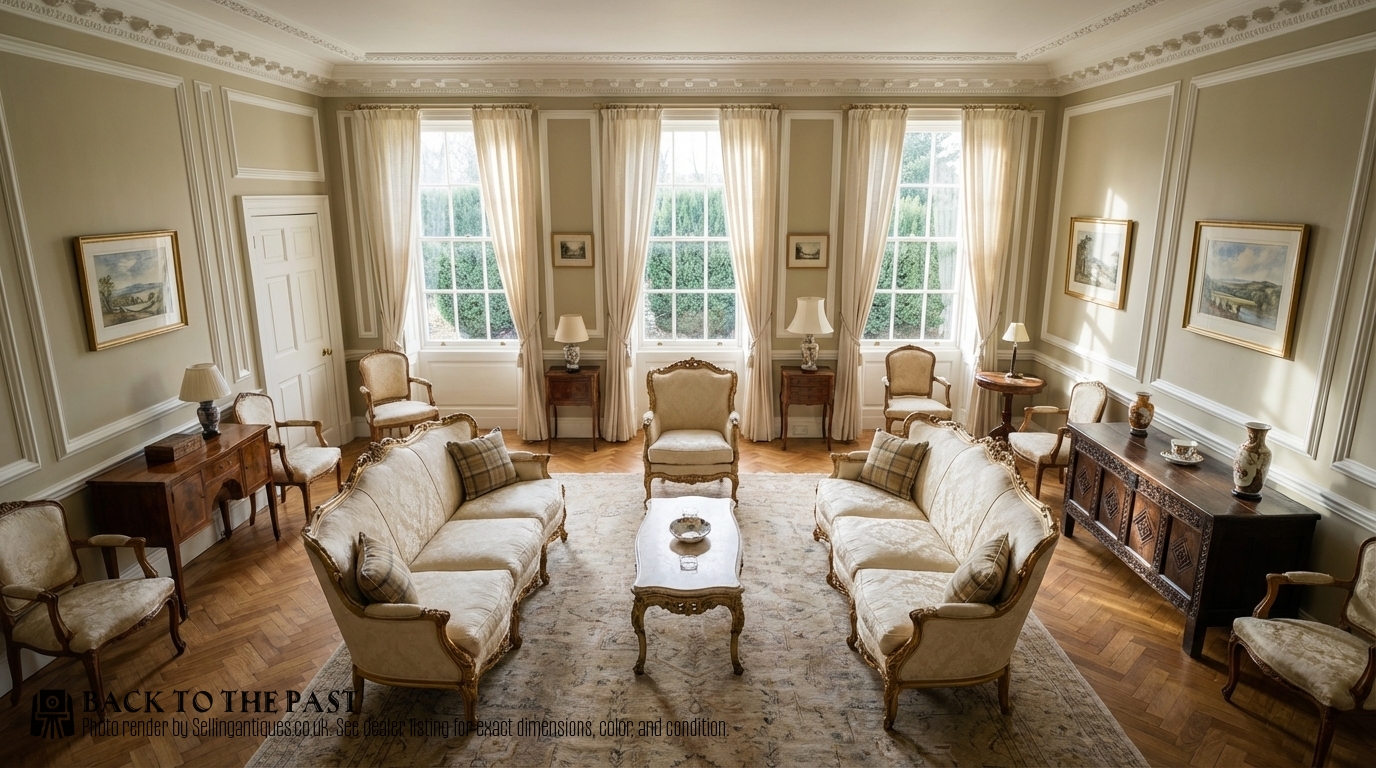
Panelled Oak Storage Chest
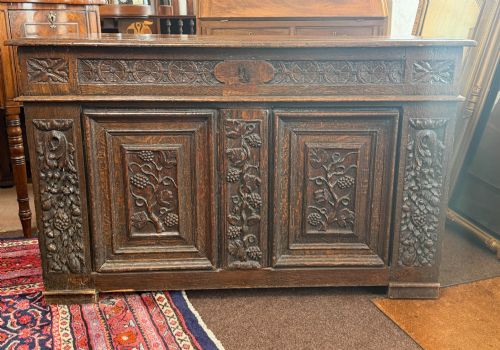
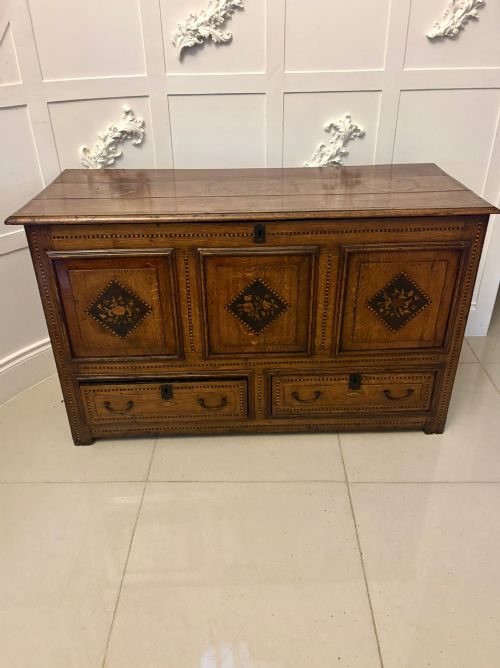
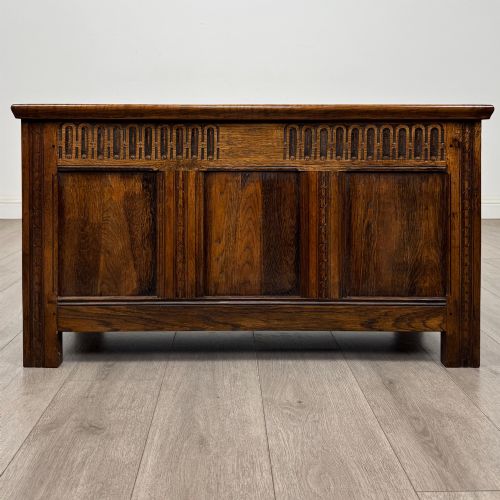
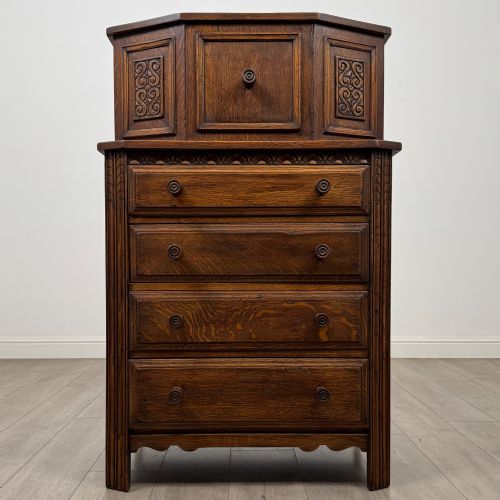
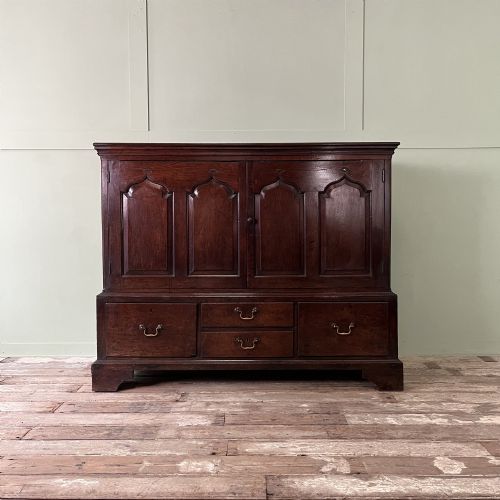
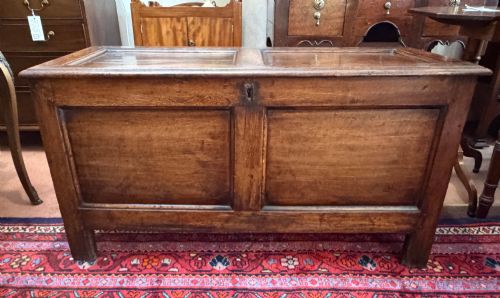
A panelled oak storage chest serves as a traditional vessel for household goods, holding linens, blankets, and garments within a solid wooden framework. These pieces appear in forms such as coffers, blanket boxes, mule chests, and low cupboards.
The versions most commonly met on this page span from the seventeenth and eighteenth centuries up through the Edwardian era and the 1930s. Regional origins include English and Welsh workshops, alongside French provincial examples.
Buyers encounter construction styles ranging from strict seventeenth-century Jacobean framework to later revivals and twentieth-century interpretations. Each piece relies on panelled construction to accommodate the natural movement of timber.
Materials and Construction
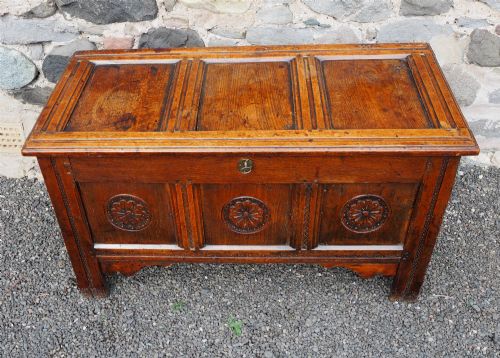
Makers construct these pieces primarily from solid oak, assembling frames with stile and rail joints that enclose recessed wooden panels. Iron hinges, locks, and brackets frequently reinforce the structural integrity of the lids and corners.
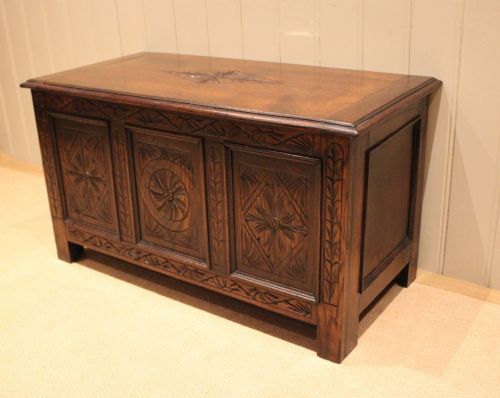
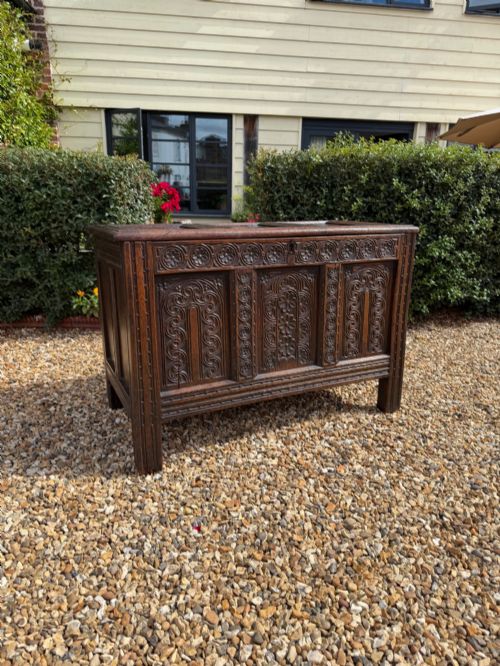
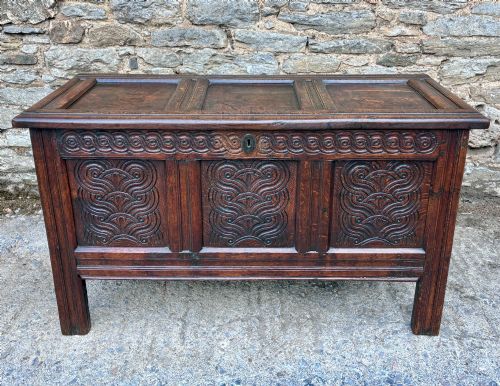
Surface embellishment involves traditional carving techniques, whilst finer examples incorporate marquetry inlay, wood inlay, or ebonised wood details. Leather elements appear occasionally on related storage forms.
Panelled Oak Storage Chest Retail Price Guide 2026
Typical asking prices for panelled oak storage chest among the pieces listed under this phrase on Sellingantiques today, from the lower quarter to the upper quarter. They describe what is for sale here now, not the wider market.
Distinctions in Quality
The hierarchy of quality rests upon the depth of the carving, the crispness of the joinery, and the integrity of the original timber. Early seventeenth-century examples display hand-cut joints and dense grain that indicate superior craftsmanship.
Patina dictates much of the appeal, where centuries of handling impart a warm glow to the oak surface. Pieces retaining their original ironwork and uncompromised panel assembly command greater regard among collectors.
The Panelled Oak Storage Chest Glossary
- Coffer
- A traditional box or chest with a hinged lid used for storing valuables and household goods. These items form the core of early storage furniture.
- Mule chest
- A storage chest featuring one or more drawers beneath the main compartment. This form bridges the traditional coffer and the modern chest of drawers.
- Marquetry inlay
- Decorative patterns formed by fitting contrasting pieces of wood veneer into the primary surface. This technique adds pictorial or geometric enrichment.
- Jacobean
- The stylistic period spanning the early to mid-seventeenth century, characterised by formal rectilinear designs and deep geometric carving. Pieces from this era often display robust proportions.
- Patina
- The surface sheen and colour developed by timber through age, wear, and exposure to light. A rich patina indicates decades or centuries of careful use.
Panelled Oak Storage Chest: Frequently Asked Questions
What is a coffer?
A coffer is a heavy wooden box with a hinged lid designed for storage. Historically, households utilised them for safeguarding textiles, documents, and valuables.
Over centuries, these pieces evolved into focal points for domestic interiors. Their robust construction allowed them to double as seating benches when space demanded.
How do I date an oak chest?
Dating relies on examining the construction methods, tool marks, and stylistic motifs present on the piece. Seventeenth-century examples often display pegged mortise and tenon joints alongside hand-riven panels.
Later pieces from the Edwardian period or the 1930s exhibit machine-sawn timber and different fastening techniques. Comparing the carving styles to established historical periods helps confirm the era of manufacture.
What is a mule chest?
A mule chest is a variation of the standard storage chest that incorporates one or more drawers at the base. This design allowed access to stored items without requiring the user to lift the entire heavy lid.
Originating in earlier centuries, these chests served as versatile storage units for clothing and household linens. They combine the deep upper well of a coffer with the accessible drawer storage of a cabinet.
How do I care for antique oak?
Antique oak benefits from stable environmental conditions away from direct heat sources and dramatic humidity fluctuations. Applying a traditional beeswax polish occasionally helps nourish the dry timber and maintain the surface sheen.
Avoiding synthetic cleaners protects the historic patina that develops over centuries. Gentle dusting with a soft cloth preserves both the wood and any delicate inlay work.