

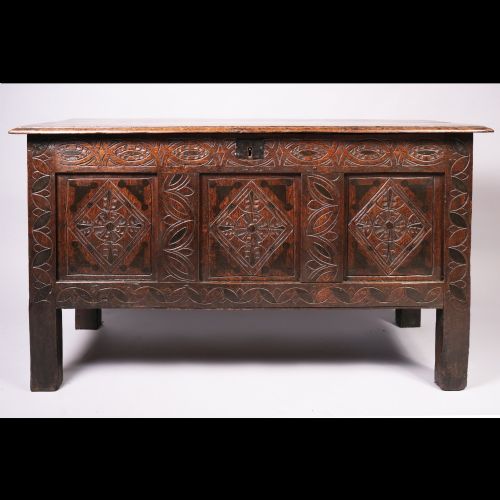
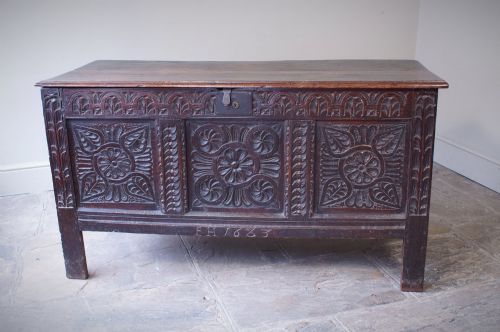
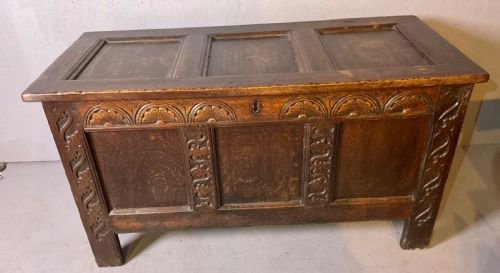
Seventeenth Century Trunk
These seventeenth century trunk pieces bring robust joinery and centuries of domestic history straight into a room.

What a seventeenth century trunk is
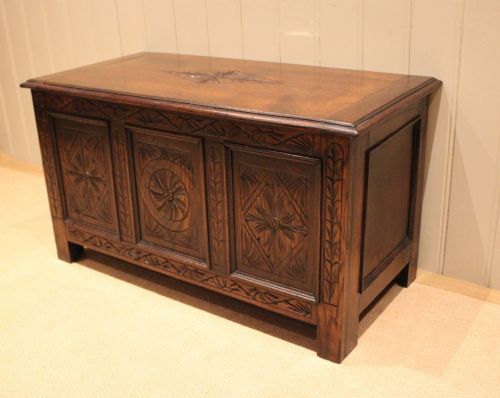
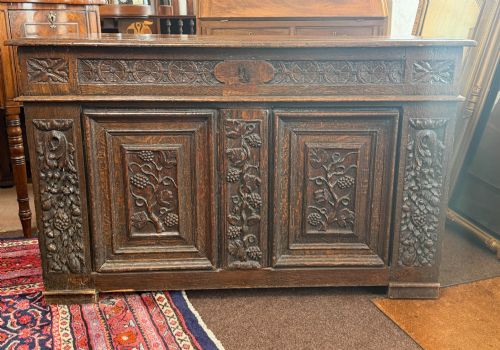
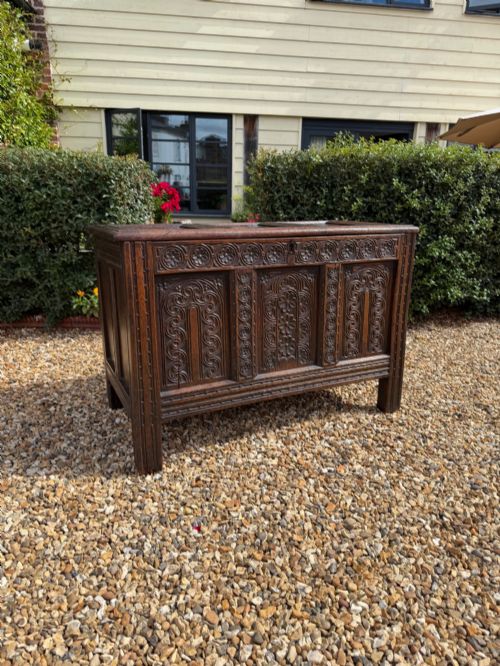
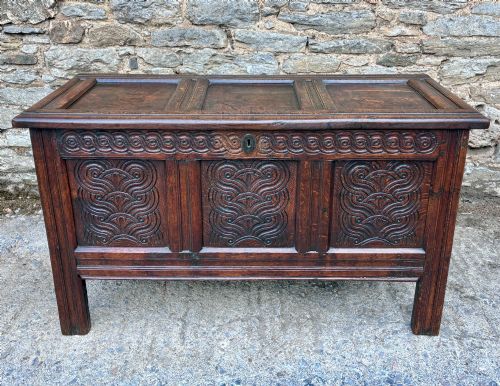
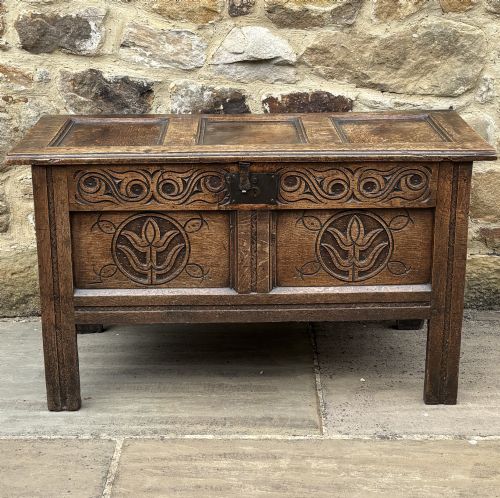
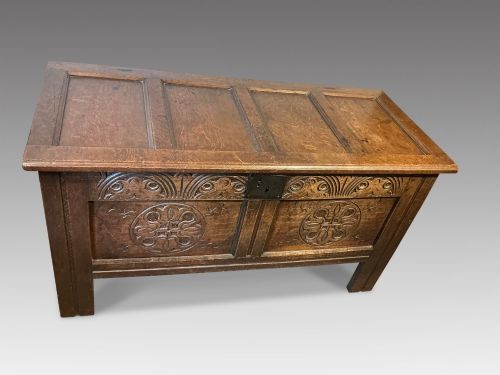
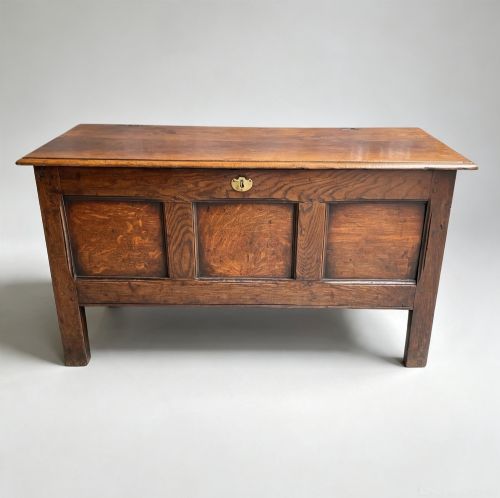
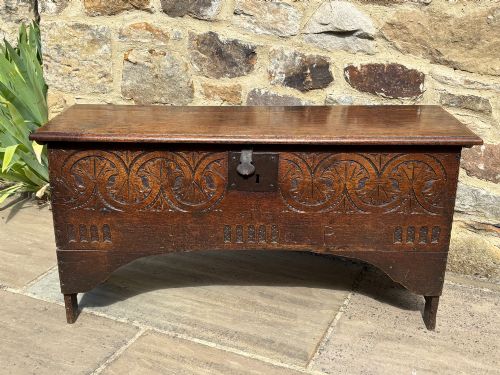
A seventeenth century trunk serves as a sturdy receptacle for domestic storage, spanning regional coffer and mule chest forms. These sturdy pieces provide functional storage while displaying the heavy timber construction characteristic of the period.
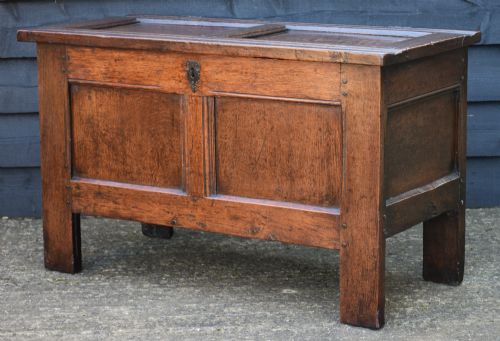
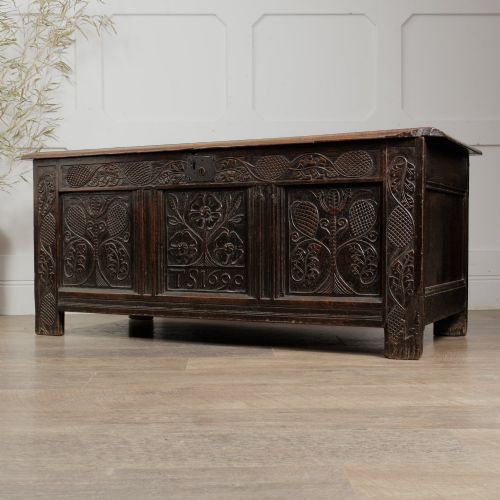
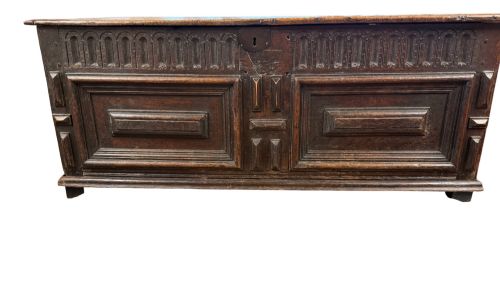
The selections on this page appear in oak, elm, and leather-clad wood, reflecting the utilitarian needs of households from the era. Most examples date from the seventeenth century, taking the form of coffers and chests designed for heavy daily use.
Materials and construction
Joiners built these pieces primarily from solid oak and elm timber, using thick boards joined by pegged mortise and tenon joints. Panels fit into grooved frames to allow the wood to expand and contract naturally with seasonal humidity changes.
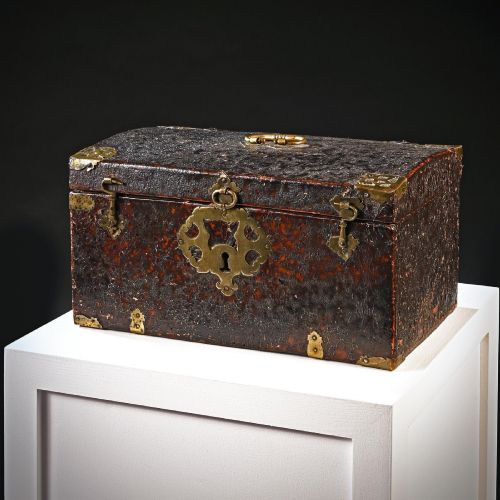
Iron and brass hardware reinforce the heavy wooden structures, securing lids and corners against wear. Some trunks employ leather coverings stretched over wooden carcasses, fastened with decorative metal tacks.
Retail Price Guide 2026
Typical UK retail prices for seventeenth century trunk, calculated from the Sellingantiques database of over a million retail prices indexed since 2003. This retail price guide relies exclusively on Sellingantiques data; no external sources or auction records are used, so the figures do not describe the wider market.
Judging quality
Quality rests in the integrity of the original timber and the restraint of subsequent repairs, distinguishing honest domestic survivors from heavily altered examples. Original floorboards and untouched hinges elevate a piece above one with mismatched timber replacements.
The sophistication of the panel carving and the crispness of the joinery mark the distinction between provincial workshop output and finer commissioned pieces. Surfaces retain varying degrees of original patination, where decades of handling soften the edges of the grain.
The Seventeenth Century Trunk Glossary
- Mule chest
- A coffer or chest fitted with one or more drawers beneath the main storage compartment. This form bridges the gap between the simple chest and the later chest of drawers.
- Coffer
- A heavy wooden chest traditionally used for storing valuables, documents, or textiles. Coffers usually feature sturdy plank lids and robust frame construction.
- Panelled
- A method of construction where a frame holds a thinner central board. This technique prevents warping while creating geometric decorative surfaces on the front and sides.
- Charles I
- The artistic and stylistic period spanning the reign of Charles I, noted for sturdy oak furniture with restrained geometric decoration. Pieces from this era show traditional joinery methods before later baroque influences took hold.
- William and Mary
- The design style prevalent around the turn of the eighteenth century, introducing lighter proportions and Dutch influences to British furniture. Pieces often incorporate applied mouldings and refined hardware.
Frequently Asked Questions
How were seventeenth century trunks used?
Households utilised these pieces primarily for storing heavy textiles, blankets, clothing, and family valuables. Because domestic architecture featured few built-in cupboards, large trunks acted as portable wardrobes and secure storage.
Travellers also mounted them onto packhorses or carriages for long journeys, which explains the robust iron reinforcement found on many surviving examples.
What woods appear in these trunks?
Oak and elm dominate the construction of these pieces, selected for their local availability and structural toughness. Joiners relied on native hardwoods to build thick frames that could withstand heavy daily use.
Some examples also incorporate leather over wooden cores, fastened with brass or iron tacks to provide a decorative, weather-resistant outer layer.
How do I care for a historic trunk?
Keep the wood away from direct heat sources and sudden humidity shifts to prevent the timber from splitting or warping. Maintain the surface simply by applying a neutral beeswax occasionally to nourish the dry grain.
Avoid modern liquid polishes, which build up harmful residues and soften the historic patina built up over centuries of handling.
How can I tell the period?
Examine the construction methods, tool marks, and hardware to understand the age of the piece. Hand-riven timber, pegged joints, and forged iron strapwork point directly to seventeenth-century workshop practices.
Compare the overall proportions and decorative mouldings, such as geometric panel layouts, against documented regional styles from the same era.