





Gothic Carved Chest
A gothic carved chest brings centuries of robust timber and architectural ornament straight into a room.
What a gothic carved chest is
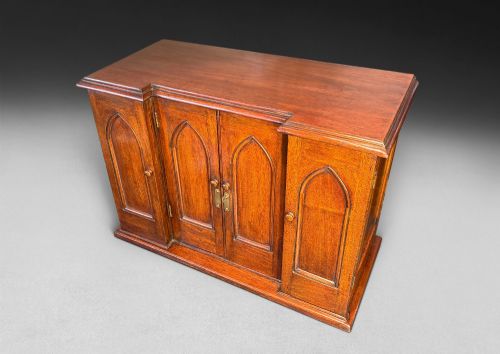
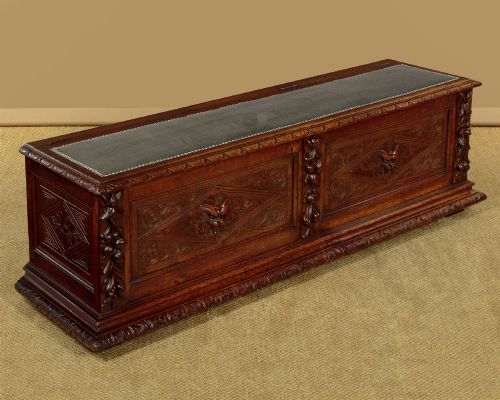
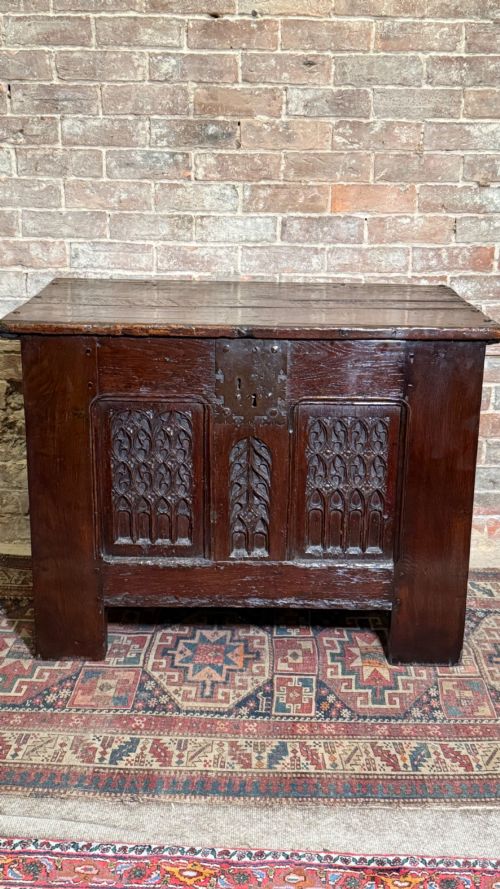
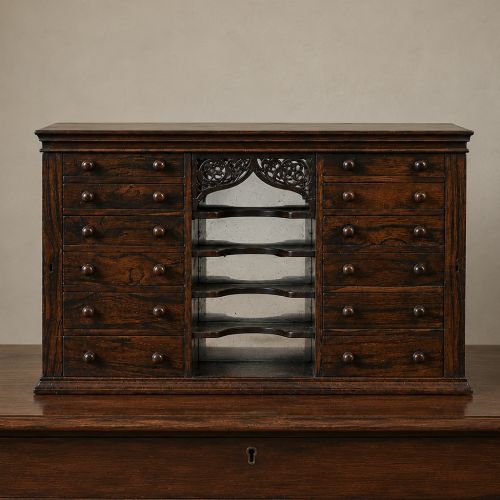
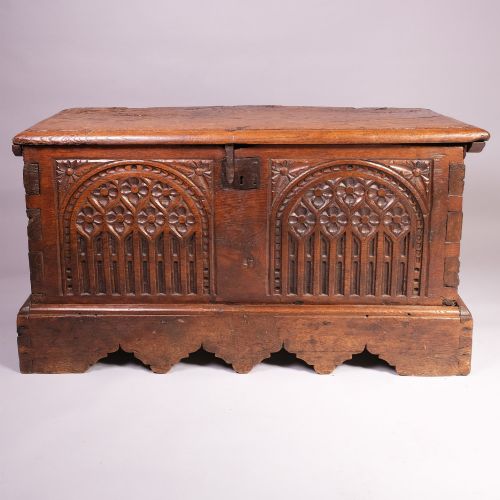
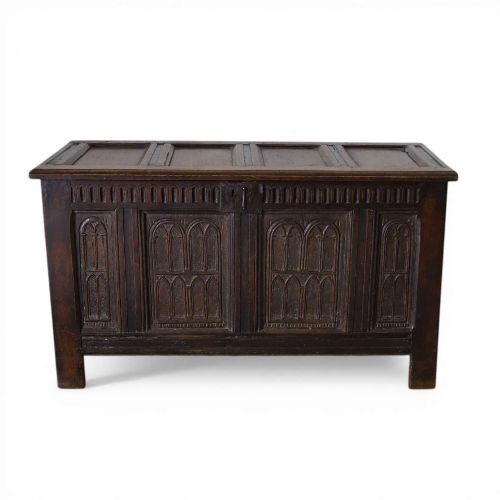
A gothic carved chest provides deep storage within a heavy wooden carcase defined by architectural panels and tracery. Buyers searching this phrase encounter examples ranging from pre sixteenth century coffers to later continental interpretations.
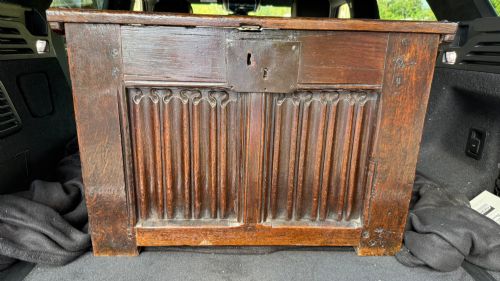
The most frequent form on this page is the oak coffer, often constructed with plank sides and heavy lids. Elm, walnut, chestnut, and giltwood also appear across the surviving pieces.
Origins span British and continental workshops, including Italian and French examples alongside later revival iterations. These pieces function as enduring anchor furniture in a hall or living space.
How they were made
Carpenters built these sturdy receptacles using solid native timbers such as oak, elm, walnut, and chestnut. Planks were joined with pegged mortise and tenon joints or heavy dovetailed corners.
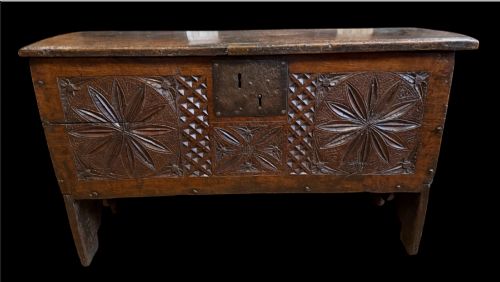
Surface decoration relies on hand-carved tracery, linenfold panels, and geometric motifs cut directly into the dense wood. Iron hardware, including strap hinges and heavy locks, reinforces the structural integrity.
Retail Price Guide 2026
Typical UK retail prices for gothic carved chest, calculated from the Sellingantiques database of over a million retail prices indexed since 2003. This retail price guide relies exclusively on Sellingantiques data; no external sources or auction records are used, so the figures do not describe the wider market.
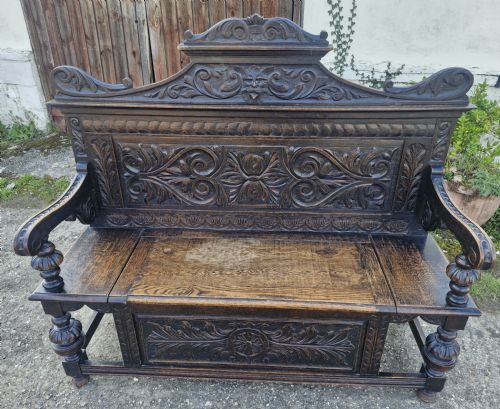
A green man face occasionally peers out from the oak foliage, watching over the household laundry.
What varies in quality
Quality rests in the crispness of the original timber carving and the architectural proportion of the panels. Superior examples retain their early ironwork and primary boards without extensive timber replacement.
The handling of the joints and the depth of the relief work distinguish standard vernacular pieces from master workshop production. Patina develops naturally over centuries of handling, separating untouched surfaces from over-restored timber.
The Gothic Carved Chest Glossary
- Tracery
- Architectural stone-window ornamentation translated into woodcarving. It forms the geometric heart of gothic panel design.
- Cassone
- An Italian marriage chest usually decorated with carving, gilding, or paint. Walnut examples display distinct Mediterranean proportions.
- Linenfold
- A style of woodcarving that imitates folded cloth. It appears frequently on the vertical panels of sixteenth century pieces.
- Giltwood
- Timber treated with gold leaf or gold paint. It provides rich contrast against dark walnut or oak.
Frequently Asked Questions
What is a gothic carved chest?
A gothic carved chest is a heavy storage box made of solid timber, decorated with architectural carvings like tracery and panels. These pieces served as secure furniture for valuables in early homes.
Today, they function as striking storage units or coffee tables in traditional and contemporary interiors alike.
How were these chests used?
Historically, these chests held household textiles, church plate, charters, and personal valuables safely under lock and key. Their flat tops also allowed them to double as benches or tables in sparse rooms.
Living with one today offers practical blanket or linen storage while introducing centuries of texture to a room.
What woods do these chests use?
The primary timber across these pieces is oak, chosen for its strength and availability in early workshops. Elm, walnut, and chestnut also appear, particularly in continental pieces.
Iron hardware frequently reinforces the wooden structure at vulnerable corners and hinges.
How do I tell periods apart?
Early pieces from the sixteenth century or before rely on heavy boards, pegged joints, and deep, primitive tracery. Later revival pieces often exhibit softer carving styles and lighter internal construction.
Examining the tool marks on the timber and the wear patterns on the base reveals the true age of the piece.